KSroido/
Kagi-Session2API-MCP

KSroido/Kagi-Session2API-MCPConnectors
Free Kagi Search MCP server — access search and summarizer via session tokens, no API key needed. Works with Claude Desktop, Cursor, Windsurf, Hermes and any MCP client.
83
Free Kagi Search MCP server — access search and summarizer via session tokens, no API key needed. Works with Claude Desktop, Cursor, Windsurf, Hermes and any MCP client.

Every past session, subagent, and workflow -- queryable by your agent, browsable by you

Real-time web dashboard for pi coding-agent sessions. Multi-session view, live chat mirroring, integrated terminal, diff viewer, pi-flows execution, and mobile-first remote control via mDNS or zrok tunnel. Coexists with pi's TUI — doesn't replace it.

Durable, searchable memory of your past agent sessions.

A history management extension for codecompanion AI chat plugin that enables saving, browsing and restoring chat sessions.

Project memory system for AI coding assistants (Claude Code, Cursor, Codex): session logs, project wiki, rules, TODOs, and handoff.

A human-governed AI coding workflow that distills ephemeral session context into persistent project memory—making work traceable, reviewable, and resumable.

Batch-download reference PDFs from a DOI or paper PDF using Crossref and your institutional Edge session.

Sage Mode for F# development — REPL with solution or project loading, Live Testing for FREE, Hot Reload, and session management.

Unofficial MCP server for working with Kagi *without* API access (you'll need to be a customer). Searches and summarizes. Uses Kagi session token for easy authentication. Works well with your agent.

Up to 71.5x fewer tokens per session on Claude Code with Obsidian + Graphify. Persistent memory, codebase knowledge graphs, and chat import pipeline. 🇧🇷 PT-BR included.

Local-first game design OS for AI agents: turn sessions into evidence, experiments, reviewable decisions, and durable project memory—Human Gates and rollback.
Multi-agent orchestration for AI coding CLIs — Claude Code, Kiro, Codex, and more, coordinated in isolated tmux sessions

self-healing and self-learning loop for coding agents

AI builder operating system. Turn Claude Code from a per-session tool into a workspace that remembers, maintains itself, and never goes stale. BASE = Builder's Automated State Engine.

Stop re-explaining your data to your AI every session. The individual-analyst context layer, delivered over MCP (Claude Code / Cursor / Codex).
Persistent Claude Code agents with scheduling, sessions, memory, and Telegram.
mentor — a session-insights skill for AI coding agents. This skill reads your local Claude Code and OpenAI Codex history and writes an /insights-style HTML report on how you work: what you build, where you lose time, and concrete fixes. An agent skill for Claude Code, Codex, and any skills-capable agent.

Persistent memory graph for AI agents. Facts, decisions, entities, and relationships that survive across sessions, tools, and providers. MCP server — works with Claude, Cursor, ChatGPT, and any MCP client.
An agentic memory database that cuts session tokens by 82–99%. One portable SQLite file — your agent's memory, anywhere.

One config to rule all your AI agents: portable (every project, every session), effective (curated writing, routing, skills), and safer (destructive-command guard).
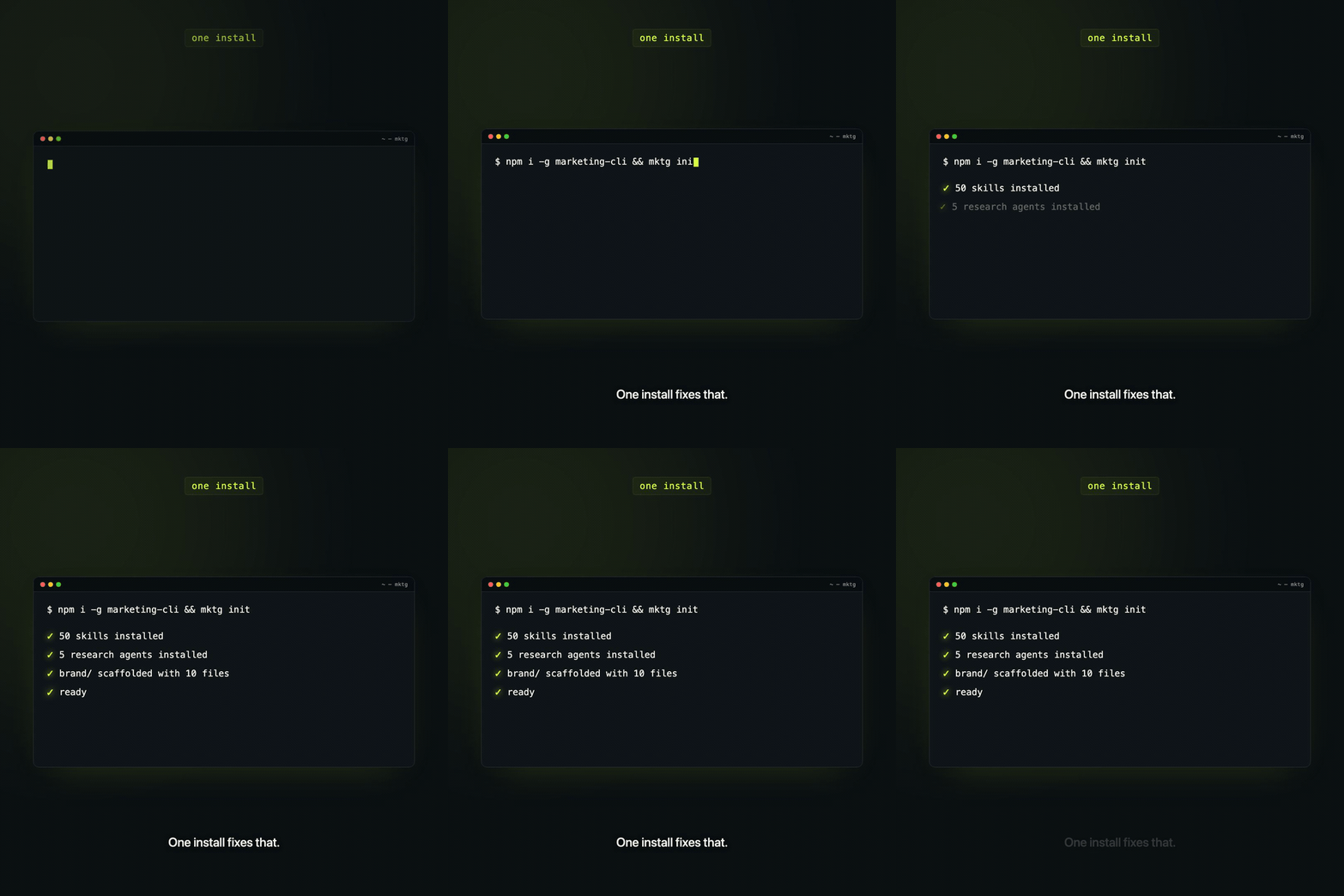
Agent-native marketing CLI: 76 skills, 6 research/review agents, brand memory that compounds across sessions, and a local Studio dashboard. One npm install, then /cmo in your coding agent.

A disciplined methodology for AI-assisted software development. Covers architectural constraints, validation hooks, session governance, and PAG (Pattern Abstract Grammar) for structured AI collaboration. Copy claude-setup/ into your project to start.

Adam Framework for OpenClaw — 5-layer persistent memory and identity architecture for AI agents. Production-validated over 353+ sessions. First documented case of emergent values in persistent AI, quantum-verified on IBM hardware.