
DietrichGebert/ponytailPlugins
Makes your AI agent think like the laziest senior dev in the room. The best code is the code you never wrote.
138k
1 add
This plugin adds chat history management to `codecompanion.nvim`. It saves chats automatically or on demand, shows them in a picker, and restores the full session state, including messages, tools, references, adapter settings, and images. It also adds summary generation and browsing, title refresh, project-aware filtering, chat duplication, and an optional `@memory` tool backed by VectorCode for searching past summaries.
Builders who use CodeCompanion in Neovim and want saved chats they can browse and restore.
You can pick up old AI chats with their context intact instead of starting over.
Saves chats as you work, or lets you save the current chat with a keymap when auto-save is off.
Opens a history picker where you can preview chats, restore one, rename it, delete it, or make a copy.
Restores messages, system prompts, images, LLM adapter settings, tools, tool outputs, variables, references, and pinned references.
Creates summaries for chats with `gcs` and lets you browse saved summaries with `gbs` or `:CodeCompanionSummaries`.
Generates chat titles automatically and can refresh them after a set number of prompts.
Filters saved chats by workspace or any custom rule before showing them in the browser.
Indexes summaries and exposes an `@memory` tool so the model can search prior chats.


A history management extension for codecompanion.nvim that enables saving, browsing and restoring chat sessions.
gcsgbs to explore all summaries@memory tool in new chats when VectorCode is installedThe following CodeCompanion features are preserved when saving and restoring chats:
| Feature | Status | Notes |
|---|---|---|
| System Prompts | ✅ | System prompt used in the chat |
| Messages History | ✅ | All messages |
| Images | ✅ | Restores images as base64 strings |
| LLM Adapter | ✅ | The specific adapter used for the chat |
| LLM Settings | ✅ | Model, temperature and other adapter settings |
| Tools | ✅ | Tool schemas and their system prompts |
| Tool Outputs | ✅ | Tool execution results |
| Variables | ✅ | Variables used in the chat |
| References | ✅ | Code snippets and command outputs added via slash commands |
| Pinned References | ✅ | Pinned references |
| Watchers | ⚠ | Saved but requires original buffer context to resume watching |
When restoring a chat:
Note: While watched buffer states are saved, they require the original buffer context to resume watching functionality.
[!NOTE] As this is an extension that deeply integrates with CodeCompanion's internal APIs, occasional compatibility issues may arise when CodeCompanion updates. If you encounter any bugs or unexpected behavior, please raise an issue to help us maintain compatibility.
@memory tool)Using lazy.nvim:
{
    "olimorris/codecompanion.nvim",
    dependencies = {
        --other plugins
        "ravitemer/codecompanion-history.nvim"
    }
}
require("codecompanion").setup({
    extensions = {
        history = {
            enabled = true,
            opts = {
                -- Keymap to open history from chat buffer (default: gh)
                keymap = "gh",
                -- Keymap to save the current chat manually (when auto_save is disabled)
                save_chat_keymap = "sc",
                -- Save all chats by default (disable to save only manually using 'sc')
                auto_save = true,
                -- Number of days after which chats are automatically deleted (0 to disable)
                expiration_days = 0,
                -- Picker interface (auto resolved to a valid picker)
                picker = "telescope", --- ("telescope", "snacks", "fzf-lua", or "default")
                ---Optional filter function to control which chats are shown when browsing
                chat_filter = nil, -- function(chat_data) return boolean end
                -- Customize picker keymaps (optional)
                picker_keymaps = {
                    rename = { n = "r", i = "<M-r>" },
                    delete = { n = "d", i = "<M-d>" },
                    duplicate = { n = "<C-y>", i = "<C-y>" },
                },
                ---Automatically generate titles for new chats
                auto_generate_title = true,
                title_generation_opts = {
                    ---Adapter for generating titles (defaults to current chat adapter)
                    adapter = nil, -- "copilot"
                    ---Model for generating titles (defaults to current chat model)
                    model = nil, -- "gpt-4o"
                    ---Number of user prompts after which to refresh the title (0 to disable)
                    refresh_every_n_prompts = 0, -- e.g., 3 to refresh after every 3rd user prompt
                    ---Maximum number of times to refresh the title (default: 3)
                    max_refreshes = 3,
                    format_title = function(original_title)
                        -- this can be a custom function that applies some custom
                        -- formatting to the title.
                        return original_title
                    end
                },
                ---On exiting and entering neovim, loads the last chat on opening chat
                continue_last_chat = false,
                ---When chat is cleared with `gx` delete the chat from history
                delete_on_clearing_chat = false,
                ---Directory path to save the chats
                dir_to_save = vim.fn.stdpath("data") .. "/codecompanion-history",
                ---Enable detailed logging for history extension
                enable_logging = false,

                -- Summary system
                summary = {
                    -- Keymap to generate summary for current chat (default: "gcs")
                    create_summary_keymap = "gcs",
                    -- Keymap to browse summaries (default: "gbs")
                    browse_summaries_keymap = "gbs",

                    generation_opts = {
                        adapter = nil, -- defaults to current chat adapter
                        model = nil, -- defaults to current chat model
                        context_size = 90000, -- max tokens that the model supports
                        include_references = true, -- include slash command content
                        include_tool_outputs = true, -- include tool execution results
                        system_prompt = nil, -- custom system prompt (string or function)
                        format_summary = nil, -- custom function to format generated summary e.g to remove <think/> tags from summary
                    },
                },

                -- Memory system (requires VectorCode CLI)
                memory = {
                    -- Automatically index summaries when they are generated
                    auto_create_memories_on_summary_generation = true,
                    -- Path to the VectorCode executable
                    vectorcode_exe = "vectorcode",
                    -- Tool configuration
                    tool_opts = {
                        -- Default number of memories to retrieve
                        default_num = 10
                    },
                    -- Enable notifications for indexing progress
                    notify = true,
                    -- Index all existing memories on startup
                    -- (requires VectorCode 0.6.12+ for efficient incremental indexing)
                    index_on_startup = false,
                },
            }
        }
    }
})
[!WARNING] Title and summary generation defaults to current chat's adapter and model. Make sure to set cheaper models in
title_generation_optsandsummary.generation_optsto avoid using premium models.
:CodeCompanionHistory - Open the history browser:CodeCompanionSummaries - Browse all summariesHistory Management:
gh - Open history browser (customizable via opts.keymap)sc - Save current chat manually (customizable via opts.save_chat_keymap)Summary System:
gcs - Generate summary for current chat (customizable via opts.summary.create_summary_keymap)gbs - Browse saved summaries (customizable via opts.summary.browse_summaries_keymap)The history browser shows all your saved chats with:
Actions in history browser:
<CR> - Open selected chatd - Delete selected chat(s)r - Rename selected chat<C-y> - Duplicate selected chat<M-d> (Alt+d) - Delete selected chat(s)<M-r> (Alt+r) - Rename selected chat<C-y> - Duplicate selected chatThe summary browser shows all your generated summaries with:
Actions in summary browser:
<CR> - Add the summary to the current chatd - Delete selected summary(s)<M-d> (Alt+d) - Delete selected summary(s)@memory toolIf you have installed the VectorCode CLI,
this plugin will use VectorCode to create an index for your chat summaries and create
a tool called @memory. This tool gives the LLM the ability to search for
(the summary of) previous chats so that you can refer to them in a new chat.
Available options for the memory submodule:
opts.memory = {
    auto_create_memories_on_summary_generation = true,
    -- path to the `vectorcode` executable
    vectorcode_exe = "vectorcode",
    tool_opts = {
        -- default number of memories to retrieve
        default_num = 10
    },
    -- whether to enable notification
    notify = true,
    -- whether to automatically update the index of all existing memories on startup
    -- (requires VectorCode 0.6.12+ for efficient incremental indexing)
    index_on_startup = false,
}
The extension can automatically refresh chat titles as conversations evolve:
refresh_every_n_prompts: Set to refresh the title after every N user prompts (e.g., 3 means refresh after the 3rd, 6th, 9th user message)max_refreshes: Limits how many times a title can be refreshed to avoid excessive API calls[truncated] indicator[conversation truncated] indicatorExample configuration for title refresh:
title_generation_opts = {
    refresh_every_n_prompts = 3, -- Refresh after every 3rd user prompt
    max_refreshes = 10,           -- Allow up to 10 refreshes per chat
}
The extension supports flexible chat filtering to help you focus on relevant conversations:
Configurable Filtering:
chat_filter = function(chat_data)
    return chat_data.cwd == vim.fn.getcwd()
end

-- Recent chats only (last 7 days)
chat_filter = function(chat_data)
    local seven_days_ago = os.time() - (7 * 24 * 60 * 60)
    return chat_data.updated_at >= seven_days_ago
end
Chat Index Data Structure: Each chat index entry (used in filtering) includes the following information:
-- ChatIndexData - lightweight metadata used for browsing and filtering
{
    save_id = "1672531200",                 -- Unique chat identifier
    title = "Debug API endpoint",           -- Chat title (auto-generated or custom)
    cwd = "/home/user/my-project",          -- Working directory when saved
    project_root = "/home/user/my-project", -- Detected project root
    adapter = "openai",                     -- LLM adapter used
    model = "gpt-4",                        -- Model name
    updated_at = 1672531200,                -- Unix timestamp of last update
    message_count = 15,                     -- Number of messages in chat
    token_estimate = 3420,                  -- Estimated token count
}
The history extension exports the following functions that can be accessed via require("codecompanion").extensions.history:
-- Chat Management
get_location(): string?                           -- Get storage location

-- Save a chat to storage (uses last chat if none provided)
save_chat(chat?: CodeCompanion.Chat)

-- Browse chats with custom filter function
browse_chats(filter_fn?: function(ChatIndexData): boolean)

-- Get metadata for all saved chats with optional filtering
get_chats(filter_fn?: function(ChatIndexData): boolean): table<string, ChatIndexData>

-- Load a specific chat by its save_id
load_chat(save_id: string): ChatData?

-- Delete a chat by its save_id
delete_chat(save_id: string): boolean

-- Duplicate a chat by its save_id
duplicate_chat(save_id: string, new_title?: string): string?


-- Summary Management
--- Generate a summary for the current chat
generate_summary(chat?: CodeCompanion.Chat)

--- Delete a sumamry
delete_summary(summary_id: string)

--- Get summaries index
get_summaries(): table<string, SummaryIndexData>

--- Load summary
load_summary(summary_id: string): string?
Example usage:
local history = require("codecompanion").extensions.history

-- Browse chats with project filter
history.browse_chats(function(chat_data)
    return chat_data.project_root == utils.find_project_root()
end)

-- Get all saved chats metadata
local chats = history.get_chats()
local chat_data = history.load_chat("some_save_id")
history.delete_chat("some_save_id")

-- Duplicate a chat with custom title
local new_save_id = history.duplicate_chat("some_save_id", "My Custom Copy")

-- Duplicate a chat with auto-generated title (appends "(1)")
local new_save_id = history.duplicate_chat("some_save_id")

-- Summary operations
history.generate_summary() -- generates for current chat

local summaries = history.get_summaries()

local summary_content = history.load_summary("some_save_id")
graph TD
    subgraph CodeCompanion Core Lifecycle
        A[CodeCompanionChatCreated Event] --> B{Chat Submitted};
        B --> C[LLM Response Received];
        subgraph Chat End
            direction RL
            D[CodeCompanionChatCleared Event];
        end
        C --> D;
        B --> D;
    end

    subgraph Extension Integration
        A -- Extension Hooks --> E[Init & Subscribe];
        E --> F[Setup Auto-Save];
        F --> G[Prepare Auto-Title];

        C -- Extension Hooks --> H[Subscriber Triggered];
        H --> H1{Auto-Save Enabled?};
        H1 -- Yes --> I[Save Chat State - Messages, Tools, Refs];
        H1 -- No --> H2[Manual Save via `sc`];
        H2 --> I;
        I --> J{No Title & Auto-Title Enabled?};
        J -- Yes --> K[Generate Title];
        K --> L[Update Buffer Title];
        L --> M[Save Chat with New Title];
        J -- No --> B;
        M --> B;

        D -- Extension Hooks --> N[Respond to Clear Event];
        N --> O[Delete Chat from Storage];
        O --> P[Reset Extension State - Title/ID];
    end

    subgraph User History Interaction
        Q[User Action - gh / :CodeCompanionHistory] --> R{History Browser};
        R -- Restore --> S[Load Chat State from Storage];
        S --> A;
        R -- Delete --> O;
    end
Here's what's happening in simple terms:
When you create a new chat, our extension jumps in and sets up two things:
As you chat:
sc keymapWhen you clear a chat:
Any time you want to look at old chats:
gh or the command to open the history browserThe extension integrates with CodeCompanion through a robust event-driven architecture:
Initialization and Storage Management:
{data_path}/codecompanion-history/Chat Lifecycle Integration:
Hooks into CodeCompanionChatCreated event to:
Monitors CodeCompanionChatSubmitted events to:
Title Generation System:
State Management:
UI Components:
Data Flow:
Special thanks to:
MIT
Sign in to join the discussion.
No comments yet. Be the first to say what this is good for.
Makes your AI agent think like the laziest senior dev in the room. The best code is the code you never wrote.
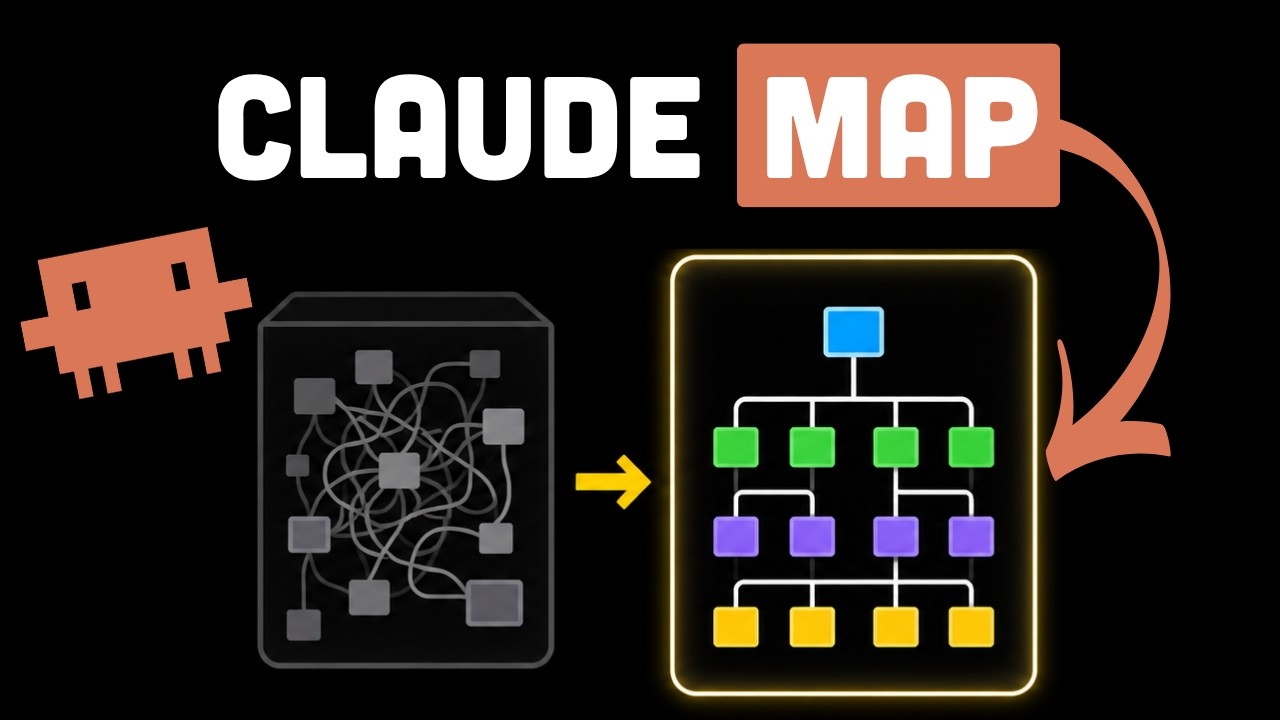
Graphs that teach > graphs that impress. Turn any code into an interactive knowledge graph you can explore, search, and ask questions about. Works with Claude Code, Codex, Cursor, Copilot, Gemini CLI, and more.

OmO: Just type "mass ulw" keyword with your prompt. Now you are the master of graph engineering.
Persistent Context Across Sessions for Every Agent – Captures everything your agent does during sessions, compresses it with AI, and injects relevant context back into future sessions. Works with Claude Code, OpenClaw, Codex, Gemini, Hermes, Copilot, OpenCode + More
Opinionated Oxlint rules for rejecting low-evidence TypeScript and JavaScript patterns
Teams-first Multi-agent orchestration for Claude Code