JimmySadek/
youtube-fetcher-to-markdown

Portable AI-agent skill: capture YouTube transcripts as Obsidian-ready Markdown with metadata, linked timestamps, language selection, and subtitle exports
470
Portable AI-agent skill: capture YouTube transcripts as Obsidian-ready Markdown with metadata, linked timestamps, language selection, and subtitle exports

Self-hosted URL- and file-to-Markdown service for humans and AI agents - web pages, documents, images, audio, YouTube. PWA + REST + MCP + Claude Code skill, Reddit-aware, refreshable share links.

Quickly reads webpages and converts to markdown for fast, token efficient web scraping

The theory of LLM wikis, running as one. A framework for agent-operated knowledge: typed, linked, review-gated markdown your agents execute.

Turn public X posts, profiles, and search into compact Markdown or JSON for agents. Hosted at x.pcstyle.dev.

ReActMCP is a reactive MCP client that empowers AI assistants to instantly respond with real-time, Markdown-formatted web search insights powered by the Exa API.
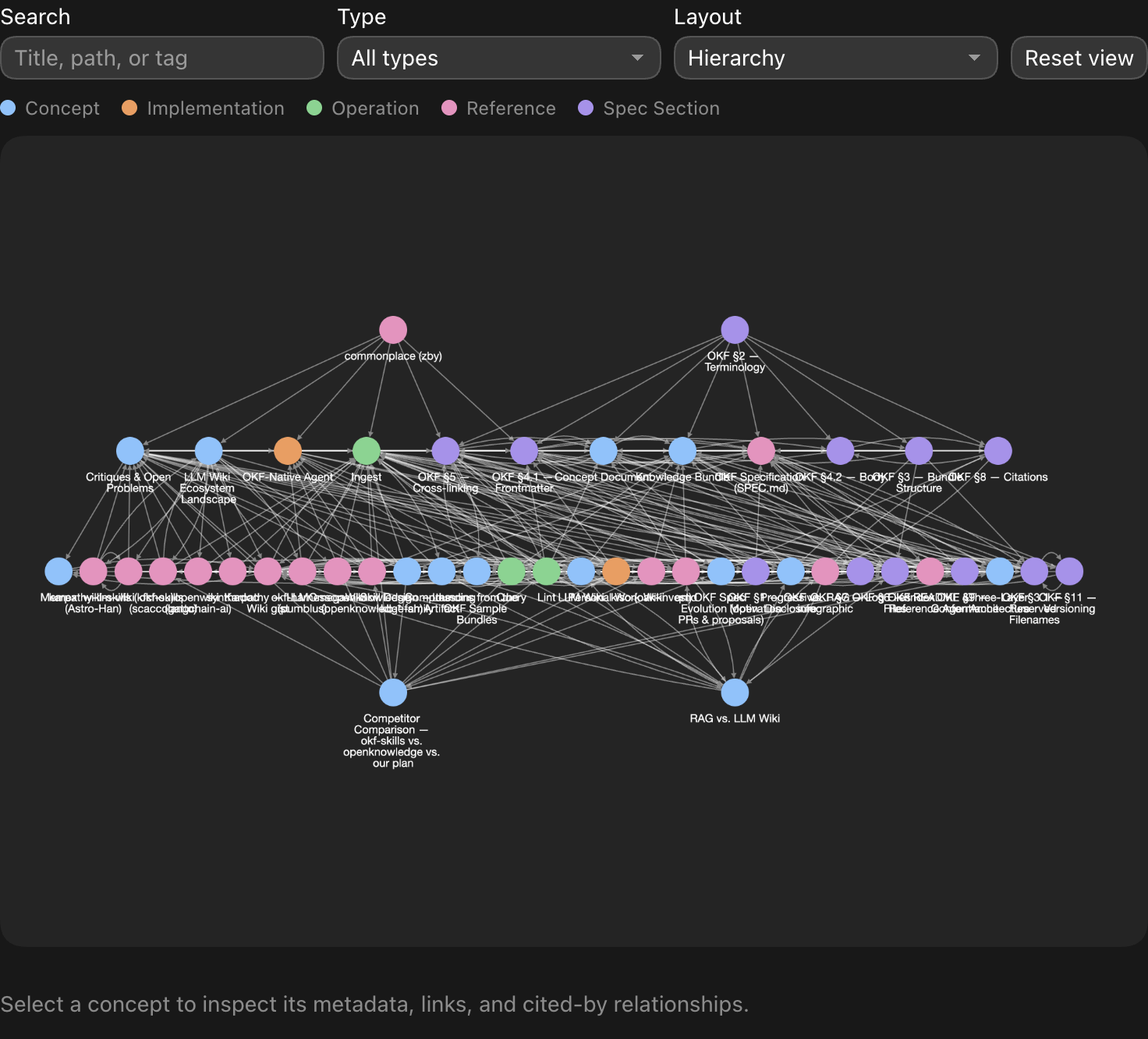
Portable Agent Skills for building and maintaining Open Knowledge Format project wikis in plain Markdown.

AI-agent skill producing reusable Markdown from PDFs. It turns flowcharts, diagrams, and charts into text beside each caption instead of empty links. It checks an earlier conversion against the PDF and fixes misread or missing parts. Long PDFs run in small saved batches with an independent review pass, each paragraph tagged with its page.

An MCP server for converting Markdown to interactive mind maps with export support (PNG/JPG/SVG).

Local RAG layer and optimizer for your Markdown knowledge base. CLI + MCP server: grounded answers for any AI client, stale-note detection, session harvesting into memories. Local-first.

Go web crawler to scrape documentation sites and convert content to clean Markdown for LLM ingestion (RAG, training data).

A MCP server providing realistic browser-like HTTP request capabilities with accurate TLS/JA3/JA4 fingerprints for bypassing anti-bot measures. It also supports converting PDF and HTML documents to Markdown for easier processing by LLMs.
One portable memory layer for every AI agent: local-first, Markdown-native, user-owned, and self-evolving across apps, tools, and workflows.
Turn your markdown vault into a compounding knowledge wiki (Karpathy inspired). Six agent skills - knowledge grows with every conversation. Works with Obsidian, Logseq, etc. or just folders on your local drive. Compiled memory for your LLM sessions. Crossplatform. GUI install on Claude Desktop, no terminal, no code.

Feed your agent papers and half-formed ideas — it links them into a system design you can defend. Markdown keeps the record; a visual canvas makes it readable. An Agent Skill for Claude Code & any SKILL.md-compatible agent.
A headless browser for AI agents that fetches modern web pages, runs JavaScript, manages sessions, and returns token-efficient Markdown.

900+ pure-markdown skills for autonomous AI research, organized as 9 freely-composable packages over a 4-layer hierarchy (Campaign → Strategy → Tactic → SOP). Non-linear orchestration with backtracking, 6 MCP integrations. The AI is the researcher — you set the direction.
Fast, local-first web content extraction for LLMs. Scrape, crawl, extract structured data — all from Rust. CLI, REST API, and MCP server.
The Wiki-link doc compiler for the LLM era.
Harness engineering applied to knowledge production: a self-evolving multi-agent newsroom that turns your documents into a cross-linked markdown wiki. A "reground" loop pulls published pages back in before they go stale — writer ≠ reviewer, local-first, a structured alternative to RAG.
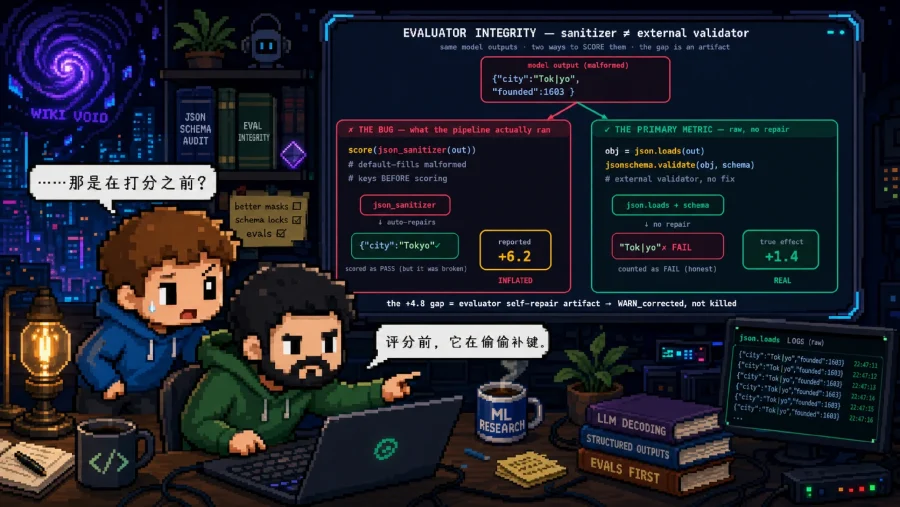
ARIS ⚔️ (Auto-Research-In-Sleep) — Lightweight Markdown-only skills for autonomous ML research: cross-model review loops, idea discovery, and experiment automation. No framework, no lock-in — works with Claude Code, Codex, OpenClaw, or any LLM agent.
Knowledge graph extractor: Markdown (or any format) to knowledge graph with RDFS/OWL ontology

Open-source, local-first Granola/Otter alternative that Claude Code, Codex, Cursor, and any MCP client can query. Meetings, calls, and voice memos transcribed on-device into markdown you own.

Multi-agent research automation framework for LLM agents, with adversarial lab meetings, paper-review rounds, auditable Markdown workflows, an autonomous runtime watchdog, and a pixel-art web dashboard.