
obra/
superpowers

obra/superpowersSkills
An agentic skills framework & software development methodology that works.
285k
1 add
This skill turns papers and rough ideas into a design workspace with evidence links, idea cards, and a final output target. Markdown stores the source of truth, while a generated HTML canvas makes the whole board easy to read and share.
Builders who feed research into an agent and need the result to stay traceable and defensible.
You can turn scattered reading into a linked design board where every decision points back to its evidence.
Files papers, repos, and posts as cards, grades them, and anchors claims to where they came from.
Lets a human create ideas, then links them to evidence, groups neighbors, and keeps conflicting views instead of forcing a choice.
Builds the deliverable from the surviving ideas when you ask, and syncs later edits back into the idea set.
Stores the board in three versionable folders so the record stays in git and remains easy to inspect.
Rebuilds a single HTML board from the markdown with no server or extra dependencies.
Lets you commit or host the canvas so other people can open one file and see the full chain from source to decision.
/plugin marketplace add tigerless-labs/design-harness
/plugin install design-harness@design-harness
codex plugin marketplace add tigerless-labs/design-harness
git clone https://github.com/tigerless-labs/design-harness
cp -r design-harness/plugins/design-harness/skills/design-harness \
  ~/.claude/skills/
/plugin marketplace update design-harness
/plugin update design-harness@design-harness
codex plugin marketplace upgrade
> file these papers onto the board




Turn scattered reading and half-formed ideas into a design you can defend — a skill, a system, a video script, even the structure of an article. The human adjudicates, the agent runs the errands.
An Agent Skill (Claude Code plugin, works with any SKILL.md-compatible agent): feed it sources and rough ideas as you go — it files and links them, records how your thinking evolves, and assembles the evidence into a system design.
Markdown keeps the record; the canvas makes it readable — every source and idea you add lands on the board, one glance away from any decision's why.
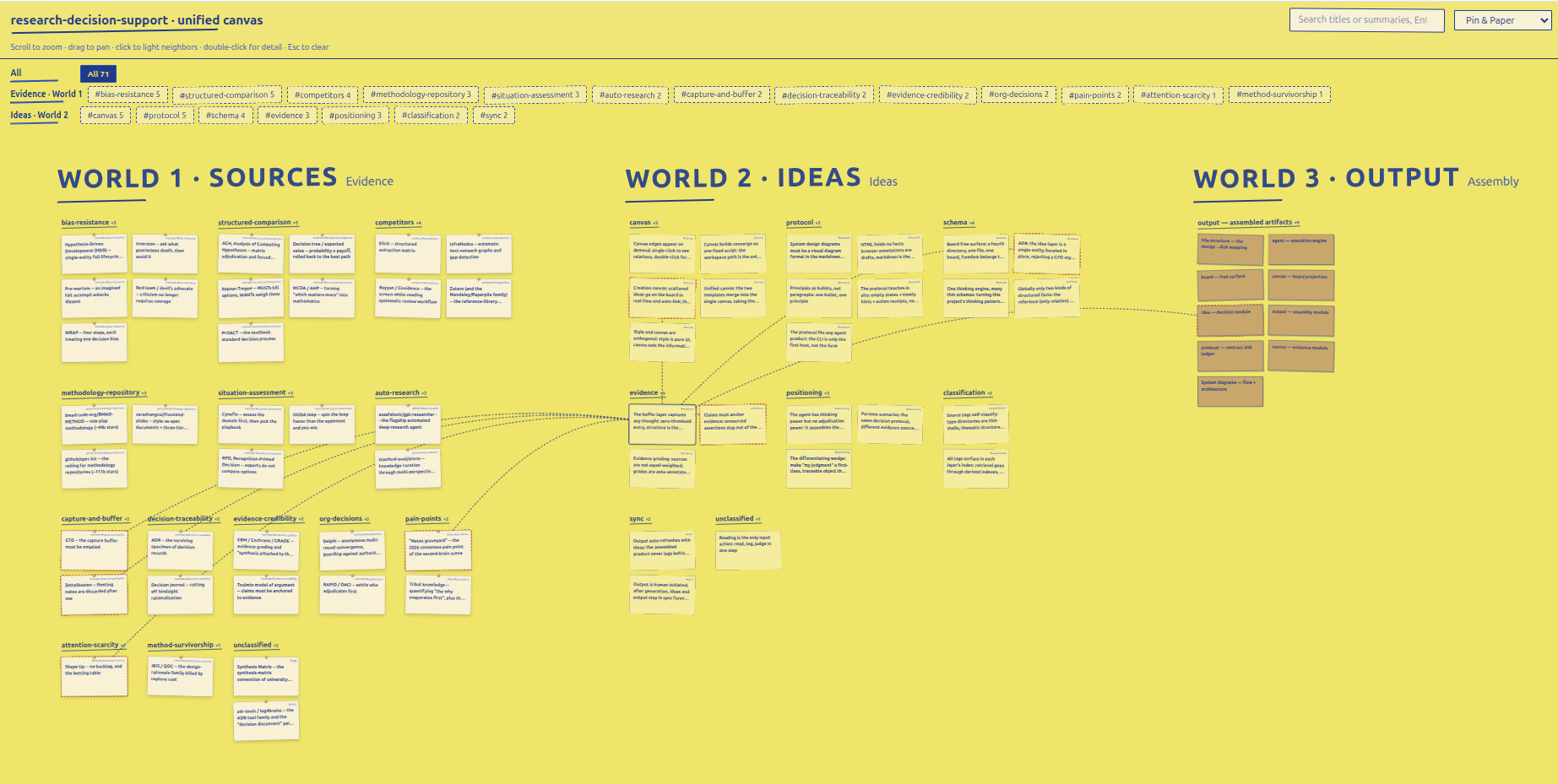
▶ Click the board to open the live canvas — this repo's own design workspace, dogfooded — Pages serves the committed docs/canvas.html as-is. It's also our answer to "why is the design like this?" — send the link.
Claude Code:
/plugin marketplace add tigerless-labs/design-harness
/plugin install design-harness@design-harness
Codex (CLI and the ChatGPT desktop app share one plugin system):
codex plugin marketplace add tigerless-labs/design-harness
then install from /plugins in the CLI or the desktop app's plugin directory.
For other SKILL.md-compatible agents, copy the skill folder into your agent's skill directory:
git clone https://github.com/tigerless-labs/design-harness
cp -r design-harness/plugins/design-harness/skills/design-harness \
  ~/.claude/skills/
Claude Code — refresh the marketplace, then update the plugin:
/plugin marketplace update design-harness
/plugin update design-harness@design-harness
(Or enable auto-update for this marketplace under /plugin → Marketplaces.)
Codex — refresh the marketplace snapshot, then update from /plugins:
codex plugin marketplace upgrade
Manual copy — git pull the clone and re-run the cp -r above.
Talk to your agent in plain language:
> file these papers onto the board
> assemble the design
target.md declares.Render your own workspace in ten seconds — the demo board is the same projection run on a real workspace:
python3 plugins/design-harness/skills/design-harness/scripts/build_canvas.py \
  path/to/your-workspace -o /tmp/canvas
open /tmp/canvas/canvas.html
The board is not just where you think — it's how you show someone else why the design is what it is. The canvas is one self-contained HTML file, so commit it beside your workspace:
python3 plugins/design-harness/skills/design-harness/scripts/build_canvas.py \
  path/to/your-workspace -o docs
git add docs/canvas.html
Whoever gets the repo opens one file and gets the whole board — every card one click from the evidence that earned it. Want a URL instead? Serve the same file with hosted pages, the way this repo does.
Five skins ship with the canvas; switch live from the toolbar, Pin & Paper is the default. Screenshots below are this repo's own workspace, unretouched — the board view and a close-up for each style.
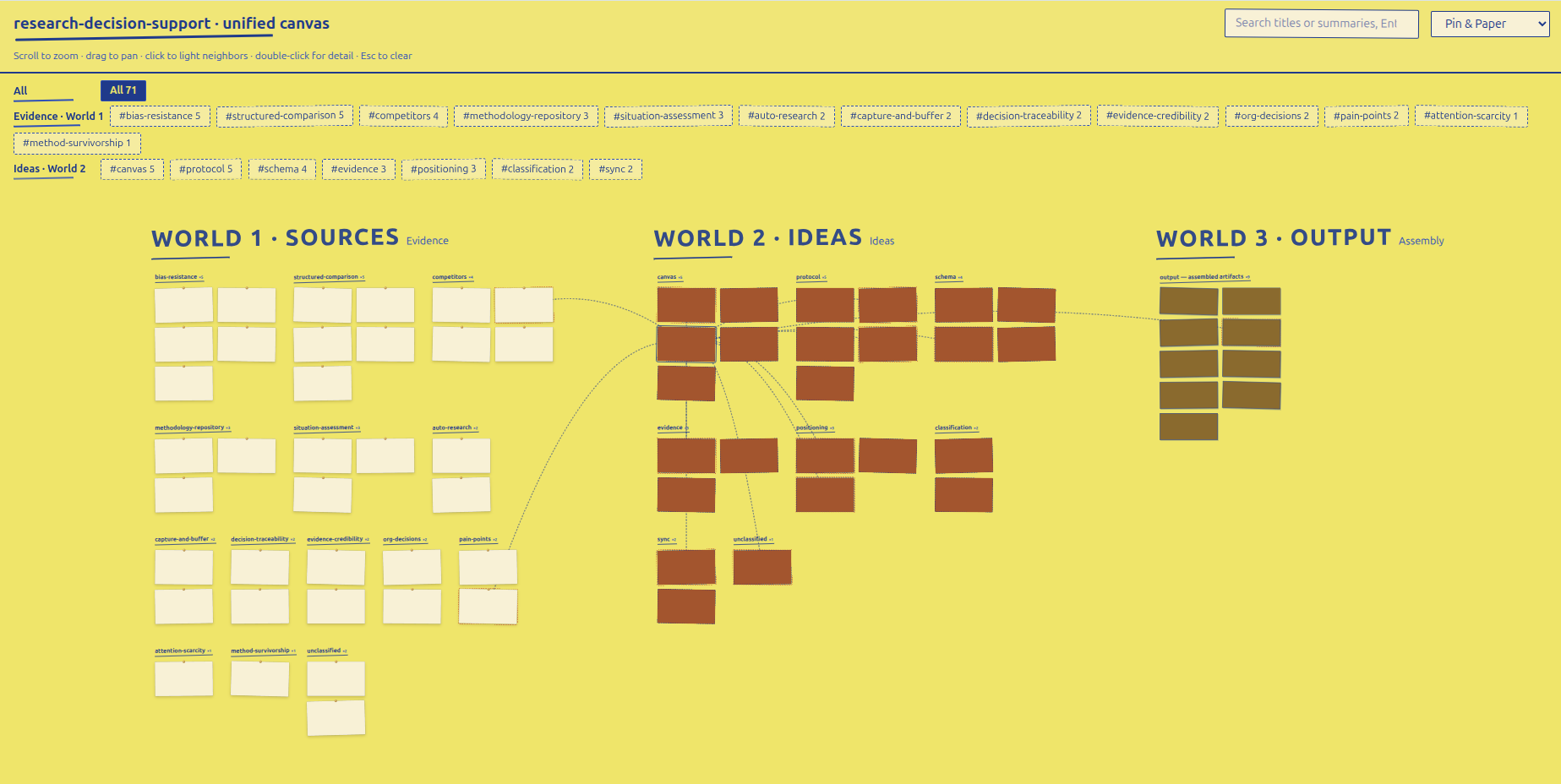
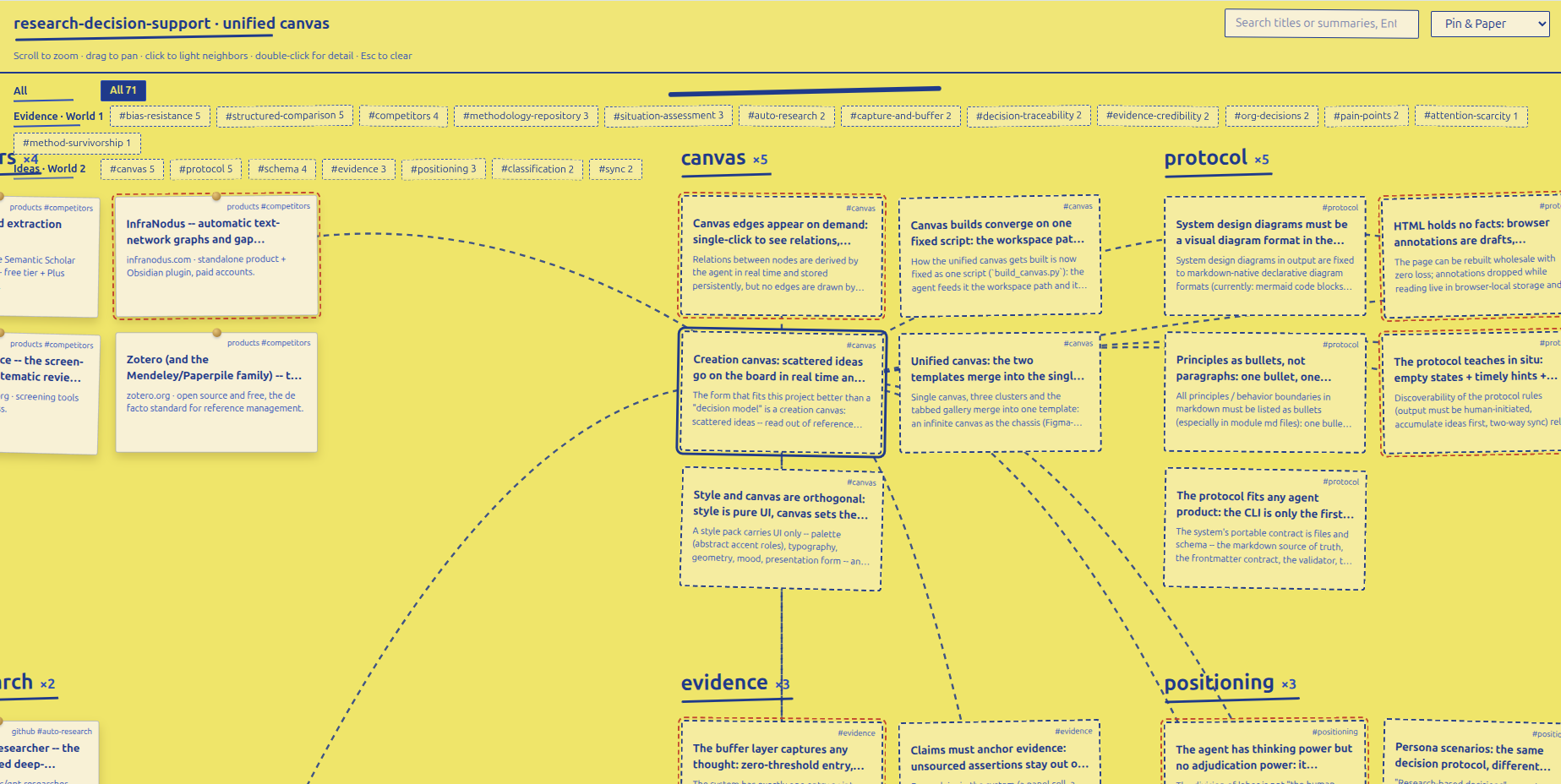
A handmade pinboard: yellow paper ground, ink-blue hand script, pinned notes, taped slips, and dashed hand-drawn threads between them.
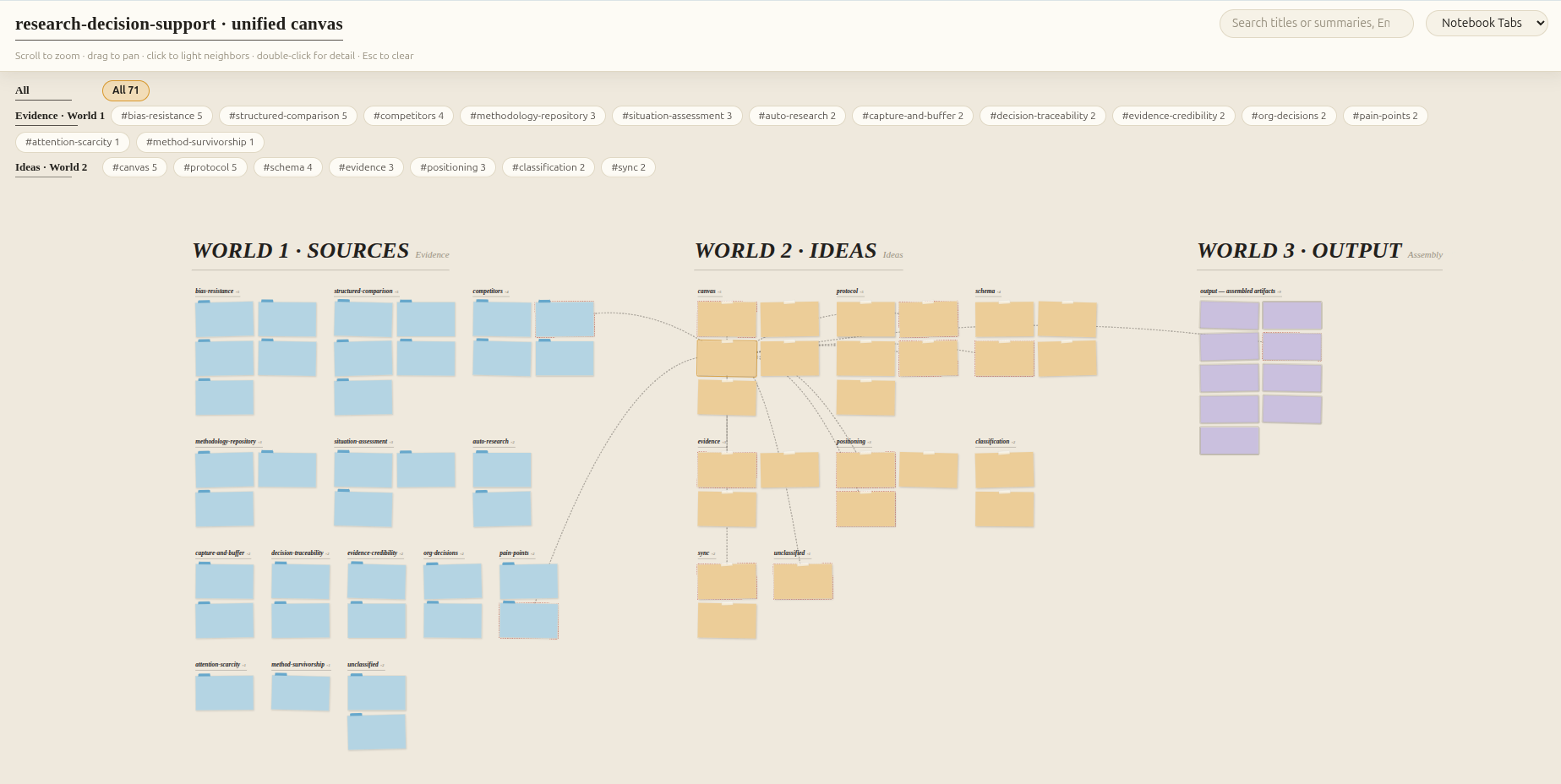
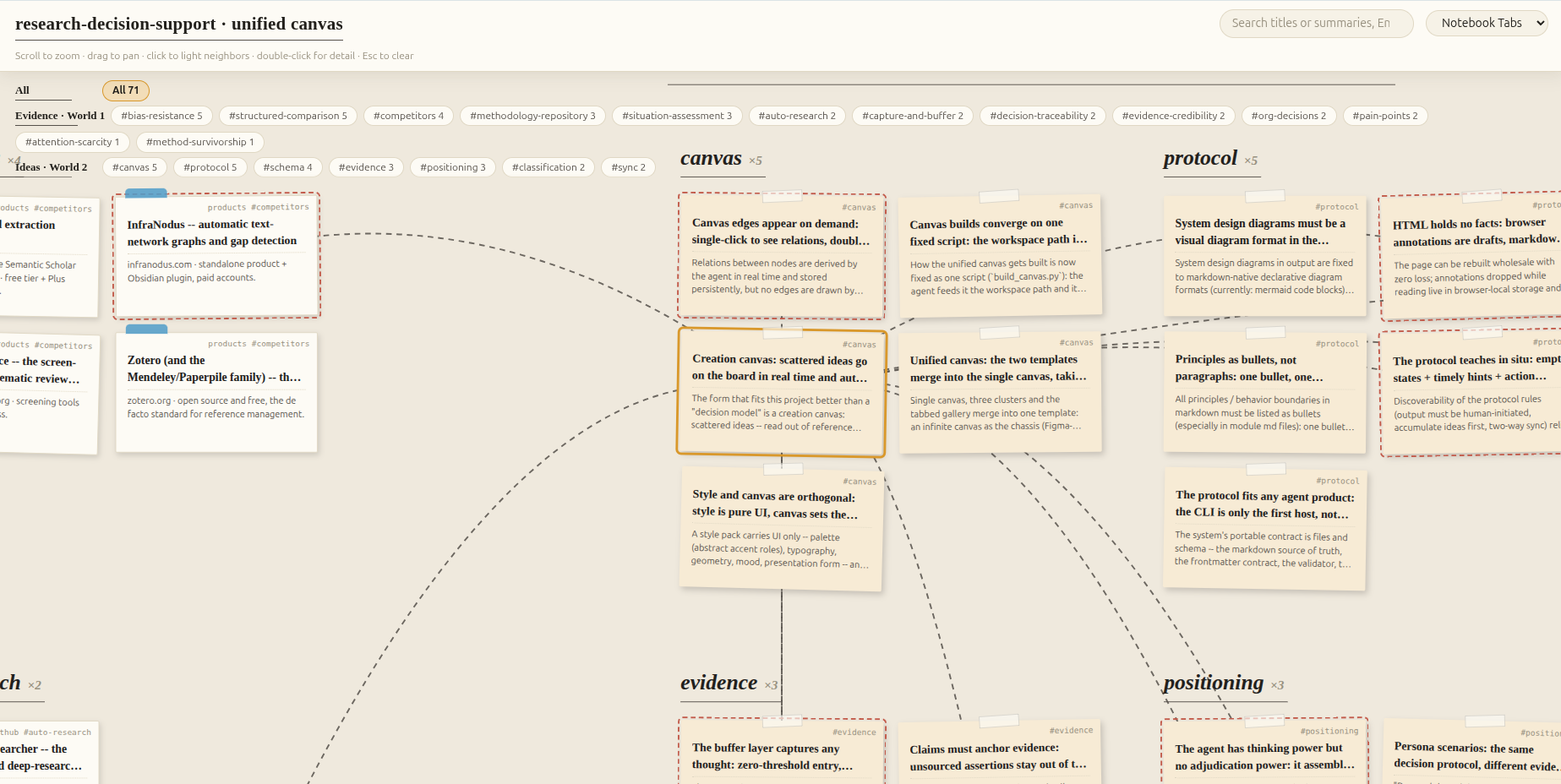
Warm ivory stationery: serif italic headings, index cards with colored tab tongues, sticky-note ideas, stitched dashed connections.
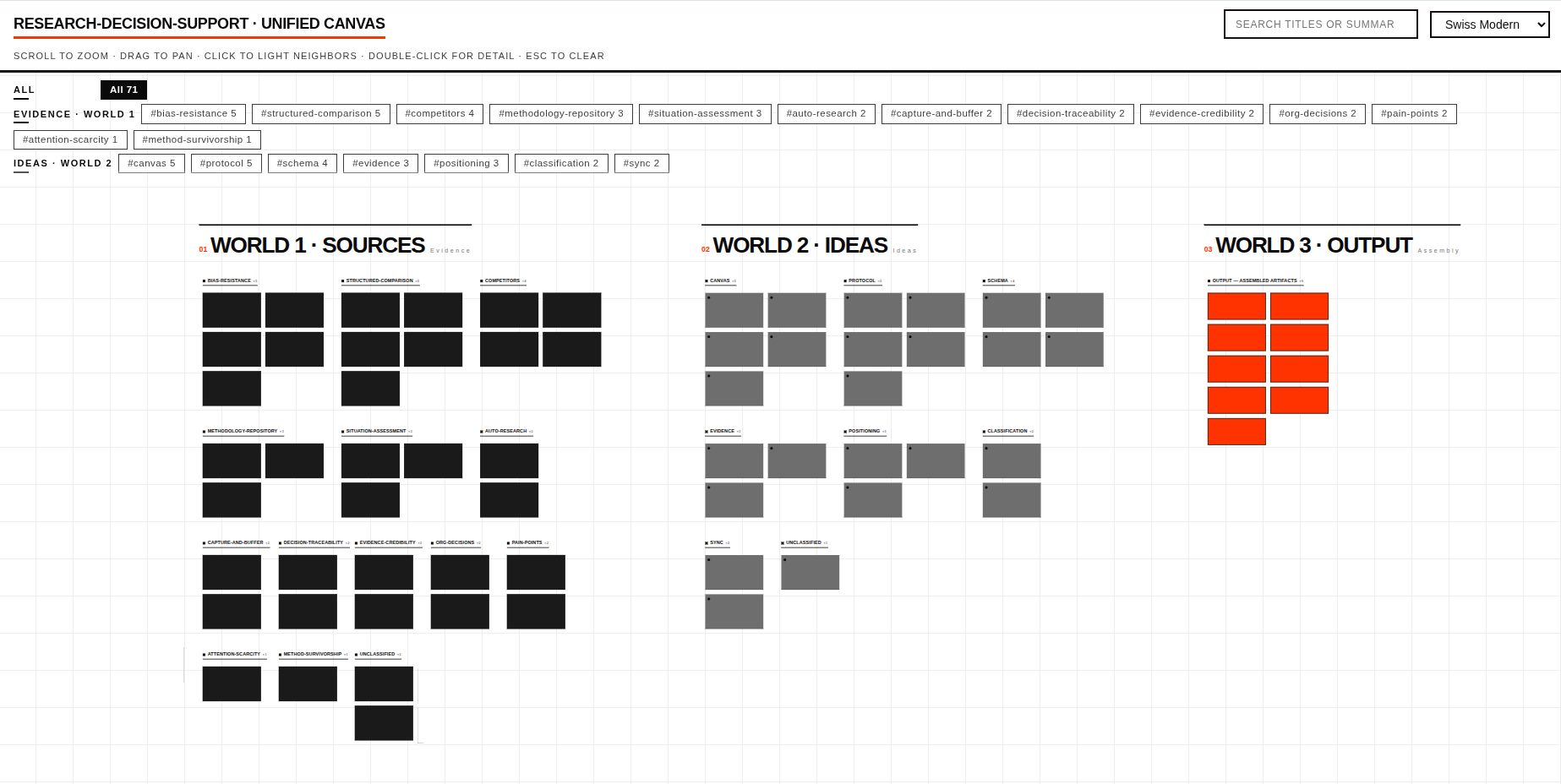
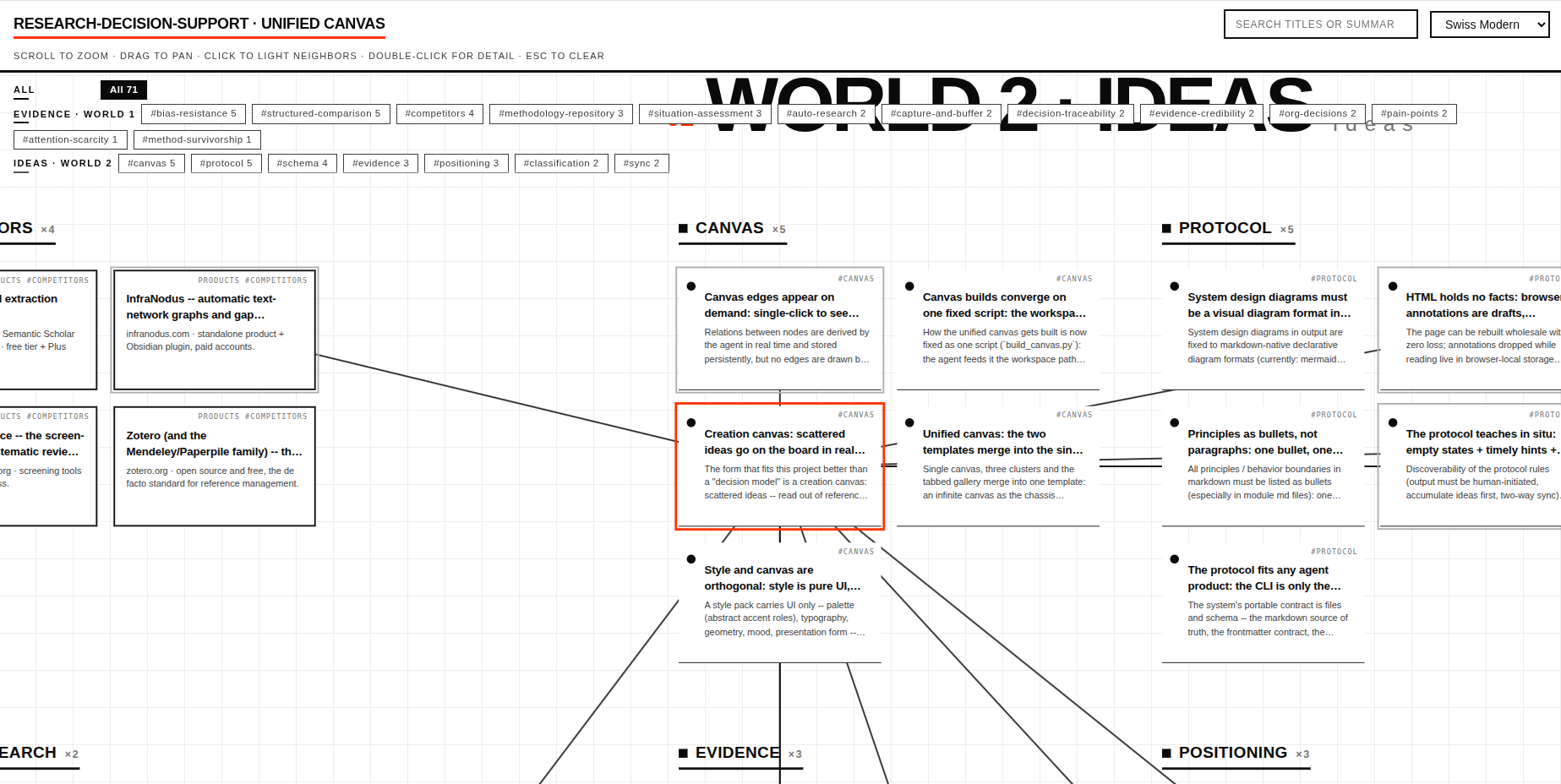
White, ink, and one red accent: hairline grid, giant grotesk world titles with red ordinals, ruler-straight edges.
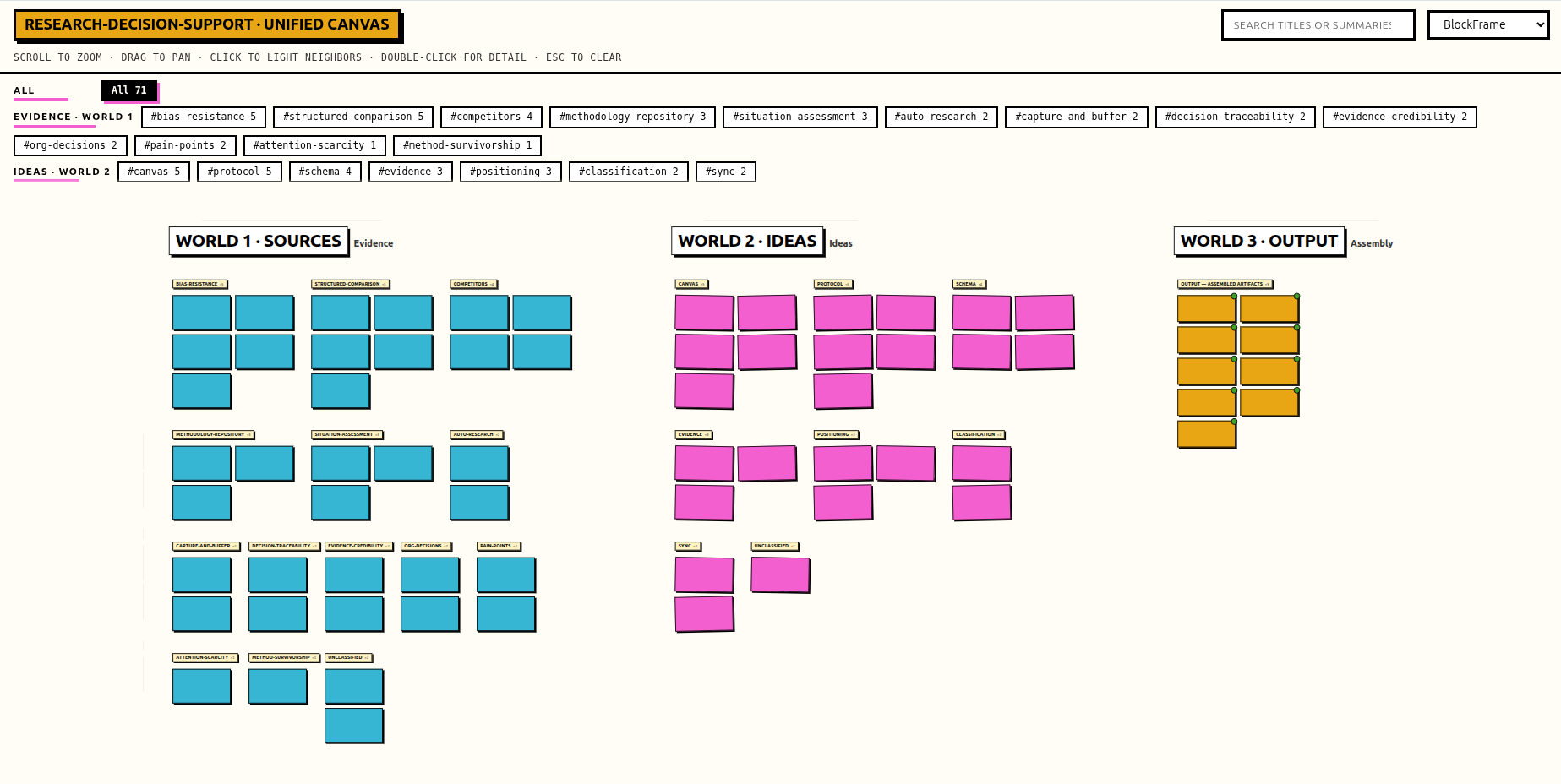
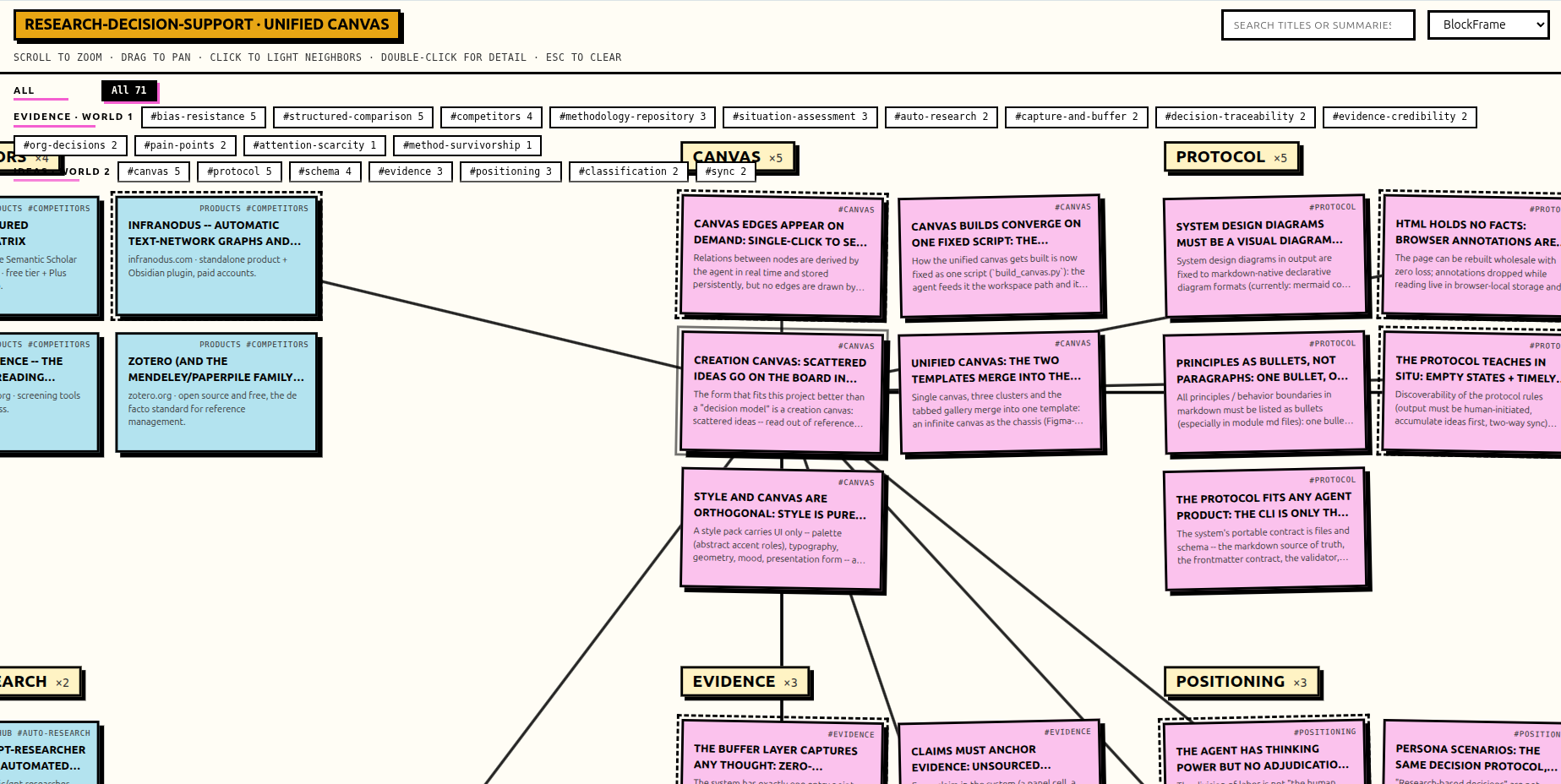
Neo-brutalist pastel decks: thick borders, hard offset shadows, cyan / pink / yellow card blocks that tilt just enough to feel alive.
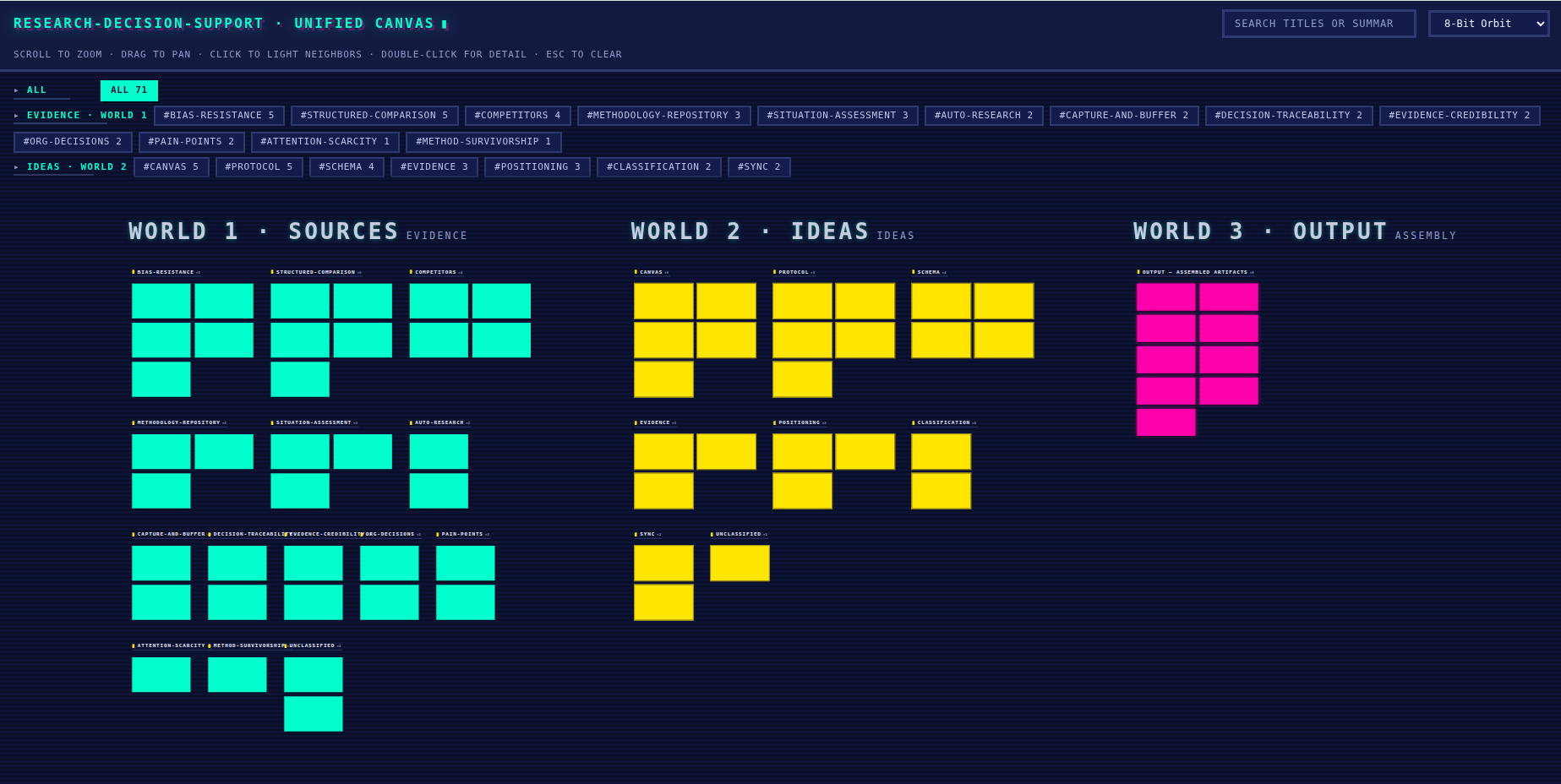
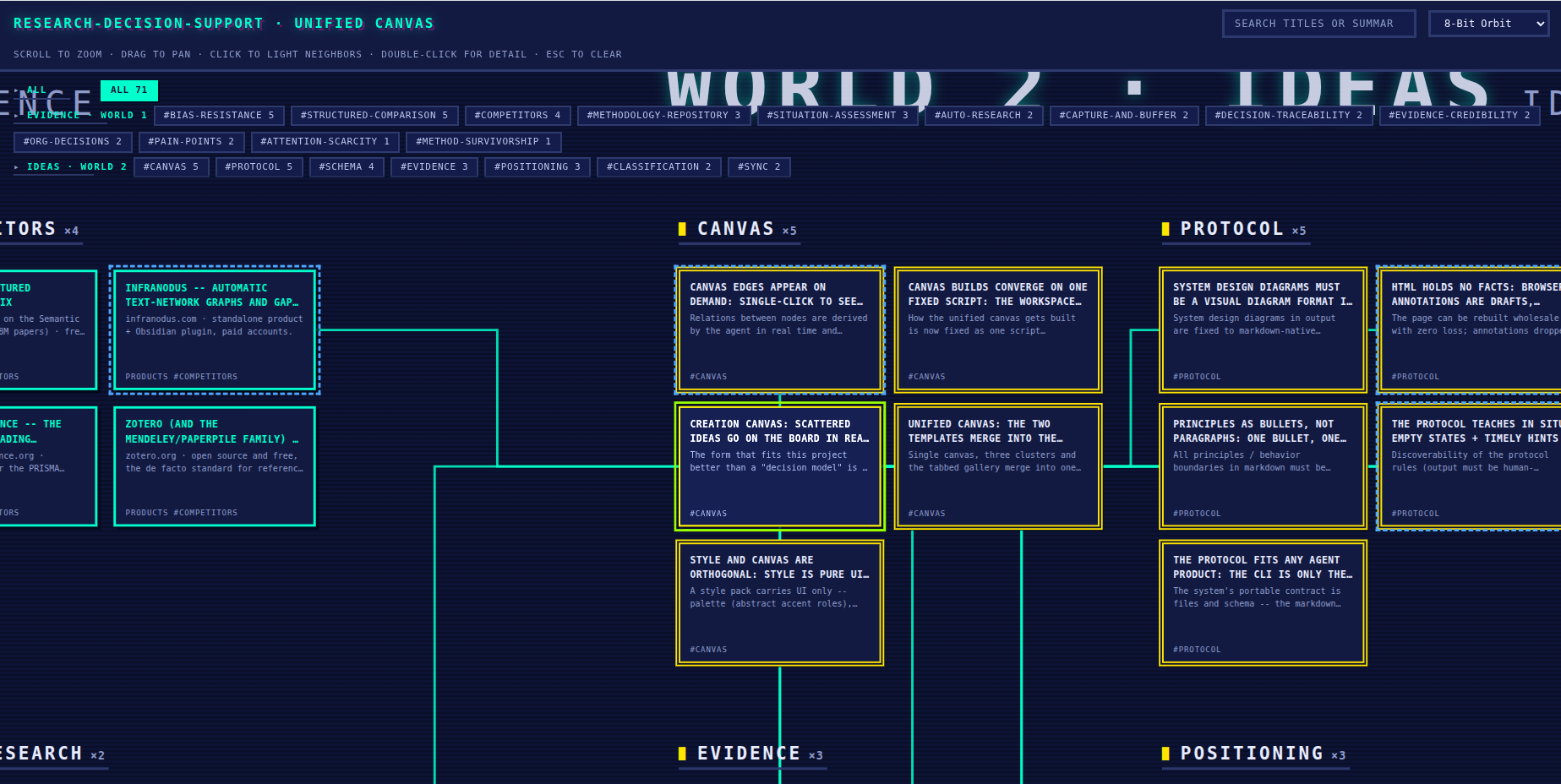
A CRT arcade in deep navy — scanlines, neon cyan / yellow / magenta frames, and orthogonal circuit-trace edges. Dark in both color schemes; a CRT has no daylight mode.
This repo is dogfooded on itself: its own design was produced by running the method on ~80 sources about decision-making methods.
MIT — vendored renderers (marked, DOMPurify) keep their original headers.
© Tigerless · tigerless.ai · tigerless.com
Sign in to join the discussion.
No comments yet. Be the first to say what this is good for.
An agentic skills framework & software development methodology that works.
Turn any codebase, with its docs, SQL schemas, configs, and PDFs, into a queryable knowledge graph. A /graphify skill for Claude Code, Cursor, Codex, and Gemini CLI: local deterministic AST parsing, every edge explained, no vector store.

Topic in, narrated explainer video out. A Claude Code / Codex skill that turns any topic into a black-canvas motion-graphics explainer video with TTS voiceover, subtitles and a chapter progress bar. Chinese or English; every frame drawn in code with Remotion.
Public repository for Agent Skills
Open-source AI job search: scan job portals, evaluate listings into a structured A-H report with a global 1-5 score, tailor your CV, track applications — runs locally in your AI coding CLI (Claude Code, Codex, OpenCode, Antigravity…)
Production-grade engineering skills for AI coding agents.