color4-alt/
CiteCheck

color4-alt/CiteCheckSkills
Agent Skill: Check academic paper citations for format, queryability, thematic relevance, and semantic accuracy.
59
Agent Skill: Check academic paper citations for format, queryability, thematic relevance, and semantic accuracy.

An MCP server that lets LLM agents play Civilization VI.

📚 Only Cite what you can verify

Open-source MCP server for comparing products and asking the buyer before purchase.

Local AI agent web app and CLI for running tools, code, web scans, and media generation.

Anti-hallucination research mode for Claude Code. Toggle on/off to enforce citation requirements and source grounding.
The fastest browser for AI agents to run browser automation, built for sharing your logged-in browser state with your AI agents, like Codex or Claude Code, without disturbing you. Zero cost, zero config.

MCP server for free Google AI Mode search with citations. Query optimization, CAPTCHA handling, multi-agent support. Works with Claude Code, Cursor, Cline, Windsurf.

A Model Context Protocol (MCP) server providing AI assistants with access to healthcare data and medical information tools, including FDA drug info, PubMed, medRxiv, NCBI Bookshelf, clinical trials, ICD-10, DICOM metadata, and a medical calculator.

Search PubMed/Europe PMC, fetch articles and full text (PMC/EPMC/Unpaywall), citations, MeSH terms via MCP. STDIO or Streamable HTTP.
AI-powered company knowledge MCP. Unified place for internal policies, values, documentation, and governance. Agents can search, cite, and answer questions using real company docs.

Zotero MCP: Connects your Zotero research library with Claude and other AI assistants via the Model Context Protocol to discuss papers, get summaries, analyze citations, and more.

42 AI agent skills for literature review, academic writing, citation verification, conference submission, rebuttal, publication, and presentations.

Google NotebookLM over MCP + a local HTTP REST API. Citation-backed Q&A, audio/video/content generation, multi-account rotation. For Claude Code, Codex, Cursor, n8n, Zapier, Make.

A highly customizable agentic harness for arXiv-ready ML/AI review papers (and beyond). It drives agentic AI like Codex CLI and Claude Code through a gated LaTeX workflow with verified BibTeX citations.
Deepdive skill for Claude Code — 12-phase research pipeline: plan-review gate, parallel sub-agent search, claims-ledger triangulation with dissent protection, relevance × authority evidence filter, multi-angle red team, four-layer citation verification. 105 blocks, 29 channels, 460+ stat sources, 47 APIs, 1072 verified endpoints.
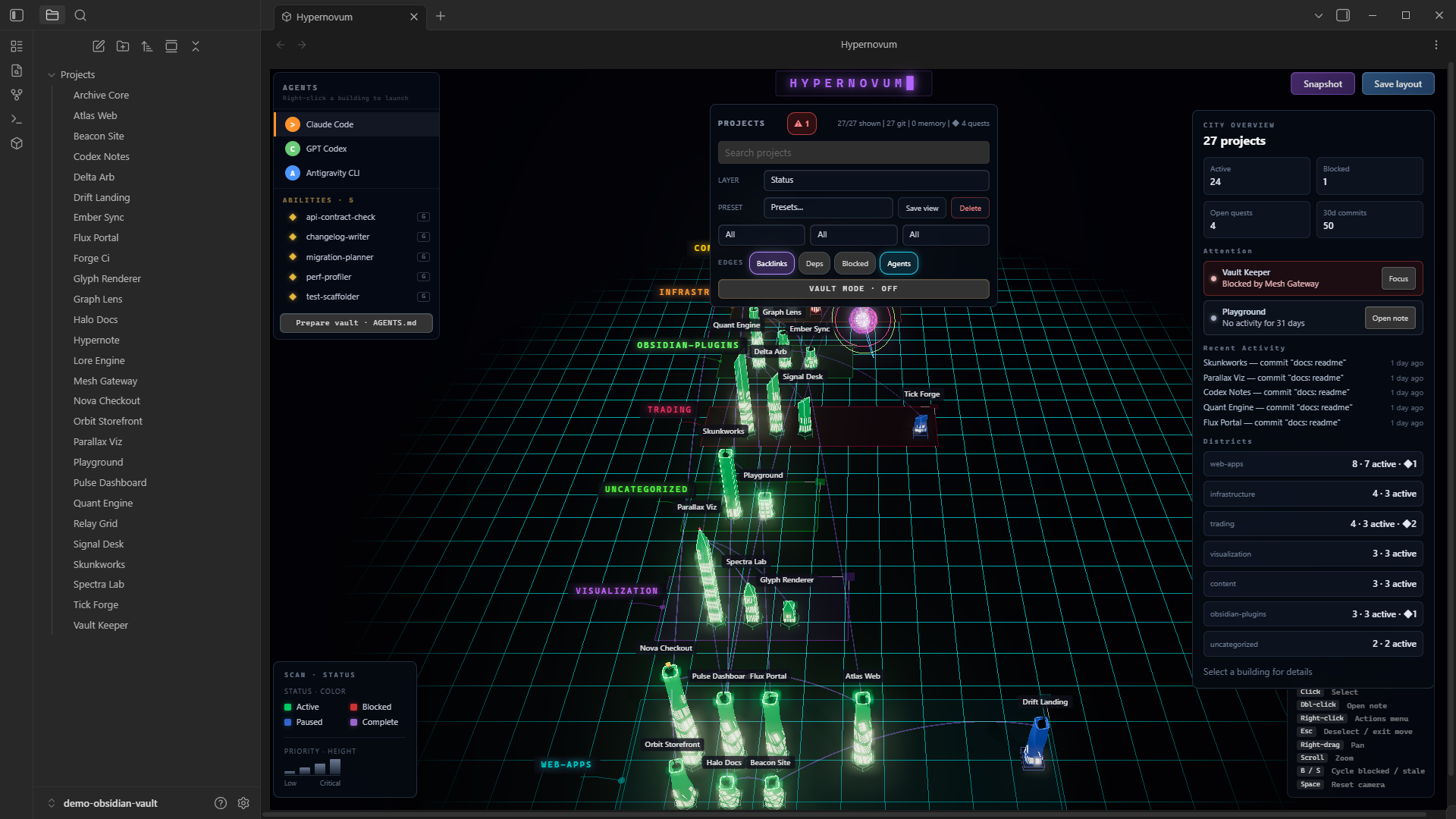
Agent Ops for your second brain - a 3D IDE for Obsidian built on Three.js. Visualize your vault as a code city, dispatch AI coding agents (Claude Code, Codex, Antigravity), post research quests, and watch your agent fleet work in real time.

Open-source AI coding agent and agent runtime: one binary, any model, MCP-native. Runs in terminal, CI, or as a daemon.

A Claude Skill for creating academic presentations (conference talks, seminar slides, thesis defenses, grant briefings). Enforces action titles, structured argument, exhibit discipline, citation standards, and communication-first design. Works alongside Anthropic's built-in PPTX skill.
239 evaluated academic Claude/agent skills across 17 research domains (bioinformatics, data science, clinical, social-science methods, Turkish academia & more). Executable eval per skill, deterministic citation verifier, research→write→review→publish pipeline, and a skill-finder front door. Claude Code, Cursor, Codex, Gemini CLI & Copilot.

A universal, industry-neutral taxonomy of cognitive core skills (perception, memory, reasoning, planning, action, verification, learning, governance) for LLMs, SLMs, AI agents, and world models — with schemas, 159 skill cards, benchmarks, and CI.

ByteRover CLI (brv) - The portable memory layer for autonomous coding agents (formerly Cipher)
Claude Code blog skill suite: 30 sub-skills, 5 agents, 5-gate v1.9.0 Blog Delivery Contract, dual-optimized for Google rankings and AI citations. Active development at AI-Marketing-Hub/claude-blog (AI Marketing Hub Pro community); public releases ship here.
Open-source Agent Skills for planning, drafting, revising, and polishing SCI/SSCI papers—while preserving evidence, citations, and claim strength.