osaurus-ai/osaurusHarnesses
Own your AI. The native macOS harness for AI agents -- any model, persistent memory, autonomous execution, cryptographic identity. Built in Swift. Fully offline. Open source.
7.8k
Own your AI. The native macOS harness for AI agents -- any model, persistent memory, autonomous execution, cryptographic identity. Built in Swift. Fully offline. Open source.

FHIR MCP Server for handling medical data standard.

Cezar is a parallel coding agents orchestrator. Type a task, pick a workflow and an agent — Claude Code, Codex or OpenCode, or a mix of them per step — and watch it work live: steps, tool calls ... or: fire and forget, PR will land and issue will be fixed. Run ot locally (Linux, Mac, WSL2) or on VPS!

Kappa Graph — κ(G). A semantic knowledge graph where knowledge has weight. Extracts concepts, measures grounding strength, preserves disagreement, traces everything to source.

AtlasAgent - an auditable AI agent control plane: evidence-backed memory, governed tool runtime, checkpoint DAG recovery, and a 55-chapter engineering tutorial. FastAPI / Next.js PWA / Textual TUI

Calibre library automation via FastMCP — metadata, shelves, RAG-friendly export. Companion to Calibre, not a replacement. For Cursor / Claude Desktop.
Uses only the subcriptions you have. Control different agents with agents. Free, local, workspace for AI agents. Let one agent (Claude Code, Codex, Hermes, DeepSeek, Kimi, ...) spawn and drive others over MCP. No API keys, no changes to your Agent.md or Claude.md. TUI, Web UI, CLI, MCP in one package.

Measure token savings per AI coding agent, optimize context, and share a live local knowledge graph across 16 CLI clients.
Zero-config entity resolution feeding a durable identity layer: messy records from any source become stable golden entities, a Customer 360 with provenance, merge/split and audit. Fellegi-Sunter beats hand-tuned Splink. Arrow-native/Rust, 250M rows in 11.2 min. Python + edge TypeScript (WASM), SQL-native in Postgres & DuckDB, 97 MCP tools + REST.
A Go framework for building production agent systems with graph workflows, tools, memory, A2A, AG-UI, MCP, evaluation, and observability.
Context engineering for AI agents. ~80% fewer tokens. Fix tool overload. Skills and memory with in-process BM25 and semantic retrieval. Progressive Disclosure. No vector DB.

Managed LinkedIn MCP server for AI agents: search, connect, message & enrich on LinkedIn from Claude, ChatGPT or Cursor. Self-reported 20,000+ accounts at <1% ban.

Nexent is a zero-code platform for auto-generating production-grade AI agents using Harness Engineering principles — unified tools, skills, memory, and orchestration with built-in constraints, feedback loops, and control planes.
Open-source super AI assistant & Agent Harness. Plans tasks, runs tools and skills, self-evolves with memory and knowledge. Multi-agent, multi-model, multi-channel. Lightweight, extensible, one-line install. (formerly chatgpt-on-wechat)

Open-source agentic workspace enterprises can make their own. Connect the systems you already run — 100+ integrations, MCP, chat tools, apps, browser, local files — with shared memory. Any agent (Claude Code, Codex), any model, or BYOK. Set up in clicks, not months. Local-first: your data never leaves your machines.

Every past session, subagent, and workflow -- queryable by your agent, browsable by you
Macro is a unified workspace for teams: email, chat, docs, tasks, agents, calls, and CRM — @-linked together with shared AI memory.

[COLM'26] SkillLearnBench is the first benchmark for evaluating continual learning methods that automatically generate agent skills.

Local-first game design OS for AI agents: turn sessions into evidence, experiments, reviewable decisions, and durable project memory—Human Gates and rollback.

Local-first AI memory MCP server — query your ChatGPT, Claude Code, Cursor & Codex history from any LLM. DuckDB+parquet.

Email, SMS & phone-call infrastructure for AI agents — send and receive real email and text messages, and place agent-driven outbound voice calls, all programmatically
Robust skills for Agents
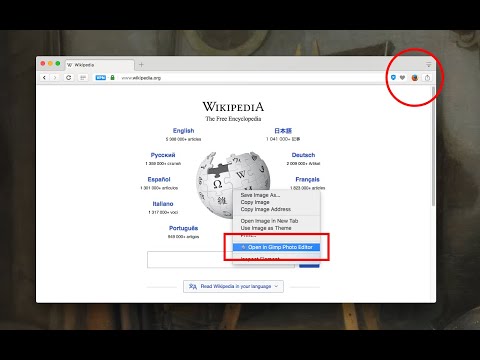
Communicate with external applications of your OS through a toolbar button or context menu item.

Kunpeng-Skill is a powerful multimodal distillation toolkit that transforms high-value insights from repositories, websites, UIs, videos, images, and documents into reusable methodologies, model-agnostic regeneration specifications, and more.