




heygen-com/hyperframesFrameworks & SDKs
Write HTML. Render video. Built for agents.
49k
Ratel is a context engineering layer that helps agents search for the right tools, skills, and facts instead of loading everything into context. It uses separate catalogs and progressive disclosure, with BM25 by default and optional semantic or hybrid ranking.
Builders who want agents like Claude Code or other agent frameworks to call only the tools and skills they need.
You can cut prompt bloat and get more accurate tool selection on each turn.
Register tools and skills with names, descriptions, schemas, tags, and bodies, then search them by turn needs.
Keep skill instructions out of context until the agent loads a relevant skill with `get_skill_content`.
Let agents call registered tools directly through `invokeToolTool` or `invoke_tool_tool`.
Use in-process BM25 search over tool metadata and skill content without a vector database.
Add embedding-based search per catalog or per call when BM25 alone is not enough.
Use the TypeScript and Python SDKs, plus adapters for frameworks like Vercel AI SDK and Mastra.
pnpm add @ratel-ai/sdk
pip install ratel-ai
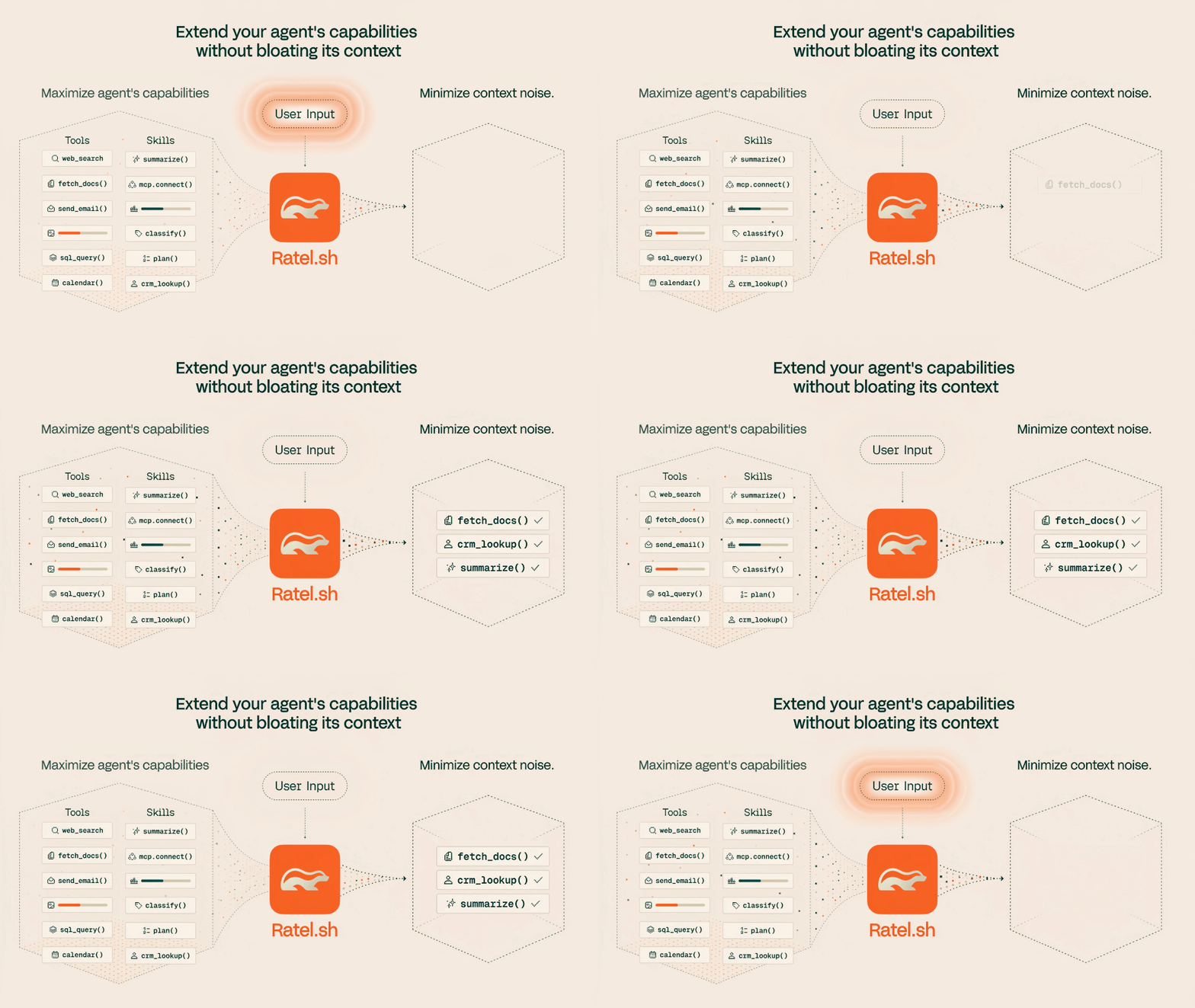
The context engineering layer for AI agents. Selects only the tools and skills relevant to each turn, recovering accuracy lost to tool overload and cutting what you pay per call. No vector DB, no infra.
Across local, open-source, and frontier model setups, Ratel cuts token usage and recovers accuracy lost to tool overload, with no vector DB required. Full results: benchmark.ratel.sh
Guides: Quickstart · TypeScript SDK · Python SDK
Examples: Vercel AI SDK · Pydantic AI
Install the SDK first:
pnpm add @ratel-ai/sdk
Then create and use your Catalogs:
import { readFile } from "node:fs/promises";
import {
  SkillCatalog,
  ToolCatalog,
  getSkillContentTool,
  invokeToolTool,
  searchCapabilitiesTool,
} from "@ratel-ai/sdk";

const catalog = new ToolCatalog();
catalog.register({
  id: "read_file",
  name: "read_file",
  description: "Read a file from local disk.",
  inputSchema: { type: "object", properties: { path: { type: "string" } } },
  outputSchema: { type: "object", properties: { contents: { type: "string" } } },
  execute: async ({ path }) => ({ contents: await readFile(path, "utf8") }),
});

const skills = new SkillCatalog();
skills.register({
  id: "inspect-local-file",
  name: "inspect-local-file",
  description: "Inspect a local file before answering questions about it.",
  tools: ["read_file"],
  body: "Read the requested file, then ground your answer in its contents.",
});

// use the following as tools in your agent framework
const search = searchCapabilitiesTool(catalog, skills);
const invoke = invokeToolTool(catalog);
const loadSkill = getSkillContentTool(skills);
Install the SDK first:
pip install ratel-ai
Then create and use your Catalogs:
from ratel_ai import (
    ExecutableTool,
    Skill,
    SkillCatalog,
    ToolCatalog,
    get_skill_content_tool,
    invoke_tool_tool,
    search_capabilities_tool,
)

catalog = ToolCatalog()
catalog.register(ExecutableTool(
    id="read_file",
    name="read_file",
    description="Read a file from local disk.",
    input_schema={"properties": {"path": {"type": "string"}}},
    execute=lambda args: {"contents": open(args["path"]).read()},
))

skills = SkillCatalog()
skills.register(Skill(
    id="inspect-local-file",
    name="inspect-local-file",
    description="Inspect a local file before answering questions about it.",
    tools=["read_file"],
    body="Read the requested file, then ground your answer in its contents.",
))

# use the following as tools in your agent framework
search = search_capabilities_tool(catalog, skills)
invoke = invoke_tool_tool(catalog)
load_skill = get_skill_content_tool(skills)
When your agent needs to act, it calls search_capabilities. Ratel searches separate tool and skill indexes and returns focused results from each. Tools can be invoked by id; skill instructions stay out of context until the agent loads a relevant playbook with get_skill_content.
The indexes use BM25 by default, the same algorithm behind most search engines, applied to schema-aware tool metadata and skill names, descriptions, and tags. Retrieval is fast and deterministic. Semantic and hybrid ranking are opt-in per catalog or per call; SDK callers register (which embeds) and search dense indexes asynchronously, using either an in-process model or an OpenAI-compatible embedding endpoint.
Related open-source projects extend and validate this repository:
| Project | Repo | What it is |
|---|---|---|
| ratel-local | ratel-ai/ratel-mcp | The local distribution for your Coding Agents: Ratel in front of your MCP setup. |
| ratel-bench | ratel-ai/ratel-bench | The benchmark harness behind benchmark.ratel.sh. |
src/
├── core/              # ratel-ai-core — Rust retrieval engine
├── sdk/ts/            # @ratel-ai/sdk — TypeScript SDK (NAPI-bound)
├── sdk/python/        # ratel-ai — Python SDK (PyO3-bound)
├── adapters/ts-vercel-ai-sdk/ # @ratel-ai/vercel-ai-sdk — Vercel AI SDK adapter
├── adapters/ts-mastra/ # @ratel-ai/mastra — Mastra adapter
└── telemetry/         # OTel conventions + helper packages
protocol/              # catalog-source wire contract
examples/              # End-to-end SDK examples
docs/
├── adr/                # Architecture decision records
└── assets/             # Images and other static assets
Prerequisites: Rust stable, Node 24+, pnpm 10.28+. Python SDK: Python 3.9+ and uv.
cargo build --workspace && cargo test --workspace   # Rust
pnpm install && pnpm -r build && pnpm -r test       # TypeScript
# Python: see src/sdk/python/README.md
The ratel-ai-core engine is licensed under Apache-2.0 — an explicit patent grant for the engine others embed. Everything else (SDKs, telemetry helpers, examples) is MIT. See ADR-0009 for the rationale.
Sign in to join the discussion.
No comments yet. Be the first to say what this is good for.
Write HTML. Render video. Built for agents.
Ultra-lightweight, open-source, self-hosted personal AI agent framework in Python with WebUI, tools, memory, MCP, multi-agent workflows, automation, and chat apps

SkillOpt is a text-space optimizer that trains reusable natural-language skills for frozen LLM agents through trajectory-driven edits, validation-gated updates, and deployable best_skill.md artifacts.
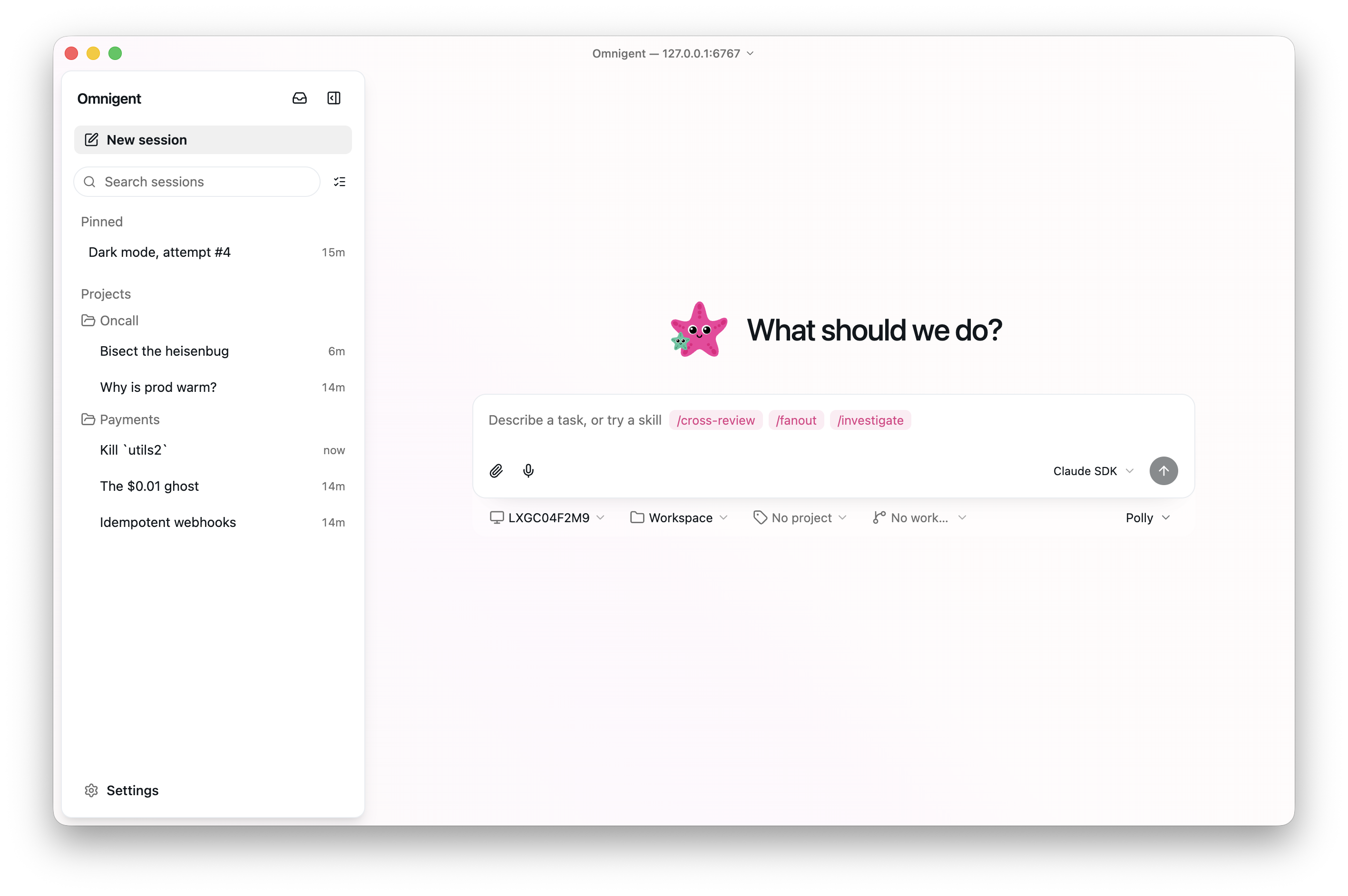
Omnigent is an open-source AI agent framework and meta-harness: orchestrate Claude Code, Codex, Cursor, Pi, and custom agents — swap harnesses without rewriting, enforce policies and sandboxing, and collaborate in real time from any device.

A theoretical reconstruction of the Claude Mythos architecture, built from first principles using the available research literature.
🕷️ An adaptive Web Scraping framework that handles everything from a single request to a full-scale crawl!