josephgoksu/TaskWingTools
Local-first AI knowledge layer. Extract architecture, query from any AI tool via MCP. Private by architecture.
87
Local-first AI knowledge layer. Extract architecture, query from any AI tool via MCP. Private by architecture.

Persistent project knowledge graph for coding agents. MCP server with semantic search, in-process embeddings, and web explorer.
High-performance code intelligence MCP server. Indexes codebases into a persistent knowledge graph — average repo in milliseconds. 158 languages, sub-ms queries, 99% fewer tokens. Single static binary, zero dependencies.
Turn any codebase, with its docs, SQL schemas, configs, and PDFs, into a queryable knowledge graph. A /graphify skill for Claude Code, Cursor, Codex, and Gemini CLI: local deterministic AST parsing, every edge explained, no vector store.
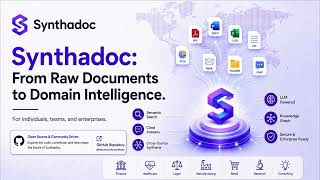
Synthadoc: An open-source LLM knowledge compilation engine that turns raw documents into structured, local-first wikis. A transparent, human-readable alternative to traditional RAG, which can be self-managed and self-improved without the use of any tools.

MCP Documentation Server - Bridge the AI Knowledge Gap. ✨ Features: Document management • Gemini integration • AI-powered semantic search • File uploads • Smart chunking • Multilingual support • Zero-setup 🎯 Perfect for: New frameworks • API docs • Internal guides

Measure token savings per AI coding agent, optimize context, and share a live local knowledge graph across 16 CLI clients.

A fast codebase indexer and knowledge wiki for AI agents.

Up to 71.5x fewer tokens per session on Claude Code with Obsidian + Graphify. Persistent memory, codebase knowledge graphs, and chat import pipeline. 🇧🇷 PT-BR included.

Markdown and OFM SDK w/ MCP server that transforms your Obsidian vault into an intelligent knowledge system

Persistent memory for AI coding agents. Local-first, cross-session context, global knowledge, and optional autonomous task execution.

WikiSkill (arXiv:2608.27454) for Hermes Agent — self-evolving agent skills via a persistent knowledge wiki. Faithful Algorithm 1 implementation with real agent runs, isolated skill gating, and a documented live run log.

Persistent memory for AI coding agents: automatic capture, explainable recall, knowledge consolidation, privacy controls, and portable offline storage. One Python file, zero dependencies.

LLM-powered knowledge base from your Claude Code, Codex CLI, Copilot, Cursor & Gemini sessions. Karpathy's LLM Wiki pattern — implemented and shipped.

Caura (formerly MemClaw) — governed shared memory for AI agent fleets. Multi-agent, multi-tenant, MCP-native. Trust tiers, keystone policies, audit trails, knowledge graph, self-improving retrieval. Apache 2.0.

Automatically create new skills based on past agent traces

The ultimate RAG for your monorepo. Query, understand, and edit multi-language codebases with the power of AI and knowledge graphs
Open-source persistent memory for AI agent pipelines (LangGraph, CrewAI, AutoGen) and Claude. REST API + knowledge graph + autonomous consolidation.

Frappe Agent Skills gives AI coding assistants structured Frappe knowledge for DocTypes, APIs, Desk customization, frontend apps, reports, testing, and production patterns.

GRACE (Graph-RAG Anchored Code Engineering): open Agent Skills for contract-driven AI code generation with semantic markup, knowledge graphs, and support for Claude Code, Codex CLI, and Kilo Code.

AI-powered learning coach with spaced repetition with Claude Code - master any knowledge faster with personalized syllabi and progress tracking
Agent-driven proactive memory CLI for AI agents — autonomously recall, maintain, and evolve persistent, source-grounded knowledge across sessions.

Structural code intelligence for AI agents — semantic search, knowledge graphs, and a built-in MCP server in one Rust binary. Give Claude, Cursor, and any MCP client a deep understanding of your codebase.
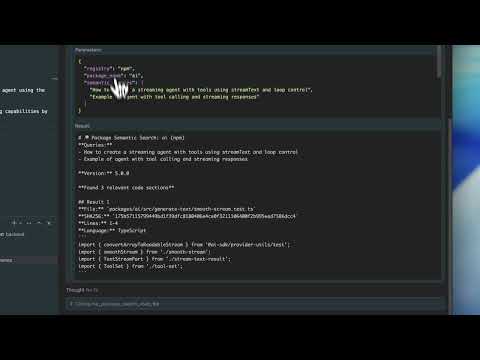
Nia is a context-augmentation layer for agents, primarily designed for coding agents. It provides them with an up-to-date knowledge base and improves their performance by 27%.