
koala73/worldmonitorConnectors
Real-time global intelligence dashboard. AI-powered news aggregation, geopolitical monitoring, and infrastructure tracking in a unified situational awareness interface
86k
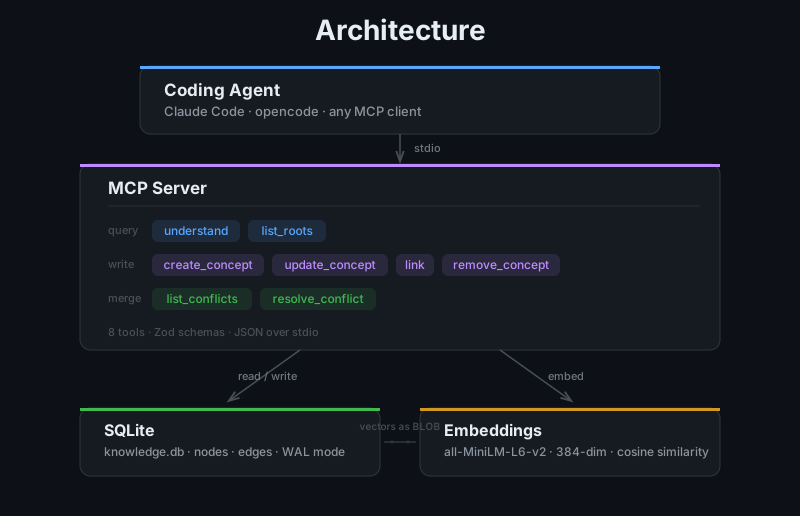
MegaMemory gives an agent a project knowledge graph it can query before work and update after work. It uses semantic search over concept nodes, in-process embeddings, and SQLite storage to keep context available across sessions. It plugs into MCP clients like Claude Code and Codex, and it can also be served in a browser as a graph explorer. The repo includes install automation, merge commands for diverged databases, and command files for bootstrapping and saving memory.
Builders who want their agent to keep project context, search past decisions, and write updates back into a shared memory graph.
You can resume work with remembered concepts, relationships, and decisions instead of re-explaining the project each time.
The `understand` tool searches the knowledge graph by natural language and returns matching concepts with context.
The `create_concept`, `update_concept`, `link`, and `remove_concept` tools let the agent record what it learned or built.
Project knowledge is saved in `.megamemory/knowledge.db` with history, soft deletes, and schema migrations.
Embeddings run locally with `Xenova/all-MiniLM-L6-v2`, so the server does not need an API key.
The `merge`, `conflicts`, and `resolve` commands help combine knowledge databases when branches diverge.
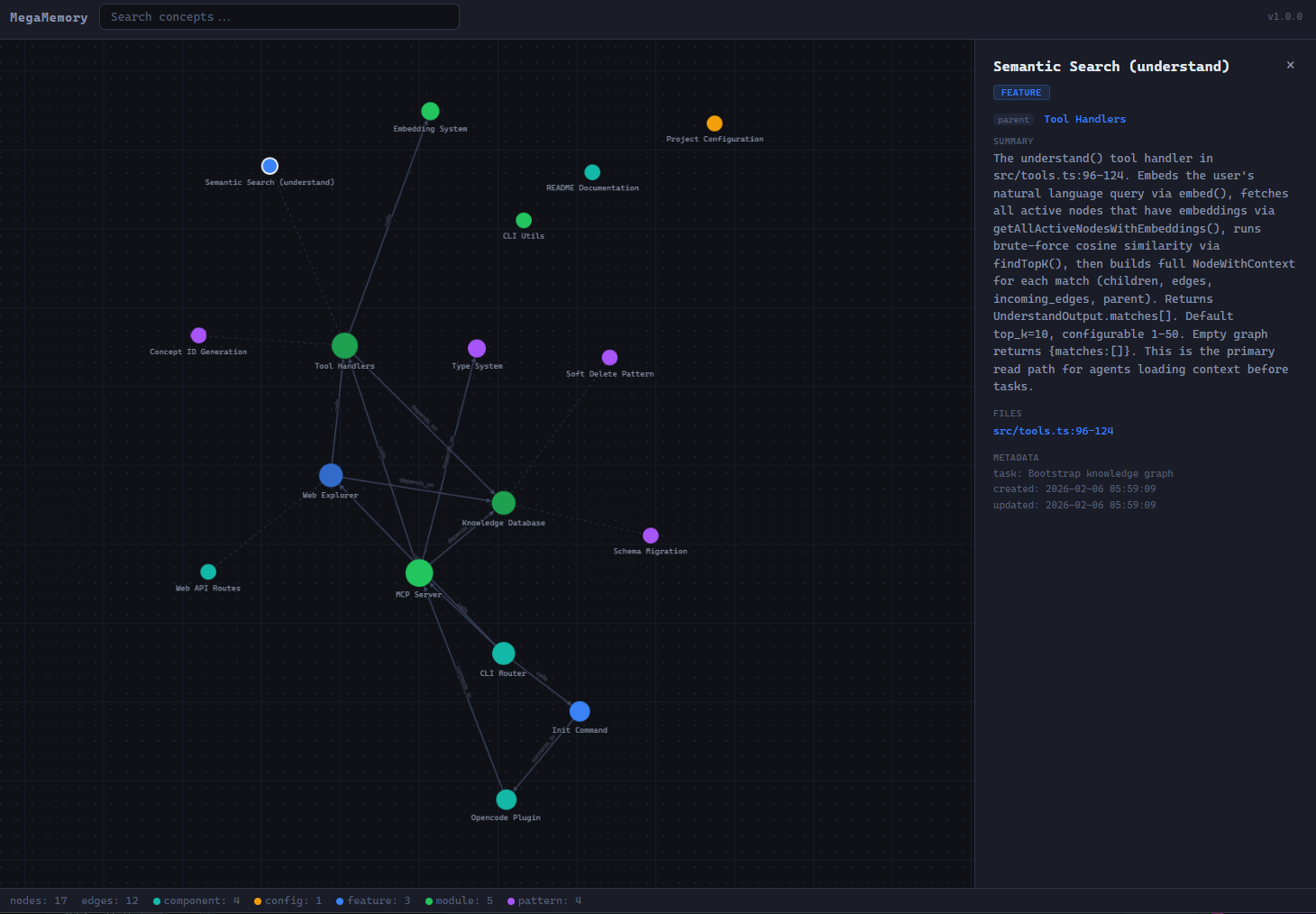
`megamemory serve` opens a browser view for browsing nodes, edges, and search results.
`megamemory install` writes the MCP and workflow files needed for supported clients and editors.
npm install -g megamemory
megamemory install
megamemory install --target opencode
megamemory install --target claudecode
megamemory install --target antigravity
megamemory install --target codex
Persistent project knowledge graph for coding agents.




An MCP server that lets your coding agent build and query a graph of concepts, architecture, and decisions — so it remembers across sessions.
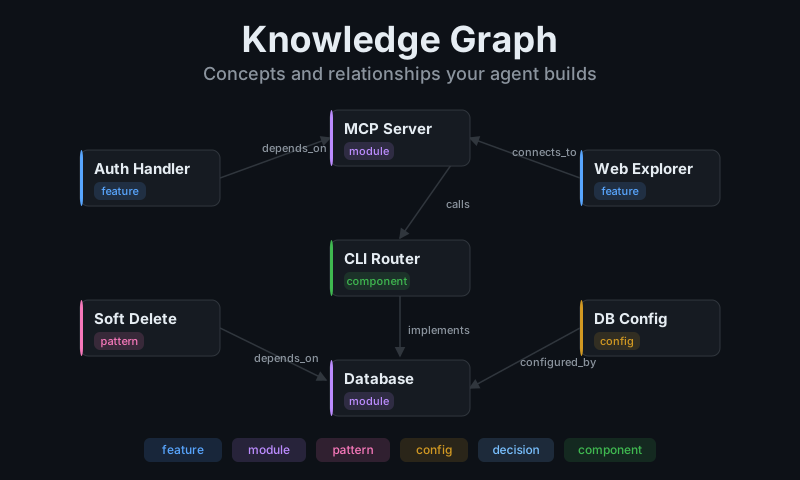
The LLM is the indexer. No AST parsing. No static analysis. Your agent reads code, writes concepts in its own words, and queries them before future tasks. The graph stores concepts — features, modules, patterns, decisions — not code symbols.
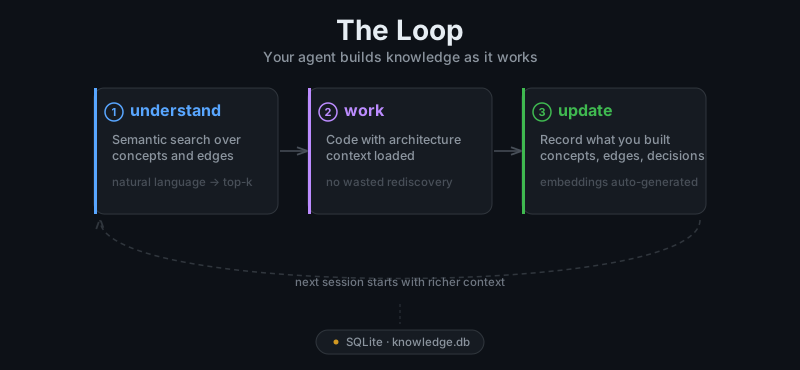
understand → work → update
list_roots to orient itselfunderstand with a natural language query (or get_concept for exact ID lookup)create_concept or update_concept to record what it builtEverything persists in a per-project SQLite database at .megamemory/knowledge.db.
npm install -g megamemory
[!NOTE] Requires Node.js >= 18. The embedding model (~23MB) downloads automatically on first use.
megamemory install
Run the interactive installer and choose your editor:
[!NOTE] The installer only updates config files after a successful read/merge, and it will not overwrite existing plugin/command files unless they are already marked as MegaMemory-managed.
megamemory install --target opencode
One command configures:
~/.config/opencode/opencode.json~/.config/opencode/AGENTS.md~/.config/opencode/tool/megamemory.ts/user:bootstrap-memory for initial graph population/user:save-memory to persist session knowledgeRestart opencode after running install.
megamemory install --target claudecode
Configures:
~/.claude.json~/.claude/CLAUDE.md~/.claude/commands/megamemory install --target antigravity
Configures:
./mcp_config.json (workspace-level)megamemory install --target codex
Configures:
~/.codex/config.toml~/.codex/AGENTS.mdAdd megamemory as a stdio MCP server. The command is just megamemory (no arguments). It reads/writes .megamemory/knowledge.db relative to the working directory, or set MEGAMEMORY_DB_PATH to override.
{
  "megamemory": {
    "type": "local",
    "command": ["megamemory"],
    "enabled": true
  }
}
| Tool | Description |
|---|---|
understand | Semantic search over the knowledge graph. Returns matched concepts with children, edges, and parent context. |
get_concept | Look up a concept by its exact ID. Returns full context including children, edges, incoming edges, and parent. |
create_concept | Add a new concept with optional edges and file references. |
update_concept | Update fields on an existing concept. Regenerates embeddings automatically. |
link | Create a typed relationship between two concepts. |
remove_concept | Soft-delete a concept with a reason. History preserved. |
list_roots | List all top-level concepts with direct children. |
list_conflicts | List unresolved merge conflicts grouped by merge group. |
resolve_conflict | Resolve a merge conflict by providing verified, correct content based on the current codebase. |
Concept kinds: feature · module · pattern · config · decision · component
Relationship types: connects_to · depends_on · implements · calls · configured_by
Visualize the knowledge graph in your browser:
megamemory serve
4321 is taken, you'll be prompted to pick anothermegamemory serve --port 8080 # custom port
src/
  index.ts       CLI entry + MCP server (9 tools)
  tools.ts       Tool handlers (understand, get_concept, create, update, link, remove, list_conflicts, resolve_conflict)
  db.ts          SQLite persistence (libsql, WAL mode, schema v3)
  embeddings.ts  In-process embeddings (all-MiniLM-L6-v2, 384 dims)
  merge.ts       Two-way merge engine for knowledge.db files
  merge-cli.ts   CLI handlers for merge, conflicts, resolve commands
  types.ts       TypeScript types
  cli-utils.ts   Colored output + interactive prompts
  install.ts     multi-target installer (opencode, Claude Code, Antigravity, Codex)
  web.ts         HTTP server for graph explorer
plugin/
  megamemory.ts  Opencode skill tool plugin
commands/
  bootstrap-memory.md  /user command for initial population
  save-memory.md       /user command to save session knowledge
web/
  index.html     Single-file graph visualization (d3-force + Canvas)
| Command | Description |
|---|---|
megamemory | Start the MCP stdio server |
megamemory install | Configure editor/agent integration |
megamemory serve | Launch the web graph explorer |
megamemory merge | Merge two knowledge.db files |
megamemory conflicts | List unresolved merge conflicts |
megamemory resolve | Resolve a merge conflict |
megamemory --help | Show help |
megamemory --version | Show version |
When branches diverge, each may update .megamemory/knowledge.db independently. Since SQLite files cannot be auto-merged by git, megamemory provides dedicated merge commands.
megamemory merge main.db feature.db --into merged.db
Concepts are compared by ID: identical nodes are deduplicated, and conflicting nodes are kept as ::left/::right variants under one merge group UUID. Use --left-label and --right-label to replace default side labels with branch names.
megamemory merge main.db feature.db --into merged.db --left-label main --right-label feature-xyz
megamemory conflicts            # human-readable summary
megamemory conflicts --json     # machine-readable output
megamemory conflicts --db path  # specify database path
megamemory resolve <merge-group-uuid> --keep left    # keep the left version
megamemory resolve <merge-group-uuid> --keep right   # keep the right version
megamemory resolve <merge-group-uuid> --keep both    # keep both as separate concepts
When an AI agent runs /merge, it calls list_conflicts, verifies both versions against current source files, then calls resolve_conflict with resolved: {summary, why?, file_refs?} plus a verification reason. It does not pick a side blindly; it resolves to what the codebase currently reflects.
Sign in to join the discussion.
No comments yet. Be the first to say what this is good for.
Real-time global intelligence dashboard. AI-powered news aggregation, geopolitical monitoring, and infrastructure tracking in a unified situational awareness interface
High-performance code intelligence MCP server. Indexes codebases into a persistent knowledge graph — average repo in milliseconds. 158 languages, sub-ms queries, 99% fewer tokens. Single static binary, zero dependencies.
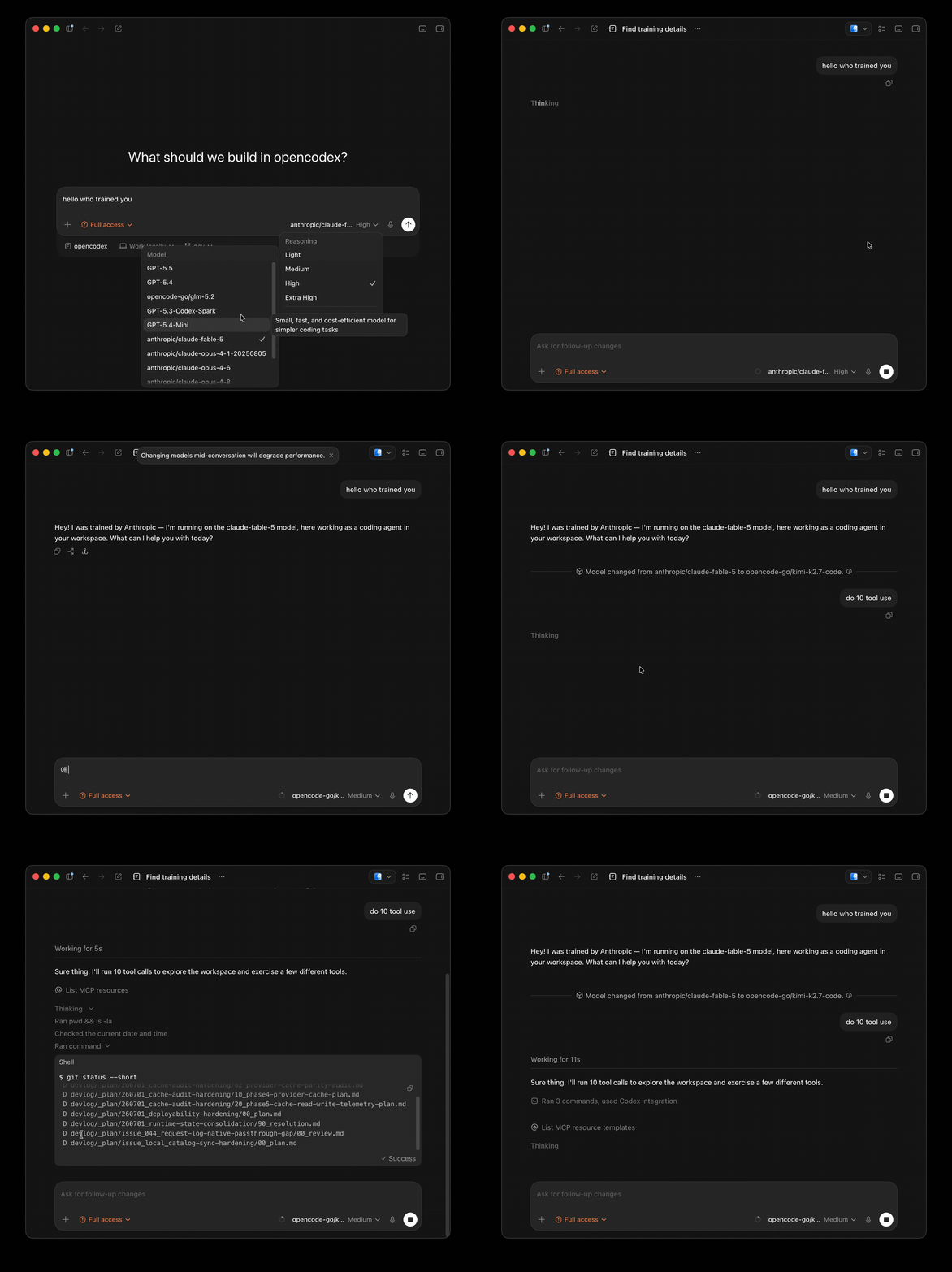
Universal provider proxy for OpenAI Codex & Claude Code — use any LLM (Claude, Gemini, Grok, DeepSeek, Ollama…) with Codex CLI, App, SDK, and Claude Code

Git-native persistent memory for AI coding agents. Implements Google OKF v0.2 with sub-300µs in-memory BM25 search, embedded MCP server, and progressive disclosure. Slashes token bloat by 80% with zero external databases or dependencies. Built in pure Go.

Local-first code intelligence graph for MCP and CLI. Builds a persistent map of your codebase so AI coding tools read only what matters, with benchmarked context reductions on reviews and large-repo workflows.

Stop your AI from making things up — it proposes, deterministic tools decide, every claim checked against ground truth with evidence. Grounded facts and context survive resets. Reverse engineering is the proving ground. MCP server + CLI.