doeixd/
opencode-ralph-rlm

doeixd/opencode-ralph-rlmPlugins
OpenCode plugin: Ralph outer loop + RLM inner loop — iterative AI development with file-first discipline and sub-agent support
31
OpenCode plugin: Ralph outer loop + RLM inner loop — iterative AI development with file-first discipline and sub-agent support

Less skills. Deeper connections. A lean, interconnected skill ecosystem for Claude Code.
An open-source plugin that runs inside Codex and lets you use Claude Code and Claude models for review, rescue, and tracked background workflows.

The Loop Engine for Claude Code — engineer the loop, not the prompt. 1 router · 9 agents · 16 skills · 4 workflows. Fail-closed gates, test honesty, anti-anchored review.
Opinionated Oxlint rules for rejecting low-evidence TypeScript and JavaScript patterns

Iterative development methodology plugin for Claude Code — extracts requirements, defines walking skeleton, loops through audited sprints autonomously
The Ultimate Claude Code Toolkit — 127 skills, 86 agents, 109 marketplace repos (11,700+ community skills), 30 commands, 8 hooks, GSD framework. Drop-in ~/.claude config that auto-activates the right resources from your prompt. Zero config required.

Agentic Software Engineering (ASE)

Run Claude Code dynamic workflows on a local Codex (GPT) backend, plus an interactive run viewer
AI code reviews grounded in 12 classic engineering books — decay risk diagnostics with book citations, severity labels, and 6 analysis modes including full-sweep auto-fix

Expert skills, agents, commands, rules, hooks & output styles for Claude Code — session continuity + modern CLI tooling for real-world dev workflows
CoCo Super Intelligence is the orchestration layer that turns Claude Code, Cursor, or Codex into an engineering department: a routed advisory board, 185 skills, 280 commands, persistent state. Local. Open-core — MIT core; Super Intelligence is proprietary, own-use.
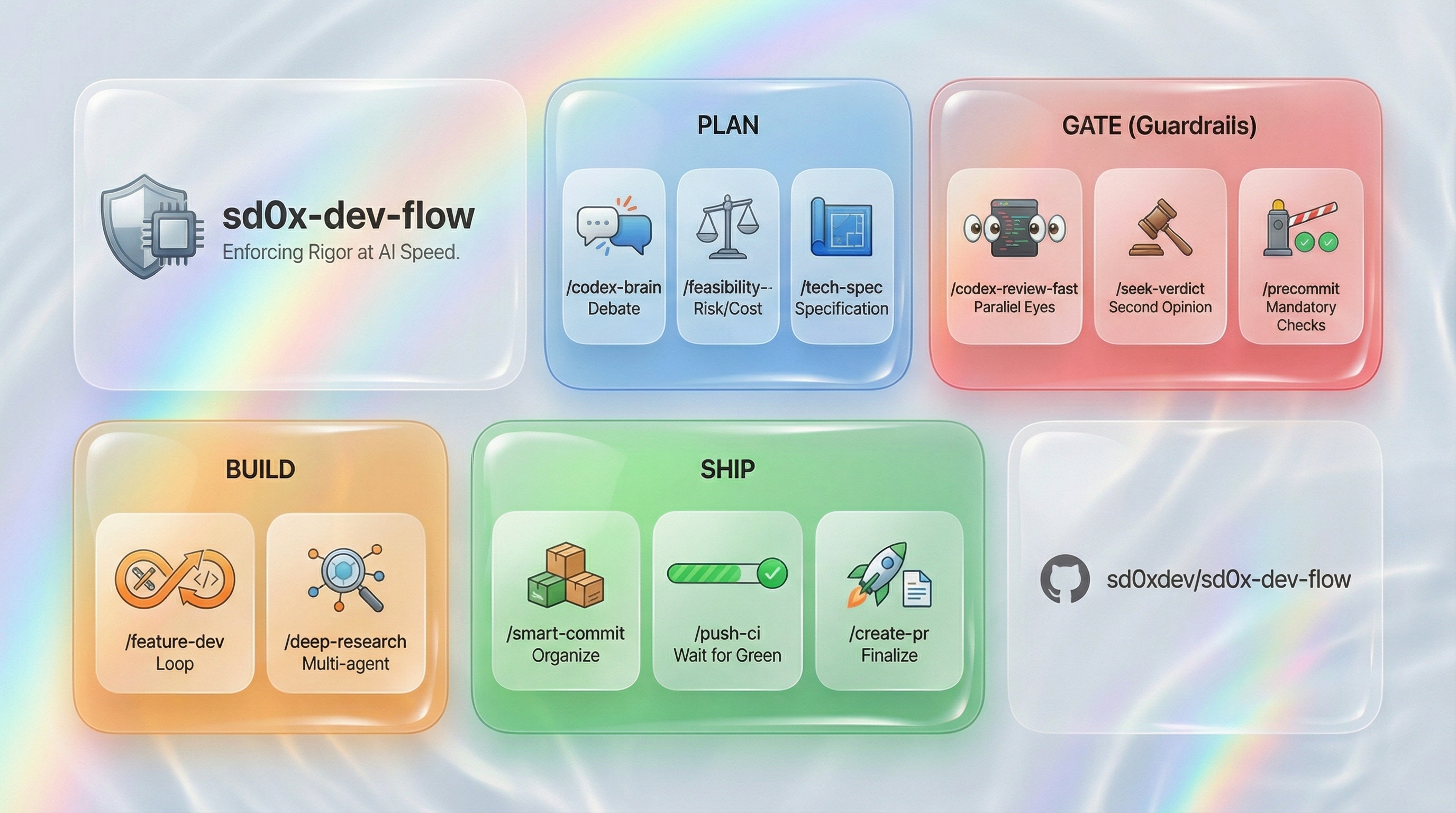
The harness layer for Claude Code — a reference implementation of harness engineering with hook-enforced dual review, state-machine gates that survive context compaction, and fail-closed safety where it counts. Quality gates that AI can't skip.
Multi-agent system for software development

A meta-skill that designs domain-specific agent teams, defines specialized agents, and generates the skills they use.
Makes your AI agent think like the laziest senior dev in the room. The best code is the code you never wrote.

23 Claude Code plugins: TDD enforcement hooks, git/PR workflows, spec-driven development, code review, project lifecycle, fix-from-error, maintenance automation, context optimization, research, and multi-LLM delegation. 186 skills, 128 commands, 54 agents.

Reusable Agent Skills, plus integrations (statusline, provider usage, vision) that install into Codex, Claude Code, and opencode.

Turn Pi into el Gentleman: a senior-architect development harness with SDD/OpenSpec, subagents, strict TDD evidence, review guardrails, and skill discovery.
Find and repair substance defects in AI-assisted prose, code, docs, and agent output. Reports defects, never authorship. Structural tests over model judgement, because LLM judges agree with human slop labels at chance.

A codex plugin for running optimization loops inside a codebase. It is useful when you have a measurable target and many possible changes to try: test runtime, build speed, bundle size, model loss, Lighthouse scores, memory use, query latency, or any other metric you can print from a script.

Free, MIT alternative to paid Django schema review. Blast radius on every PR, schema drift, N+1 across functions, ER diagrams, MCP server. No DB, no Django boot, no Pro tier.

Professional slash commands for Claude Code that provide structured workflows for software development tasks including code review, feature creation, security auditing, and architectural analysis.

Bring Claude Code to Visual Studio 2026: A native diff with accept/reject, a live debugger Claude can drive autonomously, Roslyn code navigation, and Test Explorer integration. The IDE half of Claude Code's integration protocol. Community-built, unofficial.