

DietrichGebert/ponytailPlugins
Makes your AI agent think like the laziest senior dev in the room. The best code is the code you never wrote.
138k
1 add
This repo packages a set of Claude Code plugins you can install one by one. The plugins cover project setup, TDD enforcement, PR review, git workflows, context optimization, research, and delegation to other model CLIs. It works through Claude Code commands, agents, hooks, and skills, with shared runtime pieces under `.claude/` and plugin definitions under `plugins/`.
Builders who use Claude Code and want reusable commands, agents, hooks, and skills for their project workflow.
You can install only the parts of a Claude Code workflow you want instead of rebuilding each process from scratch.
Lets you add the marketplace and then install individual plugins such as `sanctum`, `pensive`, and `spec-kit`.
Provides commands and plugins for commits, pull requests, review prep, and fixing review feedback.
Uses `imbue` and related hooks to require a failing test before implementation writes.
Includes `spec-kit` and related lifecycle commands for specifying, planning, and executing features.
Includes multi-discipline review and refactoring paths like `pensive`, `full-review`, and `refine-code`.
Adds context optimization, knowledge organization, and catch-up workflows for resuming work after a break.
Uses `conjure` to hand tasks to external model CLIs when delegation is enabled.
# Add the marketplace, then install the plugins you want
/plugin marketplace add athola/claude-night-market
/plugin install sanctum@claude-night-market    # Git workflows
/plugin install pensive@claude-night-market    # Code review
/plugin install spec-kit@claude-night-market   # Spec-driven dev


A plugin marketplace for Claude Code. Install only the plugins you need to run git workflows, code review, spec-driven development, and autonomous agents from inside your Claude Code session.

Requires Claude Code 2.1.16+ and Python 3.9+ for hooks.
# Add the marketplace, then install the plugins you want
/plugin marketplace add athola/claude-night-market
/plugin install sanctum@claude-night-market    # Git workflows
/plugin install pensive@claude-night-market    # Code review
/plugin install spec-kit@claude-night-market   # Spec-driven dev
Run claude --init once after installing. Two other paths
exist: npx skills pulls the skill files alone
into .claude/skills/, without commands, agents, or hooks, and
opkg i gh@athola/claude-night-market --plugins sanctum,pensive
installs whole plugins from the openpackage.yml each one ships.
Full options are in the
Installation Guide.
If the
Skilltool is unavailable, read skill files directly atplugins/{plugin}/skills/{skill-name}/SKILL.md.
Night Market is built around the loop you already work in. A typical feature runs end to end on a handful of commands:
/attune:mission routes you through
brainstorm, specify, plan, and execute phases.imbue enforces a failing test first,
so implementation follows the test, not the other way around./full-review runs a
multi-discipline pass; /refine-code cleans up duplication
and dead code./prepare-pr runs quality gates and drafts a
description that says who the change is for, where it lands
inside and outside the codebase, and when it is fully
integrated./catchup rebuilds context
from recent git history after a break.The commands you reach for most:
| Task | Command |
|---|---|
| Run the project lifecycle | /attune:mission |
| Initialize a new project | /attune:arch-init |
| Review a PR | /full-review |
| Address review feedback | /fix-pr |
| Implement an issue | /do-issue |
| Prepare a pull request | /prepare-pr |
| Write a spec | /speckit-specify |
| Catch up on changes | /catchup |
| Package project knowledge as skills | /attune:skill-library |
| Clean up the codebase | /unbloat |
| Pressure-test a decision | /attune:war-room |
Full task-by-task walkthroughs are in the Common Workflows Guide.
23 plugins in four layers. Each installs independently, and dependencies pull their shared runtime automatically.
Foundation is the base every other layer builds on:
leyline (auth, quotas, error patterns, trust verification),
sanctum (git, commits, PR prep, sessions), and imbue
(TDD enforcement, proof-of-work, scope guarding).
Utility handles cross-cutting concerns: conserve (context
and token optimization), conjure (delegation to seven external
model CLIs plus a local runner), hookify (a behavioral rules
engine with a security catalog), egregore (autonomous agent
orchestration), herald (notifications), and oracle (local ML
inference).
Domain is where the day-to-day work happens: pensive (code
and architecture review), attune (project lifecycle), spec-kit
(spec-driven development), parseltongue (Python), minister
(GitHub issues and DORA metrics), memory-palace (knowledge
organization), archetypes (architecture paradigms), gauntlet
(codebase learning), phantom (computer use), scribe
(documentation and slop detection), scry (recordings), tome
(research), and cartograph (codebase visualization).
Meta improves the system itself: abstract (skill authoring,
hook development, evaluation, and skill-stability tracking).


The full skill, command, and agent inventory is in the Capabilities Reference.
⚠️ Plugins run inside your Claude Code session and can read or edit your repo, run shell commands, and call external services. Review any plugin before installing it.
Three guards reduce the blast radius, but none replace your own review:
imbue) block implementation writes that lack a
failing test.conserve, hookify)
auto-approve safe commands and halt or warn on rm -rf,
git push --force, and production-shaped targets.leyline) flag unjustified additions
before commit.CONSTITUTION.md holds the immutable rules that override any conflicting skill or hook; STEWARDSHIP.md is the maintenance contract.
Three parts of the marketplace reach off your machine. Each can be turned off.
Two hooks use your existing GitHub credentials, and both fail
silently when gh is unauthenticated or the network is
unavailable.
leyline,
plugins/leyline/hooks/auto-star-repo.sh). On session start it
checks whether you have starred athola/claude-night-market,
using your gh CLI auth or a GITHUB_TOKEN / GH_TOKEN env
var. It only reads star status and asks once per session; it
never stars or unstars without your consent. Opt out by setting
CLAUDE_NIGHT_MARKET_NO_STAR_PROMPT=1.abstract,
plugins/abstract/hooks/post_learnings_stop.py). On session
stop, if ~/.claude/skills/LEARNINGS.md has content, it posts a
skill-usage summary (and may promote high-severity items to
issues) via your authenticated gh CLI. The target is detected
at runtime: a target_repo override in
~/.claude/skills/discussions/config.json, otherwise the
current repo from gh repo view. Posting defaults to on; opt
out by setting auto_post_learnings to false in that config
file.The third sends the contents of your files. Delegation
(conjure, also reached by attune missions and egregore
pipeline steps) hands execution work to whichever external model
CLI answers first, in the order Gemini, Qwen, MiniMax, GLM, Muse,
Codex, OpenCode. The prompt and the file contents it carries go to
that provider, under the credentials you configured for it. This
runs by default. Decline it for one run with
CONJURE_DELEGATION=off, or for one machine by setting
"enabled": false in
~/.claude/hooks/delegation/config.json. When no provider
answers, the work stays on your machine.
pyproject.toml pins. See the
Plugin Development Guide for the rules.1.9.19 takes conjure from three delegation targets to eight and
turns delegation on by default. GLM-5.3, Meta Muse Code, the OpenAI
Codex CLI, OpenCode and a locally served Muse Glimmer join Gemini,
Qwen and MiniMax. /conjure:provider-setup reports which of them
this machine can actually call, installs the missing ones on request,
and stores the answer instead of re-probing every call. Setting
CONJURE_DELEGATION=off declines for a single run. Every plugin ships
a workflows/ script now, so
every plugin can fan work across subagents when you ask for it.
Each script encodes that plugin's own fan-out: scribe runs its
four document reviewers blind to each other, egregore audits each
pipeline gate for whether it can return a failing verdict. A
workflow only runs when you ask for one. Full history is in the
CHANGELOG.
make validate-all
make lint && make test
A plugin directory holds .claude-plugin/plugin.json (metadata)
plus any of commands/, skills/, hooks/, agents/,
workflows/, and tests/, with a Makefile and
pyproject.toml. A workflows/ script orchestrates several
subagents at once and runs only when you ask for one. Copy the
layout from an existing plugin such as plugins/abstract, then
see the Plugin Development Guide for structure and
naming conventions.
Per-plugin pages are in book/src/plugins/.
Every plugin is entrusted to the community: steward rather than
own, and think several iterations ahead. Each plugin maintains
its own tests and docs; run make test at the repo root to
execute every suite, and /stewardship-health to view per-plugin
health. Contribution guidelines are in the
Plugin Development Guide.
Night Market builds on Anthropic Claude Code and
integrates with github/spec-kit (v0.5.0),
obra/superpowers (v5.0.7, see the
integration guide), and three patterns adapted
from QAInsights/Quillx. Per-plugin attributions are in
each plugin's pyproject.toml.
Sign in to join the discussion.
No comments yet. Be the first to say what this is good for.
Makes your AI agent think like the laziest senior dev in the room. The best code is the code you never wrote.
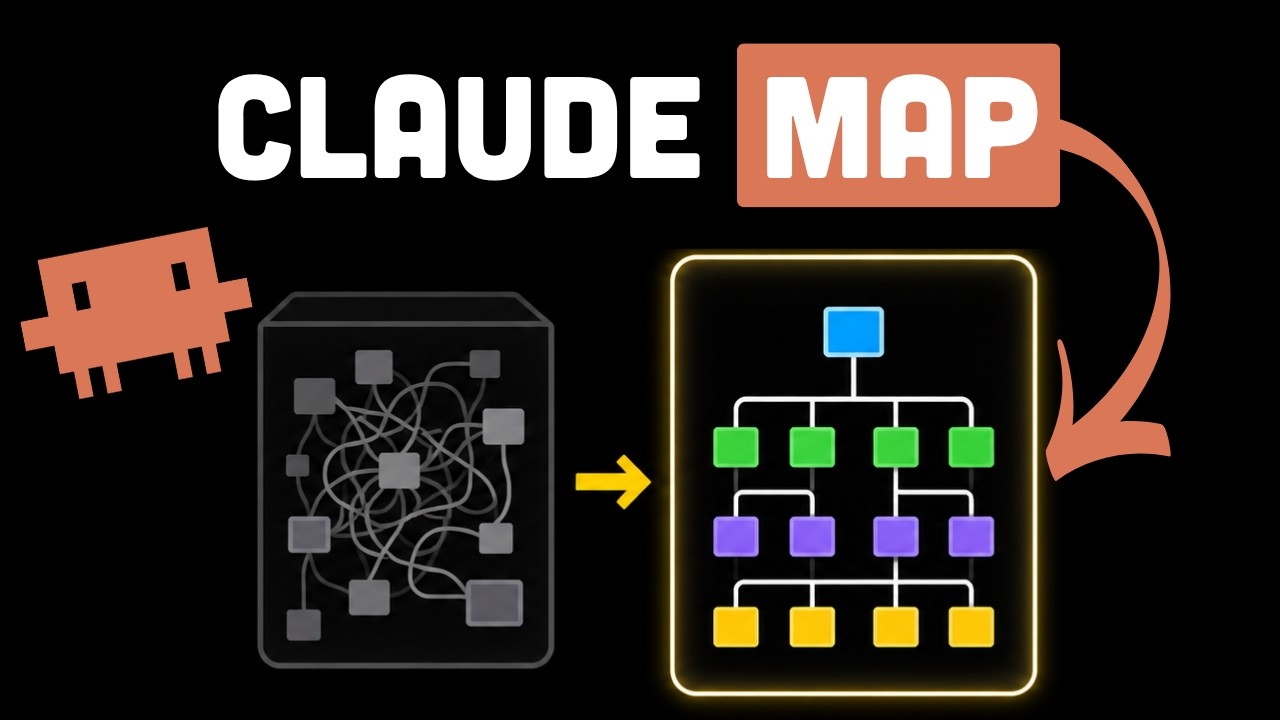
Graphs that teach > graphs that impress. Turn any code into an interactive knowledge graph you can explore, search, and ask questions about. Works with Claude Code, Codex, Cursor, Copilot, Gemini CLI, and more.

OmO: Just type "mass ulw" keyword with your prompt. Now you are the master of graph engineering.
Persistent Context Across Sessions for Every Agent – Captures everything your agent does during sessions, compresses it with AI, and injects relevant context back into future sessions. Works with Claude Code, OpenClaw, Codex, Gemini, Hermes, Copilot, OpenCode + More
Opinionated Oxlint rules for rejecting low-evidence TypeScript and JavaScript patterns
Teams-first Multi-agent orchestration for Claude Code