

DietrichGebert/ponytailPlugins
Makes your AI agent think like the laziest senior dev in the room. The best code is the code you never wrote.
138k
1 add
This repo packages a coordinated agent system for software development into installable bundles. The bundles include specialized agents, lifecycle hooks, reusable skills, and workflow commands that help you move from spec to build, test, review, and ship with shared gates.
Builders who want Claude Code or Copilot CLI to work through the same agent workflow across planning, implementation, and review.
You can run multi-agent development with shared review gates instead of managing every step by hand.
An orchestrator routes work to specialists like analyst, architect, implementer, QA, security, and devops.
Commands like `/spec`, `/plan`, `/build`, `/test`, `/review`, and `/ship` guide work through a development flow.
Claude Code and Copilot CLI can install the repo from a marketplace URL and load the right bundle for each tool.
The toolkit includes lifecycle hooks and checks that enforce session protocol, review gates, and validation steps.
Shared skills, rules, prompts, templates, and agent instructions keep behavior consistent across sessions and tools.
Memory, ADR steering, and review artifacts help the system remember decisions and keep behavior aligned over time.
/plugin marketplace add rjmurillo/ai-agents
/plugin marketplace add rjmurillo/ai-agents
Task(subagent_type="analyst", prompt="Hello, are you available?")
copilot plugin list
@orchestrator Hello, are you available?
# Create virtual environment (optional but recommended)
uv venv
source .venv/bin/activate  # On Windows: .venv\Scripts\activate

# Install project with dev dependencies
uv pip install -e ".[dev]"
For platform teams, engineering managers, and orgs that want AI-assisted development with real governance. Session protocol, review gates, and ADR-steered agent behavior built in.





Each AI tool has its own native marketplace flow. This repo ships a Claude Code marketplace at .claude-plugin/marketplace.json and a Copilot CLI marketplace at .github/plugin/marketplace.json, so the same repository URL works in both CLIs. Pick yours and paste the command(s) inside the CLI session.
Claude Code. One command installs the full set; restart Claude Code when it finishes.
/install-plugin rjmurillo/ai-agents
GitHub Copilot CLI. Two steps: register the marketplace, then install the Copilot-targeted toolkit. No restart needed afterward; Copilot CLI picks agents up automatically.
/plugin marketplace add rjmurillo/ai-agents
/plugin install project-toolkit@ai-agents
A Claude install lands the full set of agents, commands, hooks, and skills. A Copilot install lands the same capabilities generated from the same canonical sources. See Verify Installation for the per-tool sanity check that reports the exact counts for your install, or More Installation Options for component-level installs (agents only, etc.).
Python requirement for
project-toolkit@ai-agentshooks. The project-toolkit plugin ships PreToolUse and PostToolUse hooks that run Python. Minimum version: Python 3.10. On Windows, the Python launcher (py) must be on PATH.Without Python (or with a version below 3.10), hooks are skipped rather than blocking: your session works normally, but hook-based guards (security gates, review checks) do not run. A warning is printed naming the cause and the install step. This is the degraded mode, not an error.
The
claude-agents@ai-agentsbundle (agents only, no hooks) does not need Python at all.Install Python: https://www.python.org/downloads/ (3.10 or newer).
| Component | Claude Code | Copilot CLI |
|---|---|---|
| Agents | Included | Included |
| Skills | Included | Included |
| Slash commands | Included | n/a (interactive only) |
| Lifecycle hooks | Included | Included |
| Session protocol | Included | Included |
| Review gates | Included | Included |
Specialized agent roles include analyst, architect, implementer, QA, security, devops, and more. See the Agent Catalog for the full list.
/install-plugin not recognized: That command is Claude Code only. In Copilot CLI use the two-step flow (/plugin marketplace add rjmurillo/ai-agents then /plugin install project-toolkit@ai-agents)./plugin marketplace add rjmurillo/ai-agents first, then /plugin install project-toolkit@ai-agents./plugin not recognized in Copilot CLI: Update Copilot CLI to a recent stable release; plugin support is required. Run copilot --version in a regular terminal to check.Denied by preToolUse hook from "project-toolkit@ai-agents": On plugin versions after this fix, this cannot happen: missing or too-old Python causes hooks to skip (exit 0) with a warning rather than deny. If you see this message, your installed plugin predates the fix. Upgrade: /plugin install project-toolkit@ai-agents (reinstalls at the latest version). If the denial persists, install or upgrade Python to 3.10+ and ensure it is on PATH (py -3 on Windows, python3 on Linux/macOS)./version or the title bar; for Copilot CLI run copilot --version in a regular terminal.Task(subagent_type="analyst", prompt="Hello, are you available?") in Claude Code, copilot plugin list in Copilot CLI to confirm project-toolkit@ai-agents is installed, or @orchestrator Hello, are you available? in VS Code Copilot Chat.| I want to... | Go to |
|---|---|
| Use the agents right now | Fastest Start (above) |
| Understand how it works | Key Concepts |
| Contribute or modify agents | Developer Setup |
| See all available agents | Agent Catalog |
| Full installation options | Alternative: Full Installation |
AI Agents is a coordinated multi-agent system for software development. It provides specialized AI agents that handle different phases of the development lifecycle, from research and planning through implementation and quality assurance.
The orchestrator is the hub of operations. Its logic spans the full range, from taking a "vibe" or a "shower thought" and building out a functional spec with acceptance criteria and user stories, to taking a well-defined idea as input and executing on it. Both bundles ship a roster of agents that cover the roles of software development, from vision and strategy, to architecture, implementation, and verification. Each role looks at something specific, like the critic that just looks to poke holes in other agents' (or your own) work, or DevOps that's concerned about how you deploy and operate the thing you just built.
The agents themselves use the platform specific handoffs to invoke subagents, keeping the orchestrator context clean. A great example of this is orchestrator facilitating creating and debating an Architectural Decision Record from research and drafting, to discussion, iterating on the issues, tie breaking when agents don't agree. And then extracting persistent knowledge to steer future agents to adhere. Artifacts are stored in your memory system if you have one enabled, and Markdown files for easy reference to both agents and humans.
/install-plugin or Copilot CLI's /plugin marketplace add flow| Term | Definition |
|---|---|
| Agent | A specialized AI persona with a defined role (analyst, implementer, security, etc.) |
| Orchestrator | The coordinating agent that routes tasks to specialists and synthesizes results |
| Handoff | Explicit transfer of context and control between agents with clear accountability |
| Skill | A reusable workflow component for common tasks (git, PR, testing, linting, and more) |
| Memory | Cross-session context persistence via Serena + Forgetful for knowledge retention |
| ADR | Architectural Decision Record, structured documents capturing design decisions |
| Quality Gate | Validation checkpoint (critic review, QA pass, security scan) before proceeding |
The Fastest Start above is the recommended path. Use the commands below when you want component-level control (agents only, no skills, etc.).
See CONTRIBUTING.md for development setup including Python 3.14.x, pre-commit hooks, and test dependencies. Day-to-day use of the
claude-agents@ai-agentsbundle (agents only) does not need Python. Theproject-toolkit@ai-agentsplugin requires Python 3.10+ for its hooks; without it, hooks are skipped with a warning (see Fastest Start).
The Fastest Start commands install the full toolkit. For component-level installs, register the marketplace once in the CLI you are using and then install just the parts you want. Claude Code resolves that repository to .claude-plugin/marketplace.json; Copilot CLI resolves it to .github/plugin/marketplace.json. In Claude Code you can also use /install-plugin rjmurillo/ai-agents as a one-step shortcut that registers the marketplace and prompts for plugin selection.
Claude Code:
/plugin marketplace add rjmurillo/ai-agents
| Component | Install Command | What You Get |
|---|---|---|
| Claude agents only | /plugin install claude-agents@ai-agents | Agent definitions from src/claude/ (no skills, commands, or hooks) |
| Project toolkit | /plugin install project-toolkit@ai-agents | Agents, slash commands, hooks, and reusable skills from .claude/ |
GitHub Copilot CLI:
/plugin marketplace add rjmurillo/ai-agents
| Component | Install Command | What You Get |
|---|---|---|
| Copilot full toolkit | /plugin install project-toolkit@ai-agents | Agents, hooks, and skills from src/copilot-cli/ (Copilot CLI) |
Claude exposes both an agents-only bundle (claude-agents, from src/claude/) and the full toolkit (project-toolkit, from ./.claude); the two draw from different curated sets (src/claude/ versus .claude/agents/), kept in sync where they overlap. Copilot CLI installs ship a single project-toolkit plugin from src/copilot-cli/ because that directory's plugin.json declares one identity; an agents-only Copilot install would silently register as project-toolkit and is therefore not advertised (issue #1840).
After installing, confirm the agents are loaded.
Claude Code:
Task(subagent_type="analyst", prompt="Hello, are you available?")
GitHub Copilot CLI:
copilot plugin list
The output should include project-toolkit@ai-agents (or whichever component you installed). To exercise an agent end-to-end, run copilot -p "analyst: respond with 'available'".
VS Code (Copilot Chat):
@orchestrator Hello, are you available?
| Platform | Agent Location | Usage |
|---|---|---|
| Claude Code CLI | src/claude/ | Use Task(subagent_type="...") |
| GitHub Copilot CLI | src/copilot-cli/ | Use --agent flag, /agent to select, or call out agent by name |
| VS Code / GitHub Copilot | .github/agents/ | Use @agent syntax in Copilot Chat |
See docs/installation.md for complete installation documentation, including platform-specific paths, troubleshooting, and post-installation steps.
After installing the agents with the method of your choice, you can either select one of them explicitly, ask your LLM to use the agent by name, or even prefix your input with the name of the agent.
Here are prompts you can copy and paste. Prefix with the agent name to route directly, or use the orchestrator for multi-step workflows.
Review code quality:
critic: review @src/auth/login-handler.ts for coupling, error handling gaps, and test coverage. Deliver an APPROVE or REJECT verdict with specific line references.
Shows the critic agent doing a focused code review.
Investigate a bug:
analyst: the /api/users endpoint returns 500 when the email contains a plus sign. Trace the request through the handler, identify the root cause, and propose a fix.
Shows the analyst doing root cause analysis on a specific bug.
Scan for vulnerabilities:
security: scan @src/api/ for OWASP Top 10 vulnerabilities. Focus on injection, broken auth, and data exposure. Output a threat matrix with CWE identifiers and severity ratings.
Shows the security agent doing a targeted scan.
Write tests for existing code:
qa: write pytest tests for @scripts/validate_session_json.py. Cover happy path, malformed input, missing required fields, and boundary conditions. Target 95% line coverage.
Shows the QA agent generating tests with specific coverage targets.
Document a module:
explainer: document @scripts/memory_enhancement/ as a user guide. Include purpose, installation, CLI usage with examples, and architecture overview. Write for developers who have never seen this codebase.
Shows the explainer creating developer documentation.
Plan a feature:
milestone-planner: break down "add webhook retry with exponential backoff" into milestones. Include acceptance criteria, estimated complexity, dependencies, and a suggested implementation order.
Shows the planner creating structured work packages.
End-to-end feature pipeline:
orchestrator: build the webhook retry system described in @.agents/specs/webhook-retry.md. Start with analyst to verify requirements. Then milestone-planner to create work packages. Run critic to stress-test the plan. Then implementer to write code and tests. Run qa to verify coverage meets acceptance criteria. Run security to scan for injection and replay risks. Fix all critical findings recursively until critic, qa, and security pass. Open a PR.
The orchestrator chains seven agents into a full development pipeline with quality gates at each stage.
Architecture review:
orchestrator: conduct a full review of @docs/architecture/service-mesh.md. Route through analyst for data accuracy, architect for structural decisions, security for threat modeling with CWE/CVSS ratings, critic to stress-test for gaps, and independent-thinker to challenge assumptions. Synthesize all findings into a single summary highlighting consensus and disagreements.
Five agents examine the same artifact through different lenses. The orchestrator synthesizes their independent assessments.
Debug, fix, and ship:
orchestrator: the payment webhook handler drops events when Redis is unavailable. Have analyst investigate the failure pattern in the logs. Then architect propose a resilient design with fallback queuing. Then implementer build the fix with tests. Run qa and security to validate. Open a PR when all checks pass.
Turns an incident report into a shipped fix through structured agent collaboration.
Technology migration evaluation:
orchestrator: we are considering migrating from REST to gRPC for internal services. Route through analyst to research benchmarks and ecosystem maturity. Then architect to map impact on existing contracts. Then security to threat-model the new transport layer. Then devops to estimate CI/CD changes. Then independent-thinker to argue the strongest case for staying with REST. Then high-level-advisor to deliver a GO or NO-GO verdict with conditions.
Six agents build a decision package. Each contributes a different dimension of analysis. The advisor synthesizes everything into an actionable verdict.
Strategic prioritization:
orchestrator: we have three candidate features for next quarter: plugin marketplace, offline mode, and admin audit logging. For each, run analyst for effort and risk, roadmap to score with RICE and KANO, security for compliance implications, and devops for operational burden. Then independent-thinker to argue which one we will most regret skipping. Then high-level-advisor to rank all three with a clear recommendation.
The orchestrator runs the same evaluation pipeline across all candidates, producing comparable data for a defensible quarterly plan.
Six slash commands that map to the development lifecycle. Each one activates the right agents and quality gates automatically.
  DEFINE          PLAN           BUILD          VERIFY         REVIEW          SHIP
 ┌──────┐      ┌──────┐      ┌──────┐      ┌──────┐      ┌──────┐      ┌──────┐
 │ Idea │ ───> │ Spec │ ───> │ Code │ ───> │ Test │ ───> │  QA  │ ───> │  Go  │
 │Refine│      │  PRD │      │ Impl │      │Debug │      │ Gate │      │ Live │
 └──────┘      └──────┘      └──────┘      └──────┘      └──────┘      └──────┘
  /spec          /plan          /build        /test         /review       /ship
| What you're doing | Command | What happens |
|---|---|---|
| Define what to build | /spec | CVA analysis, testable acceptance criteria, critic review |
| Plan how to build it | /plan | Milestones, atomic tasks (S/M/L), dependency graph, risk register |
| Build incrementally | /build | TDD slices, atomic commits, code quality scoring |
| Prove it works | /test | 6 quality gates (functional, non-functional, security, DevOps, DX, observability) |
| Review before merge | /review | 5-axis review (architecture, security, quality, tests, standards) |
| Ship to production | /ship | Pre-flight checks, PR creation, ship report |
Each command chains to the next. Output from /spec feeds into /plan, which feeds into /build, and so on. You can also jump in at any point for smaller tasks.
Standard feature:
/spec Add OAuth2 login flow with JWT tokens
/plan
/build
/test
/review
/ship
Quick fix:
/build Fix null reference in UserService.GetById
/test
/ship
See docs/workflow-commands.md for the full command reference.
The orchestrator coordinates specialized agents through explicit handoffs. Each agent focuses on its domain, and the orchestrator synthesizes results.
flowchart LR
    User([User]) --> Orchestrator

    subgraph Planning
        Orchestrator --> Analyst
        Orchestrator --> Architect
        Orchestrator --> Planner[Milestone Planner]
    end

    subgraph Implementation
        Orchestrator --> Implementer
        Implementer --> Code[Code + Tests]
    end

    subgraph Quality
        Orchestrator --> QA
        Orchestrator --> Security
        Orchestrator --> Critic
    end

    Code --> QA
    QA --> |pass| Done([Done])
    QA --> |fail| Implementer
    Critic --> |approve| Done
    Critic --> |reject| Implementer
Typical flow:
The Copilot CLI bundle adds the backlog-generator agent; both bundles include all the other agents. spec-generator is now a skill (issue #2001), available in both bundles. Both bundles share the same templates.
| Agent | Purpose | Output | Bundle |
|---|---|---|---|
| orchestrator | Task coordination and routing | Delegated results from specialists | both |
| analyst | Research, feasibility analysis, trade-off evaluation | Quantitative findings with evidence | both |
| architect | System design evaluation, ADRs, pattern enforcement | Rated assessments (Strong/Adequate/Needs-Work) | both |
| milestone-planner | Milestones and work packages | Implementation plans with acceptance criteria | both |
| implementer | Production code and tests | Code, tests, commits | both |
| critic | Plan stress-testing, gap identification | Verdicts: APPROVE / APPROVE WITH CONDITIONS / REJECT | both |
| qa | Test strategy and verification | Test reports, coverage analysis | both |
| security | Threat modeling, vulnerability assessment | Threat matrices with CWE/CVSS ratings | both |
| devops | CI/CD pipelines, operational planning | Infrastructure configs, maintenance estimates | both |
| roadmap | Strategic prioritization, RICE/KANO analysis | Priority stacks, cost-benefit analysis | both |
| retrospective | Learning extraction | Actionable insights, skill updates | both |
| skillbook | Skill management | Atomic strategy updates | both |
| explainer | PRDs and documentation | Specs, user guides | both |
| task-decomposer | Atomic task breakdown | Estimable work items with done criteria | both |
| high-level-advisor | Strategic decisions, unblocking | Verdicts: GO / CONDITIONAL GO / NO-GO | both |
| independent-thinker | Challenge assumptions, devil's advocate | Counter-arguments with alternatives | both |
| pr-comment-responder | PR review handling | Triaged responses, resolution tracking | both |
| debug | Debugging assistance, root cause analysis | Diagnostic findings with resolution steps | both |
| janitor | Code and documentation cleanup | Refactoring and cleanup suggestions | both |
| issue-feature-review | Feature-request triage on GitHub issues | Constructive verdict with next steps | both |
| merge-resolver | Resolve git/PR merge conflicts | Pattern-based resolution plan | both |
| negotiation | Offer analysis and counter-proposals | Value-gap analysis with RADAR protocol | both |
| backlog-generator | Proactive task discovery when idle | Sized tasks from project state analysis | Copilot CLI only |
See AGENTS.md for detailed agent documentation.
ai-agents/
├── src/
│   ├── vs-code-agents/      # VS Code / GitHub Copilot agents
│   ├── copilot-cli/         # GitHub Copilot CLI agents
│   └── claude/              # Claude Code CLI agents
├── templates/               # Agent template system
├── scripts/                 # Validation and utility scripts
├── docs/                    # Documentation
├── .agents/                 # Agent artifacts (ADRs, plans, etc.)
├── .claude-plugin/          # Claude Code marketplace manifest
├── .github/plugin/          # GitHub Copilot CLI marketplace manifest
├── .github/copilot-instructions.md  # GitHub Copilot instructions
├── CLAUDE.md                        # Claude Code instructions
└── AGENTS.md                        # Detailed usage guide
Task() for Claude, @agent for VS Code)/install-plugin is a Claude Code CLI shortcut. In Copilot CLI use the explicit two-step flow:
/plugin marketplace add rjmurillo/ai-agents/plugin install project-toolkit@ai-agentsproject-toolkit@ai-agents plugin requires Python 3.10+ at runtime for its hooks. Without Python 3.10+, hooks degrade (skip with a warning) rather than block. The claude-agents@ai-agents bundle (agents only, no hooks) does not need Python..python-version file pins the exact version (currently 3.14.4)analyst: ...)See CONTRIBUTING.md for detailed contribution guidelines.
If you're contributing code or running tests locally:
Fork and clone the repository
Install Python dependencies:
# Create virtual environment (optional but recommended)
uv venv
source .venv/bin/activate  # On Windows: .venv\Scripts\activate

# Install project with dev dependencies
uv pip install -e ".[dev]"
Set up environment variables (copy .env.example to .env and fill in your API keys)
Install Git hooks: uv run --frozen lefthook install --reset-hooks-path, then verify with uv run --frozen lefthook check-install
Run tests to verify setup:
python -m pytest tests/ -v
Make changes following the guidelines
Submit a pull request
This project uses a template-based generation system. To modify agents:
templates/agents/*.shared.mduv run python build/generate_agents.py to regenerateDo not edit files in src/vs-code-agents/ or src/copilot-cli/ directly. See CONTRIBUTING.md for details.
| Document | Description |
|---|---|
| docs/getting-started.md | Step-by-step setup guide |
| docs/agent-catalog.md | All agents with capabilities and examples |
| docs/skill-reference.md | All skills with usage descriptions |
| docs/architecture.md | Plugin structure, template system, design decisions |
| docs/customization.md | How to extend and customize agents, skills, and hooks |
| docs/installation.md | Complete installation guide |
| docs/project-structure.md | Annotated repo layout (what to edit vs generated) |
| AGENTS.md | Comprehensive usage guide |
| CONTRIBUTING.md | Contribution guidelines and agent development |
| CLAUDE.md | Claude Code integration |
| copilot-instructions.md | GitHub Copilot integration |
| docs/workflow-commands.md | Lifecycle commands (/spec, /plan, /build, /test, /review, /ship) |
| docs/when-to-use.md | Fitness guide: which lifecycle phases fit which task shapes, and when the full lifecycle is overkill |
| docs/ideation-workflow.md | Ideation workflow documentation |
| docs/markdown-linting.md | Markdown standards |
MIT
Sign in to join the discussion.
No comments yet. Be the first to say what this is good for.
Makes your AI agent think like the laziest senior dev in the room. The best code is the code you never wrote.
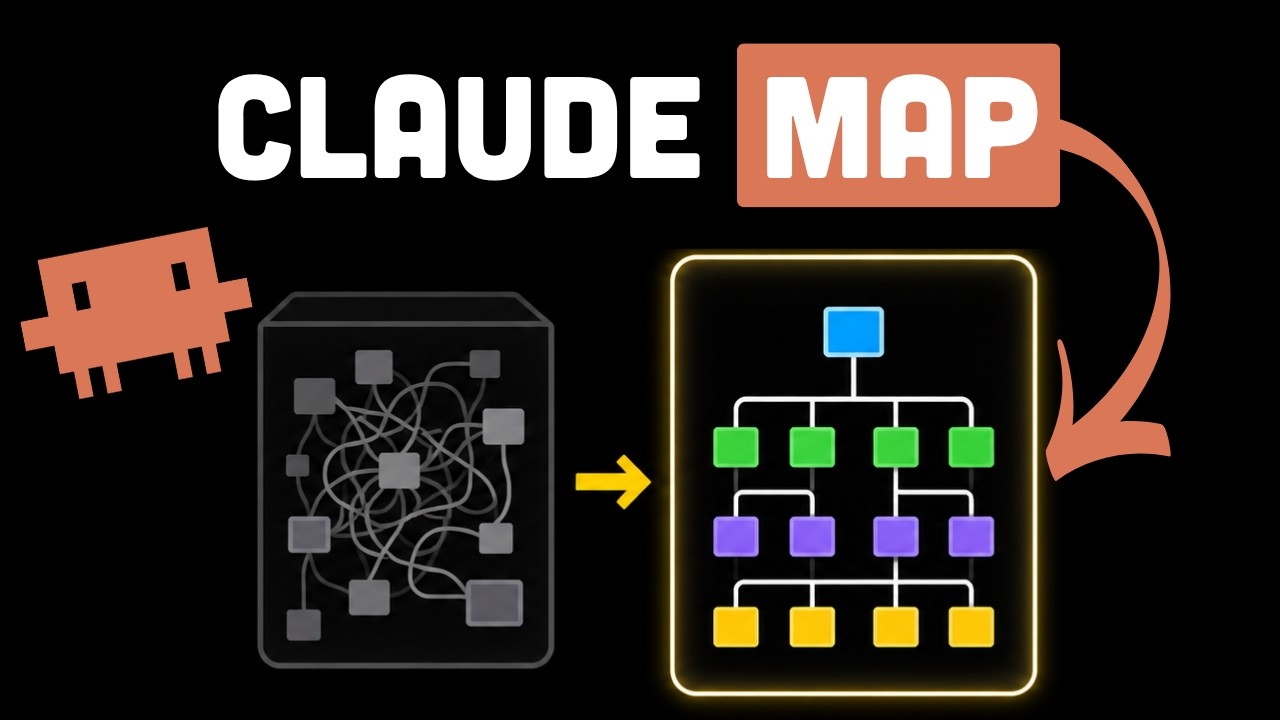
Graphs that teach > graphs that impress. Turn any code into an interactive knowledge graph you can explore, search, and ask questions about. Works with Claude Code, Codex, Cursor, Copilot, Gemini CLI, and more.

OmO: Just type "mass ulw" keyword with your prompt. Now you are the master of graph engineering.
Persistent Context Across Sessions for Every Agent – Captures everything your agent does during sessions, compresses it with AI, and injects relevant context back into future sessions. Works with Claude Code, OpenClaw, Codex, Gemini, Hermes, Copilot, OpenCode + More
Opinionated Oxlint rules for rejecting low-evidence TypeScript and JavaScript patterns
Teams-first Multi-agent orchestration for Claude Code