nxtg-ai/
forge-orchestrator

Forge Orchestrator: Multi-AI task orchestration. File locking, knowledge capture, drift detection. Rust.
159
Forge Orchestrator: Multi-AI task orchestration. File locking, knowledge capture, drift detection. Rust.

Persistent, branch-aware workflow state memory MCP server for AI coding assistants. Tracks tasks, accepted decisions, and active blockers to prevent session context bloat and speed up development.

The Agent Harness for AI-Human Collaboration, inspired by the AI-DLC (AI-Driven Development Lifecycle)

Agent Fusion is a local RAG semantic search engine that gives AI agents instant access to your code, documentation (Markdown, Word, PDF). Query your codebase from code agents without hallucinations. Runs 100% locally, includes a lightweight embedding model, and optional multi-agent task orchestration. Deploy with a single JAR
Unity MCP acts as a bridge between AI assistants and your Unity Editor. Give your LLM tools to manage assets, control scenes, edit scripts, and automate tasks within Unity.

Professional slash commands for Claude Code that provide structured workflows for software development tasks including code review, feature creation, security auditing, and architectural analysis.
Open-source super AI assistant & Agent Harness. Plans tasks, runs tools and skills, self-evolves with memory and knowledge. Multi-agent, multi-model, multi-channel. Lightweight, extensible, one-line install. (formerly chatgpt-on-wechat)
Self-evolving memory OS for LLM & AI Agents: ultra-persistent memory, hybrid-retrieval, and cross-task skill reuse, with 35.24% token savings and DeepSeek Harness support.

Persistent memory for AI coding agents. Local-first, cross-session context, global knowledge, and optional autonomous task execution.
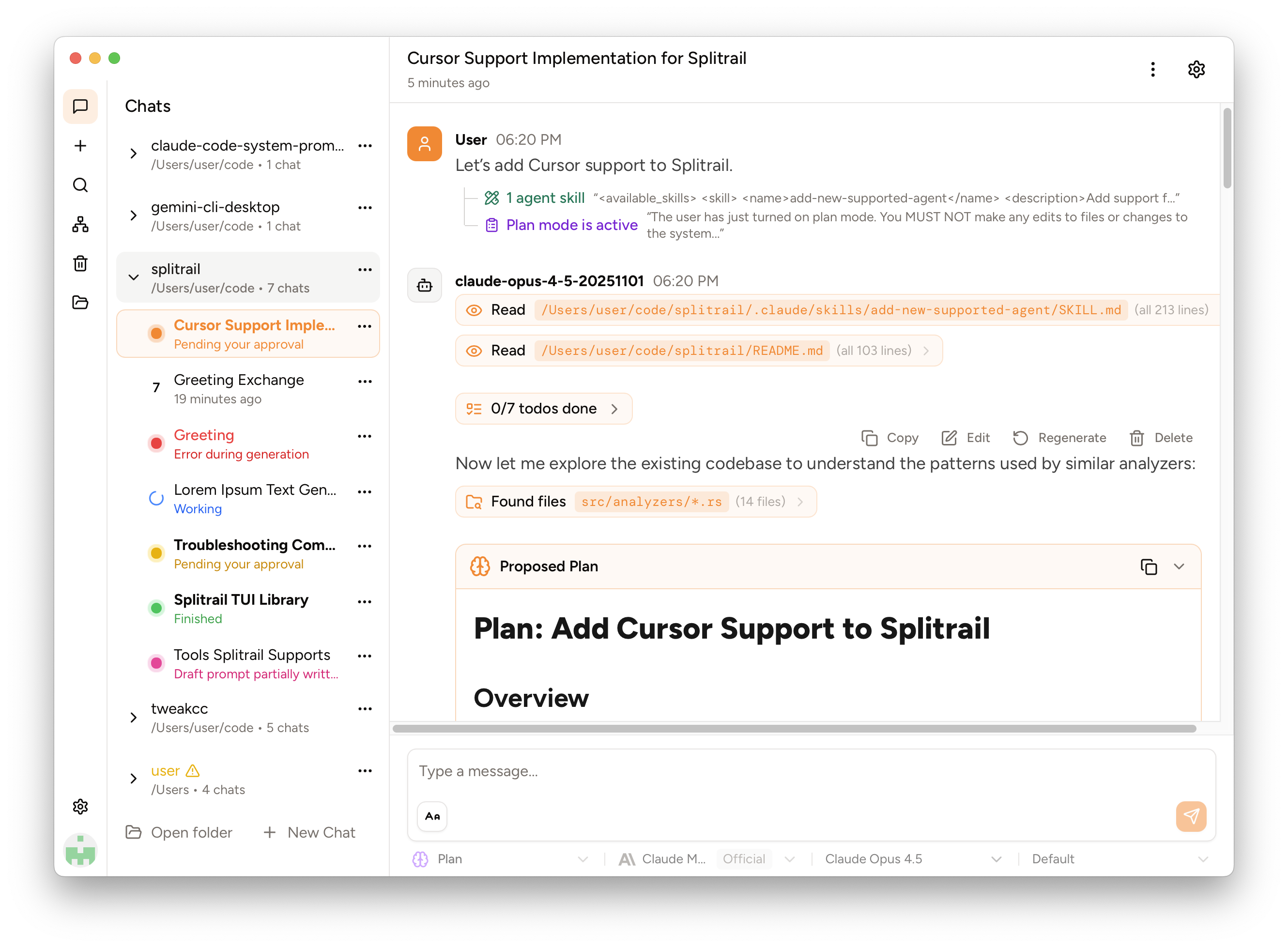
All parts of Claude Code's system prompt, 27 builtin tool descriptions, sub agent prompts (Plan/Explore/Task), utility prompts (CLAUDE.md, compact, statusline, magic docs, WebFetch, Bash cmd, security review, agent creation). Updated for each Claude Code version.
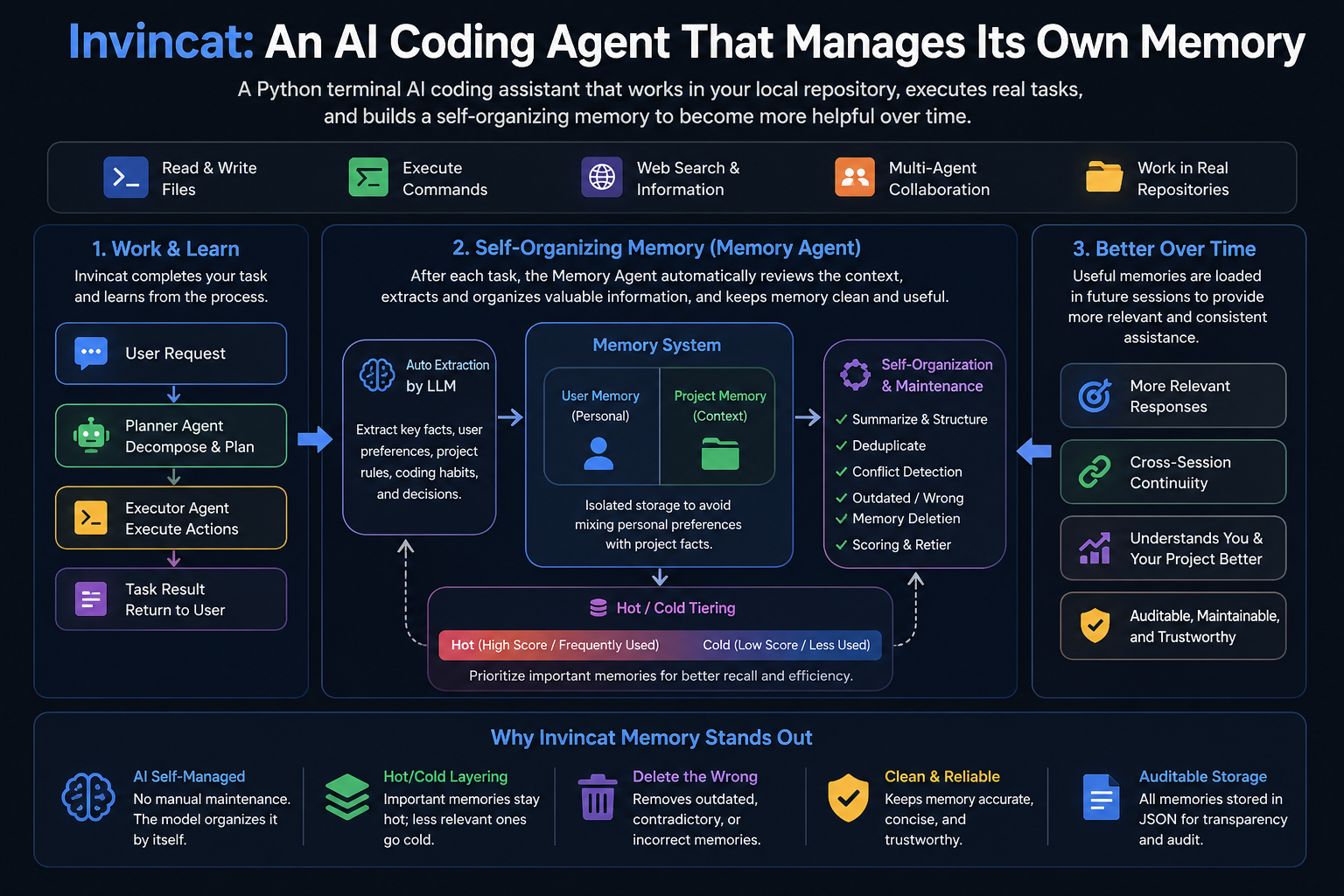
A native Python agent CLI built on DeepAgents CLI, featuring an independent memory Agent that captures learnings after each task and delivers efficient AI coding assistance through hierarchical memory management.

Free, local tool to track AI coding token usage and cost across 37 tools and agents (Claude Code, Cursor, Codex, Gemini and more), by model, project, and task. npx codeburn

Make AI coding agents architecture-aware: baseline-first, evidence-verified, drift-checked, and safe across long tasks.
Lightweight Agent Workstation for Codex CLI + Claude Code — with task scheduler, git worktree & remote control

Grov automatically captures the context from your private AI sessions and syncs it to a shared team memory. It auto injects relevant memories across developers and future sessions to save tokens and time spent on tasks.

Multi-model orchestration subagents for Claude Code — delegates by task scope to Gemini's 1M-token context or GPT's fast iteration, then routes every result back through Claude review.

Cross-LLM sub-agent orchestration as an Agent Skills. Route tasks to Codex, Claude Code, Grok, GLM, Kimi, Cursor, Gemini, OpenCode, or Command Code from any compatible tool.

Agent OS: keep specialist agents in a hub, spin up a temporary orchestrator per task. Local-first, works with any model.

A Claude skill that keeps your AI coding tools from contradicting each other. Generates requirements.md, design.md, and tasks.md before any code is written — then creates matching config files for Claude Code, Cursor, Copilot, Windsurf, and Aider.
Autoprompt is a coding-agent skill that cuts failures by 45% on agentic coding tasks.

A local-first, encrypted Slack/Discord alternative built for the agentic era. AI agents, such as openclaw, join channels, receive tasks, and coordinate on equal footing with humans — over a serverless P2P mesh.
Claude Code is an agentic coding tool that lives in your terminal, understands your codebase, and helps you code faster by executing routine tasks, explaining complex code, and handling git workflows - all through natural language commands.

All-in-one workflow plugin—loops, swarms, and teams on Claude Code's Task System. All enforce exit criteria—swarm is faster with parallel queue execution, teams add contract-first coordination. Plan your way, execute your way. Optional: Beads for persistent memory, Ralph TUI for dashboard.
Babysitter enforces obedience on agentic workforces and enables them to manage extremely complex tasks and workflows through deterministic, hallucination-free self-orchestration