liatrio-labs/
spec-driven-workflow

Lightweight markdown-based workflow for collaborating with AI coding assistants using spec-driven development methodology
93
Lightweight markdown-based workflow for collaborating with AI coding assistants using spec-driven development methodology

A MCP server providing realistic browser-like HTTP request capabilities with accurate TLS/JA3/JA4 fingerprints for bypassing anti-bot measures. It also supports converting PDF and HTML documents to Markdown for easier processing by LLMs.
Artifact layer for agent-human representations. One API call, one SVG. Zero dependencies, renders in any markdown.
One portable memory layer for every AI agent: local-first, Markdown-native, user-owned, and self-evolving across apps, tools, and workflows.

Zettelkasten-based persistent memory for AI coding agents. Works with Claude Code, Cursor, VS Code Copilot, Codex, Windsurf & any MCP client. No vector DB — just markdown + git sync.
A persistent, unified memory layer for all your AI agents (e.g. Claude Code, Codex, DSH), backed by Markdown and Milvus.

Spec-driven development workflow for AI coding agents: architecture-first planning, task decomposition, GitHub Issue/PR tracking, Deep Discuss, and adaptive control for Claude Code, Codex, Cursor, and other Markdown-capable agents.
Project memory for coding agents and humans: the reasoning behind a codebase as Markdown in the repo, versioned by Git, so nothing rejected is proposed twice. No database, no daemon, no account.

Markdown that steers an LLM is code. Genesis is the architectural layer for designing multi-agent, multi-skill systems -- with named patterns, contracts, and substrate portability, before you write them.

A comprehensive and efficient MCP server for task management with multi-format support (Markdown, JSON, YAML)

Feed your agent papers and half-formed ideas — it links them into a system design you can defend. Markdown keeps the record; a visual canvas makes it readable. An Agent Skill for Claude Code & any SKILL.md-compatible agent.
A headless browser for AI agents that fetches modern web pages, runs JavaScript, manages sessions, and returns token-efficient Markdown.

This project provides a toolset to crawl websites wikis, tool/library documentions and generate Markdown documentation, and make that documentation searchable via a Model Context Protocol (MCP) server, designed for integration with tools like Cursor.

PRD-Led Context Engineering — Memory as Infrastructure. An ontology layer for product teams building products that solve real problems — with AI agents that remember. Gated PRD, typed IDs, markdown knowledge graph, Claude Code skills & hooks.
docx ↔ LLM translator. Projects .docx office files to Markdown for editing. Projects edits back to OOXML as tracked changes (redlines). Python and Node.js implementations.

the best interface for Claude Code
Nimbalyst - The open-source visual workspace for Claude Code, Codex, and OpenCode. Run multiple coding agents in parallel, edit their work visually in markdown, mockups, and diagrams, and track tasks. Free, MIT-licensed desktop app for macOS, Windows, Linux, with mobile companion for iOS and Android.

✨ A curated list of awesome GitHub instructions, prompt, skills, MCPs and agent markdown files for enhancing your GitHub Copilot AI experience.
Fast, local-first web content extraction for LLMs. Scrape, crawl, extract structured data — all from Rust. CLI, REST API, and MCP server.
The Wiki-link doc compiler for the LLM era.
1098 professional Agent Skills for Claude, ChatGPT, Gemini, Cursor & Codex — from PRDs and postmortems to appealing a disability benefit, building a go-bag, and settling into a new country. Plain-markdown, MIT, in Anthropic's official plugin directory. Free in-browser or 'npx pm-claude-skills add'.
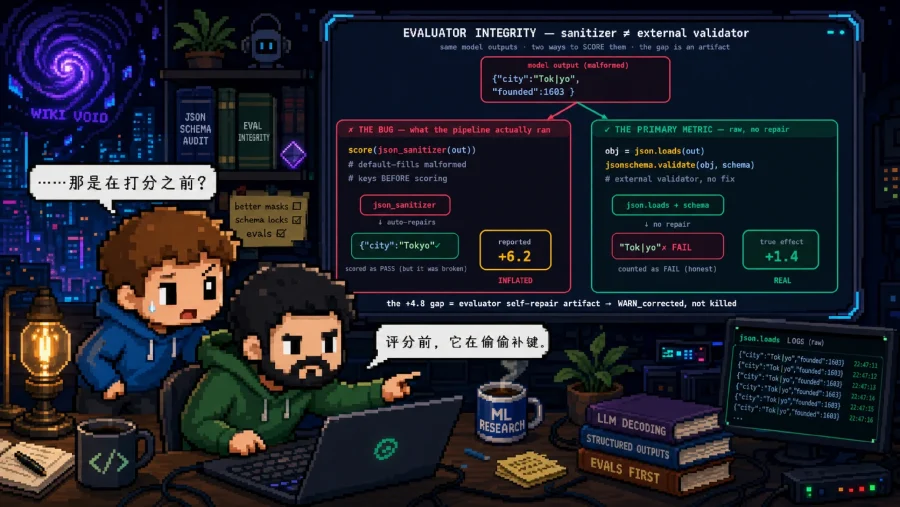
ARIS ⚔️ (Auto-Research-In-Sleep) — Lightweight Markdown-only skills for autonomous ML research: cross-model review loops, idea discovery, and experiment automation. No framework, no lock-in — works with Claude Code, Codex, OpenClaw, or any LLM agent.
Knowledge graph extractor: Markdown (or any format) to knowledge graph with RDFS/OWL ontology

Multi-agent research automation framework for LLM agents, with adversarial lab meetings, paper-review rounds, auditable Markdown workflows, an autonomous runtime watchdog, and a pixel-art web dashboard.