mcp-security-standard/
mcp-server-security-standard

MCP Server Security Standard (MSSS): an open, testable security control standard for certifying MCP servers, with levels, evidence requirements, and reporting schemas.
74
MCP Server Security Standard (MSSS): an open, testable security control standard for certifying MCP servers, with levels, evidence requirements, and reporting schemas.

Server-enforced workflow discipline for AI agents. An MCP server providing persistent work items, dependency graphs, quality gates, and actor attribution. Schemas define what agents must produce — the server blocks the call if they don't. Works with any MCP-compatible client.
Plinth is an AI-native engineering toolkit for modern Java enterprise SDLC, built around reusable Commands, Agents, Skills, and MCP Servers.

The orchestration layer under your coding agent. Turns work into a typed graph, runs one model per node, and takes the verdict from outside the model — exit codes, write-set checks, and a cross-family verifier. MCP server, 50 tools, bring your own models.

🛠️ The meta-harness for AI agents — scaffold your own focused, branded agent harness with its own npx CLI, MCP server, memory, learning loop, and witness-signed releases. Works with Claude Code, Codex, pi.dev, Hermes, OpenClaw, and RVM (hardware-isolated sandbox).

A ruleset that turns AI coding assistants (e.g. Claude Code) into disciplined Linux, FreeBSD & macOS sysadmins. Manages servers via SSH and localhost with safety guardrails, checklists, and team support. Named after the Heinzelmännchen — helpful kobolds who do the housework while you sleep.
Agent OS: the agent gets smarter on its own. We just hold the line: Interview-gated, staged evaluation, budgeted evolution loop. MCP server, 14 runtimes: Claude Code, Codex CLI, Gemini CLI, OpenCode, Copilot, Kiro and more.
Playwright for coding agents. Benchmark Claude Code, Codex, Gemini, and OpenCode on your own tasks - and test that your skills, MCP servers, and CLIs work when an agent uses them. Sandboxed YAML suites, activation checks, A/B experiments, CI gates.

MCP Playbooks for AI agents

An instruction layer for AI coding agent

Prismer Cloud

Self-hosted agent OS with skills, workflows, MCP, and second brain storage.
Own your AI. The native macOS harness for AI agents -- any model, persistent memory, autonomous execution, cryptographic identity. Built in Swift. Fully offline. Open source.

Protocol-layer harness for DeepSeek: Python witness stack — posterior verification that keeps the protocol honest. dsh doctor --node probes included.

Governance standard and reference toolset for LLM-maintained knowledge corpora

AI-powered cascading development framework. Decompose complex projects into parallel executable tasks with auto-generated PRDs, design docs, and multi-agent collaboration (Claude Code, Codex, Aider).
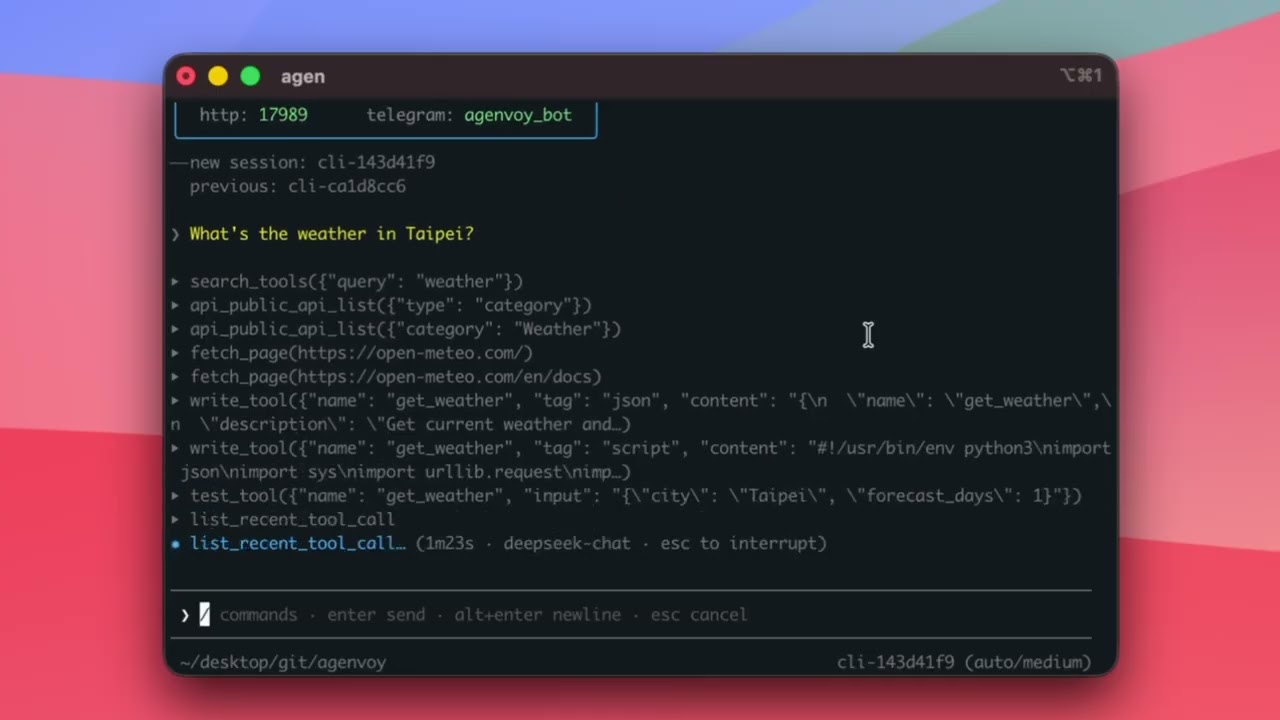
Self-hosted AI agent harness in a single Go binary — writes, sandbox-tests and repairs its own tools, and lets Claude Code, Codex and any MCP client build and share them.

IJFW — It Just F*cking Works. Ferrox Labs' local-first infrastructure for AI coding agents: shared memory, smart routing, multi-AI cross-audits, disciplined workflow.
HAR: open agent harness (CLI + MCP) for coding agents. Isolated worktrees, deterministic verify, software factory workflows for Claude Code, Cursor, and Codex.

A standalone agent runner that executes tasks using MCP (Model Context Protocol) tools via Anthropic Claude, AWS BedRock and OpenAI APIs. It enables AI agents to run autonomously in cloud environments and interact with various systems securely.

Safe local execution layer for AI agent tools. Build, validate, and publish MCP tools with a no-pass-no-run workflow — cross-platform desktop app powered by Spring AI.
Local-first, self-hosted AI agent runtime and MCP bridge with sandboxed sessions, memory, credentials, audit/replay, and a local Console.
Compile, verify, and run multi-agent DAGs across Pi, Codex, Claude Code, OpenCode, and Grok—with resume, replay, and incremental recomputation.
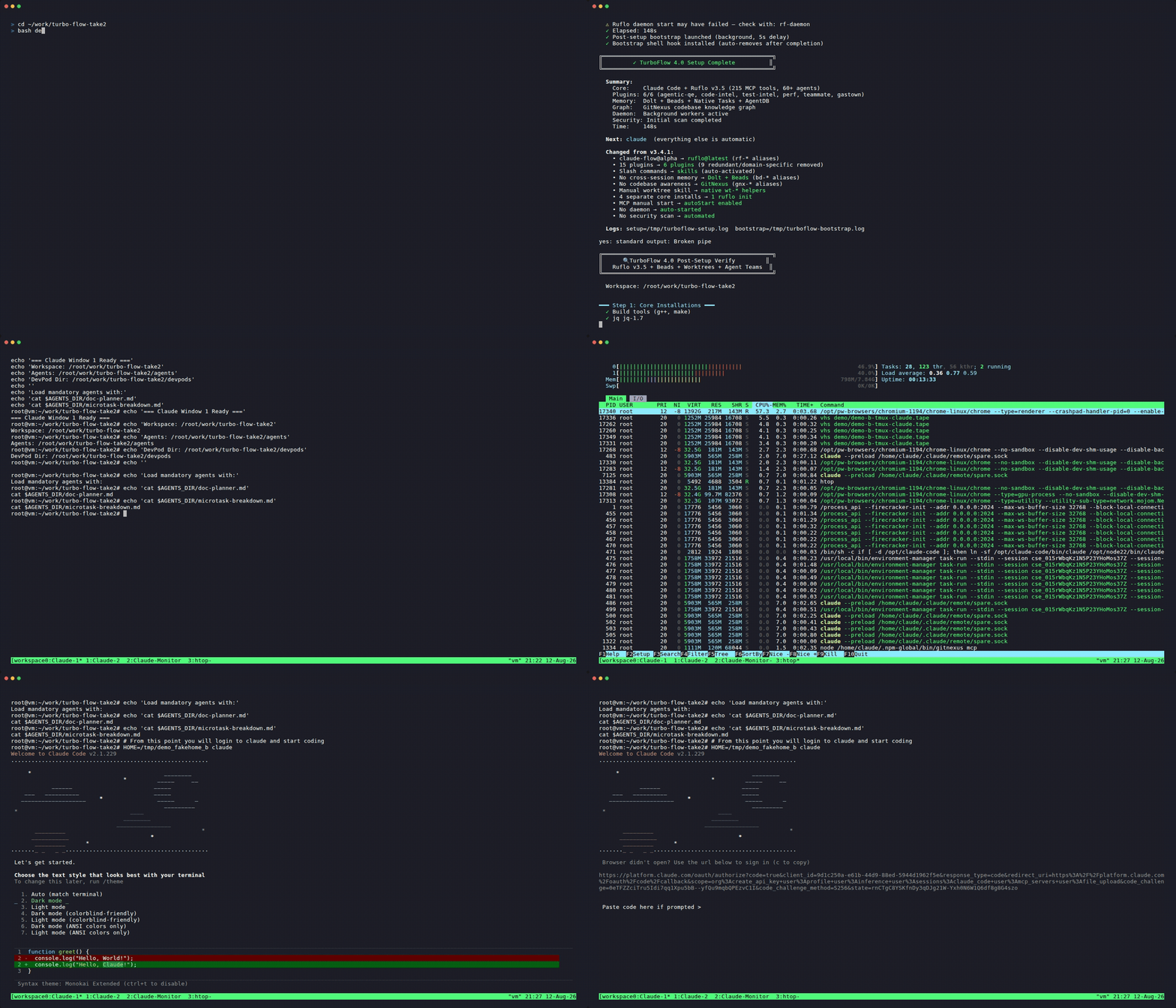
Agentic dev environment for DevPods, Codespaces & Rackspace Spot — one-command setup of Ruflo orchestration (215+ MCP tools, 60+ agents upstream).