0ldh/
claude-code-agents-orchestra

Turn Claude Code into a coordinated team of 40+ specialized AI agents that work together like a world-class engineering organization.
84
Turn Claude Code into a coordinated team of 40+ specialized AI agents that work together like a world-class engineering organization.

Autonomous software engineering fleet of AI agents for production-grade PRs on AgentField: plan, code, test, and ship.

🔥 An autonomous AI agent that runs your deep learning experiments 24/7 while you sleep. Zero-cost monitoring, Leader-Worker architecture, constant-size memory.

The open standard for agent coordination

An installable, cross-framework AI organization: C-suite agents, expert subagents, curated skills, independent review, and one-command setup across 18 AI client/runtime adapters.
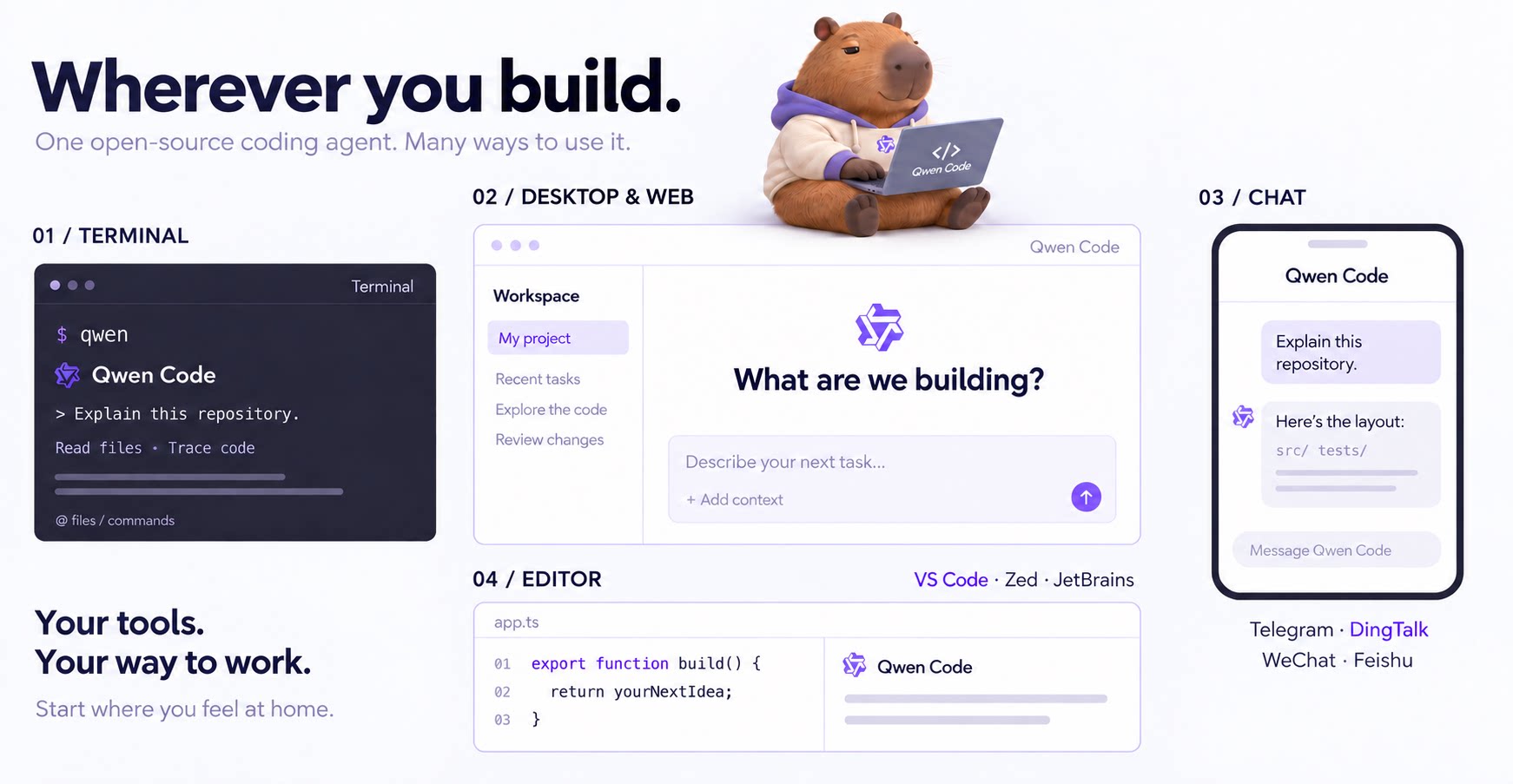
An open-source AI coding agent that lives in your terminal.

Collection of specialized AI subagents for Claude Code for personal use (full-stack development).

Open-Source Platform for Subagents and Agent Teams. Long-running, collaborative, proactive.
Provider-neutral control plane for durable-state agent swarms: subprocess workers, leases, artifacts, memory, and deterministic stitching.

Open-source coding agent for your terminal, built in Rust and on a journey of continuous community improvement. Issues and PRs welcome.

Better subagent experience for Codex and Claude users

The system of action for AI-native cybersecurity—where intent becomes governed execution, evidence becomes operational memory, and every operation improves the next.
OpenSwarm — Autonomous AI dev team orchestrator powered by Claude Code CLI. Discord control, Linear integration, cognitive memory.

Orchestrate AI coding agents (Claude Code, Codex) as parallel subagents over tmux — a loop-engineering runtime with auto-continue, execute-then-review, and cross-session memory.

🦦 ADHDev — Agent Dashboard Hub. Monitor & control AI coding agents from a single dashboard. Self-hosted, open-source.

Open-source AI coding agent and agent runtime: one binary, any model, MCP-native. Runs in terminal, CI, or as a daemon.
AI coding agent with one Python core and three front-ends — headless CLI, Textual TUI, and an Electron desktop. Works with any OpenAI-compatible API, with risk-tiered permissions, event-sourced replayable sessions, and a fail-closed OS-level sandbox.