repowise-dev/
repowise

Codebase intelligence for AI and humans: code health scores, auto-generated docs, git analytics, dead code detection, and architectural decisions via MCP.
6.4k
Codebase intelligence for AI and humans: code health scores, auto-generated docs, git analytics, dead code detection, and architectural decisions via MCP.
MCP server that orchestrates language servers into agent-native workflows. 65 tools, 30 CI-verified languages.

AI agent skills for SAP ABAP: ADT read/write CLI, 9-dimension code review, transport release gate, integration wiki. Works with Claude Code / opencode.

The ultimate RAG for your monorepo. Query, understand, and edit multi-language codebases with the power of AI and knowledge graphs
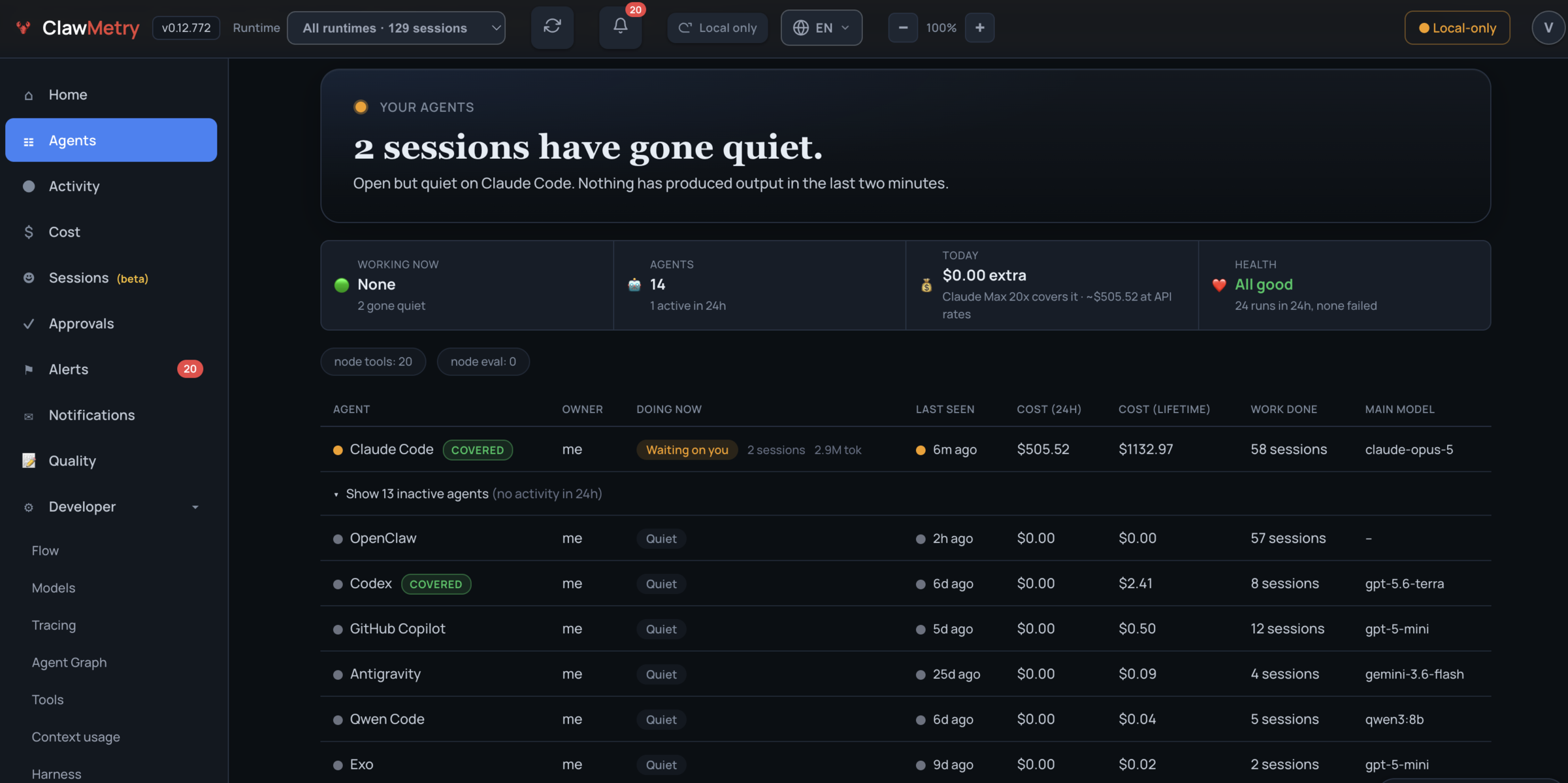
See your agent think. Zero-config observability & governance for 30 AI agent runtimes: Claude Code, OpenAI Codex, Hermes, OpenClaw & 26 more. Live token costs, sessions, tool calls, crons.

Local-first code intelligence graph for MCP and CLI. Builds a persistent map of your codebase so AI coding tools read only what matters, with benchmarked context reductions on reviews and large-repo workflows.
Minimal by design, explicitly multi-lang, production-ready and battle-tested collection of configs and plugins for your Claude Code agentic development workflows: mcp, configs, skills, agents and more.

Local codebase intelligence CLI + MCP server for AI coding agents: SQLite code graph, 28 languages, 287 commands, 246 MCP tools, change-safety gates, audit evidence, zero API keys.

🪈 Intelligent orchestration system that coordinates multiple AI coding assistants (Claude, Codex, Gemini CLI, Copilot CLI) to collaborate on complex software development tasks via REPL or a Vue/Nuxt UI dashboard. Also includes an Agentic Team runtime with role-based multi-agent open communication & lead-gated final responses.

23 Claude Code plugins: TDD enforcement hooks, git/PR workflows, spec-driven development, code review, project lifecycle, fix-from-error, maintenance automation, context optimization, research, and multi-LLM delegation. 186 skills, 128 commands, 54 agents.

The ripgrep of AI context: a zero-dependency C++23 CLI + MCP server for coding agents. Find what you want without reading the repo, then check you built what you meant — blast radius, tests-to-run, quality deltas. Signatures at 74.7% fewer bytes than bodies; every guess labelled, every loss published. Paddle out with a map.