Nexent is a zero-code platform for auto-generating production-grade AI agents using Harness Engineering principles — unified tools, skills, memory, and orchestration with built-in constraints, feedback loops, and control planes.
Threat modeling and AI-reasoning vulnerability detection harness for Claude Code — STRIDE + AI + MAESTRO
Open-source super AI assistant & Agent Harness. Plans tasks, runs tools and skills, self-evolves with memory and knowledge. Multi-agent, multi-model, multi-channel. Lightweight, extensible, one-line install. (formerly chatgpt-on-wechat)
Universal, model-agnostic operating harness for AI agents (Claude, Codex, Gemini, …) — a lean core + work-type profiles assembled by one setup script.
Self-evolving second brain with 33 AI skills, 10 agents, and people CRM. Closed-loop harness: a V-model verification lifecycle where the worker never grades its own homework. Plus paired anti-slop design skills for marketing and product UI. Works with Claude Code, Cursor, Kiro, Gemini CLI, Codex.
Local-first workspace for Claude Code, Codex CLI, and Gemini CLI with sessions, analytics, workflows, and tools
Optimize any AI agent’s skills, tools/MCP, and prompts against your own evals.
Governance standard and reference toolset for LLM-maintained knowledge corpora
Multi-agent orchestration for AI coding CLIs — Claude Code, Kiro, Codex, and more, coordinated in isolated tmux sessions
Open-source AI agent harness in native Rust — GUI, CLI, headless, and webapp from one binary. Multi-provider, MCP, skills, plugins, agent teams.

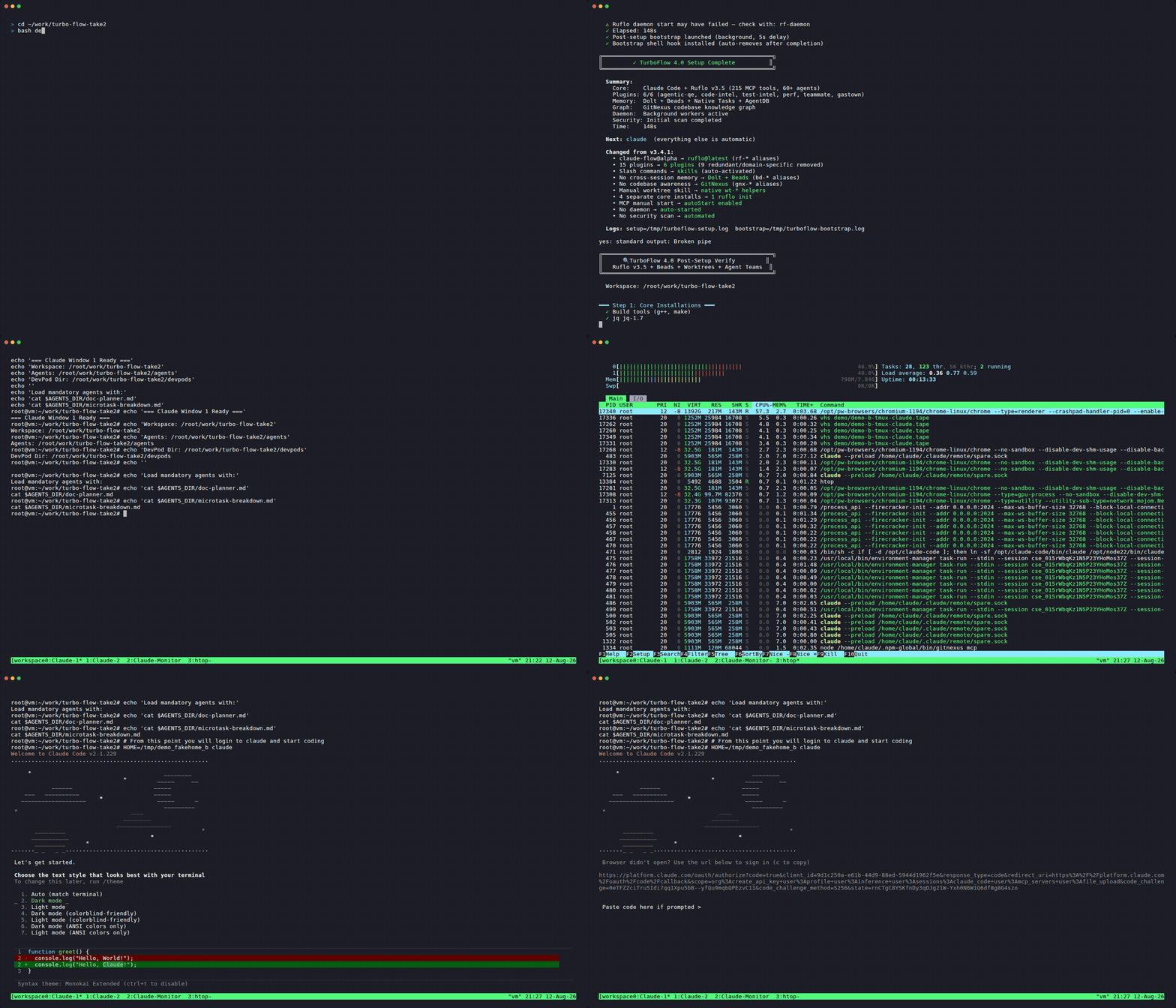
Agentic dev environment for DevPods, Codespaces & Rackspace Spot — one-command setup of Ruflo orchestration (215+ MCP tools, 60+ agents upstream).
Spec-driven, agentic workflow framework for AI coding agents. Turn a request into a verifiable goal loop — plan, act, verify — with durable specs and evidence in your repo. Works with Claude Code, Codex, Gemini, OpenCode, and plain CLI.
Server-enforced workflow discipline for AI agents. An MCP server providing persistent work items, dependency graphs, quality gates, and actor attribution. Schemas define what agents must produce — the server blocks the call if they don't. Works with any MCP-compatible client.