


heygen-com/hyperframesFrameworks & SDKs
Write HTML. Render video. Built for agents.
49k
Opendesk lets an agent see and operate a computer through screenshot, UI, mouse, keyboard, clipboard, and OCR tools. It also supports recording workflows, replaying them, scheduling tasks, and controlling paired remote machines over an encrypted connection.
Builders who want their agent to operate a desktop, automate repeated workflows, or control a paired remote machine.
You can let your agent click, type, inspect, replay, and schedule real desktop workflows instead of doing them by hand.
Captures the screen with marked elements and lets the agent click or type by element name instead of coordinates.
Provides low-level desktop actions plus text extraction from screen regions.
Records a task once and replays it later from the current screen state.
Runs learned or ad hoc tasks on a timer with `opendesk scheduler start`.
Pairs controllers and controlled machines over an encrypted WebSocket and lets the same tools target local or remote desktops.
Works as an MCP server with Claude Code, Claude Desktop, Cursor, Windsurf, Continue, and custom clients.
pip install 'opendesk[core,mcp]'
opendesk install        # shortcut for Claude Code
npm install @vitalops/opendesk-sdk
npx opendesk-js install        # shortcut for Claude Code
Take a screenshot of my screen
Click the Chrome icon
Open Spotify and play lo-fi beats
Show me the audit log
Replay everything from this session
Give any AI agent eyes and hands on your desktop.
Opendesk is a computer use framework that lets AI agents navigate your computer just like a human would — screenshots, mouse, keyboard, UI interaction, OCR, workflow recording, scheduling, and remote machine control.
macOS · Linux · Windows



|
https://github.com/user-attachments/assets/5a6fab31-9f53-4ddb-9efb-17f0afe97844 Single Machine Demo |
https://github.com/user-attachments/assets/629cf31b-12ab-4913-bc03-963f1cfbd682 Control Multiple Machines |
https://github.com/user-attachments/assets/659c9e30-e8f6-4a5a-ab81-0fa7ccaf8fb8 UI Testing |
| Language | Location | Package | Install |
|---|---|---|---|
| Python | python/ | opendesk (PyPI) | pip install 'opendesk[core,mcp]' |
| JavaScript / TypeScript | js/ | @vitalops/opendesk-sdk (npm) | npm install @vitalops/opendesk-sdk |
More SDKs can be added to this repo following the same pattern.
opendesk works as an MCP server with any MCP-compatible client — Claude Code, Claude Desktop, Cursor, Windsurf, Continue, or any custom tool.
pip install 'opendesk[core,mcp]'
opendesk install        # shortcut for Claude Code
Requires Python 3.10+
npm install @vitalops/opendesk-sdk
npx opendesk-js install        # shortcut for Claude Code
Point your client at the opendesk-mcp binary:
{
  "mcpServers": {
    "opendesk": { "command": "opendesk-mcp" }
  }
}
For JS:
{
  "mcpServers": {
    "opendesk": {
      "command": "node",
      "args": ["/path/to/node_modules/@vitalops/opendesk-sdk/bin/opendesk-mcp.js"]
    }
  }
}
Once connected, try:
Take a screenshot of my screen
Click the Chrome icon
Open Spotify and play lo-fi beats
Show me the audit log
Replay everything from this session
Use opendesk programmatically in your own agent or app.
from opendesk import create_registry, allow_all_context

registry = create_registry()
ctx = allow_all_context()

result = await registry.get("screenshot").execute(ctx, ...)
import { OpenDeskClient } from "@vitalops/opendesk-sdk";

const client = new OpenDeskClient();
await client.screenshot({ marks: true });
await client.ui({ action: "click", app: "Safari", title: "Go" });
opendesk is built in independently-importable layers:
┌──────────────────────────────────────────────────────────────┐
│  Integrations   MCP  ·  Claude Code  ·  OpenAI  ·  LangChain │
├──────────────────────────────────────────────────────────────┤
│  Tools          screenshot · mouse · keyboard · ui ·         │
│                 clipboard · ocr · learn · schedule · audit   │
├──────────────────────────────────────────────────────────────┤
│  Computer       LocalComputer  ·  RemoteComputer  (ABC)      │
├──────────────────────────────────────────────────────────────┤
│  Remote         server · client · discovery (mDNS)           │
├──────────────────────────────────────────────────────────────┤
│  Protocol       frames · codec (msgpack) · peer · transports │
│                 auth (X25519 + AEAD, pairing)                │
└──────────────────────────────────────────────────────────────┘
| Layer | What it does |
|---|---|
| Computer | The capability surface of a computer (observe / act / subscribe). LocalComputer drives the local machine; RemoteComputer forwards every call over the wire to a paired peer. Tools and integrations target this ABC — they never know whether the machine is local or remote. |
| Tools | One class per capability, agent-friendly Pydantic schemas. Calls into the active Computer on the ToolContext. |
| Integrations | Thin adapters for MCP, Anthropic, OpenAI, LangChain — add one tool, get all four. |
| Remote | opendesk serve / opendesk pair, mDNS discovery, client helper. |
| Protocol | Five-frame wire protocol (msgpack binary, no base64 ever), WebSocket transport, mutual X25519 + ChaCha20-Poly1305 auth and encryption. |
| Automation | learn + schedule backed by pynput recording, JSON storage, APScheduler daemon. |
Full details → docs/architecture.md
| Tool | What it does |
|---|---|
screenshot | Capture the screen with numbered boxes on every clickable element (Set-of-Marks) |
ui | Click and type by element name — no coordinates needed |
mouse | Pixel-level mouse control for anything ui can't reach |
keyboard | Type text, press keys, send hotkeys |
app | Open, close, and focus applications |
clipboard | Read and write the system clipboard |
ocr | Extract text from any region of the screen |
learn | Record a workflow once, replay it anytime |
schedule | Run any task or learned procedure on a timer |
Full reference → docs/tools.md
Record a task once, replay it forever, or put it on a schedule.
Record
"Start recording task expense-form"
Perform the workflow yourself. The agent captures every click, keystroke, and screenshot.
Replay
"Stop recording"
"Replay expense-form"
The agent re-executes using the current screen state — no hardcoded coordinates.
Schedule
"Every morning at 9am, open my email in Chrome, take a screenshot, and summarize what's there"
"Schedule expense-form every friday at 5pm"
opendesk scheduler start
Supported timing: every 30m · every 2h · every day at 09:00 · every friday at 17:00 · raw cron
Full guide → docs/automation.md
Control another machine from your agent — same tools, same MCP server, the
Computer abstraction just lives on the other end of an encrypted WebSocket.
On the machine being controlled (one time):
pip install 'opendesk[core,remote]'
opendesk pair        # prints a 6-digit code, listens
On the controller (one time):
pip install 'opendesk[remote]'
opendesk discover                          # list opendesk peers on the LAN
opendesk pair-with <host> <code> --name mini
After pairing, the controlled machine runs the long-lived server:
opendesk serve # accepts paired peers only
…and the controller drives it through the existing MCP server (Claude Code,
Claude Desktop, Cursor — anything that speaks MCP). The agent gets new admin
tools — opendesk_peers, opendesk_use, opendesk_status — and every
existing tool accepts an optional peer: argument:
screenshot                       → controls the local machine
screenshot peer=mini             → controls the paired remote
opendesk_use mini                → make mini the default for this session
screenshot                       → [on mini] ...
With exactly one paired peer the agent doesn't have to specify anything — it becomes the implicit default. With multiple, the agent must pick explicitly (no silent fallback).
One controller at a time. Pair as many machines as you like, but only
one drives the desktop at a time — a second peer trying to connect while
one is active gets a clean BUSY error. Same peer reconnecting bumps
the previous session (no waiting out a stale TCP). Two ways to free the
slot from the controlled machine:
opendesk disconnect — cooperative. Server asks the controller to
leave via a session.evicted PUSH; a cooperative client (the in-tree
RemoteComputer) suppresses its auto-reconnect and raises
SessionEvicted. Trust is preserved.opendesk unpair <name> — enforced. Revokes trust + closes the
session; next reconnect fails authentication.Security model: pairing exchanges long-lived X25519 keypairs via a 6-digit code-authenticated handshake (PBKDF2-stretched, ~CPU-month to brute force). Subsequent connections use mutual static-key authentication. Every frame is ChaCha20-Poly1305 AEAD-encrypted with per-direction counters. No CA-signed certificates required — the keys ARE the trust.
Full guide → docs/remote.md
pip install opendesk                              # core framework only
pip install 'opendesk[core,mcp]'                  # + screen capture + MCP server (recommended)
pip install 'opendesk[core,mcp,remote]'           # + control another machine over LAN
pip install 'opendesk[core,mcp,learn]'            # + task recording and replay
pip install 'opendesk[core,mcp,learn,schedule]'   # + scheduled tasks
pip install 'opendesk[all]'                       # everything
| Feature | macOS | Linux | Windows |
|---|---|---|---|
| Screenshot | ✓ | ✓ | ✓ |
| Mouse & keyboard | ✓ | ✓ | ✓ |
| UI element access | AppleScript | AT-SPI2 | UI Automation |
| Clipboard | pbcopy/pbpaste | xclip/xsel | pyperclip |
| OCR | Vision / tesseract | tesseract | WinRT / tesseract |
| App control | open -a | xdg-open | start |
| Task recording | ✓ | ✓ | ✓ |
| Scheduled tasks | ✓ | ✓ | ✓ |
| Remote control (LAN) | ✓ | ✓ | ✓ |
| LAN discovery (mDNS) | ✓ | ✓ | ✓ |
sudo apt install xclip xdotool python3-atspi
No extra permissions needed — opendesk uses Win32 APIs by default.
See docs/permissions.md for full setup guide.
opendesk install        # registers opendesk-mcp globally
opendesk uninstall      # removes the registration
Add to your config file:
~/Library/Application Support/Claude/claude_desktop_config.json%APPDATA%\Claude\claude_desktop_config.json~/.config/Claude/claude_desktop_config.json{
"mcpServers": {
"opendesk": { "command": "opendesk-mcp" }
}
}
import asyncio
from opendesk import create_registry, allow_all_context

async def main():
    registry = create_registry()
    ctx = allow_all_context()

    result = await registry.get("screenshot").execute(
        ctx, registry.get("screenshot").Params(marks=True)
    )
    print(result.output)

asyncio.run(main())
Works with Anthropic SDK, OpenAI, and LangChain — see docs/integrations.md
Any OpenAI-compatible local server works out of the box:
from openai import OpenAI
from opendesk.integrations.openai_compat import OpenAIAdapter

client = OpenAI(base_url="http://localhost:11434/v1", api_key="ollama")
adapter = OpenAIAdapter()
result = await adapter.run_loop(client, model="qwen2.5:72b", messages=messages)
If you use opendesk in your research or project, please cite it:
@software{opendesk,
  author  = {Abraham, Abhigith Neil and Rahman, Fariz and Rahman, Fadil},
  title   = {opendesk: Open Desktop Automation Framework},
  year    = {2026},
  url     = {https://github.com/vitalops/opendesk},
  version = {0.2.0},
  license = {MIT}
}
A CITATION.cff is included — GitHub's "Cite this repository" button will pick it up automatically.
MIT
Sign in to join the discussion.
No comments yet. Be the first to say what this is good for.
Write HTML. Render video. Built for agents.
Ultra-lightweight, open-source, self-hosted personal AI agent framework in Python with WebUI, tools, memory, MCP, multi-agent workflows, automation, and chat apps

SkillOpt is a text-space optimizer that trains reusable natural-language skills for frozen LLM agents through trajectory-driven edits, validation-gated updates, and deployable best_skill.md artifacts.
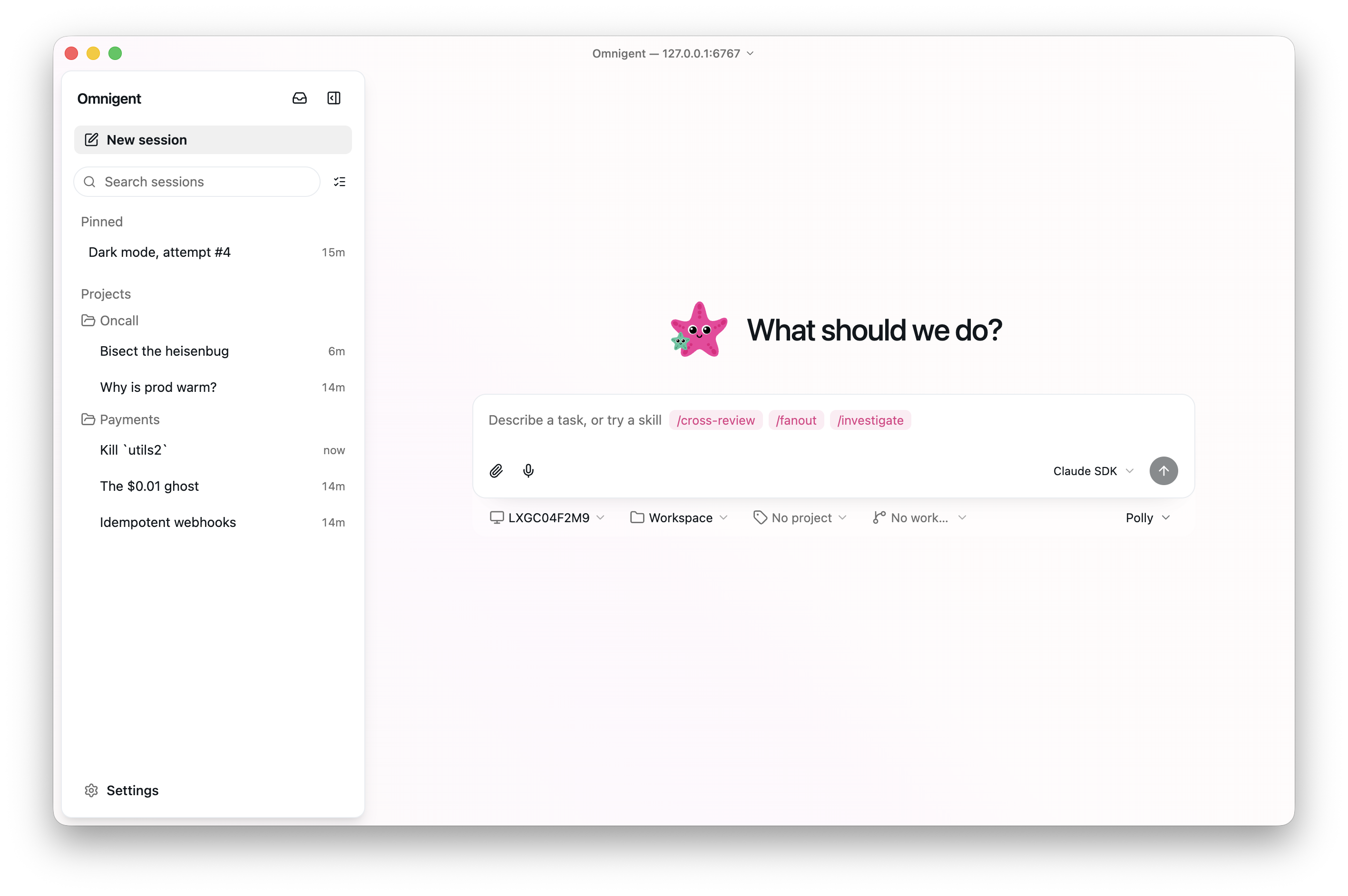
Omnigent is an open-source AI agent framework and meta-harness: orchestrate Claude Code, Codex, Cursor, Pi, and custom agents — swap harnesses without rewriting, enforce policies and sandboxing, and collaborate in real time from any device.

A theoretical reconstruction of the Claude Mythos architecture, built from first principles using the available research literature.
🕷️ An adaptive Web Scraping framework that handles everything from a single request to a full-scale crawl!