

heygen-com/hyperframesFrameworks & SDKs
Write HTML. Render video. Built for agents.
49k
Void-Box runs each agent stage in its own micro-VM, so one stage does not share a kernel or blast radius with the next. It wires in telemetry, snapshot/restore, and support for multiple model providers and tools. The repo includes the runtime, guest agent, example workflows, and scripts for building and running the system.
Builders who want their agent stages isolated, observable, and restartable.
You can run agent workflows with hard boundaries between stages and audit what each stage did.
Runs each workflow stage in its own KVM or Virtualization.framework micro-VM.
Supports fast warm restore so you can resume agent work without cold-starting every run.
Works with Claude, Codex, Ollama, LM Studio, OpenRouter, and Anthropic-compatible endpoints.
Emits traces, metrics, and structured logs for each stage.
Uses seccomp-BPF, session-secret auth, uid drop, and SLIRP networking for defense in depth.
Includes examples for sequential pipelines, fan-out branches, and reducer stages.
curl -fsSL https://raw.githubusercontent.com/the-void-ia/void-box/main/scripts/install.sh | sh
voidbox run --file examples/hackernews/hackernews_agent.yaml





void-box runs each agent stage inside its own micro-VM — Claude, Codex, Ollama, or any tool you put on PATH — with hardware isolation, OTLP telemetry, and sub-second snapshot/restore.
Docs · Examples · Getting Started · Architecture
⭐ Star us on GitHub — it helps the project a lot! ⭐
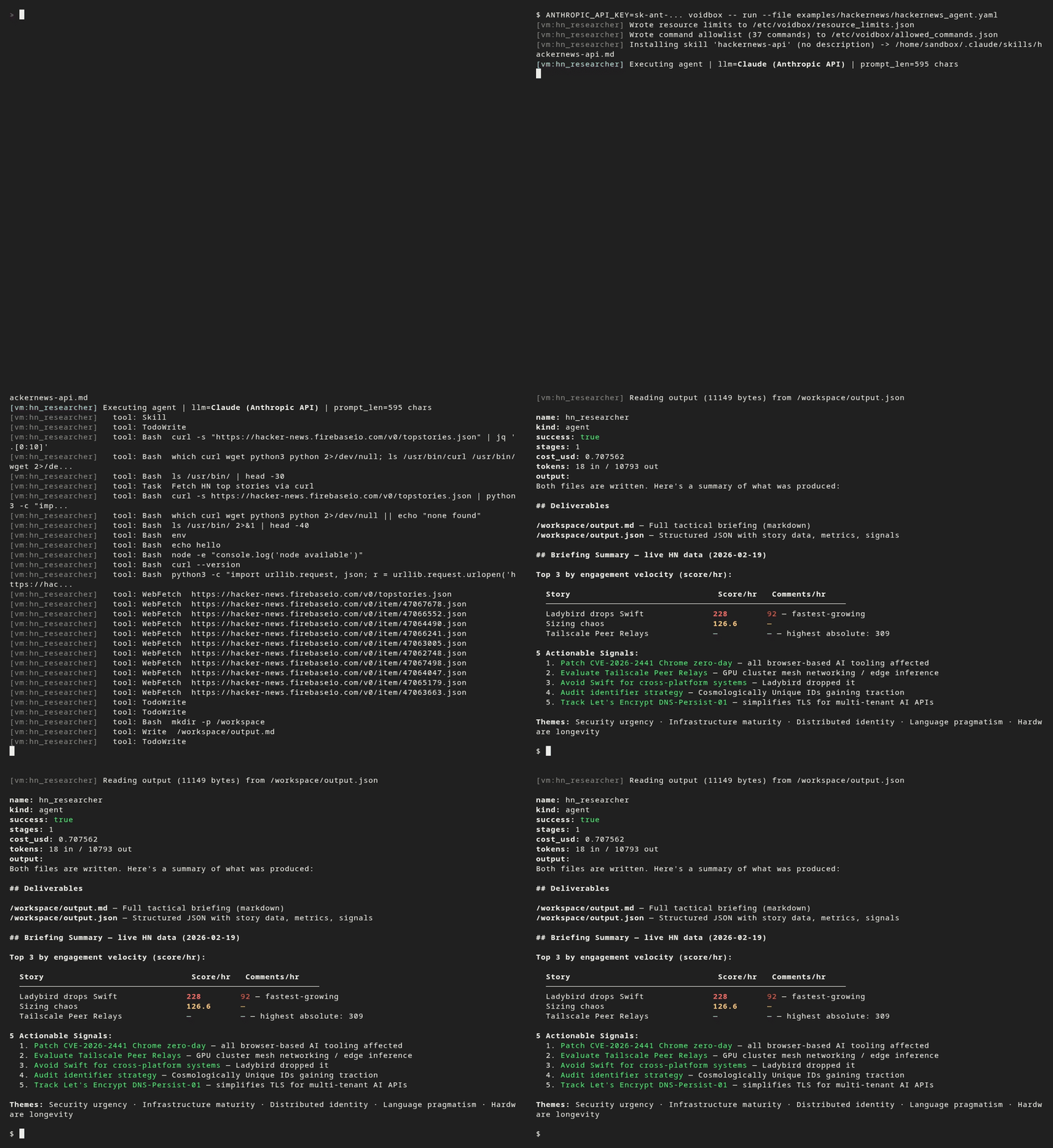
Real workflows you can run today. Every stage executes inside its own KVM (Linux) or Virtualization.framework (macOS) micro-VM — no shared kernel, no shared blast radius.
examples/hackernews/)examples/trading_pipeline.rs).fan_out() runs branches in parallel, each in its own micro-VM (the example splits into a quant and a sentiment branch), then .pipe() merges the outputs into a downstream reducer stage. (examples/parallel_pipeline.rs)GITHUB_TOKEN is scoped to the proposer alone, so a prompt injection that compromises the analyzer can't reach the PR-opening machinery. (examples/code_review/)openclaw_telegram.yaml, _ollama.yaml, _lmstudio.yaml) demonstrate Claude, Ollama, and LM Studio backends. (examples/openclaw/openclaw_telegram.yaml)10.0.2.2:<port>). No API key, no SaaS round-trip — your prompts and the model's responses never leave the host. (examples/ollama_local.rs, examples/lm_studio_local.rs)| 🛡 Hardware-isolated stages | KVM (Linux) / Virtualization.framework (macOS) boundary per stage — not shared-process containers, not advisory namespaces. |
| ⚡ Sub-second snapshot & restore | Warm restore in ~138 ms, cold in ~252 ms. Fork agents from a snapshot instead of cold-booting per task. |
| 🔌 Vendor-neutral providers | Claude, OpenAI Codex, Ollama, LM Studio, OpenRouter, or any Anthropic-compatible endpoint — selected via one config field. |
| 📦 OCI-native | Auto-pulls guest images from GHCR; mount container images as base rootfs or as skill providers via overlay. |
| 📊 OTLP-native observability | Traces, metrics, structured logs, and stage-level telemetry emitted by design — not bolted on. |
| 🔓 No root required | Usermode SLIRP networking via smoltcp — no TAP devices, no elevated privileges, no host network reach beyond what you allow. |
Claude Code · OpenAI Codex · Ollama · LM Studio · OpenRouter · Together AI · any Anthropic-compatible endpoint · MCP servers · OCI base images (GHCR) · OpenTelemetry · Grafana Tempo · Prometheus · 9p / virtiofs host mounts · …and any CLI you can put on PATH.
Read the Security overview.
curl -fsSL https://raw.githubusercontent.com/the-void-ia/void-box/main/scripts/install.sh | sh
voidbox run --file examples/hackernews/hackernews_agent.yaml
Other ways to install:
brew install the-void-ia/tap/voidboxcargo install void-boxFirst run, env vars, and provider auth → Getting Started.
| Architecture | Component diagram, data flow, security model |
| Runtime Model | LLM providers, skill types, agent binaries |
| CLI + TUI | Command reference, daemon API |
| YAML Specs | Declarative agent and pipeline definitions |
| Pipeline Composition | .pipe(), .fan_out(), failure domains |
| OCI Containers | Guest images, base images, OCI skills |
| Snapshots | Sub-second VM restore, snapshot types |
| Host Mounts | 9p / virtiofs host directory sharing |
| Events + Observability | OTLP traces, metrics, event types |
| Security Model | Defense-in-depth, seccomp, session auth |
| Wire Protocol | vsock framing, message types |
Platform setup: Linux · macOS · Local LLMs · Observability stack
Where we're headed. Current focus is hardening the security boundary and squeezing more out of the snapshot/restore path. We'll be sharing the work as it lands — follow along on voidplatform.ai/updates.
Up next, after the security and performance push:
Apache-2.0 · The Void Platform
Sign in to join the discussion.
No comments yet. Be the first to say what this is good for.
Write HTML. Render video. Built for agents.
Ultra-lightweight, open-source, self-hosted personal AI agent framework in Python with WebUI, tools, memory, MCP, multi-agent workflows, automation, and chat apps

SkillOpt is a text-space optimizer that trains reusable natural-language skills for frozen LLM agents through trajectory-driven edits, validation-gated updates, and deployable best_skill.md artifacts.
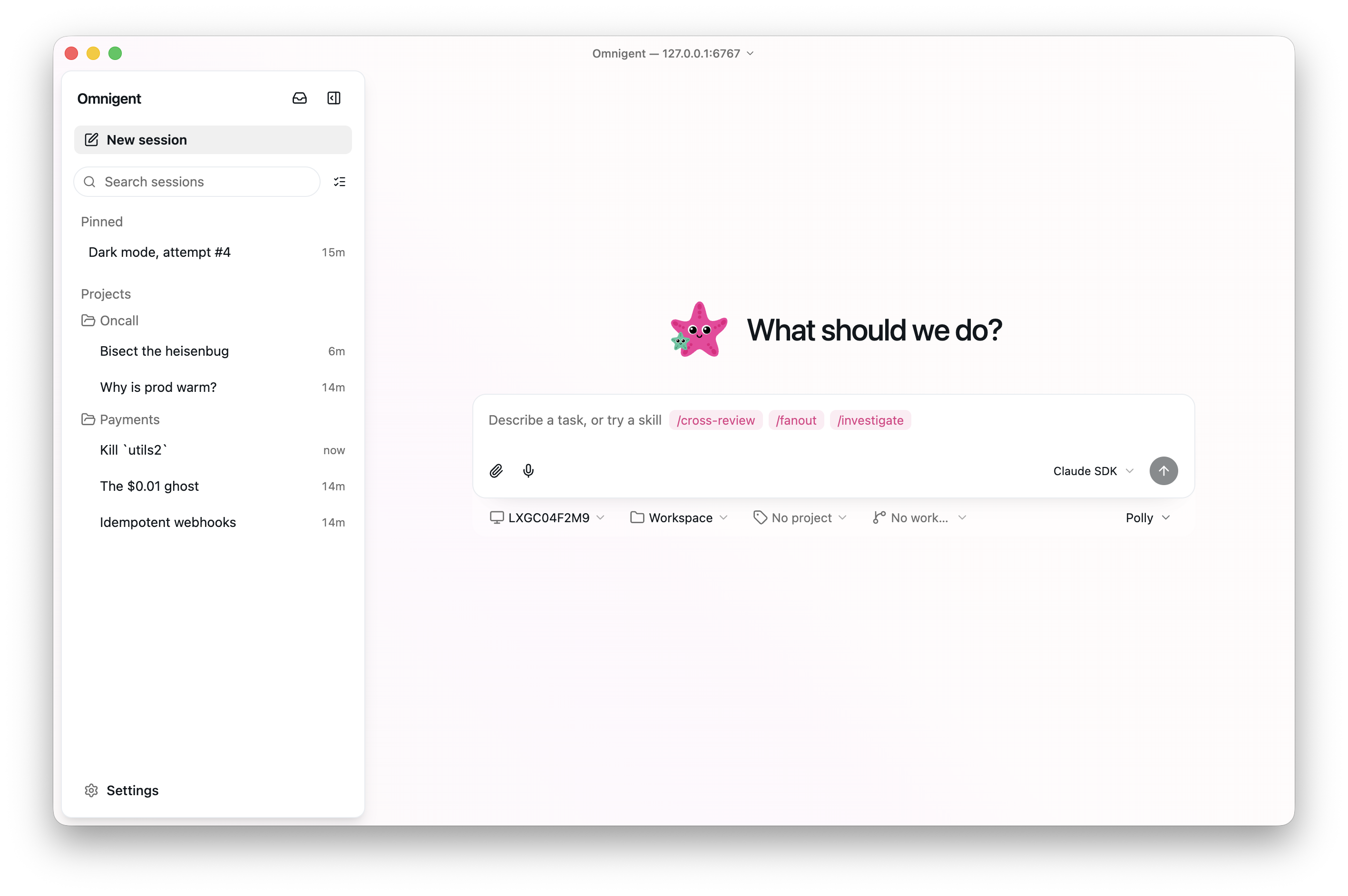
Omnigent is an open-source AI agent framework and meta-harness: orchestrate Claude Code, Codex, Cursor, Pi, and custom agents — swap harnesses without rewriting, enforce policies and sandboxing, and collaborate in real time from any device.

A theoretical reconstruction of the Claude Mythos architecture, built from first principles using the available research literature.
🕷️ An adaptive Web Scraping framework that handles everything from a single request to a full-scale crawl!