
koala73/worldmonitorConnectors
Real-time global intelligence dashboard. AI-powered news aggregation, geopolitical monitoring, and infrastructure tracking in a unified situational awareness interface
86k
PGMCP exposes an existing PostgreSQL database through the Model Context Protocol so agents can ask questions in plain English and get SQL-backed answers. It supports streaming, read-only query enforcement, free-text search, and multiple output formats. You point it at a database with `DATABASE_URL`, start the server, and connect it from MCP clients like Cursor or Claude Desktop. The server handles query generation, validation, and safer execution around the database.
Builders who want their agent to query an existing PostgreSQL database through MCP.
You can ask your database questions in plain English instead of writing SQL by hand.
Turns plain-English questions into SQL queries against PostgreSQL.
Blocks write operations and runs queries in read-only transactions.
Streams large result sets with pagination instead of failing on big responses.
Lets you search all text columns with the `search` tool.
Returns results as table, JSON, or CSV from the client.
Works with MCP-compatible clients such as Cursor and Claude Desktop.
# Example for macOS/Linux
tar xzf pgmcp_*.tar.gz
cd pgmcp_*
./pgmcp-server
# Homebrew (macOS/Linux) - Available after first release
brew tap subnetmarco/homebrew-tap
brew install pgmcp

# Build from source
go build -o pgmcp-server ./server
go build -o pgmcp-client ./client
go build -ldflags="-s -w -extldflags=-static" -trimpath -o pgmcp-server ./server
go build -ldflags="-s -w -extldflags=-static" -trimpath -o pgmcp-client ./client
# Docker
docker run -e DATABASE_URL="postgres://user:pass@host:5432/db" \
  -p 8080:8080 ghcr.io/subnetmarco/pgmcp:latest

# Kubernetes (see examples/ directory for full manifests)
kubectl create secret generic pgmcp-secret \
  --from-literal=database-url="postgres://user:pass@host:5432/db"
kubectl apply -f examples/k8s/


PGMCP connects AI assistants to any PostgreSQL database through natural language queries. Ask questions in plain English and get structured SQL results with automatic streaming and robust error handling.
Works with: Cursor, Claude Desktop, VS Code extensions, and any MCP-compatible client
PGMCP connects to your existing PostgreSQL database and makes it accessible to AI assistants through natural language queries.
# Set up environment variables
export DATABASE_URL="postgres://user:password@localhost:5432/your-existing-db"
export OPENAI_API_KEY="your-api-key"  # Optional

# Run server (using pre-compiled binary)
./pgmcp-server

# Test with client in another terminal
./pgmcp-client -ask "What tables do I have?" -format table
./pgmcp-client -ask "Who is the customer that has placed the most orders?" -format table
./pgmcp-client -search "john" -format table
Here is how it works:
👤 User / AI Assistant
         │
         │ "Who are the top customers?"
         ▼
┌─────────────────────────────────────────────────────────────┐
│                    Any MCP Client                           │
│                                                             │
│  PGMCP CLI  │  Cursor  │  Claude Desktop  │  VS Code  │ ... │
│  JSON/CSV   │  Chat    │  AI Assistant    │  Editor   │     │
└─────────────────────────────────────────────────────────────┘
         │
         │ Streamable HTTP / MCP Protocol
         ▼
┌─────────────────────────────────────────────────────────────┐
│                    PGMCP Server                             │
│                                                             │
│  🔒 Security    🧠 AI Engine      🌊 Streaming              │
│  • Input Valid  • Schema Cache    • Auto-Pagination         │
│  • Audit Log    • OpenAI API      • Memory Management       │
│  • SQL Guard    • Error Recovery  • Connection Pool         │
└─────────────────────────────────────────────────────────────┘
         │
         │ Read-Only SQL Queries
         ▼
┌─────────────────────────────────────────────────────────────┐
│                Your PostgreSQL Database                     │
│                                                             │
│  Any Schema: E-commerce, Analytics, CRM, etc.               │
│  Tables • Views • Indexes • Functions                       │
└─────────────────────────────────────────────────────────────┘

External AI Services:
OpenAI API • Anthropic • Local LLMs (Ollama, etc.)

Key Benefits:
✅ Works with ANY PostgreSQL database (no assumptions about schema)
✅ No schema modifications required
✅ Read-only access (100% safe)
✅ Automatic streaming for large results
✅ Intelligent query understanding (singular vs plural)
✅ Robust error handling (graceful AI failure recovery)
✅ PostgreSQL case sensitivity support (mixed-case tables)
✅ Production-ready security and performance
✅ Universal database compatibility
✅ Multiple output formats (table, JSON, CSV)
✅ Free-text search across all columns
✅ Authentication support
✅ Comprehensive testing suite
Required:
DATABASE_URL: PostgreSQL connection string to your existing databaseOptional:
OPENAI_API_KEY: OpenAI API key for AI-powered SQL generationOPENAI_MODEL: Model to use (default: "gpt-4o-mini")HTTP_ADDR: Server address (default: ":8080")HTTP_PATH: MCP endpoint path (default: "/mcp")AUTH_BEARER: Bearer token for authentication# Example for macOS/Linux
tar xzf pgmcp_*.tar.gz
cd pgmcp_*
./pgmcp-server
# Homebrew (macOS/Linux) - Available after first release
brew tap subnetmarco/homebrew-tap
brew install pgmcp

# Build from source
go build -o pgmcp-server ./server
go build -o pgmcp-client ./client
Add -ldflags="-s -w -extldflags=-static" -trimpath if you want to get stripped executables (no debug info):
go build -ldflags="-s -w -extldflags=-static" -trimpath -o pgmcp-server ./server
go build -ldflags="-s -w -extldflags=-static" -trimpath -o pgmcp-client ./client
# Docker
docker run -e DATABASE_URL="postgres://user:pass@host:5432/db" \
  -p 8080:8080 ghcr.io/subnetmarco/pgmcp:latest

# Kubernetes (see examples/ directory for full manifests)
kubectl create secret generic pgmcp-secret \
  --from-literal=database-url="postgres://user:pass@host:5432/db"
kubectl apply -f examples/k8s/
# Set up database (optional - works with any existing PostgreSQL database)
export DATABASE_URL="postgres://user:password@localhost:5432/mydb"
psql $DATABASE_URL < schema.sql

# Run server
export OPENAI_API_KEY="your-api-key"
./pgmcp-server

# Test with client
./pgmcp-client -ask "Who is the user that places the most orders?" -format table
./pgmcp-client -ask "Show me the top 40 most reviewed items in the marketplace" -format table
Required:
DATABASE_URL: PostgreSQL connection stringOptional:
OPENAI_API_KEY: OpenAI API key for SQL generationOPENAI_MODEL: Model to use (default: "gpt-4o-mini")HTTP_ADDR: Server address (default: ":8080")HTTP_PATH: MCP endpoint path (default: "/mcp")AUTH_BEARER: Bearer token for authentication# Ask questions in natural language
./pgmcp-client -ask "What are the top 5 customers?" -format table
./pgmcp-client -ask "How many orders were placed today?" -format json
# Search across all text fields
./pgmcp-client -search "john" -format table
# Multiple questions at once
./pgmcp-client -ask "Show tables" -ask "Count users" -format table
# Different output formats
./pgmcp-client -ask "Export all data" -format csv -max-rows 1000
The project includes two schemas:
schema.sql: Full Amazon-like marketplace with 5,000+ recordsschema_minimal.sql: Minimal test schema with mixed-case "Categories" tableKey features:
"Categories") for testing case sensitivityorder_items) for testing AI assumptionsUse your own database:
export DATABASE_URL="postgres://user:pass@host:5432/your_db"
./pgmcp-server
./pgmcp-client -ask "What tables do I have?"
When AI generates incorrect SQL, PGMCP handles it gracefully:
{
  "error": "Column not found in generated query",
  "suggestion": "Try rephrasing your question or ask about specific tables",
  "original_sql": "SELECT non_existent_column FROM table..."
}
Instead of crashing, the system provides helpful feedback and continues operating.
# Start server
export DATABASE_URL="postgres://user:pass@localhost:5432/your_db"
./pgmcp-server
Add to Cursor settings:
{
  "mcp.servers": {
    "pgmcp": {
      "transport": {
        "type": "http",
        "url": "http://localhost:8080/mcp"
      }
    }
  }
}
Edit ~/.config/claude-desktop/claude_desktop_config.json:
{
  "mcpServers": {
    "pgmcp": {
      "transport": {
        "type": "http",
        "url": "http://localhost:8080/mcp"
      }
    }
  }
}
ask: Natural language questions → SQL queries with automatic streamingsearch: Free-text search across all database text columnsstream: Advanced streaming for very large result sets with pagination# Unit tests
go test ./server -v
# Integration tests (requires PostgreSQL)
go test ./server -tags=integration -v
Apache 2.0 - See LICENSE file for details.
PGMCP makes your PostgreSQL database accessible to AI assistants through natural language while maintaining security through read-only access controls.
Sign in to join the discussion.
No comments yet. Be the first to say what this is good for.
Real-time global intelligence dashboard. AI-powered news aggregation, geopolitical monitoring, and infrastructure tracking in a unified situational awareness interface
High-performance code intelligence MCP server. Indexes codebases into a persistent knowledge graph — average repo in milliseconds. 158 languages, sub-ms queries, 99% fewer tokens. Single static binary, zero dependencies.
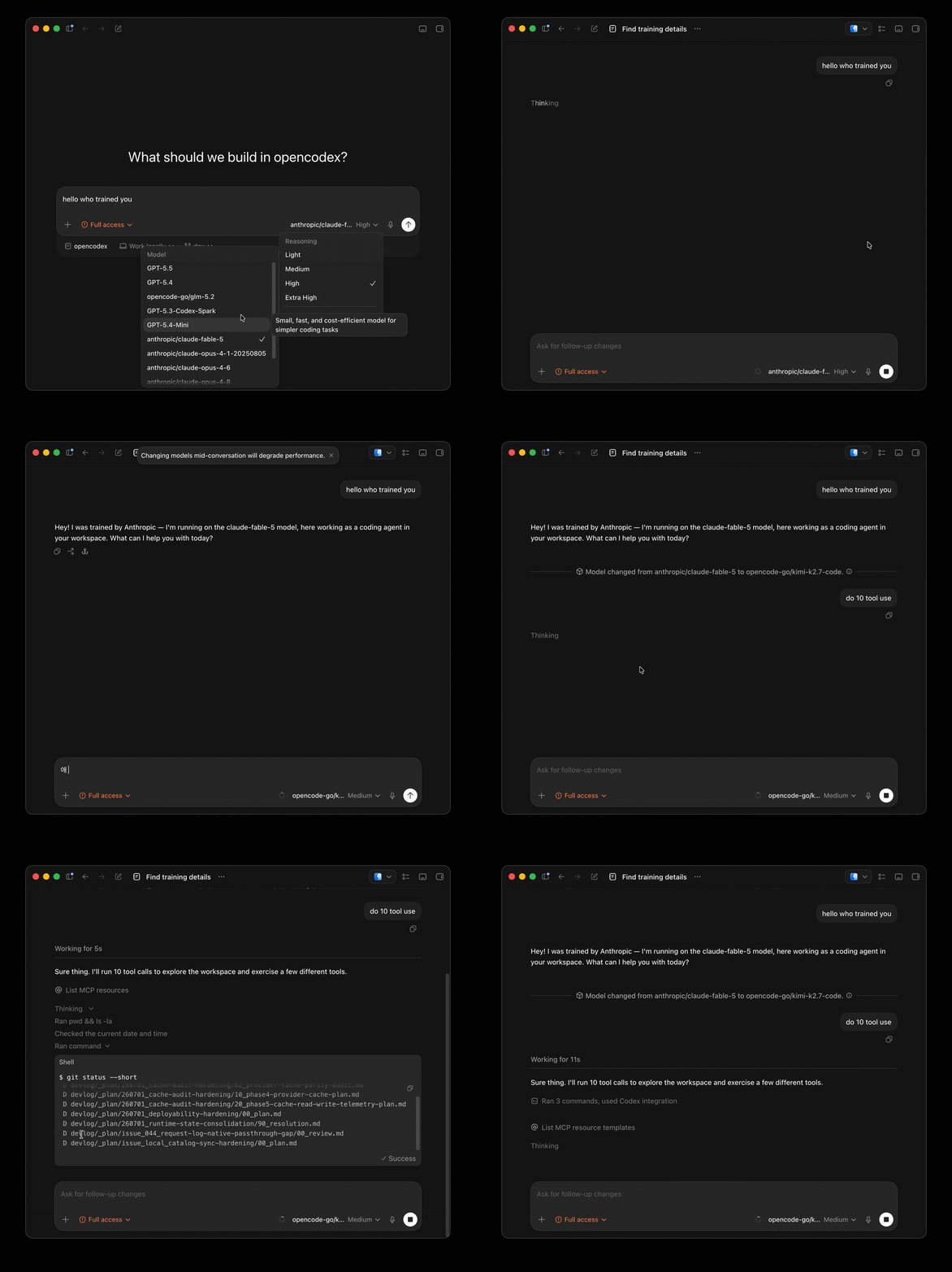
Universal provider proxy for OpenAI Codex & Claude Code — use any LLM (Claude, Gemini, Grok, DeepSeek, Ollama…) with Codex CLI, App, SDK, and Claude Code

Git-native persistent memory for AI coding agents. Implements Google OKF v0.2 with sub-300µs in-memory BM25 search, embedded MCP server, and progressive disclosure. Slashes token bloat by 80% with zero external databases or dependencies. Built in pure Go.

Local-first code intelligence graph for MCP and CLI. Builds a persistent map of your codebase so AI coding tools read only what matters, with benchmarked context reductions on reviews and large-repo workflows.

Stop your AI from making things up — it proposes, deterministic tools decide, every claim checked against ground truth with evidence. Grounded facts and context survive resets. Reverse engineering is the proving ground. MCP server + CLI.