


heygen-com/hyperframesFrameworks & SDKs
Write HTML. Render video. Built for agents.
49k
Flexible GraphRAG gives you a backend for ingesting documents from many sources, extracting entities and relationships, and querying the result with hybrid search and chat. It works with graph databases, RDF stores, vector databases, and search engines, and it exposes the system through REST, MCP, and three web frontends.
Builders who want to connect documents, graphs, and search into an agent-friendly knowledge system.
You can feed an agent live document sources and get graph-backed answers instead of plain text retrieval.
Combines vector search, full-text search, graph traversal, and SPARQL retrieval in one query path.
Extracts entities and relationships from documents and writes them into property graph and RDF stores.
Ingests files, cloud storage, enterprise repositories, web pages, Wikipedia, and YouTube.
Keeps supported sources and downstream stores updated with real-time or near real-time change detection.
Exposes ingest, search, and query tools to Claude Desktop and other MCP clients.
Includes React, Vue, and Angular clients for sources, processing, search, and chat.
Lets you choose LlamaIndex or LangChain per stage and use Docling, LlamaParse, or LiteParse for document parsing.
Can run ingestion, search, and query through Langflow flows or a CocoIndex pipeline.
cd flexible-graphrag
uv pip install -e .
# From the docker directory
docker-compose -f docker-compose.yaml -p flexible-graphrag up -d
# From the docker directory
docker-compose -f docker-compose.yaml -p flexible-graphrag up -d
# Linux/macOS
cp flexible-graphrag/env-sample.txt flexible-graphrag/.env

# Windows Command Prompt
copy flexible-graphrag\env-sample.txt flexible-graphrag\.env
cd flexible-graphrag
cp env-sample.txt .env   # Linux/macOS
copy env-sample.txt .env  # Windows










Langflow pipeline mode — a SharePoint auto-sync data source (MS Graph delta query) ingesting and targeting Qdrant vector, Elasticsearch, Neo4j, and Graphwise Ontotext GraphDB, with ontology-mode, AI chat drawing context from all four.

Can use 1 of 3 ingest pipelines with same configured data sources and database targets, with same UI and same REST / MCP APIs
Flexible GraphRAG is an open source AI context platform supporting a document processing pipeline (Docling, LlamaParse, or LiteParse), knowledge graph auto-building, ontologies, schemas, many LLM providers, GraphRAG and RAG, hybrid semantic search (fulltext, vector, property graph, RDF/SPARQL), AI query, and AI chat. The backend is Python with LlamaIndex and LangChain as peer frameworks. LlamaIndex is the default for each pipeline stage; LangChain can be selected per stage in environment configuration. The API is a REST FastAPI service. Angular, React, and Vue TypeScript frontends and an MCP server are included. The stack supports 14 data sources (10 with incremental auto-sync), 15 property graph databases, 4 RDF triple stores (Apache Jena Fuseki, Ontotext GraphDB, Oxigraph, Amazon Neptune RDF), 10 vector databases, OpenSearch / Elasticsearch / BM25 search, Alfresco, and Nuxeo. Databases and dashboards can be enabled with the provided Docker Compose layout. Optionally, the ingest pipeline, hybrid search, and AI query can run through customizable Langflow visual flows (12 custom Langflow components). As a further option, ingest can run on a CocoIndex (Rust engine) pipeline that reuses the same sources, targets, parsers and KG extractors, adding step-level memoization and automatic delete reconciliation.
New 8/18/26 — v0.8.0 release: Optional CocoIndex integration — Rust-backed CocoIndex pipeline mixed with Flexible GraphRAG sources (incl. detectors), functions, and targets (more PG/vector/RDF/search); same UI/REST/MCP. Standalone app.py also supported. Now with custom KG extractors (bring your own, or fall back to the built-in one per document) and entity resolution. New meeting-notes example (examples/cocoindex/meeting_notes_graph_any/) — a CocoIndex example ported to run against any configured graph store and source. See CocoIndex Integration.
New 8/8/26 — v0.7.2 release: Nuxeo added as a data source — all 3 UIs (React/Vue/Angular) plus REST/MCP, with basic / token / OAuth2 auth and real-time incremental sync via the Nuxeo audit event stream (Kafka). Alfresco OAuth2 and ticket authentication added across the source, all 3 UIs, initial ingest, and real-time sync. Alfresco Community 26.1 Docker upgrade. The MCP server gained optional OAuth2 on its transport (bearer token via your IdP) and moved to FastMCP 3. Requires python-alfresco-api >= 1.2.1.
New 7/20/26 — v0.7.1 release: Document processing now supports LiteParse in addition to the previous Docling and LlamaParse support. Langflow integration ships with fixes and an optional Langflow Docker image bundling the 12 "Flexible" components. MS Graph delta query support was added for more efficient incremental updating with SharePoint and OneDrive data sources.
New 7/5/26: Optional Langflow visual flows — the app can run its ingest pipeline, hybrid search, and AI query through customizable Langflow flows (12 custom Flexible GraphRAG components), using your existing .env config. See Langflow Integration.
New 5/6/26: 15 property graph databases total: 8 supported on both LlamaIndex and LangChain, 1 LI-only (Google Cloud Spanner Graph), 6 LC-only (ArangoDB, Apache AGE, Azure Cosmos DB for Gremlin, Apache HugeGraph, SurrealDB, TigerGraph). AWS Neptune RDF/SPARQL added. All 10 vector databases, all 3 search engines, and all LLM/embedding providers work with both LlamaIndex and LangChain. Every pipeline stage (chunking, KG extraction, graph write, vector write, search write, and retrieval fusion) can be configured independently. (Data source reading is LlamaIndex only; RDF stores use framework-independent adapters with LangChain Text-to-SPARQL retrieval.)
New: Flexible GraphRAG now supports RDF-based ontologies for both property graph databases and RDF triple store databases (Graphwise Ontotext GraphDB, Fuseki, and Oxigraph). Document ingestion with KG extraction, auto incremental data source change detection, and UI search (hybrid search, AI query, and AI chat) are all supported with both database types.
New: Flexible GraphRAG supports automatic incremental updates (Optional) from most data sources, keeping your Vector, Search and Graph databases synchronized in real-time or near real-time.
New: KG Spaces Integration of Flexible GraphRAG in Alfresco ACA Client
New in v0.6.0: Version 0.6.0 broadened framework and database choice: LangChain is a full peer to LlamaIndex (per-stage env pickers for chunking, vector, search, property graph, KG extraction, fusion). 15 property graph backends: 8 on both frameworks, Google Cloud Spanner (LlamaIndex-only), 6 LangChain-only (ArangoDB, Apache AGE, Azure Cosmos DB for Gremlin, HugeGraph, SurrealDB, TigerGraph). RDF includes Apache Jena Fuseki, Ontotext GraphDB, Oxigraph, and Amazon Neptune RDF. Incremental delete, LangChain adapters, and cleanup paths were extended across stores.
openai_like), OpenRouter, LiteLLM proxy, and vLLM — configurable via LLM_PROVIDER; see Supported LLM ProvidersEMBEDDING_KIND=openai_like), and LiteLLM — see LLM Configuration.env config applies), orchestrated visually. See Langflow Integration.PIPELINE_BACKEND=cocoindex) mixing CocoIndex connectors with Flexible GraphRAG sources (incl. event detectors), parsers, chunkers, embeddings, LI/LC KG extractors, and broader targets (all 15 PG + 10 vector + RDF + search) — same UI / REST / MCP. Mutually exclusive with ENABLE_INCREMENTAL_UPDATES=true and ENABLE_LANGFLOW_FLOWS=true. Standalone app.py also supported. See CocoIndex Integration.| Sources Tab | Processing Tab | Search Tab | Chat Tab |
|---|---|---|---|
 |  |  |  |
| Sources Tab | Processing Tab | Search Tab | Chat Tab |
|---|---|---|---|
 |  |  |  |
| Sources Tab | Processing Tab | Search Tab | Chat Tab |
|---|---|---|---|
 |  |  |  |
| Sources Tab | Processing Tab | Search Tab | Chat Tab |
|---|---|---|---|
 |  |  |  |
/flexible-graphrag)/flexible-graphrag-mcp)ingest_documents() support all 14 data sources with source-specific configs: filesystem, repositories (Alfresco, SharePoint, Box, CMIS, Nuxeo), cloud storage, web; skip_graph flag for all data sources; paths parameter for filesystem/Alfresco/CMIS; Alfresco also supports nodeDetails list (multi-select for KG Spaces)search_documents(), query_documents(), ingest_text(), system diagnostics, and health checks/flexible-graphrag-ui)/docker)docker/includes/ladybug-explorer.yaml).Flexible GraphRAG supports 14 different data sources for ingesting documents into your knowledge base (Nuxeo missing from older screenshots):


Flexible GraphRAG data sources, processing tab, auto-sync document states in Postgres (default pipeline, with auto incremental update system enabled), Neo4j shown (Qdrant, Elasticsearch not shown)
Each data source includes:
NEW! Flexible GraphRAG supports automatic incremental updates (Optional) from most data sources, keeping your Vector, Search and Graph databases synchronized in real-time or near real-time:
| Data Source | Auto-Sync Support | Detection Method | Status | Notes |
|---|---|---|---|---|
| Alfresco | ✅ Real-time | Apache ActiveMQ | Ready | |
| Nuxeo | ✅ Real-time | Nuxeo audit stream (Kafka) | Ready | |
| Amazon S3 | ✅ Real-time | SQS event notifications | Ready | |
| Azure Blob Storage | ✅ Real-time | Change feed | Ready | |
| Google Cloud Storage | ✅ Real-time | Pub/Sub notifications | Ready | |
| Google Drive | ✅ Near real-time | Changes API (polling) | Ready | |
| OneDrive | ✅ Near real-time | MS Graph delta query | Ready | |
| SharePoint | ✅ Near real-time | MS Graph delta query | Ready | |
| Box | ✅ Near real-time | Events API (polling) | Ready | |
| Local Filesystem | ✅ Real-time | OS events (watchdog) | Ready | REST API and MCP Server only |
| File Upload UI, CMIS, Web Pages, Wikipedia, YouTube | ➖ Not supported | - | - | No support for incremental updates |
Features:
Setup Requirements:
Enable incremental updates in your .env file:
ENABLE_INCREMENTAL_UPDATES=true

# PostgreSQL database for state management
# By default, uses the pgvector database from docker-compose.yaml
POSTGRES_INCREMENTAL_URL=postgresql://postgres:password@localhost:5433/postgres
Note: The incremental updates system uses PostgreSQL to track document state. The docker-compose.yaml includes a pgvector container that can be used both as a vector database option and for incremental updates state management. The database connection creates the necessary tables automatically on first use.
Usage:
PostgreSQL for State Management:
The docker/includes/postgres-pgvector.yaml sets up two databases automatically on first start: flexible_graphrag (for optional pgvector vector storage) and flexible_graphrag_incremental (for incremental update state management, with its schema created automatically). pgAdmin is also configured at http://localhost:5050 with both databases pre-registered — just enter the master password admin when prompted, then use password for the server connection and save it. See docs/DATABASES/POSTGRES-SETUP.md for details.
Documentation:
docs/DATA-SOURCES/INCREMENTAL-UPDATE-AUTO-SYNC/README.md](docs/DATA-SOURCESSign in to join the discussion.
No comments yet. Be the first to say what this is good for.
Write HTML. Render video. Built for agents.
Ultra-lightweight, open-source, self-hosted personal AI agent framework in Python with WebUI, tools, memory, MCP, multi-agent workflows, automation, and chat apps

SkillOpt is a text-space optimizer that trains reusable natural-language skills for frozen LLM agents through trajectory-driven edits, validation-gated updates, and deployable best_skill.md artifacts.
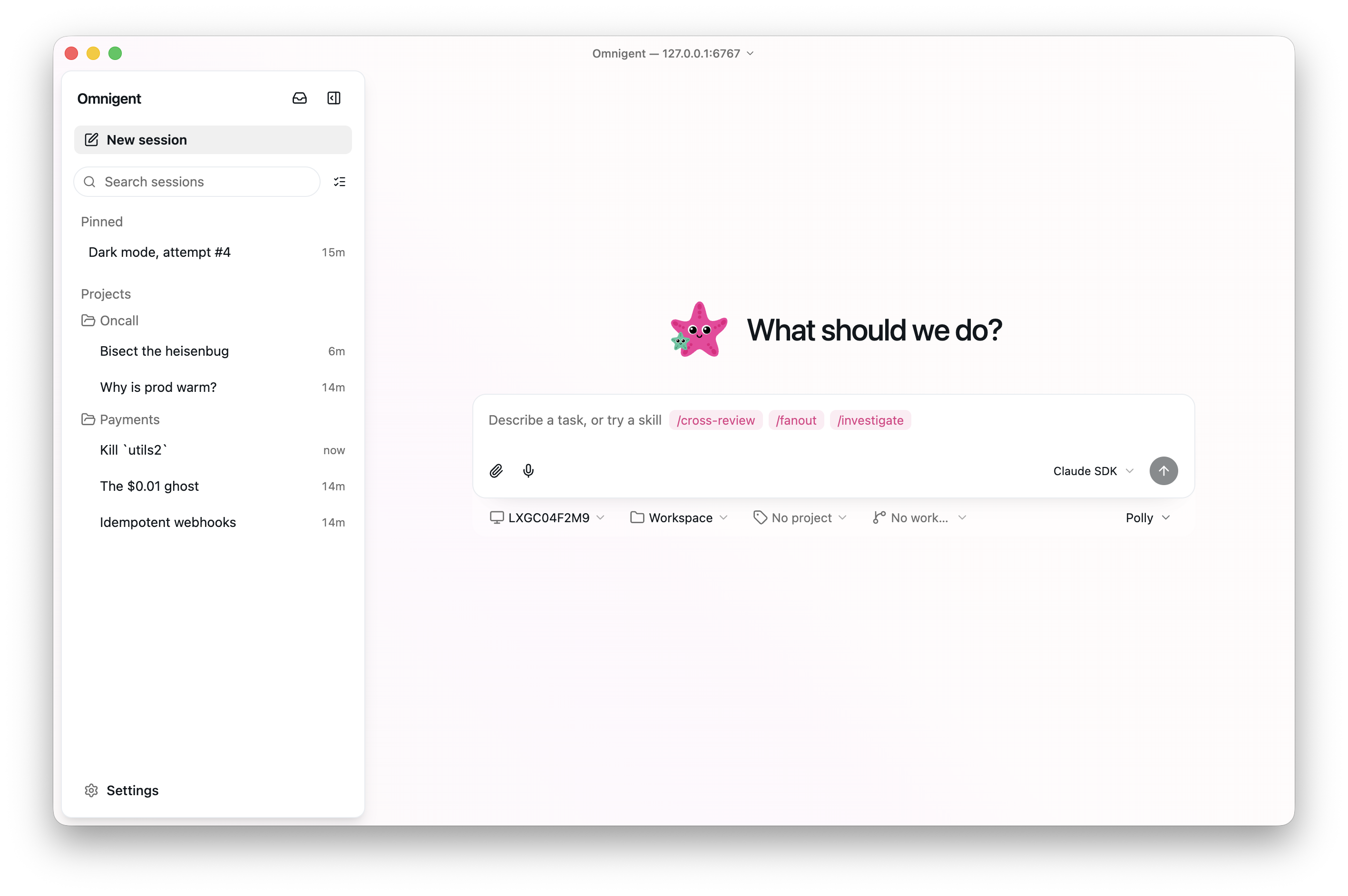
Omnigent is an open-source AI agent framework and meta-harness: orchestrate Claude Code, Codex, Cursor, Pi, and custom agents — swap harnesses without rewriting, enforce policies and sandboxing, and collaborate in real time from any device.

A theoretical reconstruction of the Claude Mythos architecture, built from first principles using the available research literature.
🕷️ An adaptive Web Scraping framework that handles everything from a single request to a full-scale crawl!