
koala73/worldmonitorConnectors
Real-time global intelligence dashboard. AI-powered news aggregation, geopolitical monitoring, and infrastructure tracking in a unified situational awareness interface
86k
Sourcerer MCP builds a semantic search index for a git workspace, then exposes it through MCP tools. It parses code into chunks, stores embeddings in a local database, and lets an agent jump straight to the functions or classes it needs.
Builders who want their agent to search code by meaning instead of reading whole files.
You can find relevant code and jump to exact chunks without wasting tokens on full-file reads.
Finds related code by meaning with the `semantic_search` tool instead of simple text matching.
Returns a specific function, class, or method by ID with `get_chunk_code`.
Uses `find_similar_chunks` to surface code that matches a selected chunk.
Rebuilds or refreshes the index with `index_workspace` and reports progress with `get_index_status`.
Respects `.gitignore`, watches changes with `fsnotify`, and re-indexes edited files.
go install github.com/st3v3nmw/sourcerer-mcp/cmd/sourcerer@latest
brew tap st3v3nmw/tap
brew install st3v3nmw/tap/sourcerer
An MCP server for semantic code search & navigation that helps AI agents work efficiently without burning through costly tokens. Instead of reading entire files, agents can search conceptually and jump directly to the specific functions, classes, and code chunks they need.

.gitignore files).sourcerer/ to .gitignore: This directory stores the embedded vector databasego install github.com/st3v3nmw/sourcerer-mcp/cmd/sourcerer@latest
brew tap st3v3nmw/tap
brew install st3v3nmw/tap/sourcerer
claude mcp add sourcerer -e OPENAI_API_KEY=your-openai-api-key -e SOURCERER_WORKSPACE_ROOT=$(pwd) -- sourcerer
{
  "mcpServers": {
    "sourcerer": {
      "command": "sourcerer",
      "env": {
        "OPENAI_API_KEY": "your-openai-api-key",
        "SOURCERER_WORKSPACE_ROOT": "/path/to/your/project"
      }
    }
  }
}
Sourcerer 🧙 builds a semantic search index of your codebase:
file.ext::Type::methodfsnotify.gitignore files via git check-ignore.sourcerer/db/semantic_search: Find relevant code using semantic searchget_chunk_code: Retrieve specific chunks by IDfind_similar_chunks: Find similar chunksindex_workspace: Manually trigger re-indexingget_index_status: Check indexing progressThis approach allows AI agents to find relevant code without reading entire files, dramatically reducing token usage and cognitive load.
Language support requires writing Tree-sitter queries to identify functions, classes, interfaces, and other code structures for each language.
Supported: Go, JavaScript, Markdown, Python, TypeScript
Planned: C, C++, Java, Ruby, Rust, and others
All contributions welcome! See CONTRIBUTING.md.
$ ls @stephenmwangi.com
- gh:st3v3nmw/obsidian-spaced-repetition
- gh:st3v3nmw/lsfr
Sign in to join the discussion.
No comments yet. Be the first to say what this is good for.
Real-time global intelligence dashboard. AI-powered news aggregation, geopolitical monitoring, and infrastructure tracking in a unified situational awareness interface
High-performance code intelligence MCP server. Indexes codebases into a persistent knowledge graph — average repo in milliseconds. 158 languages, sub-ms queries, 99% fewer tokens. Single static binary, zero dependencies.
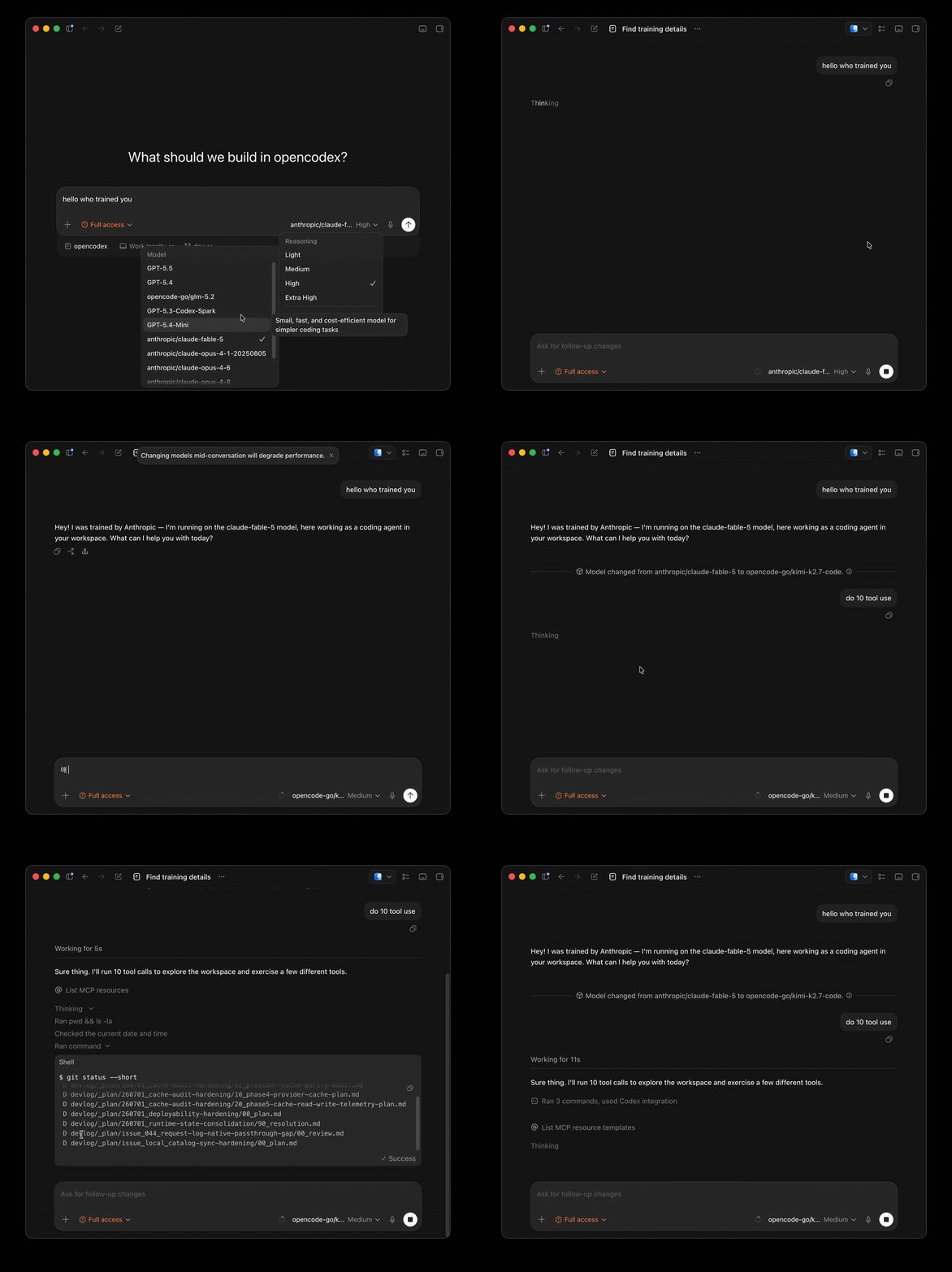
Universal provider proxy for OpenAI Codex & Claude Code — use any LLM (Claude, Gemini, Grok, DeepSeek, Ollama…) with Codex CLI, App, SDK, and Claude Code

Git-native persistent memory for AI coding agents. Implements Google OKF v0.2 with sub-300µs in-memory BM25 search, embedded MCP server, and progressive disclosure. Slashes token bloat by 80% with zero external databases or dependencies. Built in pure Go.

Local-first code intelligence graph for MCP and CLI. Builds a persistent map of your codebase so AI coding tools read only what matters, with benchmarked context reductions on reviews and large-repo workflows.

Stop your AI from making things up — it proposes, deterministic tools decide, every claim checked against ground truth with evidence. Grounded facts and context survive resets. Reverse engineering is the proving ground. MCP server + CLI.