

heygen-com/hyperframesFrameworks & SDKs
Write HTML. Render video. Built for agents.
49k
Remote-MCP provides a local MCP client package that forwards requests to a remote MCP server, plus a server package for exposing MCP tools remotely. The README shows both the client config and a server example built with `MCPRouter` and `createHTTPServer`.
Builders who want to centralize tools and model context behind a remote MCP server.
You can connect your agent to remote tools and context without waiting for native remote MCP support.
`@remote-mcp/client` runs as a local MCP server and forwards calls to a remote endpoint.
`@remote-mcp/server` lets you define tools and expose them over HTTP.
The roadmap and examples show basic MCP command, tool, and prompt handling.
The client config supports `HTTP_HEADER_*` environment variables for passing request headers.
The repo includes Cloudflare Workers and standalone Node.js examples.
$ npm install @remote-mcp/client @trpc/client@next zod
A type-safe, bidirectional and simple solution for remote MCP communication, allowing remote access and centralized management of model contexts.
%%{init: {"flowchart": {"htmlLabels": false}} }%%
graph TD
    %% Modern, Bright Color Styling with white text
    classDef client fill:#22c55e,stroke:#059669,stroke-width:2px,color:#ffffff
    classDef gateway fill:#06b6d4,stroke:#0891b2,stroke-width:2px,color:#ffffff
    classDef backend fill:#f97316,stroke:#ea580c,stroke-width:2px,color:#ffffff
    classDef resource fill:#8b5cf6,stroke:#7c3aed,stroke-width:2px,color:#ffffff
    classDef server fill:#06b6d4,stroke:#0891b2,stroke-width:2px,color:#ffffff

    linkStyle default stroke:#64748b,stroke-width:1.5px,stroke-dasharray: 5 5

    %% Current MCP Setup (Multiple Local Servers)
    subgraph Current["Current Setup (Local)"]
        direction LR
        subgraph ClientGroup["Client"]
            A[Client]:::client
        end

        subgraph Servers["Local MCP Servers"]
            direction TB
            B1["Local MCP Server (DB)"]:::server -->|"DB Access"| C1[DB]:::resource
            B2["Local MCP Server (API 1)"]:::server -->|"API Access"| C2["Web API 1"]:::resource
            B3["Local MCP Server (API 2)"]:::server -->|"API Access"| C3["Web API 2"]:::resource
        end

        A -->|"MCP Protocol"| B1
        A -->|"MCP Protocol"| B2
        A -->|"MCP Protocol"| B3
    end

    %% Vertical separator
    Current --> Proposed

    %% Proposed MCP Architecture (Decoupled)
    subgraph Proposed["Proposed Architecture (Remote)"]
        direction LR
        D[Client/Host]:::client -->|"MCP Protocol"| E["Local MCP Server (@remote-mcp/client)"]:::server
        E <-->|"tRPC(HTTP)"| F["Remote MCP Server (@remote-mcp/server)"]:::backend

        %% Separated Resources
        F -->|"DB Access"| G1[DB]:::resource
        F -->|"API Access"| G2["Web API 1"]:::resource
        F -->|"API Access"| G3["Web API 2"]:::resource
    end
Yes, I know that the official MCP roadmap includes remote MCP support in the first quarter of 2025. However, the need for remote access was immediate for me, and likely for many others. This library was created to bridge that gap, providing a way to connect to a remote MCP server from a local MCP client right now, without waiting for future official implementations.
Note: I don't want this to be a sophisticated or overcomplicated thing. This way just works right now.
Note: This project is currently under active development and is considered experimental. Expect breaking changes and potential issues.
Just put the following code in your MCP client settings, in here I'm using Claude as an example:
{
  "mcpServers": {
    "remote-mcp": {
      "command": "npx",
      "args": ["-y", "@remote-mcp/client"],
      "env": {
        "REMOTE_MCP_URL": "http://localhost:9512",
        "HTTP_HEADER_Authorization": "Bearer <token>"
      }
    }
  }
}
Install requirements:
$ npm install @remote-mcp/client @trpc/client@next zod
then write your own code like the following:
import { RemoteMCPClient } from "@remote-mcp/client";

const client = new RemoteMCPClient({
  remoteUrl: "http://localhost:9512",

  onError: (method, error) => console.error(`Error in ${method}:`, error)
});

void client.start();
You can see some examples in the examples directory.
After npm install @remote-mcp/server, you can your own remote MCP server like the following:
import { MCPRouter, LogLevel } from "@remote-mcp/server";
import { createHTTPServer } from '@trpc/server/adapters/standalone';

import { z } from "zod";

// Create router instance
const mcpRouter = new MCPRouter({
  logLevel: LogLevel.DEBUG,
  name: "example-server",
  version: "1.0.0",
  capabilities: {
    logging: {},
  },
});

// Add example tool
mcpRouter.addTool(
  "calculator",
  {
    description:
      "Perform basic calculations. Add, subtract, multiply, divide. Invoke this every time you need to perform a calculation.",
    schema: z.object({
      operation: z.enum(["add", "subtract", "multiply", "divide"]),
      a: z.string(),
      b: z.string(),
    }),
  },
  async (args) => {
    const a = Number(args.a);
    const b = Number(args.b);

    let result: number;
    switch (args.operation) {
      case "add":
        result = Number(a) + b;
        break;
      case "subtract":
        result = a - b;
        break;
      case "multiply":
        result = a * b;
        break;
      case "divide":
        if (b === 0) throw new Error("Division by zero");
        result = a / b;
        break;
    }

    return {
      content: [{ type: "text", text: `${result}` }],
    };
  },
);

const appRouter = mcpRouter.createTRPCRouter();

void createHTTPServer({
  router: appRouter,
  createContext: () => ({}),
}).listen(Number(process.env.PORT || 9512));
Then you can see like the following in your MCP client:
This repository contains:
@remote-mcp/client: Client library acting as a local MCP server, connecting to a remote implementation.@remote-mcp/server: Server library for creating remotely accessible MCP services (used as the remote implementation).@remote-mcp/nestjs)Contributions are welcome. See CONTRIBUTING.md for details.
This library is a complementary extension, not part of the official MCP specification, built upon existing MCP concepts.
This project is licensed under the MIT License. See the LICENSE file for details.
Sign in to join the discussion.
No comments yet. Be the first to say what this is good for.
Write HTML. Render video. Built for agents.
Ultra-lightweight, open-source, self-hosted personal AI agent framework in Python with WebUI, tools, memory, MCP, multi-agent workflows, automation, and chat apps

SkillOpt is a text-space optimizer that trains reusable natural-language skills for frozen LLM agents through trajectory-driven edits, validation-gated updates, and deployable best_skill.md artifacts.
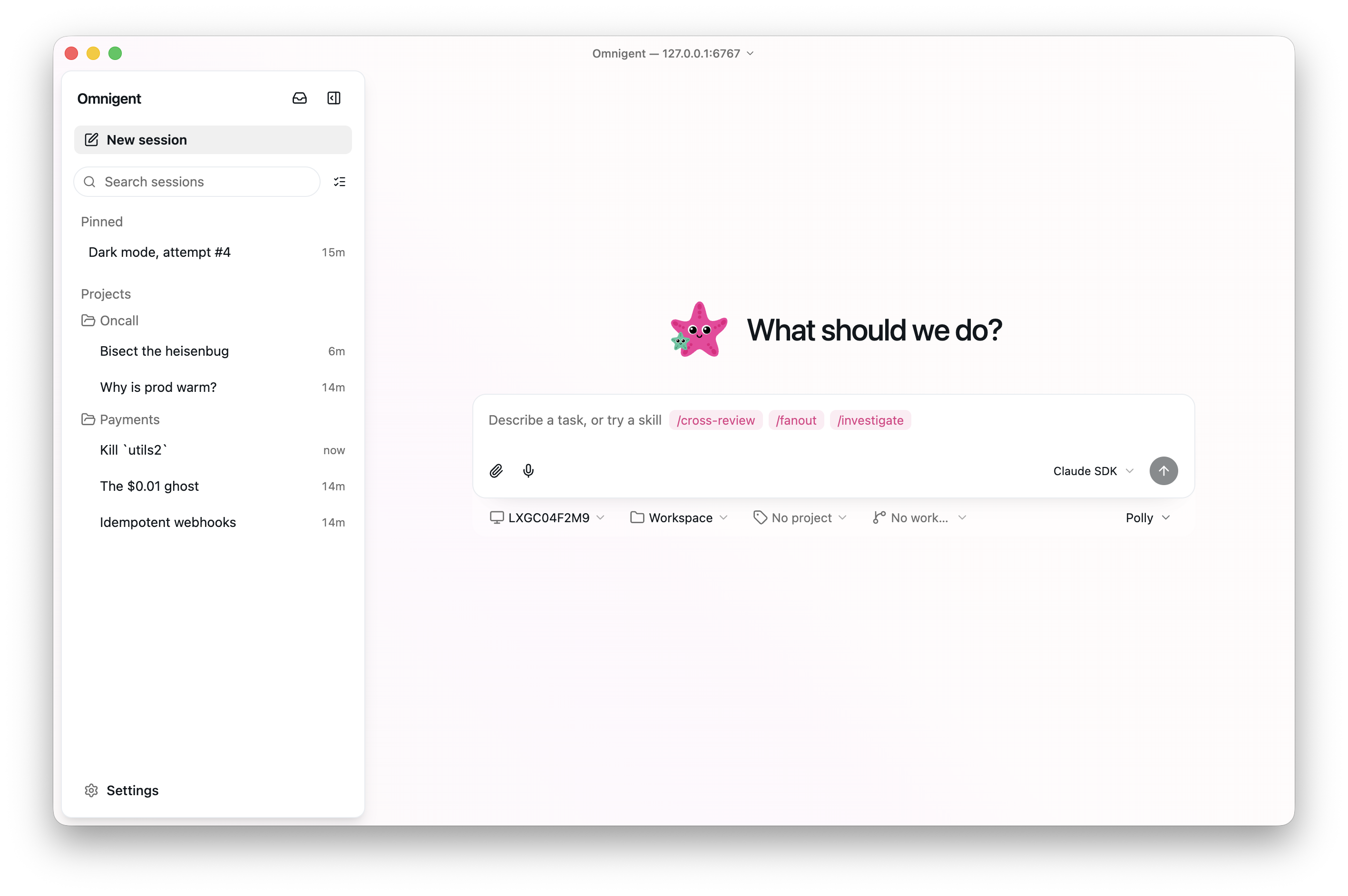
Omnigent is an open-source AI agent framework and meta-harness: orchestrate Claude Code, Codex, Cursor, Pi, and custom agents — swap harnesses without rewriting, enforce policies and sandboxing, and collaborate in real time from any device.

A theoretical reconstruction of the Claude Mythos architecture, built from first principles using the available research literature.
🕷️ An adaptive Web Scraping framework that handles everything from a single request to a full-scale crawl!