

heygen-com/hyperframesFrameworks & SDKs
Write HTML. Render video. Built for agents.
49k
This library wraps Claude Code CLI in an idiomatic Go API. You can use `Query` for one-shot work or `WithClient` and `Client` for streaming, multi-turn sessions, and automatic cleanup.
Builders who want to call Claude Code from Go code, scripts, or automation.
You can build Go apps that ask Claude Code to read files, use tools, keep session state, and stream replies.
`Query` handles one-shot tasks, while `WithClient` and `Client` support interactive, multi-turn workflows with streaming.
Named sessions keep separate conversation context, so you can return to different threads without mixing them up.
The SDK can allow built-in tools and external MCP tools, including file operations and service integrations.
It includes permission callbacks, hooks, and file checkpointing for controlling and observing agent actions.
You can define custom agents and multi-agent setups with prompts, tools, and model choices.
go get github.com/severity1/claude-agent-sdk-go


Unofficial Go SDK for Claude Code CLI integration. Build production-ready applications that leverage Claude's advanced code understanding, secure file operations, and external tool integrations through a clean, idiomatic Go API with comprehensive error handling and automatic resource management.
Two powerful APIs for different use cases:

go get github.com/severity1/claude-agent-sdk-go
Prerequisites: Go 1.18+, Node.js, Claude Code (npm install -g @anthropic-ai/claude-code)
Two APIs for different needs - Query for automation, Client for interaction
100% Python SDK compatibility - Same functionality, Go-native design
Automatic resource management - WithClient provides Go-idiomatic context manager pattern
Session management - Isolated conversation contexts with Query() and QueryWithSession()
Built-in tool integration - File operations, AWS, GitHub, databases, and more
Production ready - Comprehensive error handling, timeouts, resource cleanup
Security focused - Granular tool permissions and access controls
Context-aware - Maintain conversation state across multiple interactions
Advanced capabilities - Permission callbacks, lifecycle hooks, file checkpointing
Best for automation, scripting, and tasks with clear completion criteria:
package main

import (
    "context"
    "errors"
    "fmt"
    "log"

    "github.com/severity1/claude-agent-sdk-go"
)

func main() {
    fmt.Println("Claude Agent SDK - Query API Example")
    fmt.Println("Asking: What is 2+2?")

    ctx := context.Background()

    // Create and execute query
    iterator, err := claudecode.Query(ctx, "What is 2+2?")
    if err != nil {
        // Use error type helpers for specific error handling
        if cliErr := claudecode.AsCLINotFoundError(err); cliErr != nil {
            fmt.Printf("Claude CLI not found: %v\n", cliErr)
            fmt.Println("Install with: npm install -g @anthropic-ai/claude-code")
            return
        }
        if connErr := claudecode.AsConnectionError(err); connErr != nil {
            fmt.Printf("Connection failed: %v\n", connErr)
            return
        }
        log.Fatalf("Query failed: %v", err)
    }
    defer iterator.Close()

    fmt.Println("\nResponse:")

    // Iterate through messages
    for {
        message, err := iterator.Next(ctx)
        if err != nil {
            if errors.Is(err, claudecode.ErrNoMoreMessages) {
                break
            }
            log.Fatalf("Failed to get message: %v", err)
        }

        if message == nil {
            break
        }

        // Handle different message types
        switch msg := message.(type) {
        case *claudecode.AssistantMessage:
            for _, block := range msg.Content {
                if textBlock, ok := block.(*claudecode.TextBlock); ok {
                    fmt.Print(textBlock.Text)
                }
            }
        case *claudecode.ResultMessage:
            if msg.IsError {
                if msg.Result != nil {
                    log.Printf("Error: %s", *msg.Result)
                } else {
                    log.Printf("Error: unknown error")
                }
            }
        }
    }

    fmt.Println("\nQuery completed!")
}
WithClient provides automatic resource management (equivalent to Python's async with):
package main

import (
    "context"
    "fmt"
    "log"

    "github.com/severity1/claude-agent-sdk-go"
)

func main() {
    fmt.Println("Claude Agent SDK - Client Streaming Example")
    fmt.Println("Asking: Explain Go goroutines with a simple example")

    ctx := context.Background()
    question := "Explain what Go goroutines are and show a simple example"

    // WithClient handles connection lifecycle automatically
    err := claudecode.WithClient(ctx, func(client claudecode.Client) error {
        fmt.Println("\nConnected! Streaming response:")

        // Simple query uses default session
        if err := client.Query(ctx, question); err != nil {
            return fmt.Errorf("query failed: %w", err)
        }

        // Stream messages in real-time
        msgChan := client.ReceiveMessages(ctx)
        for {
            select {
            case message := <-msgChan:
                if message == nil {
                    return nil // Stream ended
                }

                switch msg := message.(type) {
                case *claudecode.AssistantMessage:
                    // Print streaming text as it arrives
                    for _, block := range msg.Content {
                        if textBlock, ok := block.(*claudecode.TextBlock); ok {
                            fmt.Print(textBlock.Text)
                        }
                    }
                case *claudecode.ResultMessage:
                    if msg.IsError {
                        if msg.Result != nil {
                            return fmt.Errorf("error: %s", *msg.Result)
                        }
                        return fmt.Errorf("error: unknown error")
                    }
                    return nil // Success, stream complete
                }
            case <-ctx.Done():
                return ctx.Err()
            }
        }
    })

    if err != nil {
        log.Fatalf("Streaming failed: %v", err)
    }

    fmt.Println("\n\nStreaming completed!")
}
Maintain conversation context across multiple queries with session management:
package main

import (
    "context"
    "fmt"
    "log"

    "github.com/severity1/claude-agent-sdk-go"
)

func main() {
    fmt.Println("Claude Agent SDK - Session Management Example")

    ctx := context.Background()

    err := claudecode.WithClient(ctx, func(client claudecode.Client) error {
        fmt.Println("\nDemonstrating isolated sessions:")

        // Session A: Math conversation
        sessionA := "math-session"
        if err := client.QueryWithSession(ctx, "Remember this: x = 5", sessionA); err != nil {
            return err
        }

        // Session B: Programming conversation
        sessionB := "programming-session"
        if err := client.QueryWithSession(ctx, "Remember this: language = Go", sessionB); err != nil {
            return err
        }

        // Query each session - they maintain separate contexts
        fmt.Println("\nQuerying math session:")
        if err := client.QueryWithSession(ctx, "What is x * 2?", sessionA); err != nil {
            return err
        }

        fmt.Println("\nQuerying programming session:")
        if err := client.QueryWithSession(ctx, "What language did I mention?", sessionB); err != nil {
            return err
        }

        // Default session query (separate from above)
        fmt.Println("\nDefault session (no context from above):")
        return client.Query(ctx, "What did I just ask about?") // Won't know about x or Go
    })

    if err != nil {
        log.Fatalf("Session demo failed: %v", err)
    }

    fmt.Println("Session management demo completed!")
}
Traditional Client API (still supported):
func traditionalClientExample() {
    ctx := context.Background()

    client := claudecode.NewClient()
    if err := client.Connect(ctx); err != nil {
        log.Fatalf("Failed to connect: %v", err)
    }
    defer client.Disconnect() // Manual cleanup required

    // Use client...
}
Integrate with file systems, cloud services, databases, and development tools:
Core Tools (built-in file operations):
// File analysis and documentation generation
claudecode.Query(ctx, "Read all Go files and create API documentation",
    claudecode.WithAllowedTools("Read", "Write"))
MCP Tools (external service integrations):
// AWS infrastructure automation
claudecode.Query(ctx, "List my S3 buckets and analyze their security settings",
    claudecode.WithAllowedTools("mcp__aws-api-mcp__call_aws", "mcp__aws-api-mcp__suggest_aws_commands", "Write"))
Customize Claude's behavior with functional options:
Tool & Permission Control:
claudecode.Query(ctx, prompt,
    claudecode.WithAllowedTools("Read", "Write"),
    claudecode.WithPermissionMode(claudecode.PermissionModeAcceptEdits))
System Behavior:
claudecode.Query(ctx, prompt,
    claudecode.WithSystemPrompt("You are a senior Go developer"),
    claudecode.WithModel("claude-sonnet-4-5"),
    claudecode.WithMaxTurns(10))
Environment Variables (new in v0.2.5):
// Proxy configuration
claudecode.NewClient(
    claudecode.WithEnv(map[string]string{
        "HTTP_PROXY":  "http://proxy.example.com:8080",
        "HTTPS_PROXY": "http://proxy.example.com:8080",
    }))

// Individual variables
claudecode.NewClient(
    claudecode.WithEnvVar("DEBUG", "1"),
    claudecode.WithEnvVar("CUSTOM_PATH", "/usr/local/bin"))
Context & Working Directory:
claudecode.Query(ctx, prompt,
    claudecode.WithCwd("/path/to/project"),
    claudecode.WithAddDirs("src", "docs"))
Session Management (Client API):
// WithClient provides isolated session contexts
err := claudecode.WithClient(ctx, func(client claudecode.Client) error {
    // Default session
    client.Query(ctx, "Remember: x = 5")

    // Named session (isolated context)
    return client.QueryWithSession(ctx, "What is x?", "math-session")
})
Programmatic Agents:
// Define custom agents for specialized tasks
claudecode.Query(ctx, "Review this codebase for security issues",
    claudecode.WithAgent("security-reviewer", claudecode.AgentDefinition{
        Description: "Reviews code for security vulnerabilities",
        Prompt:      "You are a security expert focused on OWASP top 10...",
        Tools:       []string{"Read", "Grep", "Glob"},
        Model:       claudecode.AgentModelSonnet,
    }))

// Multiple agents for complex workflows
claudecode.Query(ctx, "Analyze and improve this code",
    claudecode.WithAgents(map[string]claudecode.AgentDefinition{
        "code-reviewer": {
            Description: "Reviews code quality and best practices",
            Prompt:      "You are a senior engineer focused on code quality...",
            Tools:       []string{"Read", "Grep"},
            Model:       claudecode.AgentModelSonnet,
        },
        "test-writer": {
            Description: "Writes comprehensive unit tests",
            Prompt:      "You are a testing expert...",
            Tools:       []string{"Read", "Write", "Bash"},
            Model:       claudecode.AgentModelHaiku,
        },
    }))
Available agent models: AgentModelSonnet, AgentModelOpus, AgentModelHaiku, AgentModelInherit
The SDK includes advanced capabilities for production use:
GetStreamIssues() and GetStreamStats()See the examples directory for complete documentation.
Use Query API when you:
Use Client API (WithClient) when you:
See examples/README.md for detailed documentation.
| Example | Description |
|---|---|
01_quickstart | Query API fundamentals |
02_client_streaming | WithClient streaming basics |
03_client_multi_turn | Multi-turn conversations |
| Example | Description |
|---|---|
04_query_with_tools | File operations with Query API |
05_client_with_tools | Interactive file workflows |
06_query_with_mcp | External MCP server integration |
07_client_with_mcp | Multi-turn MCP workflows |
| Example | Description |
|---|---|
08_client_advanced | Error handling, model switching |
09_context_manager | WithClient vs manual patterns |
10_session_management | Session isolation |
| Example | Description |
|---|---|
11_permission_callback | Permission callbacks |
12_hooks | Lifecycle hooks |
13_file_checkpointing | File rewind capabilities |
14_sdk_mcp_server | In-process custom tools |
MIT
Sign in to join the discussion.
No comments yet. Be the first to say what this is good for.
Write HTML. Render video. Built for agents.
Ultra-lightweight, open-source, self-hosted personal AI agent framework in Python with WebUI, tools, memory, MCP, multi-agent workflows, automation, and chat apps

SkillOpt is a text-space optimizer that trains reusable natural-language skills for frozen LLM agents through trajectory-driven edits, validation-gated updates, and deployable best_skill.md artifacts.
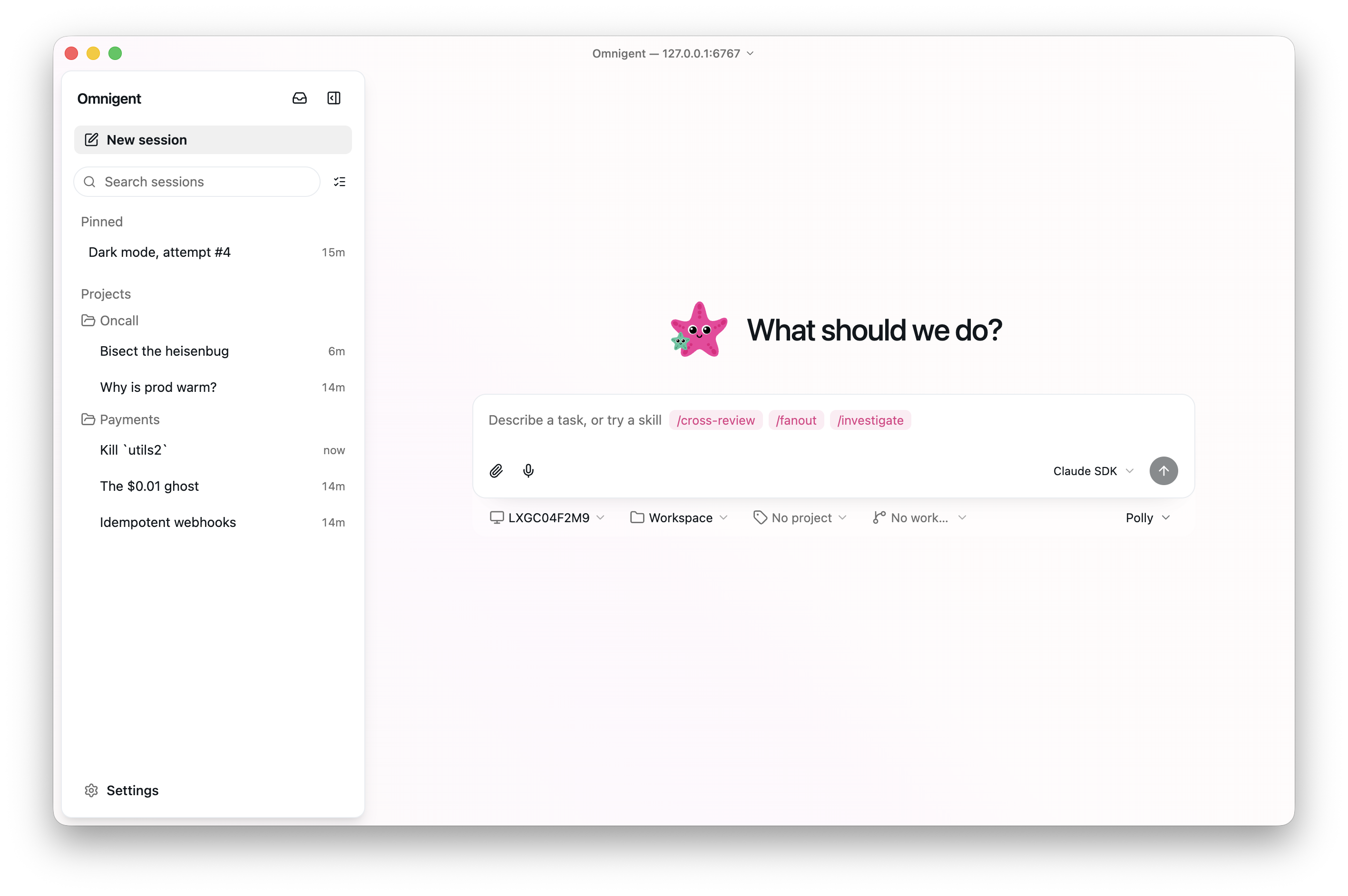
Omnigent is an open-source AI agent framework and meta-harness: orchestrate Claude Code, Codex, Cursor, Pi, and custom agents — swap harnesses without rewriting, enforce policies and sandboxing, and collaborate in real time from any device.

A theoretical reconstruction of the Claude Mythos architecture, built from first principles using the available research literature.
🕷️ An adaptive Web Scraping framework that handles everything from a single request to a full-scale crawl!