

heygen-com/hyperframesFrameworks & SDKs
Write HTML. Render video. Built for agents.
49k
This repo gives Python access to the Chemistry Development Kit so you can convert between SMILES, InChI, and InChI keys, and fetch basic compound details. It also adds an MCP server that lets a tool-using agent search for compounds, resolve names, generate structure images, and look up properties through CDK and linked chemistry data sources.
Builders who work with chemical structures and want Python wrappers plus MCP tools for compound lookup and conversion.
You can turn chemical identifiers into each other and ask an agent to look up compound details without leaving your workflow.
Wraps the Java Chemistry Development Kit so Python code can use CDK functionality.
Converts between SMILES, InChI, and InChI keys for compounds.
Lets an MCP client search by compound name and return matching structure data.
Exposes simple compound properties such as molecular mass.
Can create an SVG image of a compound structure.
Provides a tool server for LLMs that can call the wrapper and related chemistry data sources.
uv tool install . --force-reinstall
Cheminformatics only has a small number of open source tools, e.g. OpenBabel, the Chemistry Development Kit and RDKit.
Every framework has its pros and cons, e.g. OpenBabel has issues with InChI generation from SMILES.
CDK lacks the ability to be used with Python, while Python has become the indispensable programming language for data science, also in cheminformatics and computational biology.
Also, all three frameworks lack integration with databases.
Before installing cdk_pywrapper, make sure to have a Java JDK available on your system, e.g. OpenJDK.
Then, you can install from the repository directly.
# Create Python virtual environment named 'cdk_pywrapper'
python3 -m venv ./cdk_pywrapper
source ./cdk_pywrapper/bin/activate

# Clone repository from GitHub
git clone https://github.com/sebotic/cdk_pywrapper.git
cd cdk_pywrapper

# Install into created venv
pip install .
This will install the package on your local system. Setuptools will take care of downloading the CDK.jar and it will build the cdk_bridge.java. So after that, cdk_pywrapper should be ready to use, like in the example below.
cdk_pywrapper was tested on Linux and MacOS, but it should also work on Windows.
from cdk_pywrapper.cdk_pywrapper import Compound

smiles = 'CCN1C2=CC=CC=C2SC1=CC=CC=CC3=[N+](C4=CC=CC=C4S3)CC.[I-]'
cmpnd = Compound(compound_string=smiles, identifier_type='smiles')
ikey = cmpnd.get_inchi_key()
print(ikey)
Output: 'MNQDKWZEUULFPX-UHFFFAOYSA-M'
I also added a MCP server now which makes use of the functions of cdk_pywrapper and also integrates with UNII, Chembl and Guide to Pharmacology data.
It requires a LLM capable of tool use.
Key features:
Most conveniently, one would install it locally as a tool, using the uv package manager. Install uv first, according to it's instructions, then run from the repo root:
uv tool install . --force-reinstall
For using the MCP server, add this configuration to your respective LLM MCP configuration.
  "cdk_pywrapper-mcp-server": {
    "command": "uv",
    "args": [
      "tool",
      "run",
      "--from",
      "cdk-pywrapper",
      "cdk_pywrapper-mcp-server"
    ],
    "env": {}
  }
Search for structure of compound vemurafenib.
Will return SMILES, InchI and Inchi key for vemurafenib.
Get details for compound vemurafenib.
Will return synonyms and compound structure.
Get inchi for CCOH
Will return the InChI for Ethanol, which is InChI=1S/C2H6O/c1-2-3/h3H,2H2,1H3
This conversion works for any valid SMILES string and can also return the InChI key.
Get the compound names for this smiles CC1=CN=C(C(=C1OC)C)CS(=O)C2=NC3=C(N2)C=C(C=C3)OC
That should return Omeprazole. Use a modern thinking model like Google Gemini 2.5. Gemini will figure out on its own that it first needs to convert the SMILES to an InChI key and then use the Chembl tool to get the name.
Sign in to join the discussion.
No comments yet. Be the first to say what this is good for.
Write HTML. Render video. Built for agents.
Ultra-lightweight, open-source, self-hosted personal AI agent framework in Python with WebUI, tools, memory, MCP, multi-agent workflows, automation, and chat apps

SkillOpt is a text-space optimizer that trains reusable natural-language skills for frozen LLM agents through trajectory-driven edits, validation-gated updates, and deployable best_skill.md artifacts.
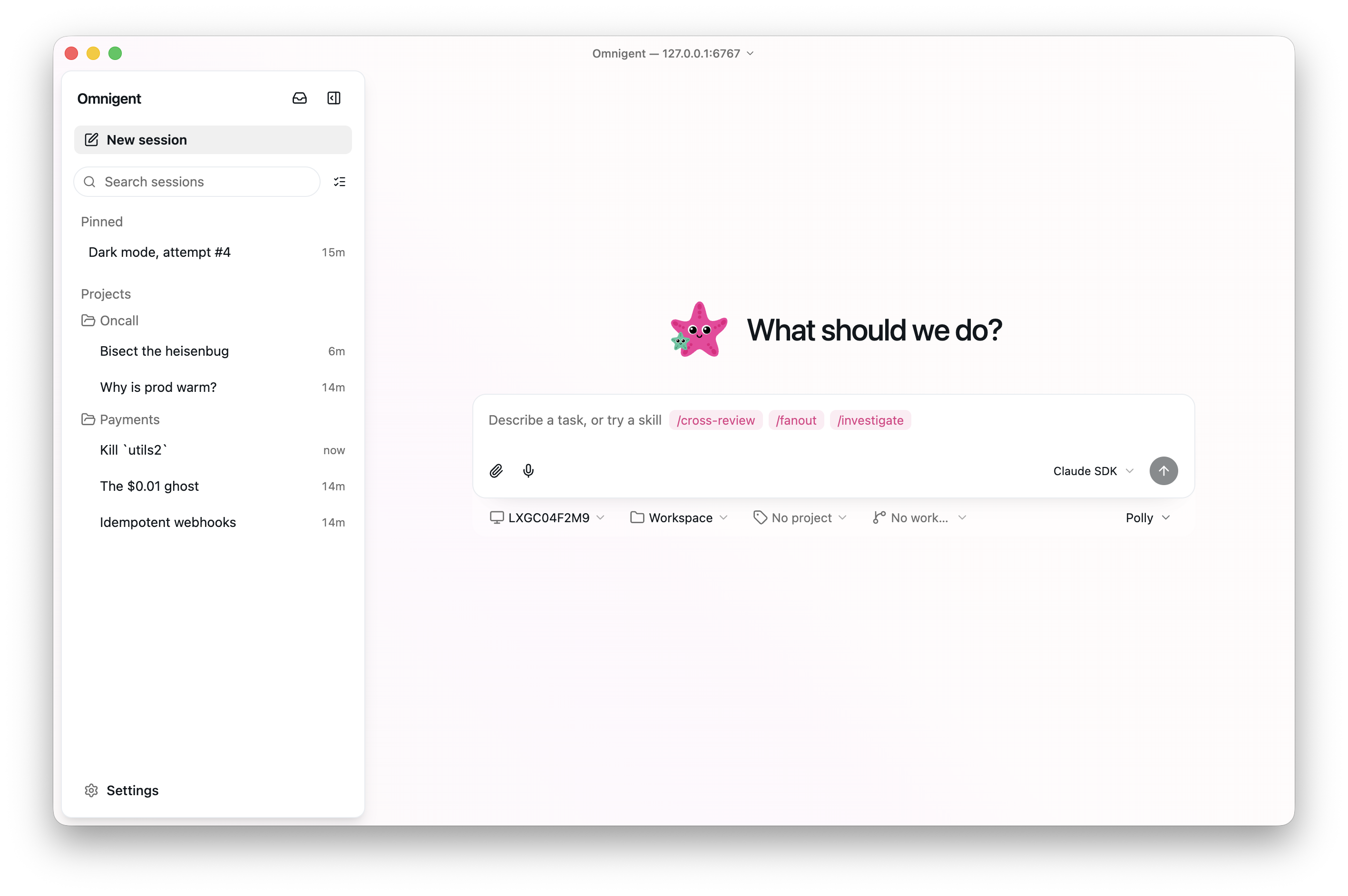
Omnigent is an open-source AI agent framework and meta-harness: orchestrate Claude Code, Codex, Cursor, Pi, and custom agents — swap harnesses without rewriting, enforce policies and sandboxing, and collaborate in real time from any device.

A theoretical reconstruction of the Claude Mythos architecture, built from first principles using the available research literature.
🕷️ An adaptive Web Scraping framework that handles everything from a single request to a full-scale crawl!