

heygen-com/hyperframesFrameworks & SDKs
Write HTML. Render video. Built for agents.
49k
AgentUp lets you define an agent as a portable, configurable unit with built-in auth, middleware, and tool access. It supports MCP servers, agent-to-agent discovery, async tasks, and deterministic routing so you can run the same agent across local development and production.

Builders who want reusable agent infrastructure with shared security, tools, and runtime behavior.
You can ship agents that start the same way, connect to tools safely, and run across environments without rewriting the setup.
Define agent behavior, dependencies, and capabilities through config instead of assembling everything manually.
Includes scope-based access control plus OAuth2, JWT, and API key auth for agent and tool access.
Supports MCP over STDIO, SSE, and Streamable HTTP so agents can connect to external tools and services.
Generates agent cards so other agents can discover and talk to your agent.
Supports long-running tasks with callback notifications and state persistence backends such as Redis.
Routes requests to code-based services when that is a better fit than sending everything through the model.
pip install agentup






|
🚀 Active Development
🏃♂️ We are moving fast, things will break! |
Just as Docker made applications immutable, reproducible, and ops-friendly, AgentUp does the same for AI agents. Define your agent with configuration, and it runs consistently anywhere. Share agents with teammates who can clone / fork and run them instantly. Deploy knowing your agent will behave identically across development, staging, and production environments.
When you need to customize, write your code as clean abstraction and load into AgentUp's runtime and inherit all of AgentUp's middleware and security. You can the manage your code as a depedency , along with any other communiity based plugins you used. No more fighting against a framework that breaks your app each time they changed something. Check out the AgentUp Plugin registry for a few of the current plugins on offer.

AgentUp is built by engineers who've created open-source solutions powering mission-critical systems at Google, GitHub, Nvidia, Red Hat, Shopify and more. We understand what it takes to build stable, secure, scalable software - and we're applying those same principles to make AI agents truly production-ready, secure and reliable.
AgentUp delivers enterprise-grade agent infrastructure built for professional developers who demand both power and simplicity.
Developer-First Operations: Built by developers who understand real-world constraints. Each agent lives in its own repository with a single AgentUp configuration file. Clone, run agentup run, and all dependencies resolve during initialization - no more environment setup headaches.
Secure by Design: Fine-grained, scope-based access control with OAuth2, JWT, and API key authentication built-in, preventing unauthorized Tools / MCP access, ensuring data protection. Security isn't an afterthought - it's foundational architecture in AgentUp.
Configuration-Driven Architecture: Define complex agent behaviors, data sources, and workflows through declarative configuration. Skip weeks of boilerplate and framework wrestling. Your agents become portable, versionable assets with clear contracts defining their capabilities and interactions.
Extensible Ecosystem for customizations: Need RAG, image processing, custom API logic? No problem. Leverage community plugins or build custom extensions that automatically inherit AgentUp's middleware, security, and operational features. Independent plugin versioning integrates seamlessly with existing CI/CD pipelines, ensuring core platform updates don't break your implementations. With AgentUp you get the immediate feedback of a running agent, along with the extensibility of a framework.
Agent-to-Agent Discovery: Automatic A2A Agent Card generation exposes your agent's capabilities to other agents in the ecosystem, enabling seamless inter-agent communication and orchestration.
Asynchronous Task Architecture: Message-driven task management supports long-running operations with callback-based notifications. Perfect for research agents, data processing workflows, and event-driven automation. State persistence across Redis and other backends ensures reliability at scale.
Deterministic routing: Most frameworks place everything in the LLM's execution path, but this is often not optimal. Frequently, the better solution is through deterministic code, aka good old software engineering. For this reason, AgentUp allows for deterministic keyword based routing, where requests can natural language driven, but instead be sent to existing non-LLM services that utilize caching and other efficiency mechanisms.
MCP Support: AgentUp includes built-in support for Model-Context Protocol (MCP), allowing agents to seamlessly interact with various communication channels and APIs. Full support is available for STDIO, SSE and Streamable HTTP. Simply add a configuration in as much the same way as you would for Claude, Cursor or VSCode.
Within AgentUp there are what we term multiple Agent types.
Reactive Agents: These agents respond to user inputs and events as single shot interactions, making them ideal for chatbots and interactive applications.
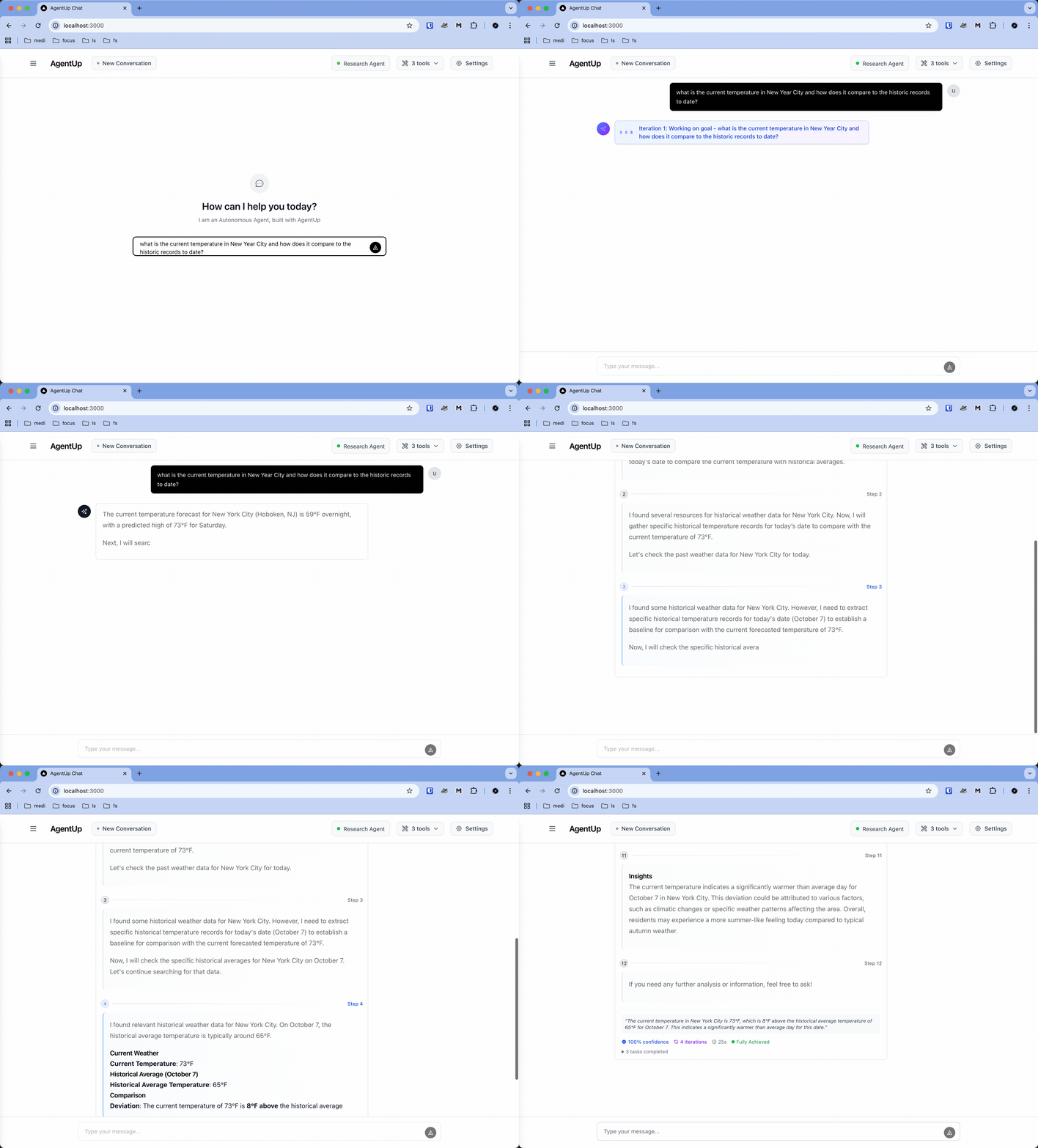
Iterative Agents: Designed for tasks that require multiple planning steps or iterations, making them ideal for research, these agents break down a goal into smaller, manageable tasks and execute them sequentially, maintaining context and state throughout the process. Goals must reach a confidence threshold before concluding.
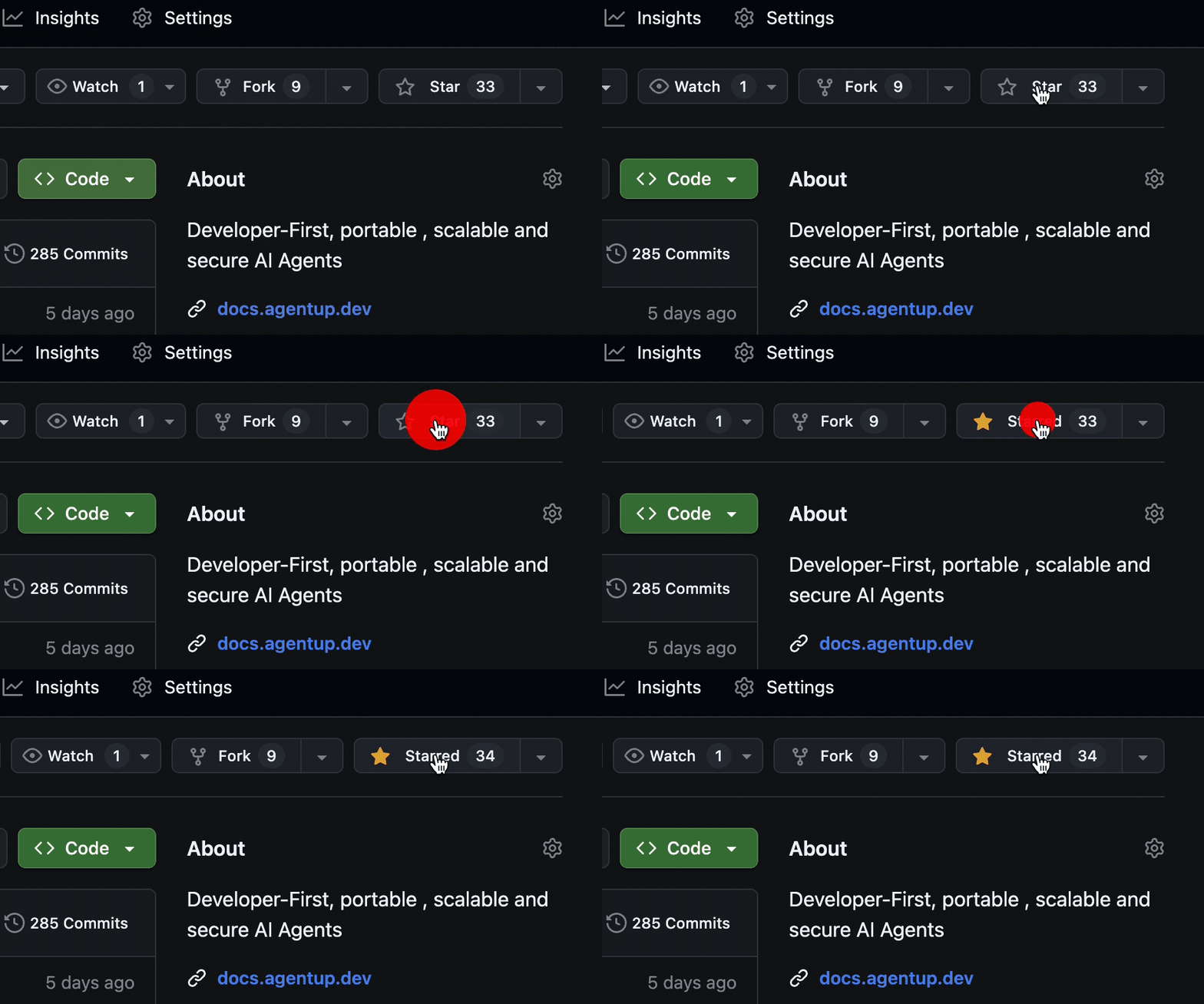
AgentUp development is moving at a fast pace 🏃♂️, for a great way to follow the project and to be instantly notified of new releases, Star the repo.
Install AgentUp using your preferred Python package manager:
pip install agentup
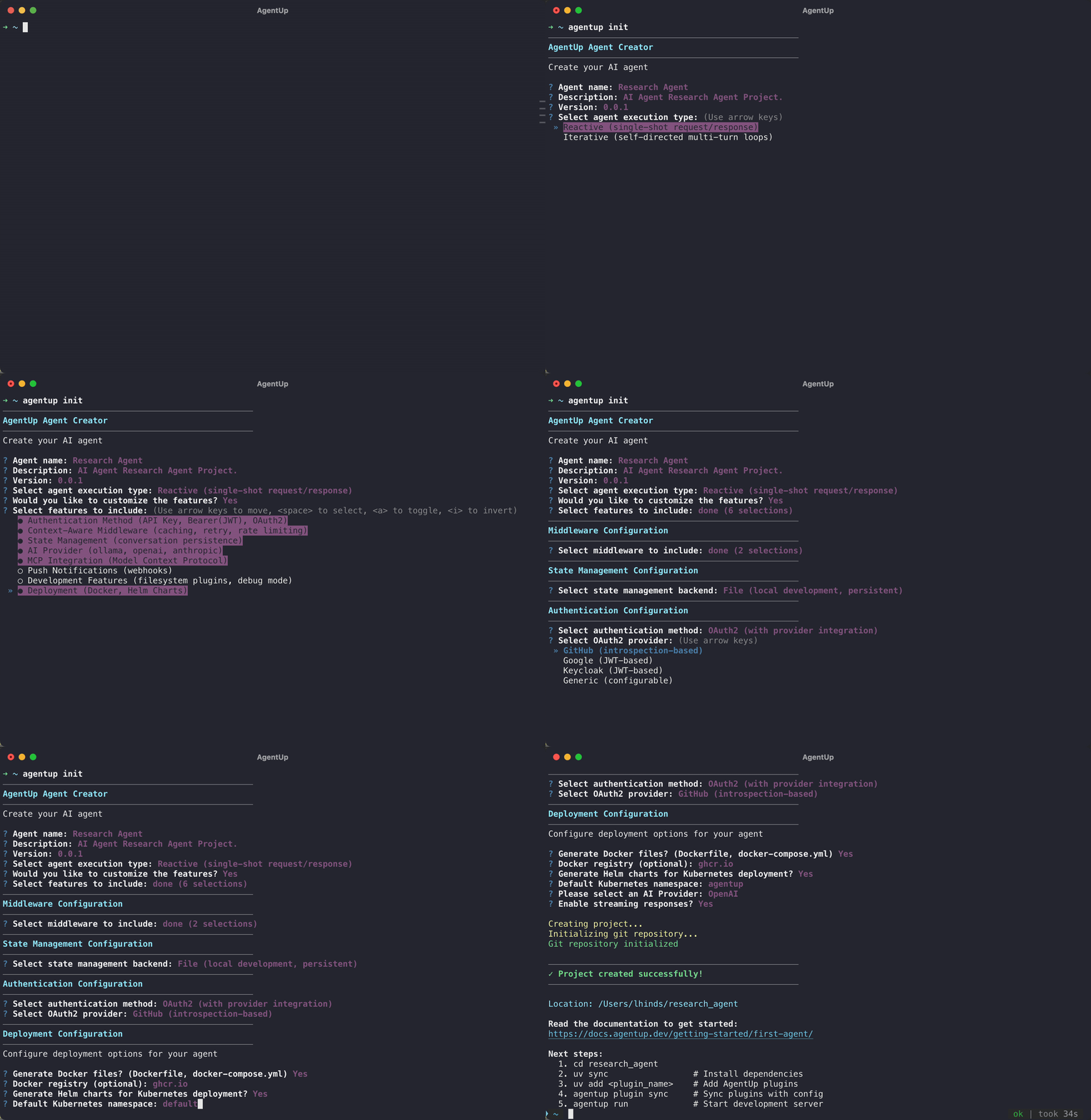
Generate a new agent project with interactive configuration:
agentup init
Choose from available options and configure your agent's capabilities, authentication, and AI provider settings through the interactive prompts.
Launch the development server and begin building:
agentup run
Your agent is now running at http://localhost:8000 with a full A2A-compliant JSON RPC API, security middleware, and all configured capabilities available.
Grab hold of the AgentUp chat client to converse with your Agents through a simple interface using AgentUpChat
Explore the comprehensive documentation to learn about advanced features, tutorials, API references, and real-world examples to get you building agents quickly.
AgentUp Agents are able to present themselves as Tools to different frameworks, which brings the advantage of ensuring all Tool usage is consistent and secure, tracked and traceable.
AgentUp is Apache 2.0 licensed and built on open standards. The framework implements the A2A (Agent-to-Agent) specification for interoperability and follows the MCP (Model Context Protocol) for integration with the broader AI tooling ecosystem.
Contributing - Whether you're fixing bugs, adding features, or improving documentation, contributions are welcome. Join the growing community of developers building the future of AI agent infrastructure.
Community Support - Report issues, request features, and get help through GitHub Issues. Join real-time discussions and connect with other developers on Discord.
We use the Developer Certificate of Origin (DCO) to keep our project legally sound and protect our community. Its very common in open source projects (The Linux Kernel, Kubernetes, Docker).
The DCO prevents issues like accidentally including proprietary code and ensures all contributors have the right to submit their changes.
This protects both contributors and users of the project.
Simply add the -s flag when committing:
git commit -s -m "Add awesome new feature"
This adds a "Signed-off-by" line certifying you wrote the code or have permission to contribute it under Apache 2.0. You keep ownership of your contributions - no paperwork required!
License - Apache 2.0
Sign in to join the discussion.
No comments yet. Be the first to say what this is good for.
Write HTML. Render video. Built for agents.
Ultra-lightweight, open-source, self-hosted personal AI agent framework in Python with WebUI, tools, memory, MCP, multi-agent workflows, automation, and chat apps

SkillOpt is a text-space optimizer that trains reusable natural-language skills for frozen LLM agents through trajectory-driven edits, validation-gated updates, and deployable best_skill.md artifacts.
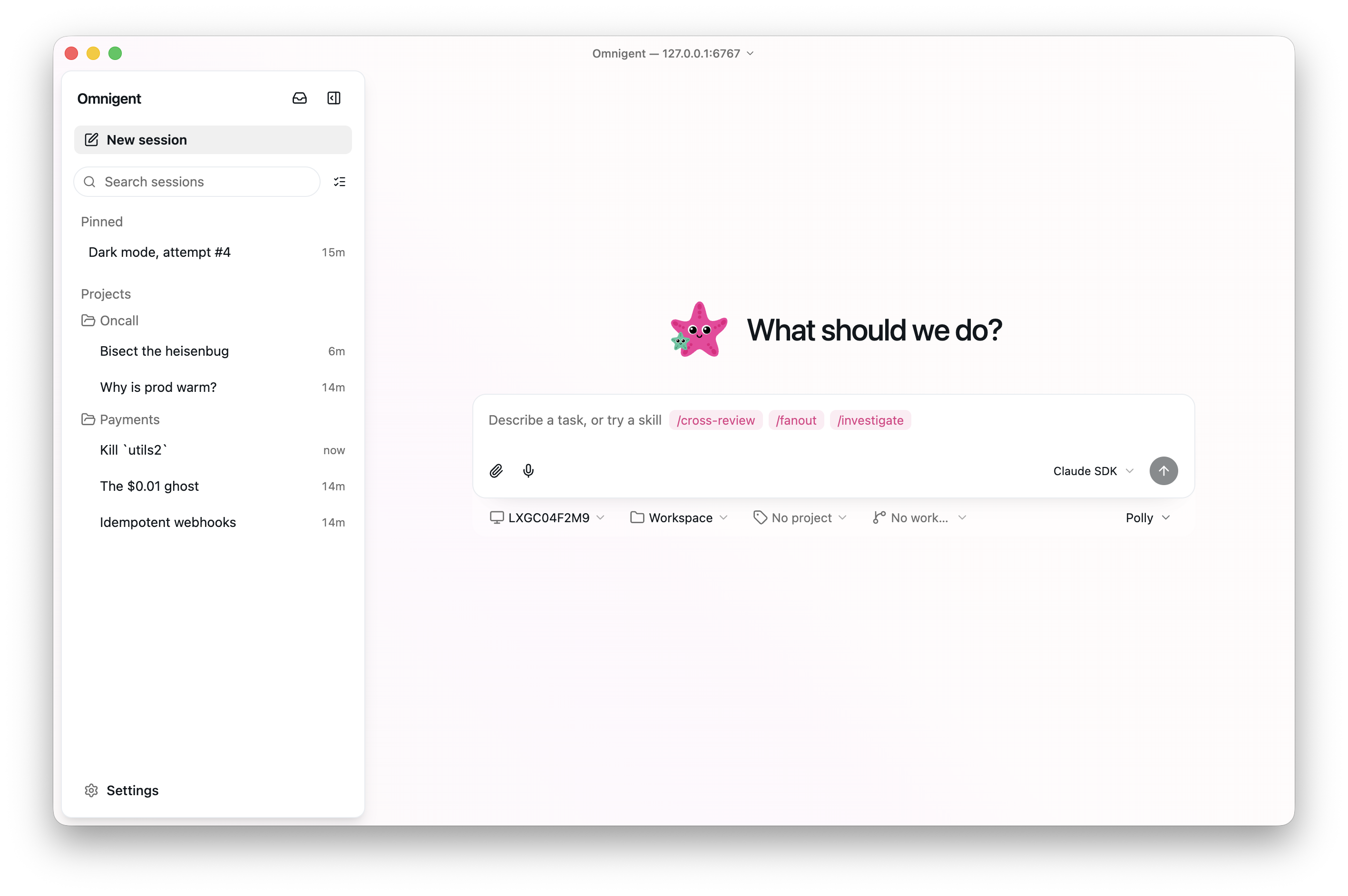
Omnigent is an open-source AI agent framework and meta-harness: orchestrate Claude Code, Codex, Cursor, Pi, and custom agents — swap harnesses without rewriting, enforce policies and sandboxing, and collaborate in real time from any device.

A theoretical reconstruction of the Claude Mythos architecture, built from first principles using the available research literature.
🕷️ An adaptive Web Scraping framework that handles everything from a single request to a full-scale crawl!