

heygen-com/hyperframesFrameworks & SDKs
Write HTML. Render video. Built for agents.
49k
Ophis plugs into a Cobra command tree and generates MCP tool schemas from commands, flags, and arguments. It then runs the CLI as a subprocess when a tool is called, and it can also manage editor config for MCP clients.
Builders who want to expose an existing Cobra CLI to MCP clients without rewriting the app.
You can reuse one CLI as an MCP server and make its commands available inside your agent or editor.
Walks the Cobra command tree and turns commands into tools.
Builds JSON schemas so MCP clients can call the right command inputs.
Executes the underlying Cobra command and captures output for the MCP response.
Uses selectors to include or exclude commands, local flags, and inherited flags.
Provides `claude`, `vscode`, and `cursor` subcommands to enable, disable, and list MCP servers.
Offers `mcp stream` for remote access instead of only stdio.
Merges configured env values into the editor config written by `enable`.
go get github.com/njayp/ophis
./my-cli mcp stream --host localhost --port 8080
Transform any Cobra CLI into an MCP server
Ophis automatically converts your Cobra commands into MCP tools, and provides CLI commands for integration with Claude Desktop, VSCode, and Cursor.
go get github.com/njayp/ophis
package main

import (
    "os"
    "github.com/njayp/ophis"
)

func main() {
    rootCmd := createMyRootCommand()
    rootCmd.AddCommand(ophis.Command(nil))

    if err := rootCmd.Execute(); err != nil {
        os.Exit(1)
    }
}
# Claude Desktop
./my-cli mcp claude enable
# Restart Claude Desktop

# VSCode (requires Copilot in Agent Mode)
./my-cli mcp vscode enable

# Cursor
./my-cli mcp cursor enable
Your CLI commands are now available as MCP tools!
Expose your MCP server over HTTP for remote access:
./my-cli mcp stream --host localhost --port 8080
The ophis.Command(nil) adds these subcommands to your CLI (the default command name is mcp, configurable via Config.CommandName):
mcp
├── start            # Start MCP server on stdio
├── stream           # Stream MCP server over HTTP
├── tools            # Export available MCP tools as JSON
├── claude
│   ├── enable       # Add server to Claude Desktop config
│   ├── disable      # Remove server from Claude Desktop config
│   └── list         # List Claude Desktop MCP servers
├── vscode
│   ├── enable       # Add server to VSCode config
│   ├── disable      # Remove server from VSCode config
│   └── list         # List VSCode MCP servers
└── cursor
    ├── enable       # Add server to Cursor config
    ├── disable      # Remove server from Cursor config
    └── list         # List Cursor MCP servers
Control which commands and flags are exposed as MCP tools using selectors. By default, all commands and flags are exposed (except hidden/deprecated).
config := &ophis.Config{
    Selectors: []ophis.Selector{
        {
            CmdSelector: ophis.AllowCmdsContaining("get", "list"),
            LocalFlagSelector: ophis.ExcludeFlags("token", "secret"),
            InheritedFlagSelector: ophis.NoFlags,  // Exclude persistent flags

            // Middleware wraps command execution
            Middleware: func(ctx context.Context, req *mcp.CallToolRequest, in ophis.ToolInput, next func(context.Context, *mcp.CallToolRequest, ophis.ToolInput) (*mcp.CallToolResult, ophis.ToolOutput, error)) (*mcp.CallToolResult, ophis.ToolOutput, error) {
                ctx, cancel := context.WithTimeout(ctx, time.Minute)
                defer cancel()
                return next(ctx, req, in)
            },
        },
    },
}

rootCmd.AddCommand(ophis.Command(config))
By default the ophis command is named mcp. If your CLI already uses mcp for something else, set CommandName to avoid the collision:
config := &ophis.Config{
    CommandName: "agent",
}

rootCmd.AddCommand(ophis.Command(config))
The command tree, editor config (enable/disable), and internal filters all use the configured name automatically.
Editors launch MCP server subprocesses with a minimal environment. On macOS this means a PATH of just /usr/bin:/bin:/usr/sbin:/sbin, so tools like helm, kubectl, or docker installed via mise/homebrew/nix won't be found. Use DefaultEnv to capture the current PATH (or any other variables) at enable time:
config := &ophis.Config{
    DefaultEnv: map[string]string{
        "PATH": os.Getenv("PATH"),
    },
}

rootCmd.AddCommand(ophis.Command(config))
These are merged into the editor config written by enable. User-provided --env values take precedence on conflict.
See docs/config.md for detailed configuration options.
Ophis bridges Cobra commands and the Model Context Protocol:
Contributions welcome! See CONTRIBUTING.md.
Sign in to join the discussion.
No comments yet. Be the first to say what this is good for.
Write HTML. Render video. Built for agents.
Ultra-lightweight, open-source, self-hosted personal AI agent framework in Python with WebUI, tools, memory, MCP, multi-agent workflows, automation, and chat apps

SkillOpt is a text-space optimizer that trains reusable natural-language skills for frozen LLM agents through trajectory-driven edits, validation-gated updates, and deployable best_skill.md artifacts.
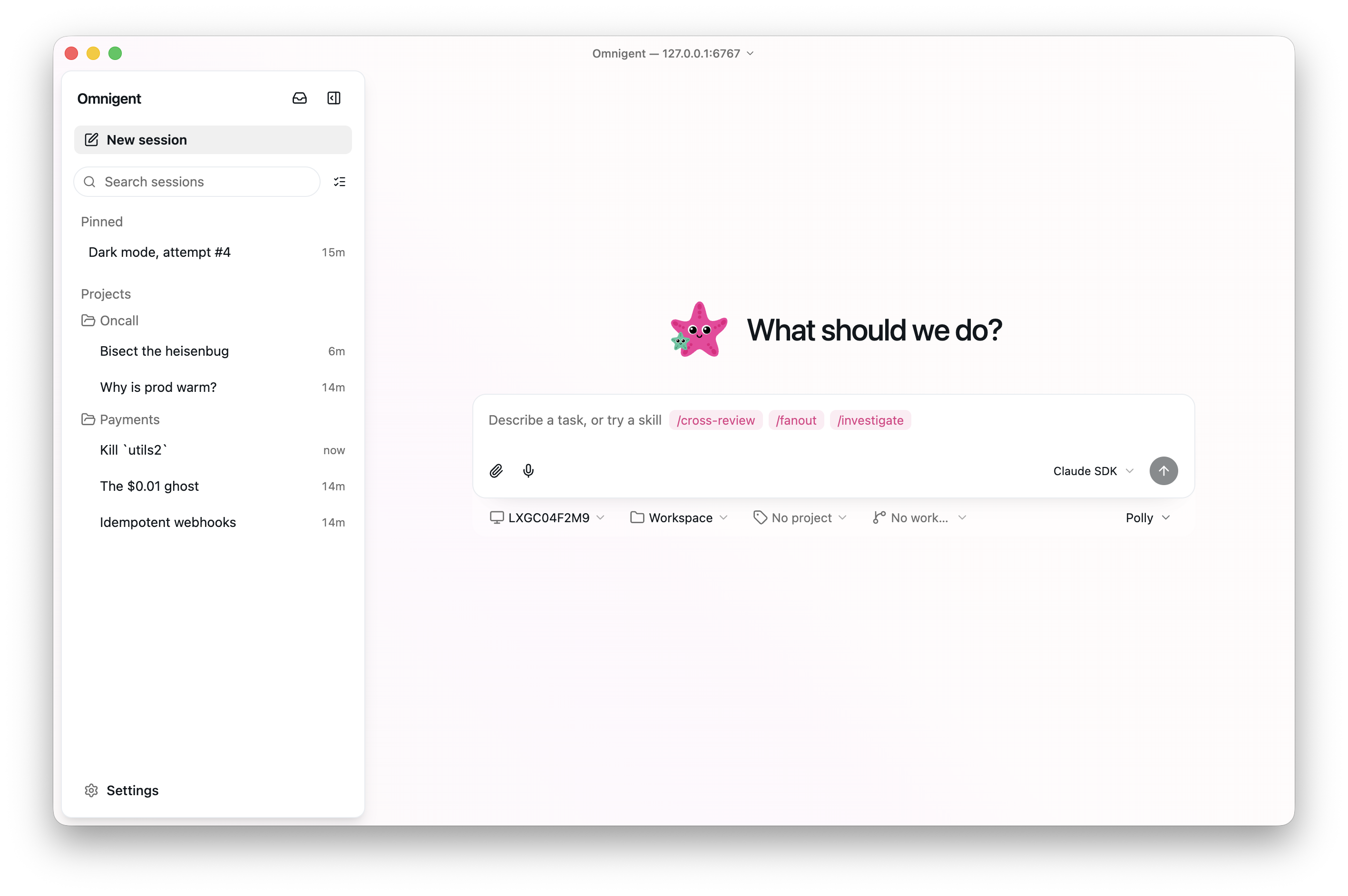
Omnigent is an open-source AI agent framework and meta-harness: orchestrate Claude Code, Codex, Cursor, Pi, and custom agents — swap harnesses without rewriting, enforce policies and sandboxing, and collaborate in real time from any device.

A theoretical reconstruction of the Claude Mythos architecture, built from first principles using the available research literature.
🕷️ An adaptive Web Scraping framework that handles everything from a single request to a full-scale crawl!