

heygen-com/hyperframesFrameworks & SDKs
Write HTML. Render video. Built for agents.
49k
This gem provides the Ruby API for Model Context Protocol. You can use it to build servers that expose tools, prompts, and resources, or clients that connect to MCP servers with stdio and Streamable HTTP transports.
Builders who want Ruby code to speak MCP as a server or client.
You can add MCP connections and protocol handling to Ruby apps without building the wire format yourself.
Define tools, prompts, and resources and serve them to any MCP host.
Connect to MCP servers with lifecycle negotiation and OAuth 2.1 authorization.
Use stdio or Streamable HTTP, including SSE and Rails integration.
Handle requests, notifications, progress, logging, cancellation, completions, and pagination.
Use the sample clients and servers in `examples/` and the protocol runners in `conformance/`.
$ bundle install
$ gem install mcp
$ ruby server.rb
{"jsonrpc":"2.0","id":"1","method":"ping"}
{"jsonrpc":"2.0","id":"2","method":"tools/list"}
{"jsonrpc":"2.0","id":"3","method":"tools/call","params":{"name":"example_tool","arguments":{"message":"Hello"}}}


The official Ruby SDK for Model Context Protocol servers and clients.
Detailed guides are available at https://ruby.sdk.modelcontextprotocol.io.
Add this line to your application's Gemfile:
gem "mcp"
And then execute:
$ bundle install
Or install it yourself as:
$ gem install mcp
You may need to add additional dependencies depending on which features you wish to access.
The following minimal programs show both sides of the protocol: a server that exposes a single tool, and a client that spawns such a server and drives it over stdio.
A minimal server defines a tool and serves it over the stdio transport:
require "mcp"

# Create a simple tool
class ExampleTool < MCP::Tool
  description "A simple example tool that echoes back its arguments"
  input_schema(
    properties: {
      message: { type: "string" },
    },
    required: ["message"]
  )

  class << self
    def call(message:, server_context:)
      MCP::Tool::Response.new([{
        type: "text",
        text: "Hello from example tool! Message: #{message}",
      }])
    end
  end
end

# Set up the server
server = MCP::Server.new(
  name: "example_server",
  tools: [ExampleTool],
)

# Create and start the transport
transport = MCP::Server::Transports::StdioTransport.new(server)
transport.open
Save the script as server.rb, run it, and send JSON-RPC requests via stdin:
$ ruby server.rb
{"jsonrpc":"2.0","id":"1","method":"ping"}
{"jsonrpc":"2.0","id":"2","method":"tools/list"}
{"jsonrpc":"2.0","id":"3","method":"tools/call","params":{"name":"example_tool","arguments":{"message":"Hello"}}}
The same server can also run over Streamable HTTP, including mounted inside a Rails application; see Server Transports.
A minimal client spawns a stdio server as a subprocess, connects, and lists and calls its tools:
stdio_transport = MCP::Client::Stdio.new(
  command: "bundle",
  args: ["exec", "ruby", "path/to/server.rb"],
  env: { "API_KEY" => "my_secret_key" },
  read_timeout: 30
)
client = MCP::Client.new(transport: stdio_transport)

# Perform the MCP initialization handshake before sending any requests.
client.connect

# List available tools.
tools = client.tools
tools.each do |tool|
  puts "Tool: #{tool.name} - #{tool.description}"
end

# Call a specific tool.
response = client.call_tool(
  tool: tools.first,
  arguments: { message: "Hello, world!" }
)

# Close the transport when done.
stdio_transport.close
The same client can connect to Streamable HTTP servers with MCP::Client::HTTP;
see Client Transports.
Runnable examples are available in examples/,
including a complete Rails application in examples/rails.
This project is licensed under the Apache License 2.0 for new contributions, with existing code under MIT. See the LICENSE file for details.
Sign in to join the discussion.
No comments yet. Be the first to say what this is good for.
Write HTML. Render video. Built for agents.
Ultra-lightweight, open-source, self-hosted personal AI agent framework in Python with WebUI, tools, memory, MCP, multi-agent workflows, automation, and chat apps

SkillOpt is a text-space optimizer that trains reusable natural-language skills for frozen LLM agents through trajectory-driven edits, validation-gated updates, and deployable best_skill.md artifacts.
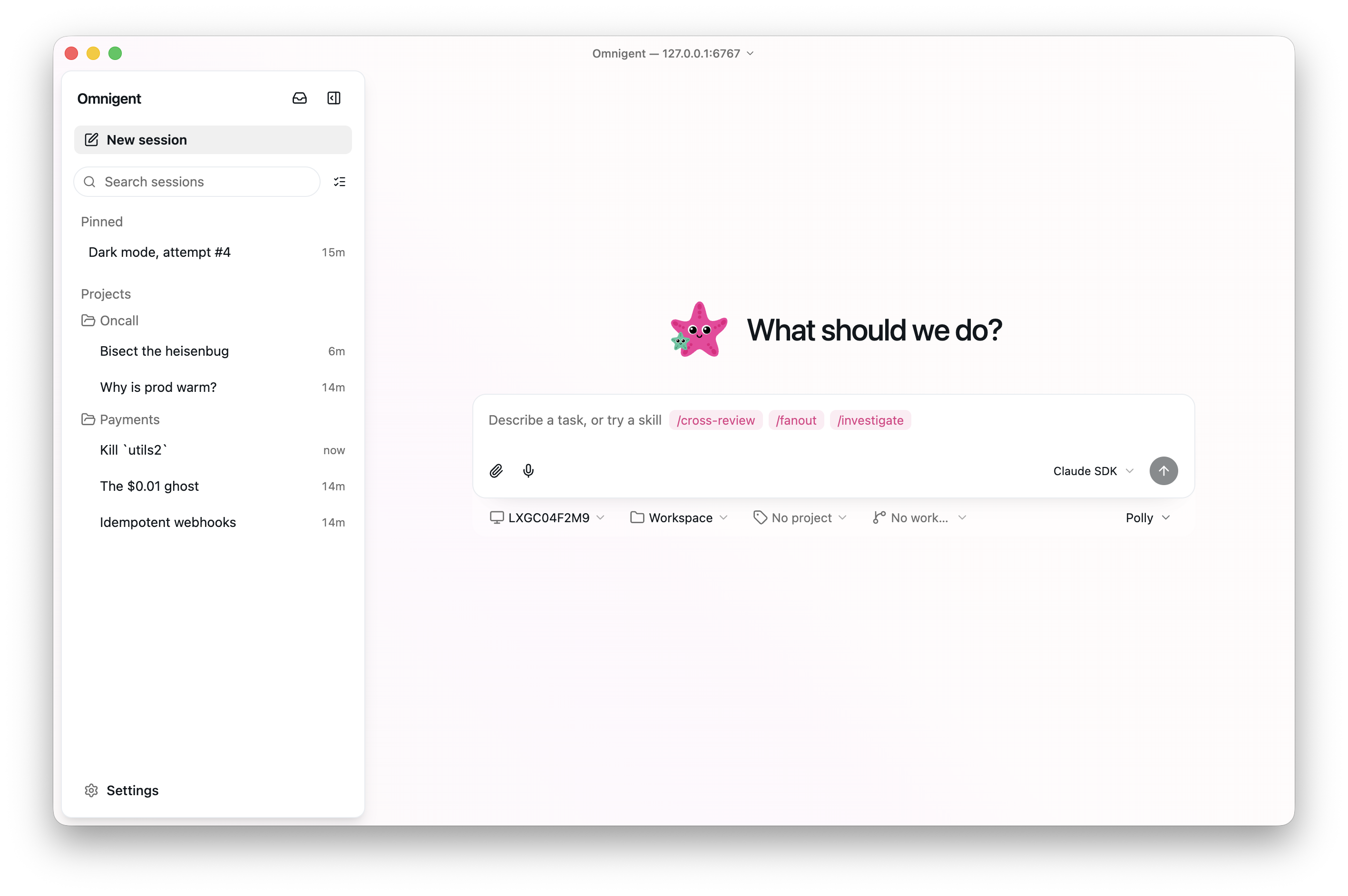
Omnigent is an open-source AI agent framework and meta-harness: orchestrate Claude Code, Codex, Cursor, Pi, and custom agents — swap harnesses without rewriting, enforce policies and sandboxing, and collaborate in real time from any device.

A theoretical reconstruction of the Claude Mythos architecture, built from first principles using the available research literature.
🕷️ An adaptive Web Scraping framework that handles everything from a single request to a full-scale crawl!