
heygen-com/hyperframesFrameworks & SDKs
Write HTML. Render video. Built for agents.
49k
This library provides the core PHP building blocks for Model Context Protocol apps. You can use it to define tools and resources on a server, or to connect a client to an MCP server over STDIO or HTTP. It also covers sessions, authorization, and both current protocol eras.
Builders who want to add MCP support to a PHP app or connect PHP code to MCP tools.
You can build MCP servers and clients in PHP without wiring the protocol by hand.
Create an MCP server from a plain PHP class with `Server::builder()`, discovery, and a transport like STDIO.
Connect to MCP servers, list tools, call tools, and handle server-initiated requests.
Expose server capabilities through attributes and protocol handlers for tools, resources, resource templates, and prompts.
Run MCP traffic over local process streams or HTTP.
Support session handling and authorization flows in MCP servers and clients.
Work with both the `initialize` handshake era and the stateless `2026-07-28` revision.
Track server and client behavior against the MCP Conformance Test Framework.
composer require mcp/sdk




The official PHP SDK for the Model Context Protocol (MCP). It provides a framework-agnostic API for implementing MCP
servers and clients in PHP — tools, resources, prompts, STDIO and HTTP transports, sessions, authorization, and both
protocol eras (the initialize handshake and the stateless 2026-07-28 revision).
This project represents a collaboration between the PHP Foundation and the Symfony project. It adopts development practices and standards from the Symfony project, including Coding Standards and the Backward Compatibility Promise.
Until the first major release, this SDK is considered experimental, please see the roadmap for planned next steps and features.
Measured weekly against the MCP Conformance Test Framework,
as passing checks out of total. The 2026-07-28 scores run against the framework's alpha releases, so they move as
upstream publishes new scenarios.
| Revision | Server | Client |
|---|---|---|
2026-07-28 |  |  |
2025-11-25 |  |  |
composer require mcp/sdk
A server is a plain PHP class plus three lines of wiring:
use Mcp\Capability\Attribute\McpResource;
use Mcp\Capability\Attribute\McpTool;
use Mcp\Server;
use Mcp\Server\Transport\StdioTransport;

class Calculator
{
    /**
     * Adds two numbers.
     */
    #[McpTool]
    public function add(int $a, int $b): int
    {
        return $a + $b;
    }

    #[McpResource(uri: 'config://calculator/settings')]
    public function settings(): array
    {
        return ['precision' => 2];
    }
}

exit(Server::builder()
    ->setServerInfo('Calculator', '1.0.0')
    ->setDiscovery(__DIR__, ['.'], excludeDirs: ['vendor'])
    ->build()
    ->run(new StdioTransport()));
The walkthrough in First server explains each piece, and Try it with the Inspector shows it running.
use Mcp\Client;
use Mcp\Client\Transport\StdioTransport;

$client = Client::builder()
    ->setClientInfo('My Application', '1.0.0')
    ->build();

$client->connect(new StdioTransport(command: 'php', args: ['/path/to/server.php']));

$tools = $client->listTools();
$result = $client->callTool('add', ['a' => 5, 'b' => 3]);

$client->disconnect();
See Connecting to a server for transports, timeouts, and the handlers that answer server-initiated requests.
The full documentation is published at php.sdk.modelcontextprotocol.io.
2026-07-28 changedBuilding something on top of the SDK? Open a pull request to add it to this list.
We are passionate about supporting contributors of all levels of experience and would love to see you get involved in the project. Start by reporting issues or sending pull requests. See CONTRIBUTING.md for development setup, coding standards, and what to run before opening a PR.
The starting point for this SDK was the PHP-MCP project, initiated by Kyrian Obikwelu, and the Symfony AI initiative. We are grateful for the work done by both projects and their contributors, which created a solid foundation for this SDK.
This project is licensed under the Apache License, Version 2.0 for new contributions, with existing code under the MIT License — see the LICENSE file for details.
Sign in to join the discussion.
No comments yet. Be the first to say what this is good for.
Write HTML. Render video. Built for agents.
Ultra-lightweight, open-source, self-hosted personal AI agent framework in Python with WebUI, tools, memory, MCP, multi-agent workflows, automation, and chat apps

SkillOpt is a text-space optimizer that trains reusable natural-language skills for frozen LLM agents through trajectory-driven edits, validation-gated updates, and deployable best_skill.md artifacts.
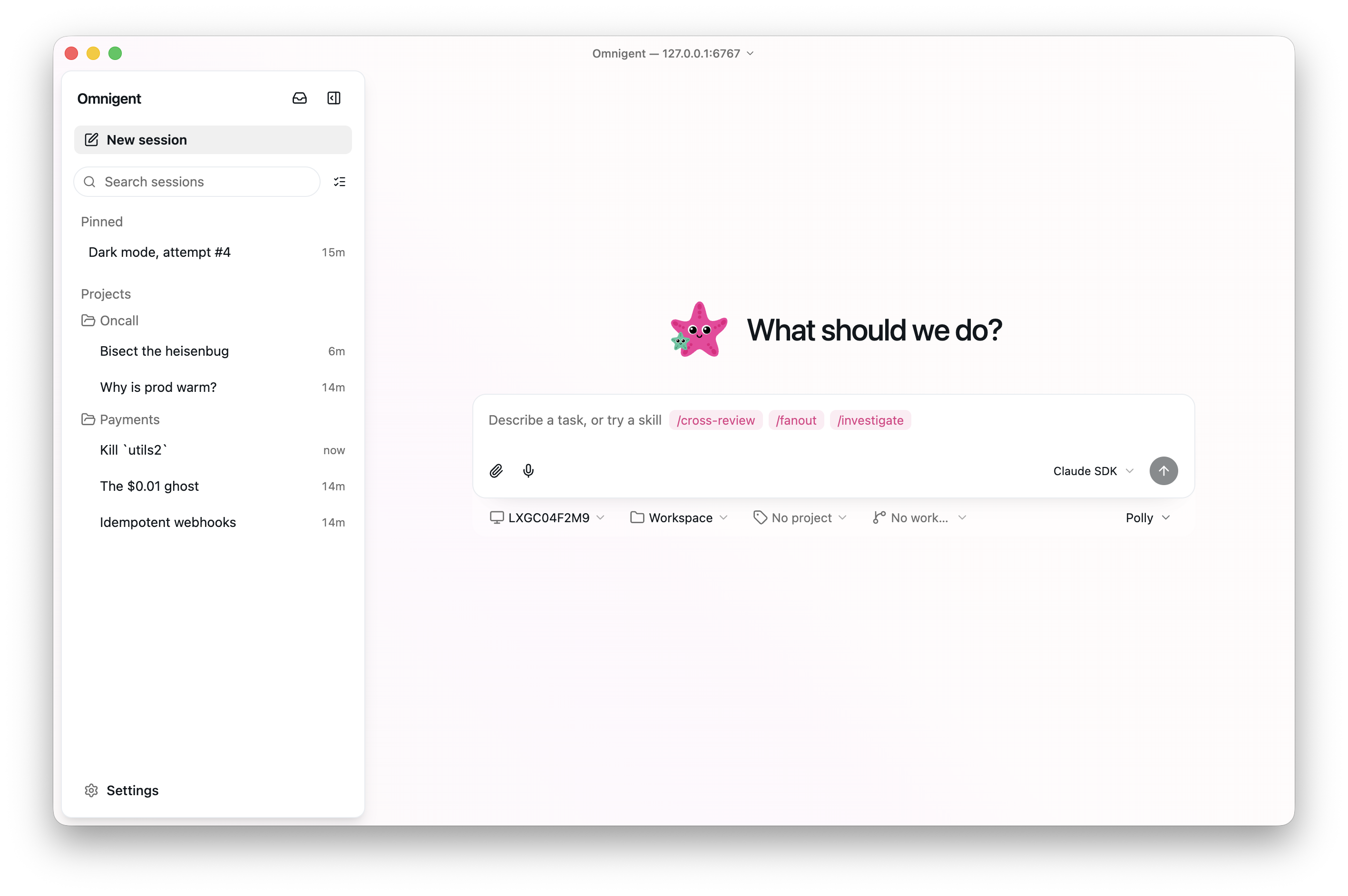
Omnigent is an open-source AI agent framework and meta-harness: orchestrate Claude Code, Codex, Cursor, Pi, and custom agents — swap harnesses without rewriting, enforce policies and sandboxing, and collaborate in real time from any device.

A theoretical reconstruction of the Claude Mythos architecture, built from first principles using the available research literature.
🕷️ An adaptive Web Scraping framework that handles everything from a single request to a full-scale crawl!