

heygen-com/hyperframesFrameworks & SDKs
Write HTML. Render video. Built for agents.
49k
This SDK helps .NET builders implement and consume Model Context Protocol servers and clients. It is split into packages for low-level protocol work, hosting and dependency injection, ASP.NET Core servers, interactive MCP apps, and asynchronous task handling.
Builders who are adding MCP support to .NET apps, services, or libraries.
You can build MCP clients and servers in C# with the right package for your transport and hosting needs.
`ModelContextProtocol.Core` provides client and low-level server APIs with minimal dependencies.
`ModelContextProtocol` adds hosting and DI extensions for most MCP projects.
`ModelContextProtocol.AspNetCore` provides HTTP-based MCP server support.
`ModelContextProtocol.Extensions.Apps` supports interactive UI applications that render inside MCP hosts.
`ModelContextProtocol.Extensions.Tasks` supports long-running tool calls with status polling and input requests.
The `samples` and `tests` folders show quickstarts, weather servers, OAuth, SSE, AOT, and conformance setups.

The official C# SDK for the Model Context Protocol, enabling .NET applications, services, and libraries to implement and interact with MCP clients and servers. Please visit the API documentation for more details on available functionality.
The SDK packages are:
ModelContextProtocol.Core  - For projects that only need to use the client or low-level server APIs and want the minimum number of dependencies.
ModelContextProtocol - The main package with hosting and dependency injection extensions. References ModelContextProtocol.Core. This is the right fit for most projects that don't need HTTP server capabilities.
ModelContextProtocol.AspNetCore  - The library for HTTP-based MCP servers. References
 ModelContextProtocol.
ModelContextProtocol.Extensions.Apps  - MCP Apps extension for building interactive UI applications that render inside MCP hosts.
ModelContextProtocol.Extensions.Tasks  - MCP Tasks extension for running long-running tool invocations asynchronously with status polling and input requests.
To get started, see the Getting Started guide in the conceptual documentation for installation instructions, package-selection guidance, and complete examples for both clients and servers.
You can also browse the samples directory and the API documentation for more details on available functionality.
The Model Context Protocol (MCP) is an open protocol that standardizes how applications provide context to Large Language Models (LLMs). It enables secure integration between LLMs and various data sources and tools.
For more information about MCP:
The SDK provides support for the Identity Assertion Authorization Grant flow
via IdentityAssertionGrantProvider. See the Cross-Application Access section in the transport docs for full usage details.
This project is licensed under the Apache License 2.0.
Sign in to join the discussion.
No comments yet. Be the first to say what this is good for.
Write HTML. Render video. Built for agents.
Ultra-lightweight, open-source, self-hosted personal AI agent framework in Python with WebUI, tools, memory, MCP, multi-agent workflows, automation, and chat apps

SkillOpt is a text-space optimizer that trains reusable natural-language skills for frozen LLM agents through trajectory-driven edits, validation-gated updates, and deployable best_skill.md artifacts.
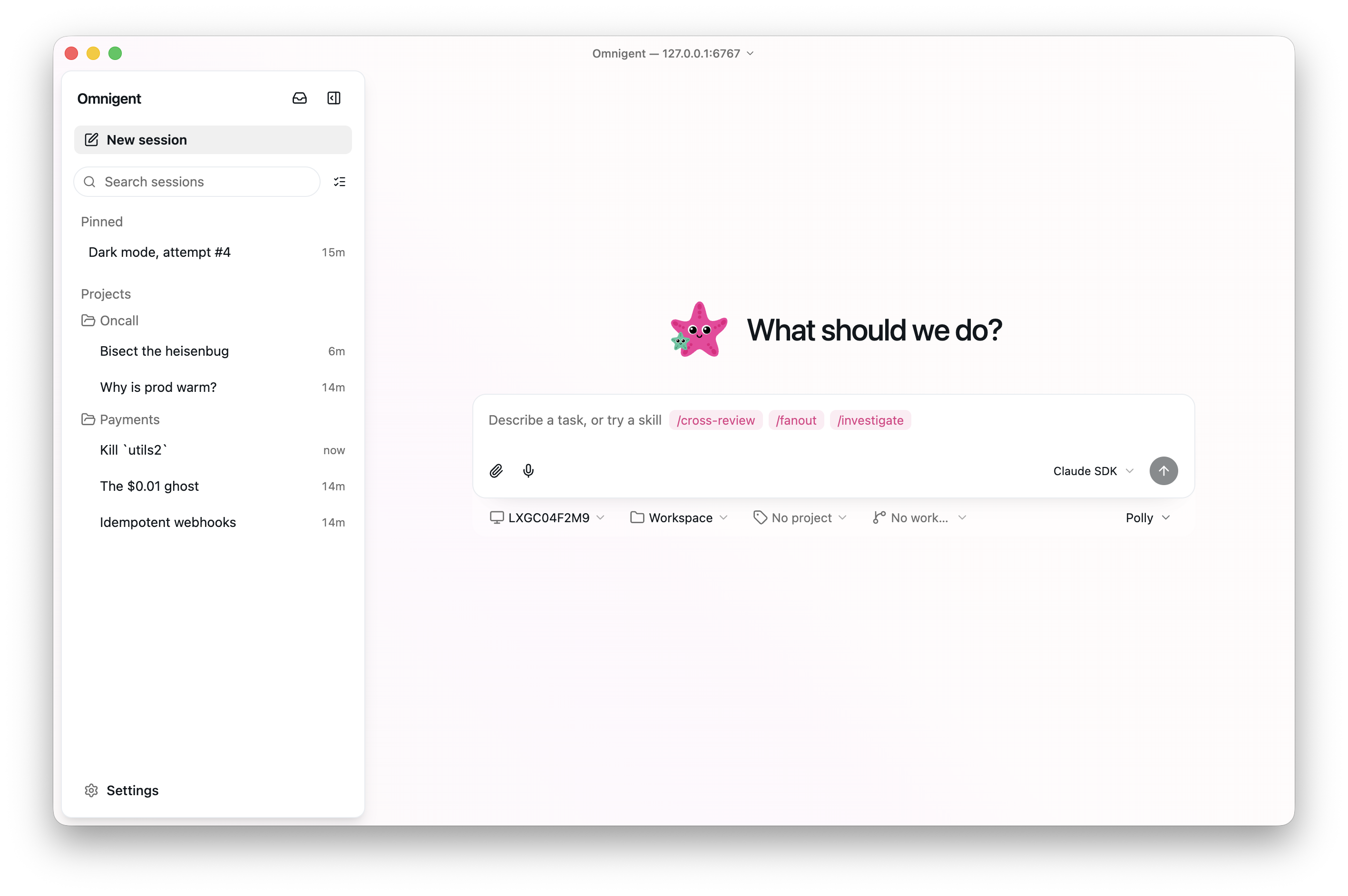
Omnigent is an open-source AI agent framework and meta-harness: orchestrate Claude Code, Codex, Cursor, Pi, and custom agents — swap harnesses without rewriting, enforce policies and sandboxing, and collaborate in real time from any device.

A theoretical reconstruction of the Claude Mythos architecture, built from first principles using the available research literature.
🕷️ An adaptive Web Scraping framework that handles everything from a single request to a full-scale crawl!