
heygen-com/hyperframesFrameworks & SDKs
Write HTML. Render video. Built for agents.
49k
NERV-UI gives you a typed React component set for sharp dashboard, terminal, and HUD-style interfaces. The package ships with styles, examples, and design tokens so you can assemble real screens instead of starting from a blank prompt or a one-off CSS rebuild. It also includes a skill that teaches supported agents how to use the published exports correctly.
Builders who are creating dashboards, monitoring screens, auth flows, and command-center layouts in React with Claude Code or Codex.
You can build consistent industrial UI screens with reusable components and give your agent a clear path to the right exports.
Ships 48 documented components for layout, forms, data display, charts, overlays, navigation, and HUD-style UI.
Includes 18 example pages such as command center, operations dashboard, comms terminal, login, and error states.
Provides a canonical `SKILL.md` path for supported agents and points them to the published npm package.
Includes color and typography tokens plus an optional Tailwind preset for the NERV visual system.
Animations and examples respect `prefers-reduced-motion`.
npx skills add https://github.com/mdrbx/nerv-ui --skill nerv-ui
npm install @mdrbx/nerv-ui framer-motion
git clone https://github.com/mdrbx/nerv-ui.git
cd nerv-ui
npm install
npm run dev         # Dev server at localhost:3000
npm run build:lib   # Build the npm package
npm run test        # Run tests
npm run type-check  # TypeScript check
Build original, sharp industrial dashboards, terminals, and flows in React without rebuilding the design system from scratch.
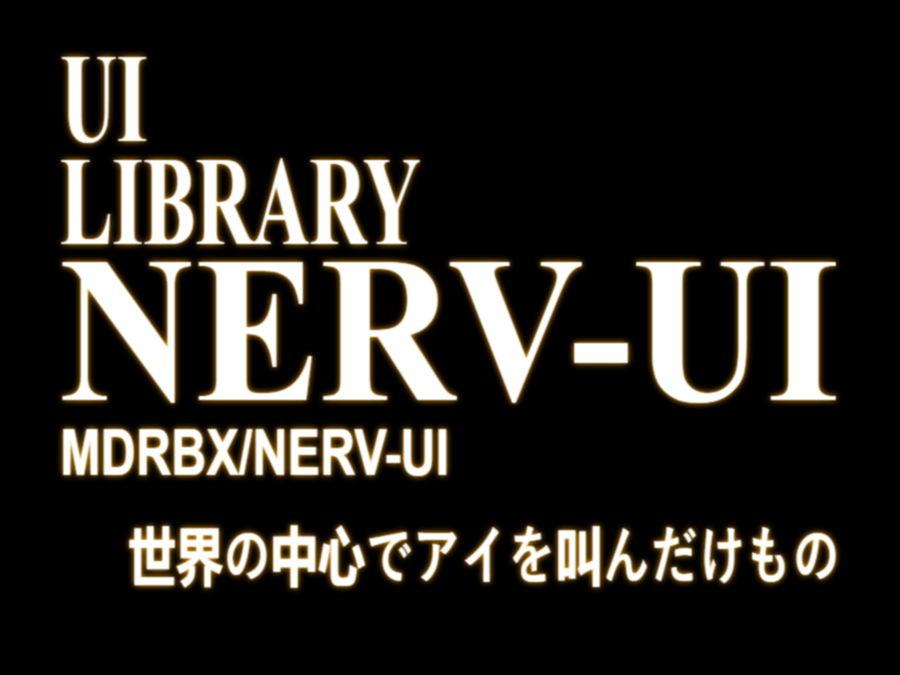
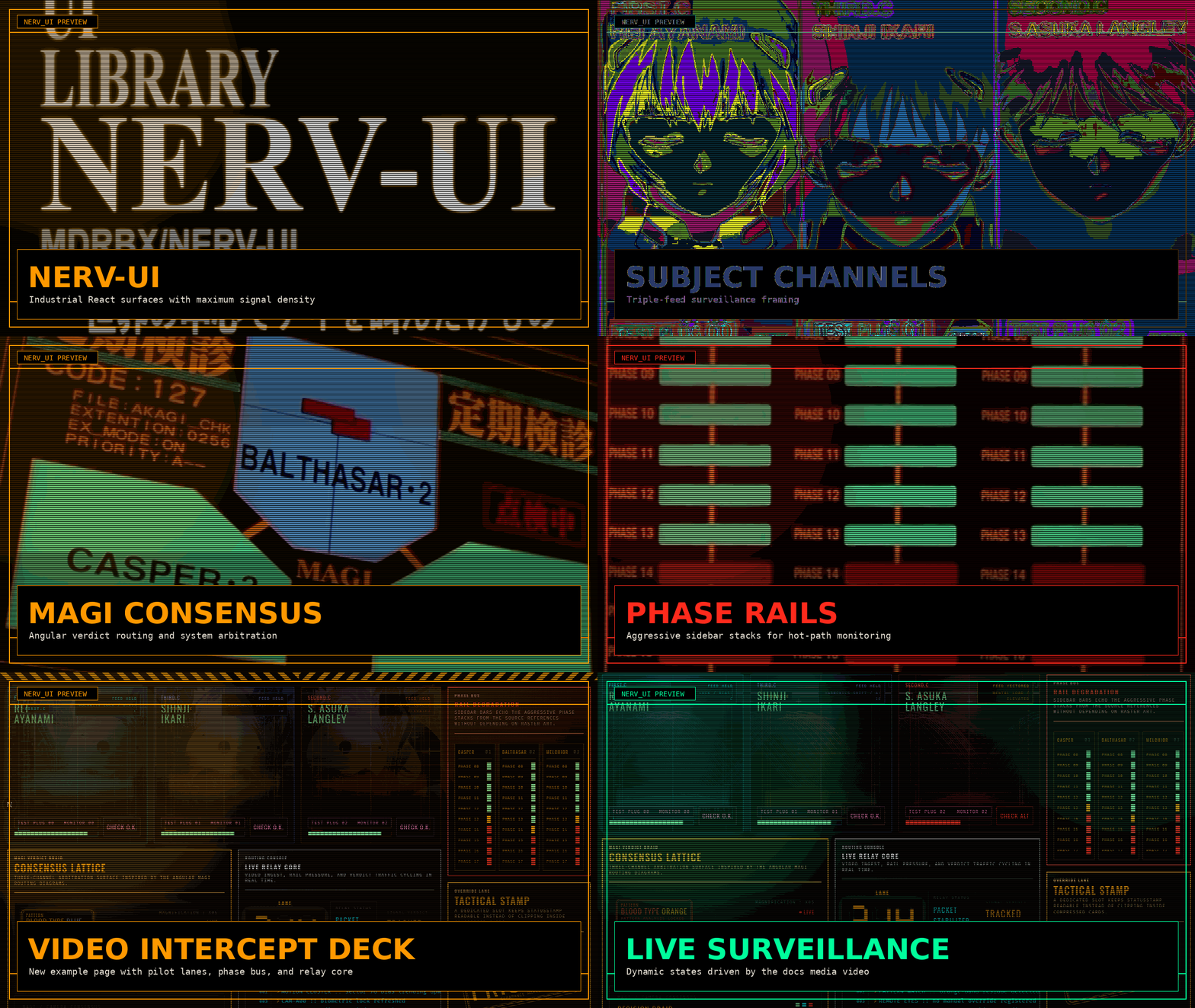








> START_IN_30_SECONDSNERV-UI is a production React/TypeScript component library, a published npm package, 48 documented components, 18 live application examples, and a portable coding-agent skill.
> USE_WITH_AN_AI_CODING_AGENTInstall the canonical NERV-UI skill for your coding agent:
npx skills add https://github.com/mdrbx/nerv-ui --skill nerv-ui
The installer discovers supported agents and lets you choose where to install the skill. You can also inspect NERV-UI on skills.sh before installing it.
The skill tells an agent when NERV-UI fits, installs the real npm package, uses only exported components, and includes dashboard, terminal, and authentication recipes.
Try this prompt: “Install
@mdrbx/nerv-uiand build an accessible operations dashboard withDataGrid,Gauge, andBarChart; use original labels and respect reduced motion.”
Clone the repository and copy the canonical skill directory to your agent's user-level skill path:
git clone --depth 1 https://github.com/mdrbx/nerv-ui.git /tmp/nerv-ui-skill

# Codex
mkdir -p ~/.codex/skills
cp -R /tmp/nerv-ui-skill/skills/nerv-ui ~/.codex/skills/nerv-ui

# Hermes Agent
mkdir -p ~/.hermes/skills
cp -R /tmp/nerv-ui-skill/skills/nerv-ui ~/.hermes/skills/nerv-ui
Inside this repository, compatible agents can discover the same canonical source through .agents/skills/nerv-ui and .claude/skills/nerv-ui.
> INSTALL_IN_A_REACT_PROJECTnpm install @mdrbx/nerv-ui framer-motion
import { Button, TerminalDisplay, Gauge } from "@mdrbx/nerv-ui";
import "@mdrbx/nerv-ui/styles.css";

export default function App() {
  return (
    <div className="bg-black min-h-screen p-8">
      <TerminalDisplay
        lines={[
          "MAGI SYSTEM v2.11",
          "> Initializing...",
          "> All systems online",
        ]}
        typewriter
        color="green"
      />
      <Gauge value={73} label="SYNC RATE" color="cyan" />
      <Button variant="danger" size="lg">
        INITIATE OVERRIDE
      </Button>
    </div>
  );
}
Peer dependencies: react, react-dom, framer-motion. Tailwind CSS is optional. NERV-UI is the useful middle ground between a style-only prompt and a bespoke CSS rebuild: you get typed, importable, tested component primitives plus working compositions.
// tailwind.config.js
import nervPreset from "@mdrbx/nerv-ui/tailwind.preset";

export default {
  presets: [nervPreset],
};
> WHY_NERV_UI@mdrbx/nerv-ui ships TypeScript declarations and package CSS—not a pasted stylesheet or a visual prompt.SKILL.md steers compatible agents toward the published exports and documented recipes.prefers-reduced-motion.> WHAT_IS_NERV_UINERV-UI is a 48-component React design system published on npm for original CRT-era, command-center-inspired interfaces. Every pixel follows strict brutalist design rules:
border-radius: 0 nearly everywhere — sharp industrial angles onlyprefers-reduced-motion — all animations respect accessibility settings> COMPONENTS48 components across 7 categories. Full API reference in the documentation.
| Category | Components |
|---|---|
| Layout | TargetingContainer, HexGridBackground, MonitorOverlay, Card, Accordion, Divider, Drawer, Breadcrumb |
| Forms | Button, InputField, SelectMenu, Checkbox, Toggle, Textarea, RadioGroup, FileUpload |
| Data Display | TerminalDisplay, DataGrid, SyncProgressBar, SegmentDisplay, Badge, Skeleton, PilotCard, Pagination |
| Charts | BarChart, Gauge, PieChart, SyncRatioChart, PhaseStatusStack, GradientStatusBar |
| Overlays | SystemDialog, ClassifiedOverlay, TitleScreen, NervToastProvider, StatusStamp, Tooltip, DropdownMenu |
| Navigation | NavigationTabs, EmergencyBanner, Stepper |
| HUD / Military | TargetingReticle, SurveillanceGrid, PatternAlert, MagiSystemPanel, SeeleMonolith, CountdownTimer, WireframeLoader, ThemeProvider |
> EXAMPLE_PAGES18 production-ready example pages showcasing real-world usage patterns. All responsive.
| Page | Description |
|---|---|
| Command Center | NERV HQ main dashboard with live data |
| Operations Dashboard | KPI cards, charts, gauges, operations log |
| Comms Terminal | Military chat interface with channels |
| Dispatch Form | Multi-field form with validation |
| Intelligence Bulletin | Classified content feed with filtering |
| Monitoring Station | Real-time sensor data & charts |
| Video Intercept Deck | Aggressive surveillance wall with pilot channels, MAGI, and phase rails |
| Equipment Requisition | CRUD inventory management |
| Pilot Dossier | Personnel profiles with sync history |
| Mission Report | After-action document template |
| MAGI File System | File browser with tree navigation |
| SaaS Landing | Marketing page with pricing |
| Library Landing | NERV-UI showcase page |
| Ceremonial Splash | Full-page EVA title-card splash screen |
| Login | Authentication terminal |
| Register | Personnel registration |
| Help Center | FAQ with knowledge base |
| Error 404 | Signal lost page |
> DESIGN_TOKENSCOLOR HEX USAGE
─────────────────────────────────────────────
nerv-black #000000 Background void
nerv-red #FF0000 Emergency / alerts
nerv-orange #FF9900 Primary text & UI
nerv-green #00FF00 Terminal / grid lines
nerv-cyan #00FFFF Data readouts
nerv-magenta #FF00FF Waveform accents
nerv-lcd-green #39FF14 LCD displays
nerv-amber #FFAA00 Warning states
nerv-purple #9933FF Special indicators
TYPOGRAPHY FAMILY USAGE
─────────────────────────────────────────────────────────
nerv-display Oswald, Impact Headers & labels
nerv-mono Fira Code, JetBrains Mono Terminal & data
nerv-body Barlow Condensed Body text
nerv-title Noto Serif JP, Playfair Cinematic titles
> TECH_STACK| Technology | Version | Role |
|---|---|---|
| React | 19 | Functional components with Hooks |
| TypeScript | 5.8 | Strict typing, all props exported |
| Tailwind CSS | 4 | @theme design tokens |
| Framer Motion | 12 | Animations & transitions |
> CONTRIBUTINGgit clone https://github.com/mdrbx/nerv-ui.git
cd nerv-ui
npm install
npm run dev # Dev server at localhost:3000
npm run build:lib # Build the npm package
npm run test # Run tests
npm run type-check # TypeScript check
See CONTRIBUTING.md for component patterns and design rules.
> CREDITS AND INSPIRATIONNERV-UI is an independent fan-inspired open-source project. It is not affiliated with, endorsed by, or sponsored by the owners of Neon Genesis Evangelion or its related marks.
MADE WITH [REDACTED] BY mdrbx
> LICENSEMIT License. See LICENSE.
Sign in to join the discussion.
No comments yet. Be the first to say what this is good for.
Write HTML. Render video. Built for agents.
Ultra-lightweight, open-source, self-hosted personal AI agent framework in Python with WebUI, tools, memory, MCP, multi-agent workflows, automation, and chat apps

SkillOpt is a text-space optimizer that trains reusable natural-language skills for frozen LLM agents through trajectory-driven edits, validation-gated updates, and deployable best_skill.md artifacts.
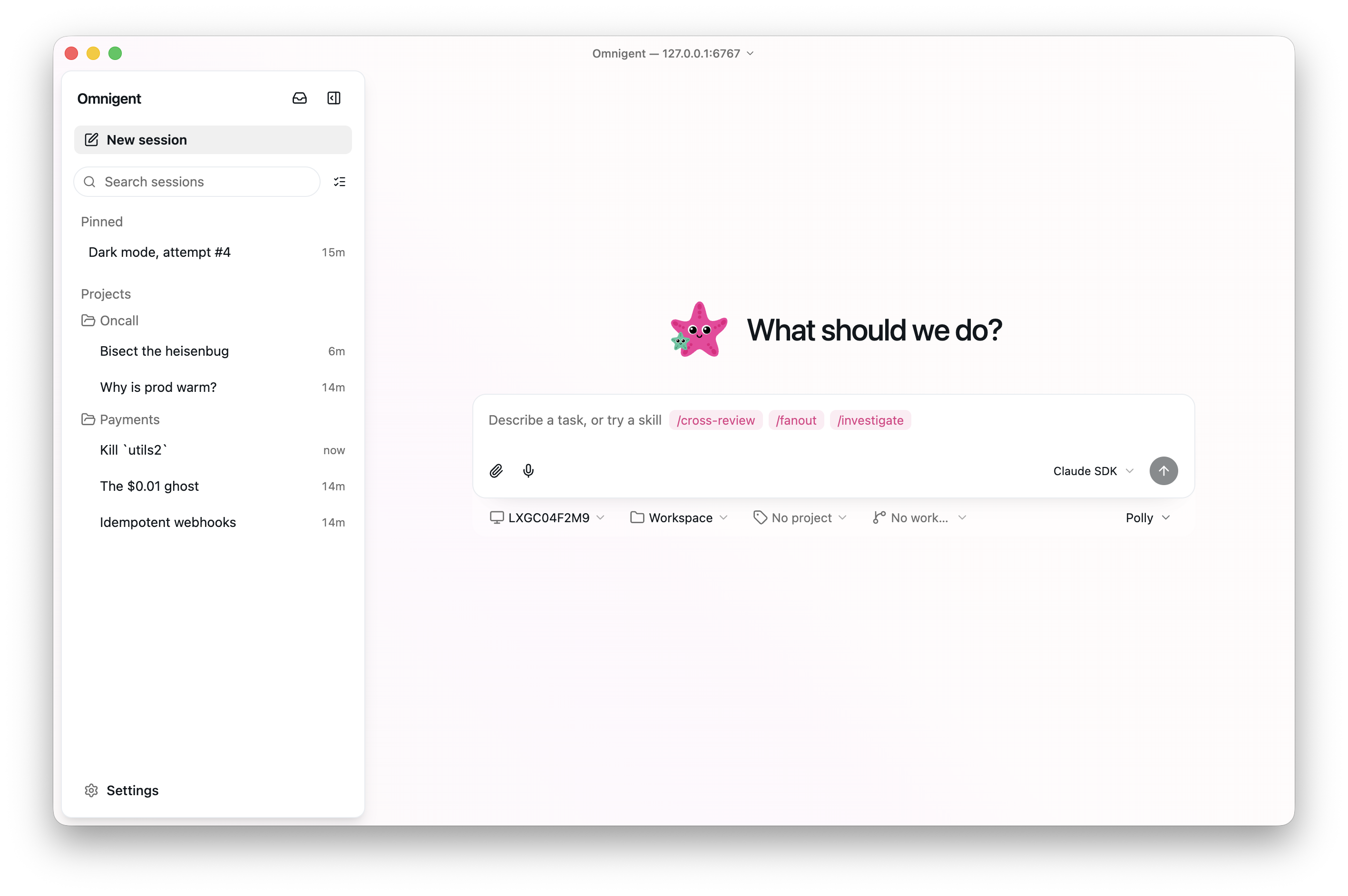
Omnigent is an open-source AI agent framework and meta-harness: orchestrate Claude Code, Codex, Cursor, Pi, and custom agents — swap harnesses without rewriting, enforce policies and sandboxing, and collaborate in real time from any device.

A theoretical reconstruction of the Claude Mythos architecture, built from first principles using the available research literature.
🕷️ An adaptive Web Scraping framework that handles everything from a single request to a full-scale crawl!