

heygen-com/hyperframesFrameworks & SDKs
Write HTML. Render video. Built for agents.
49k
LangGraph is a Python framework for building agents that keep state across steps, recover from failures, and involve a person when needed. It works as a base layer for agent flows, with checkpointing, memory, and deployment-oriented pieces split across the repo.
Builders who want their agent workflows to remember state, branch, recover, and accept human input.
You can build agent workflows that keep going after failures instead of restarting from scratch.
Lets agents resume from where they left off after a failure or interruption.
Lets a person inspect or modify agent state during execution.
Supports working memory during a run and persistent memory across sessions.
Shows execution paths, state changes, and runtime metrics for agent runs.
Supports deploying long-running, stateful agent systems with managed infrastructure.
pip install -U langgraph





Trusted by companies shaping the future of agents – including Klarna, Replit, Elastic, and more – LangGraph is a low-level orchestration framework for building, managing, and deploying long-running, stateful agents.
pip install -U langgraph
[!TIP] If you're looking to quickly build agents, check out Deep Agents — a higher-level package built on LangGraph for agents that can plan, use subagents, and leverage file systems for complex tasks.
For an equivalent JS/TS library, check out LangGraph.js and the JS docs.
LangGraph provides low-level supporting infrastructure for any long-running, stateful workflow or agent:
[!TIP] For developing, debugging, and deploying AI agents and LLM applications, see LangSmith.
While LangGraph can be used standalone, it also integrates seamlessly with any LangChain product, giving developers a full suite of tools for building agents.
To improve your LLM application development, pair LangGraph with:
Discussions: Visit the LangChain Forum to connect with the community and share all of your technical questions, ideas, and feedback.
LangGraph is inspired by Pregel and Apache Beam. The public interface draws inspiration from NetworkX. LangGraph is built by LangChain Inc, the creators of LangChain, but can be used without LangChain.
Sign in to join the discussion.
No comments yet. Be the first to say what this is good for.
Write HTML. Render video. Built for agents.
Ultra-lightweight, open-source, self-hosted personal AI agent framework in Python with WebUI, tools, memory, MCP, multi-agent workflows, automation, and chat apps

SkillOpt is a text-space optimizer that trains reusable natural-language skills for frozen LLM agents through trajectory-driven edits, validation-gated updates, and deployable best_skill.md artifacts.
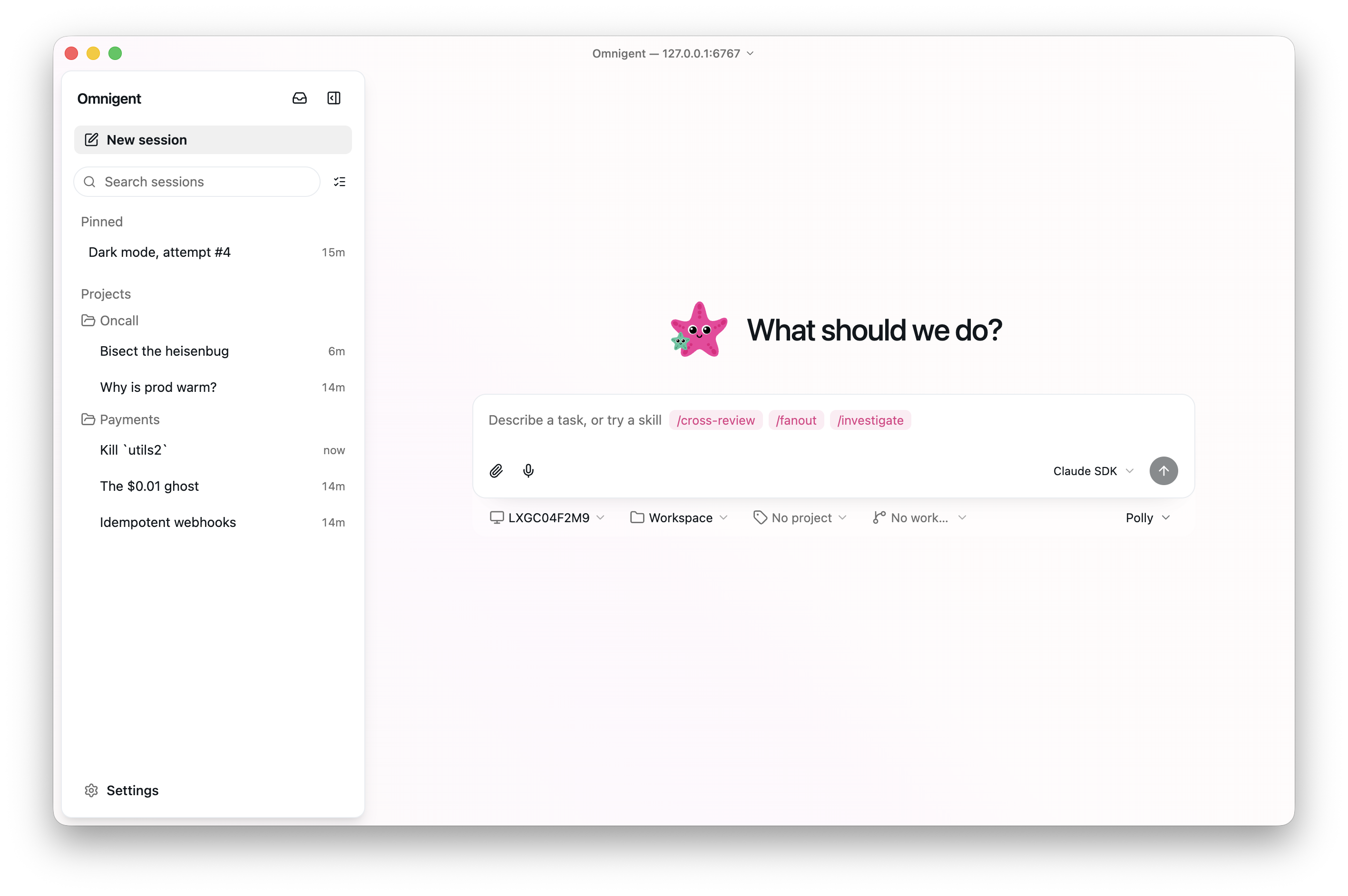
Omnigent is an open-source AI agent framework and meta-harness: orchestrate Claude Code, Codex, Cursor, Pi, and custom agents — swap harnesses without rewriting, enforce policies and sandboxing, and collaborate in real time from any device.

A theoretical reconstruction of the Claude Mythos architecture, built from first principles using the available research literature.
🕷️ An adaptive Web Scraping framework that handles everything from a single request to a full-scale crawl!