

heygen-com/hyperframesFrameworks & SDKs
Write HTML. Render video. Built for agents.
49k
This library bridges MCP servers and LangChain so agents can call MCP tools as regular LangChain tools. It supports both single-server sessions and a multi-server client for pulling tools from several MCP endpoints. The main flow is to connect to an MCP server, load its tools, and pass those tools into a LangChain or LangGraph agent. The repo also includes examples for stdio, HTTP, and streamable HTTP transports.
Builders who want their LangChain or LangGraph agent to use MCP tools from local or remote servers.
You can connect MCP servers to your agent without writing your own adapter layer.
Converts MCP tools into LangChain tools that agents can call.
`MultiServerMCPClient` lets you fetch tools from several servers in one place.
Examples show how to connect over `stdio`, `http`, and streamable HTTP.
Lets you send headers such as authorization or tracing data with supported HTTP transports.
Can return MCP execution errors as tool messages instead of crashing the agent run.
pip install langchain-mcp-adapters
pip install langchain-mcp-adapters langgraph "langchain[openai]"

export OPENAI_API_KEY=<your_api_key>
This library provides a lightweight wrapper that makes Anthropic Model Context Protocol (MCP) tools compatible with LangChain and LangGraph.
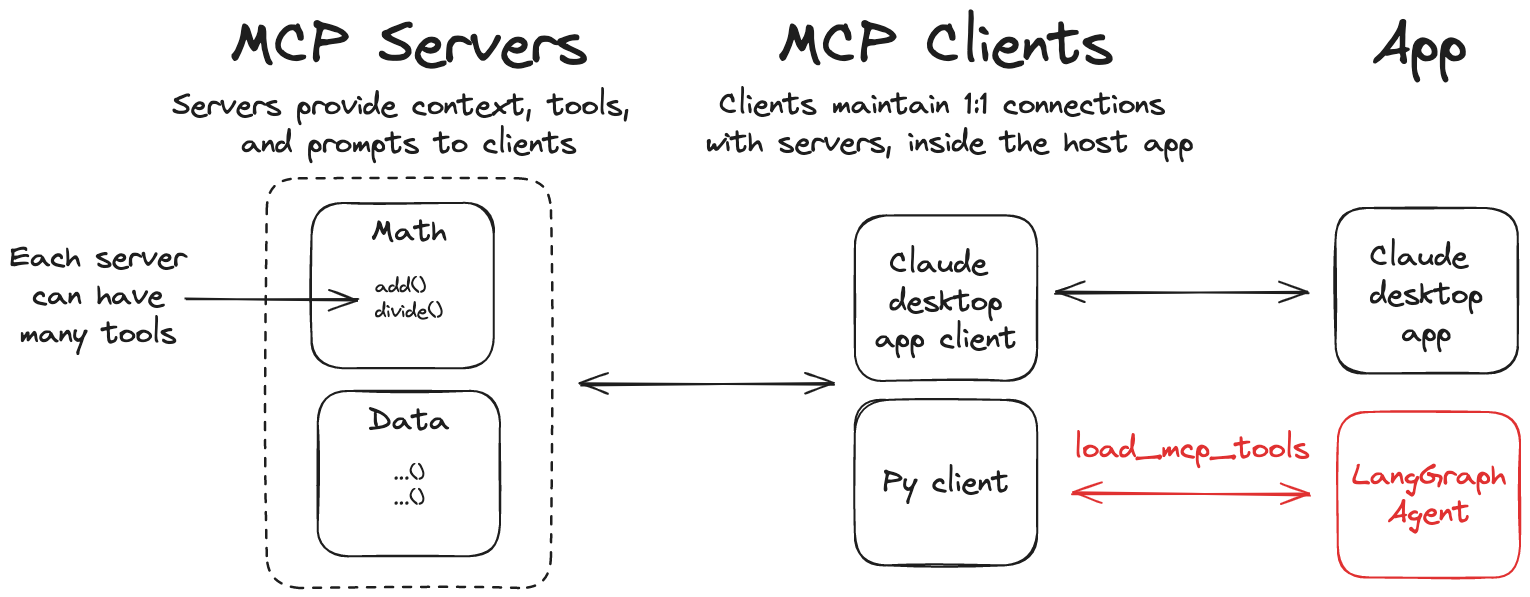
[!note] A JavaScript/TypeScript version of this library is also available at langchainjs.
pip install langchain-mcp-adapters
Here is a simple example of using the MCP tools with a LangGraph agent.
pip install langchain-mcp-adapters langgraph "langchain[openai]"

export OPENAI_API_KEY=<your_api_key>
First, let's create an MCP server that can add and multiply numbers.
# math_server.py
from mcp.server.fastmcp import FastMCP

mcp = FastMCP("Math")

@mcp.tool()
def add(a: int, b: int) -> int:
    """Add two numbers"""
    return a + b

@mcp.tool()
def multiply(a: int, b: int) -> int:
    """Multiply two numbers"""
    return a * b

if __name__ == "__main__":
    mcp.run(transport="stdio")
# Create server parameters for stdio connection
from mcp import ClientSession, StdioServerParameters
from mcp.client.stdio import stdio_client

from langchain_mcp_adapters.tools import load_mcp_tools
from langchain.agents import create_agent

server_params = StdioServerParameters(
    command="python",
    # Make sure to update to the full absolute path to your math_server.py file
    args=["/path/to/math_server.py"],
)

async with stdio_client(server_params) as (read, write):
    async with ClientSession(read, write) as session:
        # Initialize the connection
        await session.initialize()

        # Get tools
        tools = await load_mcp_tools(session)

        # Create and run the agent
        agent = create_agent("openai:gpt-4.1", tools)
        agent_response = await agent.ainvoke({"messages": "what's (3 + 5) x 12?"})
The library also allows you to connect to multiple MCP servers and load tools from them:
# math_server.py
...

# weather_server.py
from typing import List
from mcp.server.fastmcp import FastMCP

mcp = FastMCP("Weather")

@mcp.tool()
async def get_weather(location: str) -> str:
    """Get weather for location."""
    return "It's always sunny in New York"

if __name__ == "__main__":
    mcp.run(transport="http")
python weather_server.py
from langchain_mcp_adapters.client import MultiServerMCPClient
from langchain.agents import create_agent

client = MultiServerMCPClient(
    {
        "math": {
            "command": "python",
            # Make sure to update to the full absolute path to your math_server.py file
            "args": ["/path/to/math_server.py"],
            "transport": "stdio",
        },
        "weather": {
            # Make sure you start your weather server on port 8000
            "url": "http://localhost:8000/mcp",
            "transport": "http",
        }
    }
)
tools = await client.get_tools()
agent = create_agent("openai:gpt-4.1", tools)
math_response = await agent.ainvoke({"messages": "what's (3 + 5) x 12?"})
weather_response = await agent.ainvoke({"messages": "what is the weather in nyc?"})
[!note] Example above will start a new MCP
ClientSessionfor each tool invocation. If you would like to explicitly start a session for a given server, you can do:from langchain_mcp_adapters.tools import load_mcp_tools client = MultiServerMCPClient({...}) async with client.session("math") as session: tools = await load_mcp_tools(session)
MCP now supports streamable HTTP transport.
To start an example streamable HTTP server, run the following:
cd examples/servers/streamable-http-stateless/
uv run mcp-simple-streamablehttp-stateless --port 3000
Alternatively, you can use FastMCP directly (as in the examples above).
To use it with Python MCP SDK streamablehttp_client:
# Use server from examples/servers/streamable-http-stateless/

from mcp import ClientSession
from mcp.client.streamable_http import streamablehttp_client

from langchain.agents import create_agent
from langchain_mcp_adapters.tools import load_mcp_tools

async with streamablehttp_client("http://localhost:3000/mcp") as (read, write, _):
    async with ClientSession(read, write) as session:
        # Initialize the connection
        await session.initialize()

        # Get tools
        tools = await load_mcp_tools(session)
        agent = create_agent("openai:gpt-4.1", tools)
        math_response = await agent.ainvoke({"messages": "what's (3 + 5) x 12?"})
Use it with MultiServerMCPClient:
# Use server from examples/servers/streamable-http-stateless/
from langchain_mcp_adapters.client import MultiServerMCPClient
from langchain.agents import create_agent

client = MultiServerMCPClient(
    {
        "math": {
            "transport": "http",
            "url": "http://localhost:3000/mcp"
        },
    }
)
tools = await client.get_tools()
agent = create_agent("openai:gpt-4.1", tools)
math_response = await agent.ainvoke({"messages": "what's (3 + 5) x 12?"})
When connecting to MCP servers, you can include custom headers (e.g., for authentication or tracing) using the headers field in the connection configuration. This is supported for the following transports:
ssehttp (or streamable_http)MultiServerMCPClientfrom langchain_mcp_adapters.client import MultiServerMCPClient
from langchain.agents import create_agent
client = MultiServerMCPClient(
{
"weather": {
"transport": "http",
"url": "http://localhost:8000/mcp",
"headers": {
"Authorization": "Bearer YOUR_TOKEN",
"X-Custom-Header": "custom-value"
},
}
}
)
tools = await client.get_tools()
agent = create_agent("openai:gpt-4.1", tools)
response = await agent.ainvoke({"messages": "what is the weather in nyc?"})
Only
sseandhttptransports support runtime headers. These headers are passed with every HTTP request to the MCP server.
MCP distinguishes a tool execution error (CallToolResult(isError=True), e.g. "project not found") from a protocol/transport failure. By default, an execution error is returned to the model as a ToolMessage with status="error", so the agent can see what went wrong and self-correct instead of the run crashing:
client = MultiServerMCPClient({...})
tools = await client.get_tools()  # handle_tool_errors=True by default
To restore the legacy behavior — raising a ToolException on execution errors — set handle_tool_errors=False:
client = MultiServerMCPClient({...}, handle_tool_errors=False)
# or, at the tool-loading level:
tools = await load_mcp_tools(session, handle_tool_errors=False)
The error's content blocks are preserved verbatim on the
ToolMessage. The one exception: if the MCP error has no content at all, a minimal placeholder text block is substituted so the tool message isn't empty (a fragile shape for some model providers) — this placeholder is adapter-generated, not server-provided error detail.Transport/session failures and content-conversion errors (e.g. unsupported audio content) always raise regardless of this setting; only MCP execution errors (
isError=True) are governed by it.
from langchain_mcp_adapters.client import MultiServerMCPClient
from langgraph.graph import StateGraph, MessagesState, START
from langgraph.prebuilt import ToolNode, tools_condition

from langchain.chat_models import init_chat_model
model = init_chat_model("openai:gpt-4.1")

client = MultiServerMCPClient(
    {
        "math": {
            "command": "python",
            # Make sure to update to the full absolute path to your math_server.py file
            "args": ["./examples/math_server.py"],
            "transport": "stdio",
        },
        "weather": {
            # make sure you start your weather server on port 8000
            "url": "http://localhost:8000/mcp",
            "transport": "http",
        }
    }
)
tools = await client.get_tools()

def call_model(state: MessagesState):
    response = model.bind_tools(tools).invoke(state["messages"])
    return {"messages": response}

builder = StateGraph(MessagesState)
builder.add_node(call_model)
builder.add_node(ToolNode(tools))
builder.add_edge(START, "call_model")
builder.add_conditional_edges(
    "call_model",
    tools_condition,
)
builder.add_edge("tools", "call_model")
graph = builder.compile()
math_response = await graph.ainvoke({"messages": "what's (3 + 5) x 12?"})
weather_response = await graph.ainvoke({"messages": "what is the weather in nyc?"})
[!TIP] Check out this guide on getting started with LangGraph API server.
If you want to run a LangGraph agent that uses MCP tools in a LangGraph API server, you can use the following setup:
# graph.py
from contextlib import asynccontextmanager
from langchain_mcp_adapters.client import MultiServerMCPClient
from langchain.agents import create_agent

async def make_graph():
    client = MultiServerMCPClient(
        {
            "weather": {
                # make sure you start your weather server on port 8000
                "url": "http://localhost:8000/mcp",
                "transport": "http",
            },
            # ATTENTION: MCP's stdio transport was designed primarily to support applications running on a user's machine.
            # Before using stdio in a web server context, evaluate whether there's a more appropriate solution.
            # For example, do you actually need MCP? or can you get away with a simple `@tool`?
            "math": {
                "command": "python",
                # Make sure to update to the full absolute path to your math_server.py file
                "args": ["/path/to/math_server.py"],
                "transport": "stdio",
            },
        }
    )
    tools = await client.get_tools()
    agent = create_agent("openai:gpt-4.1", tools)
    return agent
In your langgraph.json make sure to specify make_graph as your graph entrypoint:
{
  "dependencies": ["."],
  "graphs": {
    "agent": "./graph.py:make_graph"
  }
}
Sign in to join the discussion.
No comments yet. Be the first to say what this is good for.
Write HTML. Render video. Built for agents.
Ultra-lightweight, open-source, self-hosted personal AI agent framework in Python with WebUI, tools, memory, MCP, multi-agent workflows, automation, and chat apps

SkillOpt is a text-space optimizer that trains reusable natural-language skills for frozen LLM agents through trajectory-driven edits, validation-gated updates, and deployable best_skill.md artifacts.
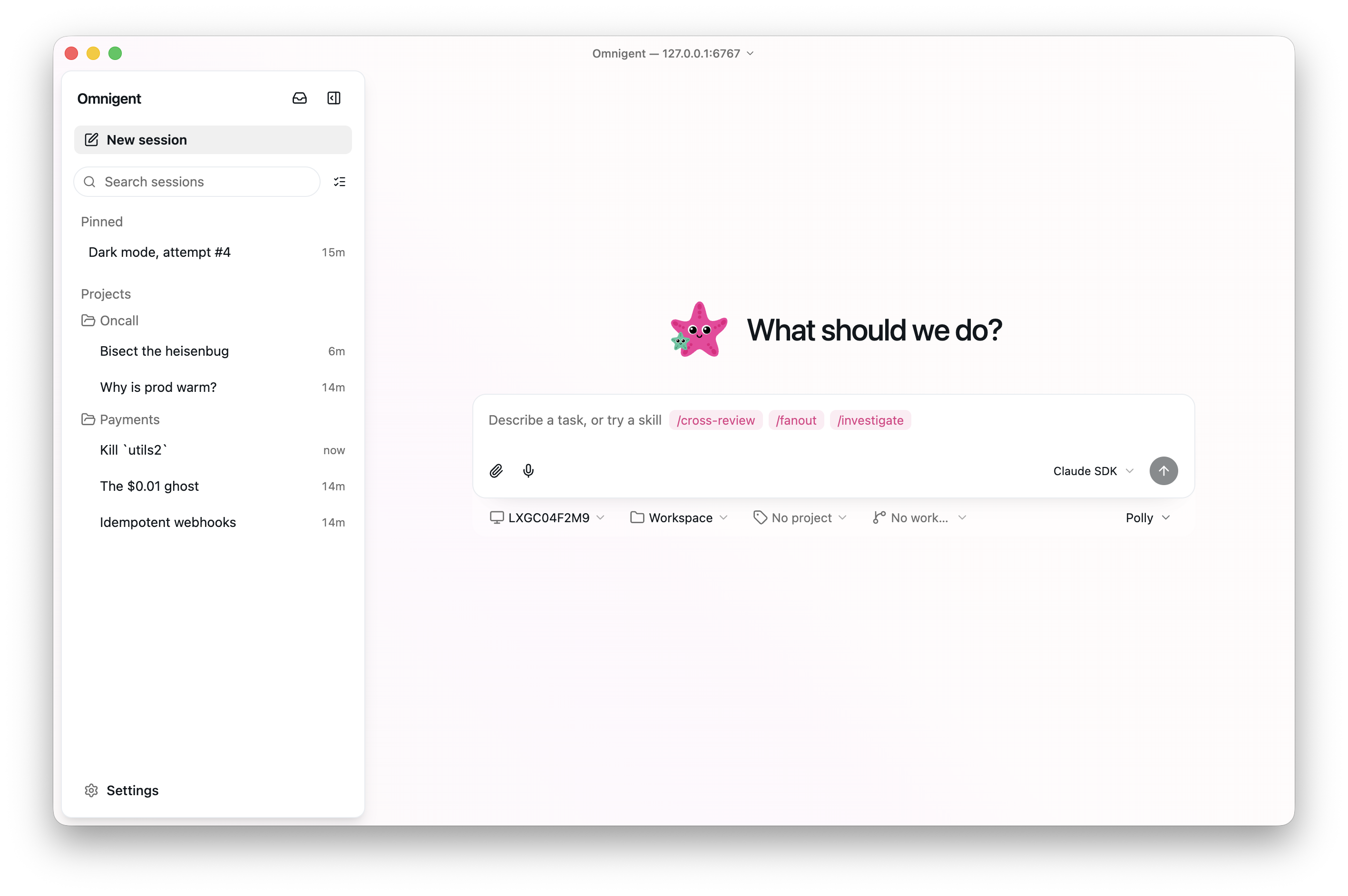
Omnigent is an open-source AI agent framework and meta-harness: orchestrate Claude Code, Codex, Cursor, Pi, and custom agents — swap harnesses without rewriting, enforce policies and sandboxing, and collaborate in real time from any device.

A theoretical reconstruction of the Claude Mythos architecture, built from first principles using the available research literature.
🕷️ An adaptive Web Scraping framework that handles everything from a single request to a full-scale crawl!