

heygen-com/hyperframesFrameworks & SDKs
Write HTML. Render video. Built for agents.
49k
Unprice sits in the request path so you can check entitlement, budget, wallet credits, and meter rules before an agent or workflow creates cost. It also keeps invoice evidence by tracing usage events and ledger captures back to charges.
Builders who need to control customer spend for AI products, agent runs, or metered workflows.
You can block unfunded work before it runs and still produce invoice evidence later.
Checks entitlement, budget, wallet credits, and meter rules before work starts.
Sets budget envelopes for agents, workflows, jobs, tools, and other workloads.
Links rated usage events and ledger captures to each charge.
Separates purchased, granted, reserved, and consumed balances.
Uses Stripe as the production payment provider while Unprice manages the customer money path.
Ships a skill playbook for Codex, Claude Code, Cursor, and other skills-compatible agents.
npx skills add https://github.com/jhonsfran/unprice --skill integrate-unprice-sdk
npx skills add https://docs.unprice.dev --skill integrate-unprice-sdk




"Your product is smart, but your pricing is hardcoded."
Sell AI credits and usage without paying for unfunded agent work. Authorize each agent run or paid workflow before it creates cost, reserve customer credits up front, then trace settled usage to the invoice.
For AI products, billing cannot start at the end of the cycle. By then, the model call, agent run, or paid workflow already created cost.
If the request should have been blocked, you already paid for it. When a customer disputes an invoice, engineering must reconstruct the path from product event to usage counter to billing line. Changing a package also means finding plan logic across application code, billing scripts, counters, and support workflows.
Every AI charge starts with an authorization. Unprice gives your app that decision before the work runs.
AI gateways cap what you spend with providers. Unprice governs what your customer is allowed to spend, then turns that decision into invoice evidence.
PriceOps is Unprice's operating model for versioned plan rules, entitlements, customer budgets, wallet credits, and invoice evidence.
Unprice is for developer-led AI products that sell prepaid credits, metered AI usage, agent runs, or paid workflows. It is built for CTOs, founding engineers, and platform engineers who own the path from customer authorization to invoice.
This repository uses different licenses for the core and the client packages:
packages/** use the MIT License.You can embed an MIT package such as @unprice/api in an application. Doing so does not apply the core AGPL license to that application. See LICENSING.md for the exact scope.
Money logic should be open to inspection.
Use the commercial license if you need separate terms for the core.
Unprice uses:
Read the quickstart to put one agent action on the money path.
Install the Unprice SDK integration playbook in Codex, Claude Code, Cursor, and other skills-compatible agents:
npx skills add https://github.com/jhonsfran/unprice --skill integrate-unprice-sdk
The same skill is available through the documentation site:
npx skills add https://docs.unprice.dev --skill integrate-unprice-sdk
Unprice is open source. Bug reports, documentation fixes, and focused feature proposals are welcome.
Sign in to join the discussion.
No comments yet. Be the first to say what this is good for.
Write HTML. Render video. Built for agents.
Ultra-lightweight, open-source, self-hosted personal AI agent framework in Python with WebUI, tools, memory, MCP, multi-agent workflows, automation, and chat apps

SkillOpt is a text-space optimizer that trains reusable natural-language skills for frozen LLM agents through trajectory-driven edits, validation-gated updates, and deployable best_skill.md artifacts.
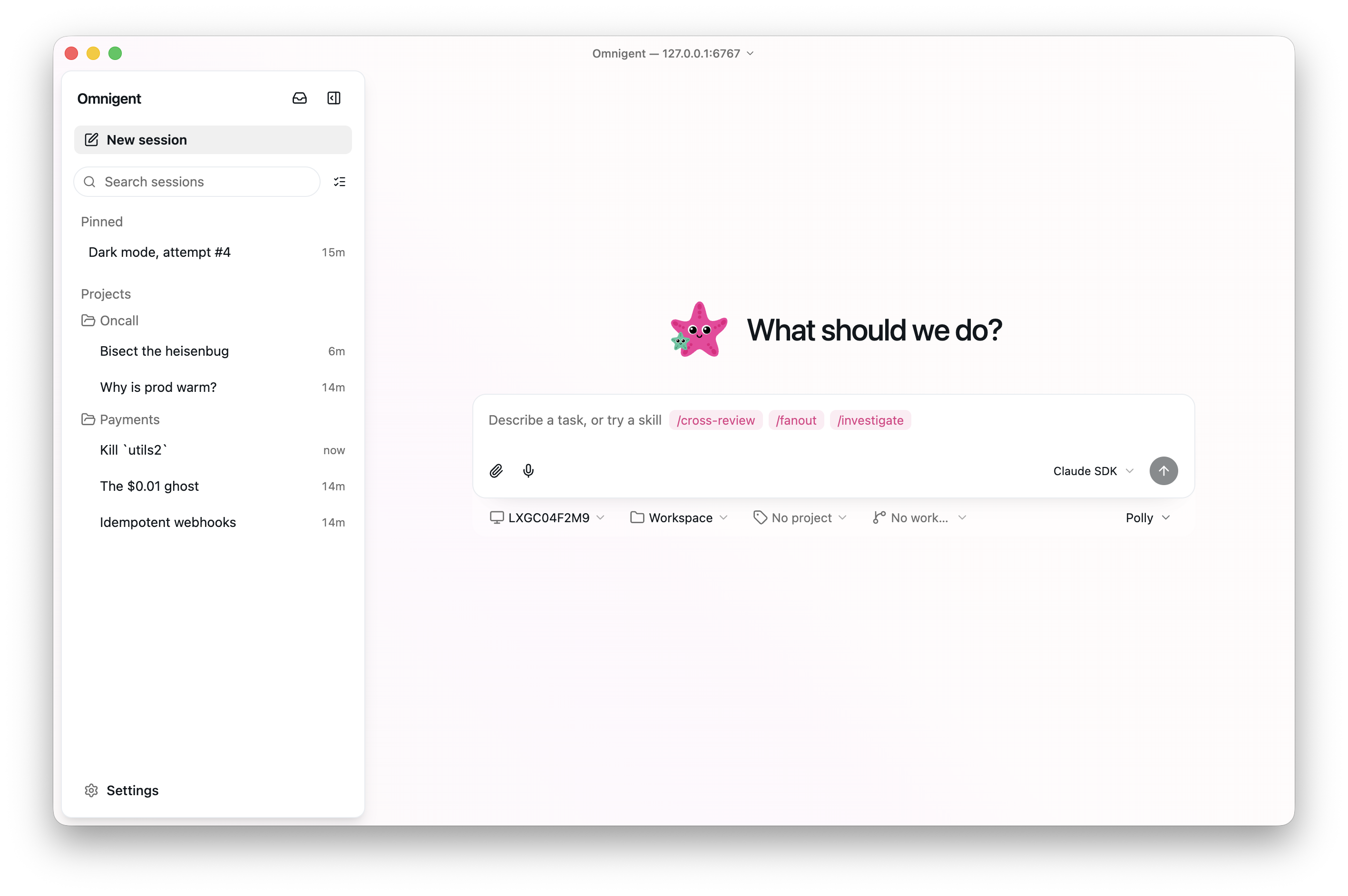
Omnigent is an open-source AI agent framework and meta-harness: orchestrate Claude Code, Codex, Cursor, Pi, and custom agents — swap harnesses without rewriting, enforce policies and sandboxing, and collaborate in real time from any device.

A theoretical reconstruction of the Claude Mythos architecture, built from first principles using the available research literature.
🕷️ An adaptive Web Scraping framework that handles everything from a single request to a full-scale crawl!