





heygen-com/hyperframesFrameworks & SDKs
Write HTML. Render video. Built for agents.
49k
Golf turns a directory of Python files into an MCP server. You define tools, resources, and prompts in `tools/`, `resources/`, and `prompts/`, and Golf handles discovery, compilation, authentication, and telemetry.
Builders who want to create MCP servers for their agents from a simple Python project layout.
You can ship MCP server capabilities without hand-building the server scaffolding, auth flow, or telemetry plumbing.
Finds tool, prompt, and resource files in standard folders and turns them into MCP components.
Supports JWT, OAuth server mode, static development tokens, and API-key style setup in `auth.py`.
Includes anonymous CLI telemetry and OpenTelemetry tracing support for server runs.
Creates a starter project with `golf init` and runs a dev server with `golf build dev` and `golf run`.
Provides helpers like `elicit`, `sample`, and `get_current_context` for MCP tool logic.
pip install golf-mcp
golf init your-project-name
cd your-project-name
golf build dev
golf run
Golf is a framework designed to streamline the creation of MCP server applications. It allows developers to define server's capabilities—tools, prompts, and resources—as simple Python files within a conventional directory structure. Golf then automatically discovers, parses, and compiles these components into a runnable MCP server, minimizing boilerplate and accelerating development.
Golf targets FastMCP 4.0.0 and the current MCP 2026-07-28 protocol. FastMCP also negotiates legacy MCP clients through its compatibility mode.
With Golf v0.2.0, you get enterprise-grade authentication (JWT, OAuth Server, development tokens), built-in utilities for LLM interactions, and automatic telemetry integration. Focus on implementing your agent's logic while Golf handles authentication, monitoring, and server infrastructure.
Get your Golf project up and running in a few simple steps:
Golf requires Python 3.10 or newer. Then, install Golf using pip:
pip install golf-mcp
Use the Golf CLI to scaffold a new project:
golf init your-project-name
This command creates a new directory (your-project-name) with a basic project structure, including example tools, resources, and a golf.json configuration file.
Navigate into your new project directory and start the development server:
cd your-project-name
golf build dev
golf run
This will start the MCP server, typically on http://localhost:3000 (configurable in golf.json).
That's it! Your Golf server is running and ready for integration.
A Golf project initialized with golf init will have a structure similar to this:
<your-project-name>/
│
├─ golf.json          # Main project configuration
│
├─ tools/             # Directory for tool implementations
│   └─ hello.py       # Example tool
│
├─ resources/         # Directory for resource implementations
│   └─ info.py        # Example resource
│
├─ prompts/           # Directory for prompt templates
│   └─ welcome.py     # Example prompt
│
├─ .env               # Environment variables (e.g., API keys, server port)
└─ auth.py            # Authentication configuration (JWT, OAuth Server, API key, dev tokens)
golf.json: Configures server name, port, transport, telemetry, and other build settings.auth.py: Dedicated authentication configuration file (new in v0.2.0, breaking change from v0.1.x authentication API) for JWT, OAuth Server, API key, or development authentication.tools/, resources/, prompts/: Contain your Python files, each defining a single component. These directories can also contain nested subdirectories to further organize your components (e.g., tools/payments/charge.py). The module docstring of each file serves as the component's description.
tools/hello.py becomes hello, and a nested file like tools/payments/submit.py would become submit_payments (filename, followed by reversed parent directories under the main category, joined by underscores).Creating a new tool is as simple as adding a Python file to the tools/ directory. The example tools/hello.py in the boilerplate looks like this:
# tools/hello.py
"""Hello World tool {{project_name}}."""

from typing import Annotated
from pydantic import BaseModel, Field

class Output(BaseModel):
    """Response from the hello tool."""
    message: str

async def hello(
    name: Annotated[str, Field(description="The name of the person to greet")] = "World",
    greeting: Annotated[str, Field(description="The greeting phrase to use")] = "Hello"
) -> Output:
    """Say hello to the given name.

    This is a simple example tool that demonstrates the basic structure
    of a tool implementation in Golf.
    """
    print(f"{greeting} {name}...")
    return Output(message=f"{greeting}, {name}!")

# Designate the entry point function
export = hello
Golf will automatically discover this file. The module docstring """Hello World tool {{project_name}}.""" is used as the tool's description. It infers parameters from the hello function's signature and uses the Output Pydantic model for the output schema. The tool will be registered with the ID hello.
Golf includes enterprise-grade authentication, built-in utilities, and automatic telemetry:
# auth.py - Configure authentication
from golf.auth import configure_auth, JWTAuthConfig, StaticTokenConfig, OAuthServerConfig

# JWT authentication (production)
configure_auth(JWTAuthConfig(
    jwks_uri_env_var="JWKS_URI",
    issuer_env_var="JWT_ISSUER",
    audience_env_var="JWT_AUDIENCE",
    required_scopes=["read", "write"]
))

# OAuth Server mode (Golf acts as OAuth 2.0 server)
# configure_auth(OAuthServerConfig(
#     base_url="https://your-golf-server.com",
#     valid_scopes=["read", "write", "admin"]
# ))

# Static tokens (development only)
# configure_auth(StaticTokenConfig(
#     tokens={"dev-token": {"client_id": "dev", "scopes": ["read"]}}
# ))

# Built-in utilities available in all tools
from golf.utilities import elicit, sample, get_current_context
On MCP 2026-07-28, elicitation and sampling use caller-owned multi-round-trip
control flow. A nested helper cannot transparently continue the containing
tool: declare InputRequiredResult in the tool's return type and return any
such result unchanged. The tool is then re-entered with the answer. Legacy
connections continue to use imperative requests.
from mcp_types import InputRequiredResult
from golf.utilities import sample

async def explain(topic: str) -> str | InputRequiredResult:
    result = await sample(f"Explain {topic}")
    if isinstance(result, InputRequiredResult):
        return result
    return result
JWT authentication requires an audience so tokens are bound to this MCP resource. Inbound MCP JWT/OAuth bearer tokens must never be forwarded to an upstream API; use a separate upstream credential or a standards-based token exchange/delegation flow.
# Enable OpenTelemetry tracing
export OTEL_TRACES_EXPORTER="otlp_http"
export OTEL_EXPORTER_OTLP_ENDPOINT="http://localhost:4318/v1/traces"
golf run  # ✅ Telemetry enabled
Basic configuration in golf.json:
{
  "name": "My Golf Server",
  "host": "localhost",
  "port": 3000,
  "transport": "streamable-http",
  "opentelemetry_enabled": false,
  "detailed_tracing": false
}
transport: Use "streamable-http" or "stdio". SSE remains available
only as a deprecated legacy transport.stateless_http: Optional legacy Streamable HTTP behavior. MCP
2026-07-28 is intrinsically sessionless and does not depend on this setting.opentelemetry_enabled: Enable OpenTelemetry tracingdetailed_tracing: Capture input/output (use carefully with sensitive data)Golf collects anonymous usage data on the CLI to help us understand how the framework is being used and improve it over time. The data collected includes:
No personal information, project names, code content, or error messages are ever collected.
You can disable telemetry in several ways:
Using the telemetry command (recommended):
golf telemetry disable
This saves your preference permanently. To re-enable:
golf telemetry enable
During any command: Add --no-telemetry to save your preference:
golf init my-project --no-telemetry
Your telemetry preference is stored in ~/.golf/telemetry.json and persists across all Golf commands.
Sign in to join the discussion.
No comments yet. Be the first to say what this is good for.
Write HTML. Render video. Built for agents.
Ultra-lightweight, open-source, self-hosted personal AI agent framework in Python with WebUI, tools, memory, MCP, multi-agent workflows, automation, and chat apps

SkillOpt is a text-space optimizer that trains reusable natural-language skills for frozen LLM agents through trajectory-driven edits, validation-gated updates, and deployable best_skill.md artifacts.
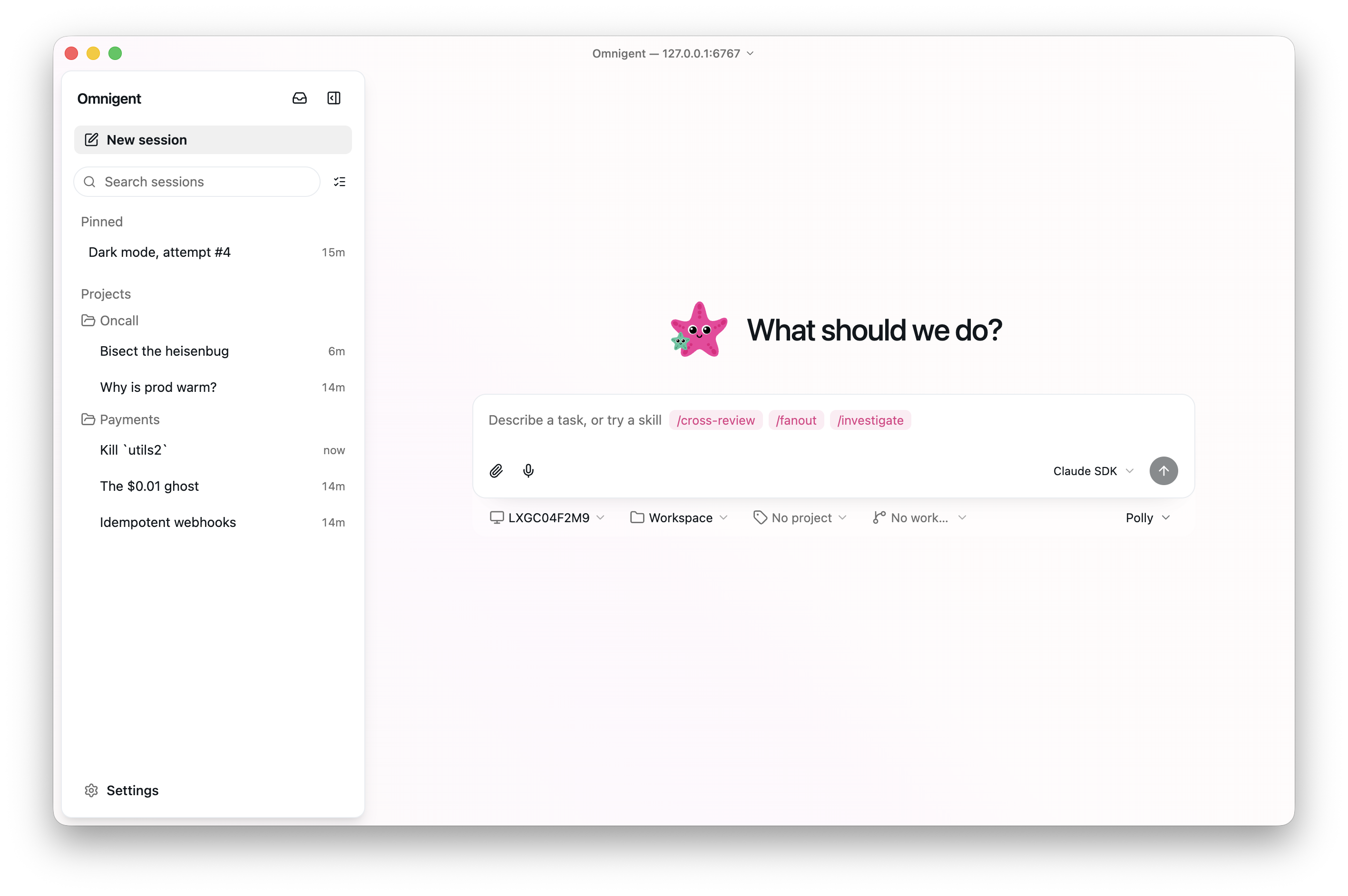
Omnigent is an open-source AI agent framework and meta-harness: orchestrate Claude Code, Codex, Cursor, Pi, and custom agents — swap harnesses without rewriting, enforce policies and sandboxing, and collaborate in real time from any device.

A theoretical reconstruction of the Claude Mythos architecture, built from first principles using the available research literature.
🕷️ An adaptive Web Scraping framework that handles everything from a single request to a full-scale crawl!