

heygen-com/hyperframesFrameworks & SDKs
Write HTML. Render video. Built for agents.
49k
This package provides a typed TypeScript SDK for MCP over MQTT. It lets you create MCP servers and clients that run in browser or Node.js, discover servers over MQTT topics, and call tools or read resources through the protocol.
Builders who want MCP clients and servers that communicate over MQTT in browser or Node.js.
You can build agent integrations that discover servers, call tools, and read resources over MQTT without wiring the protocol yourself.
Works in WebSocket-based browser environments and TCP-based Node.js environments with automatic detection.
Provides `McpMqttServer` and `McpMqttClient` classes with TypeScript types and Zod-backed validation.
Lets servers register tools and resources, and lets clients list, call, and read them.
Discovers servers over MQTT presence topics and connects to them by server ID.
Uses MQTT as the transport layer and follows the MCP over MQTT topic structure from the README.
Exposes connection and server lifecycle events such as ready, connected, disconnected, and error.
Lets you access the underlying MQTT client for custom publish and subscribe work.
npm install @emqx-ai/mcp-mqtt-sdk
A TypeScript SDK for implementing Model Context Protocol (MCP) over MQTT, supporting both browser and Node.js environments with full type safety and automatic environment detection.
See this SDK in action! Check out our MCP AI Companion Demo - a real-world implementation using both Python and TypeScript with this SDK to create an AI agent that can:
This demo showcases how to build sophisticated AI agents using MCP over MQTT for seamless browser control and interaction.
npm install @emqx-ai/mcp-mqtt-sdk
import { McpMqttServer } from '@emqx-ai/mcp-mqtt-sdk'

// Create server instance
const server = new McpMqttServer({
  // MQTT connection
  host: 'mqtt://localhost:1883',

  // Server identification
  serverId: 'unique-server-id-123',
  serverName: 'myapp/greeting-server',  // Hierarchical naming

  // Server information
  name: 'My MCP Server',
  version: '1.0.0',

  // Optional configuration
  description: 'A sample MCP server providing greeting tools',
  capabilities: {
    tools: { listChanged: true },
    resources: { listChanged: true, subscribe: false },
  },
})

// Add a tool
server.tool(
  'greet',
  'Greet someone with a personalized message',
  {
    type: 'object',
    properties: {
      name: {
        type: 'string',
        description: 'Name of the person to greet'
      },
      language: {
        type: 'string',
        enum: ['en', 'es', 'fr'],
        description: 'Language for greeting'
      }
    },
    required: ['name'],
  },
  async ({ name, language = 'en' }) => {
    const greetings = {
      en: `Hello, ${name}!`,
      es: `¡Hola, ${name}!`,
      fr: `Bonjour, ${name}!`
    }

    return {
      content: [{
        type: 'text',
        text: greetings[language] || greetings.en,
      }],
    }
  }
)

// Add a resource
server.resource(
  'config://app-settings',
  'Application Settings',
  async () => ({
    contents: [{
      uri: 'config://app-settings',
      mimeType: 'application/json',
      text: JSON.stringify({
        theme: 'dark',
        language: 'en',
        notifications: true
      }, null, 2),
    }],
  }),
  {
    description: 'Current application configuration',
    mimeType: 'application/json',
  }
)

// Event handlers
server.on('ready', () => {
  console.log('Server is ready!')
  console.log('Topics:', server.getTopics())
})

server.on('error', (error) => {
  console.error('Server error:', error)
})

// Start the server
await server.start()
import { McpMqttClient } from '@emqx-ai/mcp-mqtt-sdk'

// Create client instance
const client = new McpMqttClient({
  // MQTT connection
  host: 'mqtt://localhost:1883',

  // Client information
  name: 'My MCP Client',
  version: '1.0.0',
})

// Set up server discovery handler
client.on('serverDiscovered', async (server) => {
  console.log('📡 Discovered server:', server.name, '(ID:', server.serverId, ')')

  try {
    // Connect to the discovered server using serverId
    await client.initializeServer(server.serverId)
    console.log('✅ Connected to:', server.name)

    // List available tools using serverId
    const tools = await client.listTools(server.serverId)
    console.log('🔧 Available tools:', tools.map(t => t.name))

    // Call a tool using serverId
    if (tools.some(t => t.name === 'greet')) {
      const result = await client.callTool(server.serverId, 'greet', {
        name: 'World',
        language: 'es'
      })
      console.log('🎉 Tool result:', result.content[0]?.text)
    }

    // List and read resources using serverId
    const resources = await client.listResources(server.serverId)
    console.log('📚 Available resources:', resources.map(r => r.uri))

    if (resources.some(r => r.uri === 'config://app-settings')) {
      const config = await client.readResource(server.serverId, 'config://app-settings')
      console.log('📄 Config:', config.contents[0]?.text)
    }
  } catch (error) {
    console.error('❌ Error with server:', server.name, error)
  }
})

// Connect and start discovery
await client.connect()

// Graceful shutdown
process.on('SIGINT', async () => {
  await client.disconnect()
  process.exit(0)
})
new McpMqttServer(config: McpMqttServerConfig)
Configuration:
interface McpMqttServerConfig {
  // MQTT connection settings
  host: string
  username?: string
  password?: string

  // Server identification (required)
  serverId: string      // Unique server ID (MQTT client ID)
  serverName: string    // Hierarchical server name (e.g., "app/feature/server")

  // Server information (required)
  name: string
  version: string

  // Optional configuration
  description?: string     // Server description
  capabilities?: {
    prompts?: { listChanged?: boolean }
    resources?: { subscribe?: boolean; listChanged?: boolean }
    tools?: { listChanged?: boolean }
  }
  rbac?: {               // Optional role-based access control
    roles: Array<{
      name: string
      description: string
      allowed_methods: string[]
      allowed_tools: string[] | "all"
      allowed_resources: string[] | "all"
    }>
  }
}
tool(name, description, inputSchema, handler)Register a tool that clients can call.
server.tool(
  'calculate',
  'Perform mathematical calculations',
  {
    type: 'object',
    properties: {
      expression: {
        type: 'string',
        description: 'Mathematical expression to evaluate'
      },
    },
    required: ['expression'],
  },
  async ({ expression }) => {
    try {
      // Safe evaluation - implement your own parser
      const result = evaluateExpression(expression)
      return {
        content: [{
          type: 'text',
          text: `${expression} = ${result}`,
        }],
      }
    } catch (error) {
      return {
        content: [{
          type: 'text',
          text: `Error: ${error.message}`,
        }],
        isError: true,
      }
    }
  }
)
resource(uri, name, handler, options?)Register a resource that clients can read.
server.resource(
  'file://logs/app.log',
  'Application Logs',
  async () => {
    const logs = await readLogFile()
    return {
      contents: [{
        uri: 'file://logs/app.log',
        mimeType: 'text/plain',
        text: logs,
      }],
    }
  },
  {
    description: 'Current application log entries',
    mimeType: 'text/plain',
  }
)
start() / stop()Control server lifecycle.
await server.start()  // Start listening for requests
await server.stop()   // Gracefully shutdown
getTopics()Get MQTT topics used by this server.
const { request, response } = server.getTopics()
server.on('ready', () => console.log('Server ready'))
server.on('error', (error) => console.error('Server error:', error))
server.on('closed', () => console.log('Server closed'))
new McpMqttClient(config: McpMqttClientConfig)
Configuration:
interface McpMqttClientConfig {
  // MQTT connection settings
  host: string
  clientId?: string
  username?: string
  password?: string
  clean?: boolean
  keepalive?: number
  connectTimeout?: number
  reconnectPeriod?: number

  // Client information (required)
  name: string
  version: string

  // Optional configuration
  capabilities?: {
    roots?: { listChanged?: boolean }
    sampling?: Record<string, any>
  }

  // Advanced MQTT settings (optional)
  will?: {
    topic: string
    payload: string | Buffer
    qos?: 0 | 1 | 2
    retain?: boolean
  }
  properties?: Record<string, any>
}
await client.connect()           // Connect to MQTT broker and start discovery
await client.disconnect()        // Disconnect from broker
await client.initializeServer(serverId)  // Initialize connection to a specific server
const tools = await client.listTools(serverId)
const result = await client.callTool(serverId, toolName, args)
const resources = await client.listResources(serverId)
const data = await client.readResource(serverId, uri)
const discovered = client.getDiscoveredServers()
const connected = client.getConnectedServers()
client.on('serverDiscovered', (server) => {
  console.log('Found server:', server.name, 'ID:', server.serverId)
})

client.on('serverInitialized', (server) => {
  console.log('Connected to:', server.name)
})

client.on('serverDisconnected', (serverId) => {
  console.log('Server disconnected:', serverId)
})

client.on('connected', () => console.log('Client connected'))
client.on('disconnected', () => console.log('Client disconnected'))
client.on('error', (error) => console.error('Client error:', error))
The SDK supports comprehensive MQTT connection options:
interface MqttConnectionOptions {
  host: string               // Complete connection URL (e.g., ws://localhost:8083, wss://broker.emqx.io:8084)
  clientId?: string          // Auto-generated if not provided
  username?: string
  password?: string
  clean?: boolean            // Clean session (default: true)
  keepalive?: number         // Keep-alive interval in seconds
  connectTimeout?: number    // Connection timeout in milliseconds
  reconnectPeriod?: number   // Reconnection period in milliseconds
  will?: {                   // Last Will Testament
    topic: string
    payload: string | Buffer
    qos?: 0 | 1 | 2
    retain?: boolean
  };
}
The host parameter should be a complete connection URL:
// WebSocket connections (browser)
host: 'ws://localhost:8083'
host: 'wss://broker.emqx.io:8084'

// TCP connections (Node.js)
host: 'mqtt://localhost:1883'
host: 'mqtts://broker.emqx.io:8883'
Both server and client provide getMqttClient() method to access the underlying MQTT client for custom pub/sub operations:
const mqttClient = server.getMqttClient() // or client.getMqttClient()
if (mqttClient) {
  mqttClient.subscribe('custom/topic', { qos: 1 })
  mqttClient.publish('custom/topic', 'Hello World')
}
import { z } from 'zod'

// Define schema for tool parameters
const CalculateSchema = z.object({
  operation: z.enum(['add', 'subtract', 'multiply', 'divide']),
  a: z.number(),
  b: z.number(),
})

server.tool(
  'calculate',
  'Perform arithmetic operations',
  {
    type: 'object',
    properties: {
      operation: { type: 'string', enum: ['add', 'subtract', 'multiply', 'divide'] },
      a: { type: 'number' },
      b: { type: 'number' },
    },
    required: ['operation', 'a', 'b'],
  },
  async (params) => {
    // Validate with Zod
    const { operation, a, b } = CalculateSchema.parse(params)

    let result: number
    switch (operation) {
      case 'add': result = a + b; break
      case 'subtract': result = a - b; break
      case 'multiply': result = a * b; break
      case 'divide':
        if (b === 0) throw new Error('Division by zero')
        result = a / b
        break
    }

    return {
      content: [{
        type: 'text',
        text: `${a} ${operation} ${b} = ${result}`,
      }],
    }
  }
)
// Server-side error handling
server.tool('risky-operation', 'An operation that might fail', schema, async (params) => {
  try {
    const result = await performRiskyOperation(params)
    return {
      content: [{ type: 'text', text: `Success: ${result}` }],
    }
  } catch (error) {
    return {
      content: [{ type: 'text', text: `Operation failed: ${error.message}` }],
      isError: true, // Mark as error response
    }
  }
})

// Client-side error handling
try {
  const result = await client.callTool(serverName, 'risky-operation', params)
  if (result.isError) {
    console.error('Tool returned error:', result.content[0]?.text)
  } else {
    console.log('Success:', result.content[0]?.text)
  }
} catch (error) {
  console.error('Tool call failed:', error.message)
}
// Server: Streaming resource
server.resource(
  'stream://live-data',
  'Live Data Stream',
  async () => {
    const chunks = await getLiveDataChunks()
    return {
      contents: chunks.map((chunk, index) => ({
        uri: `stream://live-data#${index}`,
        mimeType: 'application/json',
        text: JSON.stringify(chunk),
      })),
    }
  }
)

// Client: Read streaming resource
const stream = await client.readResource(serverName, 'stream://live-data')
for (const content of stream.contents) {
  const data = JSON.parse(content.text!)
  processStreamChunk(data)
}
# Install dependencies
npm install

# Build
npm run build

# Build in watch mode
npm run build:watch

# Run tests
npm run test

# Type checking
npm run typecheck

# Linting
npm run lint
npm run lint:fix
The SDK follows the official MCP over MQTT specification topic hierarchy:
MCP over MQTT Topic Structure:

🗂️ Server Topics:
├── $mcp-server/{server-id}/{server-name}              # Control topic (initialization)
├── $mcp-server/capability/{server-id}/{server-name}   # Capability change notifications
└── $mcp-server/presence/{server-id}/{server-name}     # Server presence (online/offline)

🗂️ Client Topics:
├── $mcp-client/capability/{mcp-client-id}             # Client capability changes
└── $mcp-client/presence/{mcp-client-id}               # Client presence

🗂️ RPC Communication:
└── $mcp-rpc/{mcp-client-id}/{server-id}/{server-name} # Bidirectional RPC communication

Example Topics:
- Control: $mcp-server/server-123/myapp/greeting-server
- Capability: $mcp-server/capability/server-123/myapp/greeting-server
- Presence: $mcp-server/presence/server-123/myapp/greeting-server
- RPC: $mcp-rpc/client-456/server-123/myapp/greeting-server
$mcp-server/presence/+/#$mcp-server/presence/{server-id}/{server-name}initialize request to $mcp-server/{server-id}/{server-name}$mcp-rpc/{client-id}/{server-id}/{server-name}The SDK follows JSON-RPC 2.0 error codes:
-32700: Parse error-32600: Invalid request-32601: Method not found-32602: Invalid params-32603: Internal error-32000 to -32099: Implementation-defined server errorsLooking for MCP over MQTT support in other languages?
git checkout -b feature/amazing-feature)npm test)Apache License 2.0. See LICENSE file for details.
Sign in to join the discussion.
No comments yet. Be the first to say what this is good for.
Write HTML. Render video. Built for agents.
Ultra-lightweight, open-source, self-hosted personal AI agent framework in Python with WebUI, tools, memory, MCP, multi-agent workflows, automation, and chat apps

SkillOpt is a text-space optimizer that trains reusable natural-language skills for frozen LLM agents through trajectory-driven edits, validation-gated updates, and deployable best_skill.md artifacts.
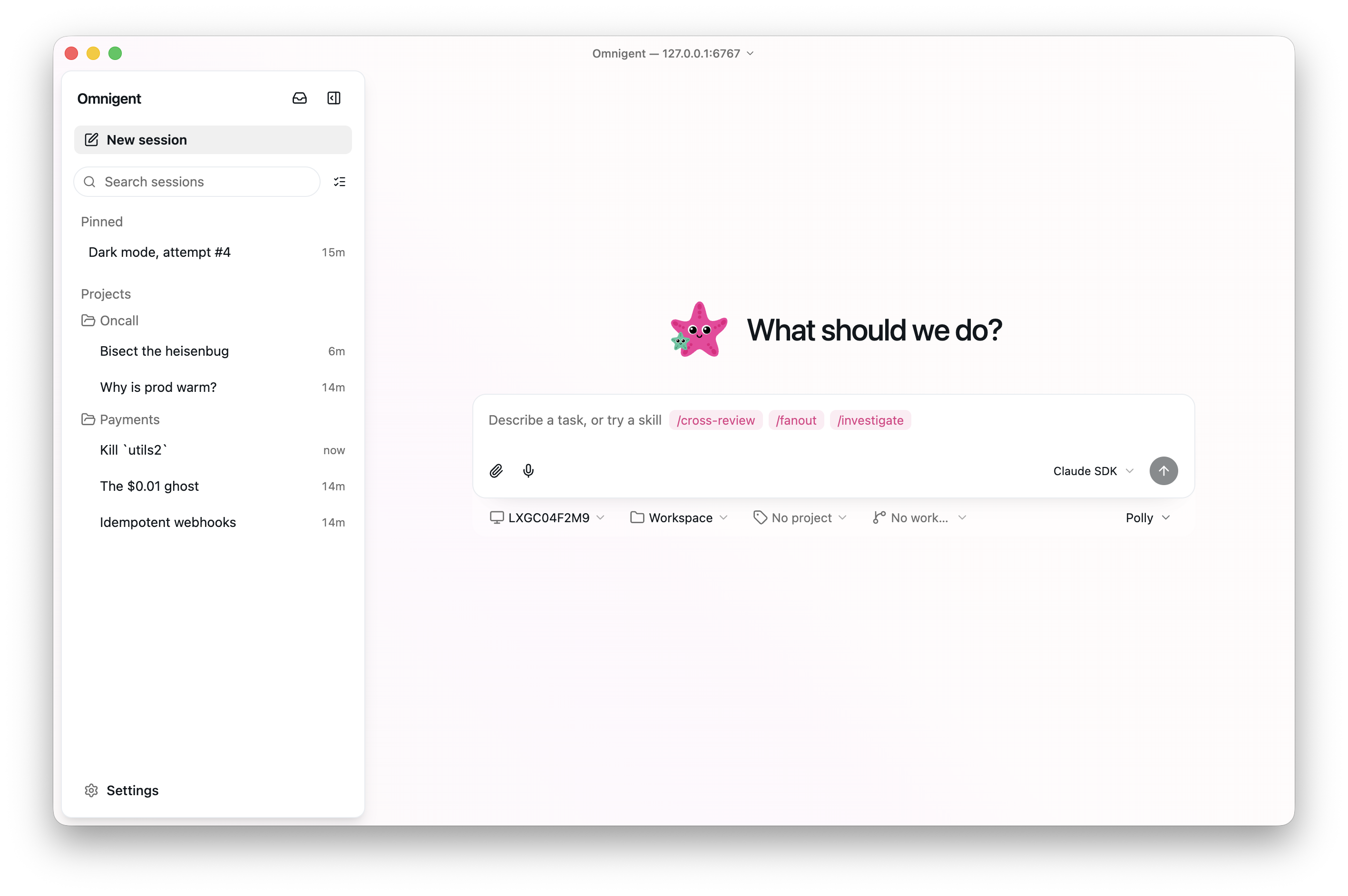
Omnigent is an open-source AI agent framework and meta-harness: orchestrate Claude Code, Codex, Cursor, Pi, and custom agents — swap harnesses without rewriting, enforce policies and sandboxing, and collaborate in real time from any device.

A theoretical reconstruction of the Claude Mythos architecture, built from first principles using the available research literature.
🕷️ An adaptive Web Scraping framework that handles everything from a single request to a full-scale crawl!