

heygen-com/hyperframesFrameworks & SDKs
Write HTML. Render video. Built for agents.
49k
This library adds Claude Code-style compaction to DeepAgents as a reusable middleware layer. It runs lightweight cleanup steps first, then falls back to structured LLM summarization when the context window gets too full.
Builders who want their agent to handle longer conversations without re-explaining the work.
You can keep long-running agent sessions coherent while using less context.
Runs collapse, truncation, and microcompaction before it asks an LLM to summarize.
Uses a 9-section prompt that keeps requests, files, errors, tasks, and next steps.
Uses real API usage when available and estimates only the remaining messages.
Reattaches recent files and active plan state after a summary.
Stops repeated failed compactions instead of retrying forever.
Adds a tool middleware so an agent can compact on demand.
pip install compact-middleware

# Or from source
pip install git+https://github.com/emanueleielo/compact-middleware.git
compact-middleware




Problem • How it works • Quick start • Configuration • Comparison
Long-running AI agents hit the context window wall. The built-in SummarizationMiddleware does a single-pass summary with a generic prompt — it works, but it loses critical details and has no lightweight fallbacks.
compact-middleware takes the battle-tested compaction pipeline from Claude Code and makes it a composable DeepAgents middleware. One import, and your agents handle 10x longer conversations without blowing the context window.
| What goes wrong | Built-in middleware | compact-middleware |
|---|---|---|
| Summary loses file paths, code, user feedback | Generic prompt | 9-section structured prompt |
| Every compaction = expensive LLM call | Yes | 3 free levels tried first |
| Recently-read files vanish after compaction | Yes | Auto-restores top 5 files + active plan |
| Compaction fails and retries forever | Yes | Circuit breaker after 3 failures |
| No way to clear stale tool results cheaply | Correct | Time-based microcompaction (free) |
| Token counting is pure heuristic | Yes | Hybrid: real API usage + heuristic tail |
Lightweight levels run every turn (each with its own trigger), matching Claude Code's query.ts pipeline. The expensive LLM summarization only fires when tokens exceed the global threshold:
flowchart TD
    A["Every turn"] --> B{"1. COLLAPSE"}
    B -->|"Group consecutive read/search\ninto badge summaries"| C{"2. TRUNCATE"}
    C -->|"Shorten large tool args\nin old messages"| D{"3. MICROCOMPACT"}
    D -->|"Clear stale tool results\n(time gap > 60 min)"| E{"Token threshold\nexceeded?"}
    E -->|No| F["Done — no LLM call needed"]
    E -->|Yes| G{"4. SUMMARIZE"}
    G -->|"9-section structured summary\n+ restore files & plan"| H["Done"]

    style F fill:#2d6a4f,color:#fff
    style H fill:#2d6a4f,color:#fff
    style B fill:#1a1a2e,color:#fff
    style C fill:#1a1a2e,color:#fff
    style D fill:#1a1a2e,color:#fff
    style G fill:#e63946,color:#fff
Levels 1-3 are free (no LLM call) and run unconditionally — each has its own internal trigger (group size, arg length, time gap). Only level 4 is gated by the global token threshold.
pip install compact-middleware

# Or from source
pip install git+https://github.com/emanueleielo/compact-middleware.git
from deepagents import create_deep_agent
from compact_middleware import CompactionMiddleware, CompactionToolMiddleware

mw = CompactionMiddleware(
    model="anthropic:claude-sonnet-4-6",
    backend=backend,
)
tool_mw = CompactionToolMiddleware(mw)  # optional: lets the agent compact manually

agent = create_deep_agent(
    model="anthropic:claude-sonnet-4-6",
    tools=[read_file, edit_file, execute],
    system_prompt="You are a coding assistant.",
    backend=backend,
    middleware=[mw, tool_mw],
)

# That's it — compaction triggers automatically at ~85% context usage
result = agent.invoke({"messages": [("human", "Refactor the auth module")]})
create_deep_agent — full setupfrom deepagents import create_deep_agent
from deepagents.backends import FilesystemBackend
from langchain.chat_models import init_chat_model
from compact_middleware import (
CompactionConfig,
CompactionMiddleware,
CompactionToolMiddleware,
)
backend = FilesystemBackend(root_dir="/data/workspace")
model = init_chat_model("anthropic:claude-sonnet-4-6")
mw = CompactionMiddleware(model=model, backend=backend)
tool_mw = CompactionToolMiddleware(mw)
agent = create_deep_agent(
model=model,
tools=[search_tool, execute_tool, edit_file_tool],
system_prompt="You are a senior engineer.",
backend=backend,
middleware=[mw, tool_mw],
memory=["/memory/AGENTS.md"],
interrupt_on={"edit_file": True},
)
# Async works too — all operations have async variants
result = await agent.ainvoke({"messages": [("human", "Add pagination to the API")]})
The defaults match Claude Code's production settings. Override what you need:
from compact_middleware import CompactionConfig, CompactionMiddleware
from compact_middleware.config import (
    CollapseConfig,
    MicrocompactConfig,
    RestorationConfig,
    TokenBudgetConfig,
    TruncateArgsConfig,
)

config = CompactionConfig(
    # --- When to compact ---
    trigger=("fraction", 0.80),          # at 80% of context window (default: 0.85)
    keep=("messages", 10),               # keep last 10 messages after compaction

    # --- Circuit breaker ---
    max_consecutive_failures=5,          # default: 3

    # --- Custom summary instructions ---
    custom_instructions="Focus on code diffs and test output. Include file paths verbatim.",
    suppress_follow_up_questions=True,   # resume without asking "where were we?"
)

mw = CompactionMiddleware(model=model, backend=backend, config=config)
config = CompactionConfig(
    microcompact=MicrocompactConfig(
        enabled=True,                       # default
        gap_threshold_minutes=30,           # clear after 30 min gap (default: 60)
        keep_recent=3,                      # always keep last 3 results (default: 5)
        compactable_tools={                 # which tools' results can be cleared
            "read_file", "execute", "grep", "glob",
            "web_search", "web_fetch", "edit_file", "write_file",
        },
    ),
)
config = CompactionConfig(
    truncate_args=TruncateArgsConfig(
        trigger=("fraction", 0.80),         # when to start truncating
        max_length=1_000,                   # chars per arg value (default: 2000)
        truncate_all_tools=True,            # all tools, not just write/edit (default)
    ),
)
config = CompactionConfig(
    collapse=CollapseConfig(
        enabled=True,
        min_group_size=3,                   # need 3+ consecutive reads to collapse (default: 2)
        collapse_tools={"read_file", "grep", "glob", "web_search"},
    ),
)
config = CompactionConfig(
    restoration=RestorationConfig(
        enabled=True,
        max_files=3,                        # re-read top 3 recent files (default: 5)
        file_budget_chars=30_000,           # total budget for restored content
        per_file_chars=10_000,              # max per file
        restore_plans=True,                 # re-attach active plan state
    ),
)
config = CompactionConfig(
    token_budget=TokenBudgetConfig(
        per_tool_chars=50_000,              # max chars per tool result
        per_message_chars=200_000,          # aggregate max per message turn
    ),
)
The trigger and keep parameters accept three formats:
# Absolute token count
trigger=("tokens", 170_000)

# Fraction of context window (requires model with known context size)
trigger=("fraction", 0.85)

# Message count
trigger=("messages", 50)

# Multiple triggers (any fires)
trigger=[("fraction", 0.85), ("messages", 100)]
| Feature | SummarizationMiddleware | compact-middleware |
|---|---|---|
| Summary prompt | Generic | 9-section structured |
| Pre-summarization optimization | — | Collapse + Truncate + Microcompact |
| Partial compaction (prefix/suffix) | — | Yes |
| Post-compaction restoration | — | Files + Plans |
| Circuit breaker | — | Configurable |
| PTL error recovery | — | Head truncation + retry |
| Token counting | Heuristic only | Hybrid (real API + heuristic) |
| Argument truncation | write_file, edit_file | All tools |
| Time-based clearing | — | Configurable gap threshold |
| Message collapsing | — | Consecutive read/search |
| Custom summary instructions | — | Yes |
| Async support | Yes | Yes (concurrent offload + summary) |
Unlike a generic "summarize this conversation", the compaction prompt enforces 9 sections that preserve what agents actually need:
An <analysis> scratchpad is used during generation for quality, then stripped from the final summary.
Most middleware estimates tokens with len(text) / 4. That's a guess.
compact-middleware uses a hybrid approach ported from Claude Code:
Messages: [Human] [AI] [Tool] [AI with usage={input:45000, output:1200}] [Human] [AI]
                                              ^                              ^      ^
                                       real: 46,200 tokens               heuristic only
                                       (from API response)               (for these 2)
It walks messages backwards, finds the last AIMessage with real API token usage (response_metadata.usage), and estimates only the messages after it. Falls back to pure heuristic when no API response is available.
Works with Anthropic, OpenAI, and any LangChain-compatible provider.
compact_middleware/
├── middleware.py      CompactionMiddleware + CompactionToolMiddleware
├── decision.py        Multi-level cascade engine
├── compaction.py      LLM summarization (full + partial)
├── tokens.py          Hybrid token counting (real API + heuristic)
├── prompts.py         9-section prompt templates
├── microcompact.py    Time-based tool result clearing
├── collapse.py        Message collapsing
├── truncation.py      Argument truncation
├── restoration.py     Post-compaction file/plan restoration
├── config.py          All configuration dataclasses
└── state.py           State schema (TypedDict events)
git clone https://github.com/emanueleielo/compact-middleware
cd compact-middleware
pip install -e ".[dev]"

pytest -v              # run tests
ruff check .           # lint
mypy compact_middleware # typecheck
Sign in to join the discussion.
No comments yet. Be the first to say what this is good for.
Write HTML. Render video. Built for agents.
Ultra-lightweight, open-source, self-hosted personal AI agent framework in Python with WebUI, tools, memory, MCP, multi-agent workflows, automation, and chat apps

SkillOpt is a text-space optimizer that trains reusable natural-language skills for frozen LLM agents through trajectory-driven edits, validation-gated updates, and deployable best_skill.md artifacts.
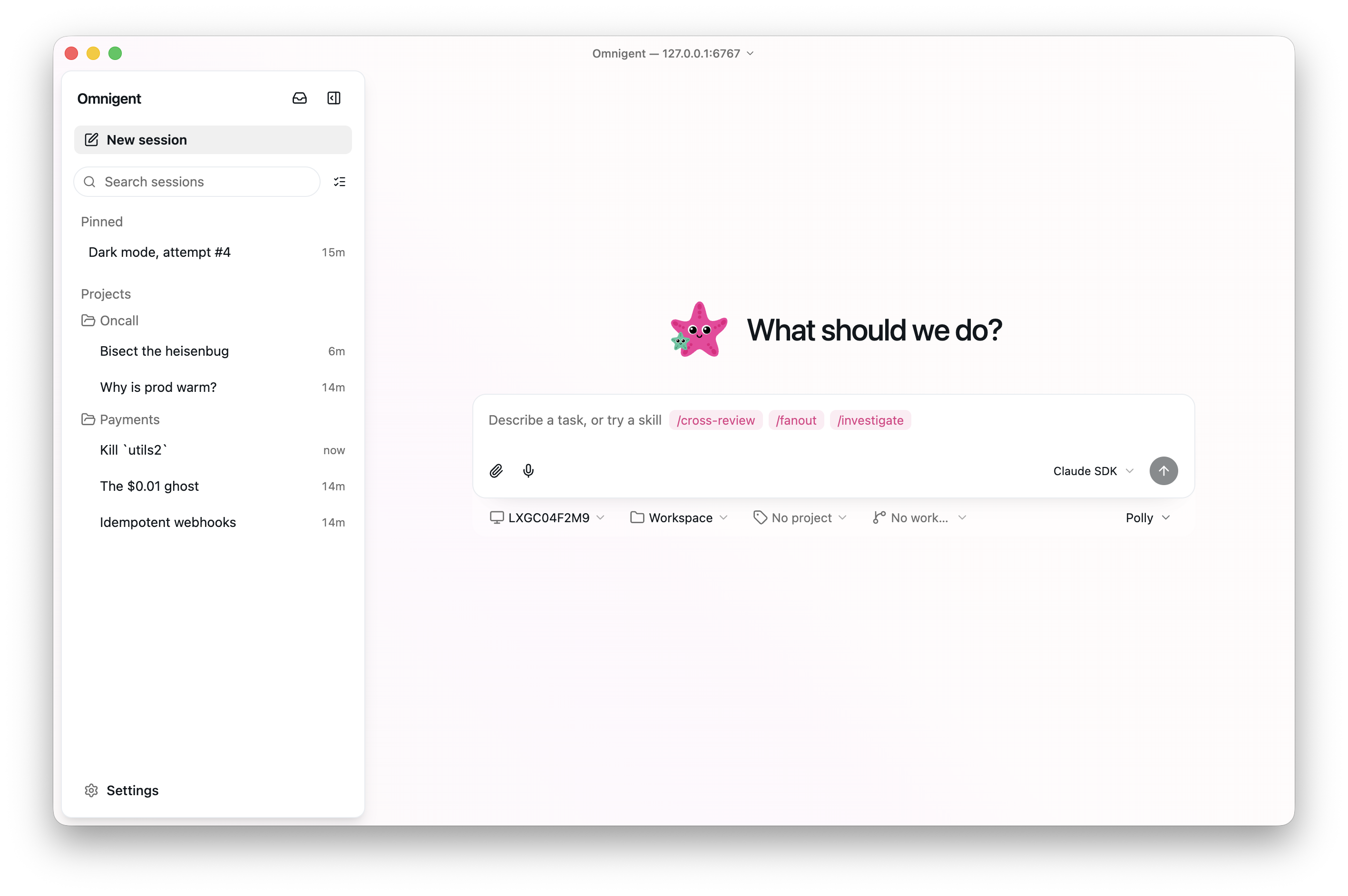
Omnigent is an open-source AI agent framework and meta-harness: orchestrate Claude Code, Codex, Cursor, Pi, and custom agents — swap harnesses without rewriting, enforce policies and sandboxing, and collaborate in real time from any device.

A theoretical reconstruction of the Claude Mythos architecture, built from first principles using the available research literature.
🕷️ An adaptive Web Scraping framework that handles everything from a single request to a full-scale crawl!