
koala73/worldmonitorConnectors
Real-time global intelligence dashboard. AI-powered news aggregation, geopolitical monitoring, and infrastructure tracking in a unified situational awareness interface
86k
This server connects an AI client to Airtable through Model Context Protocol. It lets the agent list bases and tables, inspect schema, read and search records, and create, update, or delete records and fields.
Builders who want Claude Code, Cursor, or another MCP client to work directly with Airtable data.
You can let your agent inspect Airtable schema and edit records without leaving your chat or editor.
Lists bases, tables, fields, and views, with detail levels for quick or full schema inspection.
Fetches one record, lists records, and searches record text across fields.
Creates, updates, and deletes records, plus creates and updates tables and fields.
Adds record comments and lists threaded comments with paging.
Supports normal MCP client use and an HTTP transport for remote clients.
MCP_TRANSPORT=http PORT=3000 npx airtable-mcp-server
A Model Context Protocol server that provides read and write access to Airtable databases. This server enables LLMs to inspect database schemas, then read and write records.
https://github.com/user-attachments/assets/c8285e76-d0ed-4018-94c7-20535db6c944
Follow the instructions on install-mcp, which generates the right config for your MCP client (Claude Code, Claude Desktop, Cursor, Cline, VS Code, and more).
You'll need an Airtable personal access token — create one here with scopes schema.bases:read and data.records:read (and optionally schema.bases:write, data.records:write, data.recordComments:read, data.recordComments:write), and access to the bases you want to use. It looks something like pat123.abc123 (but longer). Set it as AIRTABLE_API_KEY (replacing the placeholder in the generated config).
list_records
baseId (string, required): The ID of the Airtable basetableId (string, required): The ID of the table to querymaxRecords (number, optional): Maximum number of records to return. Defaults to 100.filterByFormula (string, optional): Airtable formula to filter recordssearch_records
baseId (string, required): The ID of the Airtable basetableId (string, required): The ID of the table to querysearchTerm (string, required): Text to search for in recordsfieldIds (array, optional): Specific field IDs to search in. If not provided, searches all text-based fields.maxRecords (number, optional): Maximum number of records to return. Defaults to 100.list_bases
list_tables
baseId (string, required): The ID of the Airtable basedetailLevel (string, optional): The amount of detail to get about the tables (tableIdentifiersOnly, identifiersOnly, or full)detailLevel)describe_table
baseId (string, required): The ID of the Airtable basetableId (string, required): The ID of the table to describedetailLevel (string, optional): The amount of detail to get about the table (tableIdentifiersOnly, identifiersOnly, or full)get_record
baseId (string, required): The ID of the Airtable basetableId (string, required): The ID of the tablerecordId (string, required): The ID of the record to retrievecreate_record
baseId (string, required): The ID of the Airtable basetableId (string, required): The ID of the tablefields (object, required): The fields and values for the new recordupdate_records
baseId (string, required): The ID of the Airtable basetableId (string, required): The ID of the tablerecords (array, required): Array of objects containing record ID and fields to updatedelete_records
baseId (string, required): The ID of the Airtable basetableId (string, required): The ID of the tablerecordIds (array, required): Array of record IDs to deletecreate_table
baseId (string, required): The ID of the Airtable basename (string, required): Name of the new tabledescription (string, optional): Description of the tablefields (array, required): Array of field definitions (name, type, description, options)update_table
baseId (string, required): The ID of the Airtable basetableId (string, required): The ID of the tablename (string, optional): New name for the tabledescription (string, optional): New description for the tablecreate_field
baseId (string, required): The ID of the Airtable basetableId (string, required): The ID of the tablename (string, required): Name of the new fieldtype (string, required): Type of the fielddescription (string, optional): Description of the fieldoptions (object, optional): Field-specific optionsupdate_field
baseId (string, required): The ID of the Airtable basetableId (string, required): The ID of the tablefieldId (string, required): The ID of the fieldname (string, optional): New name for the fielddescription (string, optional): New description for the fieldcreate_comment
baseId (string, required): The ID of the Airtable basetableId (string, required): The ID of the tablerecordId (string, required): The ID of the recordtext (string, required): The comment textparentCommentId (string, optional): Parent comment ID for threaded replieslist_comments
baseId (string, required): The ID of the Airtable basetableId (string, required): The ID of the tablerecordId (string, required): The ID of the recordpageSize (number, optional): Number of comments to return (max 100, default 100)offset (string, optional): Pagination offset for retrieving additional commentsThe server can also run in HTTP mode for use with remote MCP clients:
MCP_TRANSPORT=http PORT=3000 npx airtable-mcp-server
This starts a stateless HTTP server at http://localhost:3000/mcp.
[!WARNING] The HTTP transport has no built-in authentication, and binding to localhost or a private network is not a security boundary against browsers: a malicious website can use DNS rebinding to make a visitor's browser send requests to
http://localhost:3000/mcpand invoke tools — including reading, writing and deleting records — using this server's Airtable token.Only run HTTP mode where untrusted callers (including browsers on the same machine or network) cannot reach
/mcpwithout authenticating. In practice that means putting it behind a reverse proxy or gateway that requires a credential a browser won't attach cross-origin, such as anAuthorizationheader.If you just want to use this server with an MCP client on the same machine, use the default stdio transport instead — it doesn't open a port at all.
Pull requests are welcomed on GitHub! To get started:
npm installnpm run test to run testsnpm run buildnpm run build:watch to automatically build after editing src/index.ts. This means you can hit save, reload Claude Desktop (with Ctrl/Cmd+R), and the changes apply.Versions follow the semantic versioning spec.
To release:
npm version <major | minor | patch> to bump the versiongit push --follow-tags to push with tagsSign in to join the discussion.
No comments yet. Be the first to say what this is good for.
Real-time global intelligence dashboard. AI-powered news aggregation, geopolitical monitoring, and infrastructure tracking in a unified situational awareness interface
High-performance code intelligence MCP server. Indexes codebases into a persistent knowledge graph — average repo in milliseconds. 158 languages, sub-ms queries, 99% fewer tokens. Single static binary, zero dependencies.
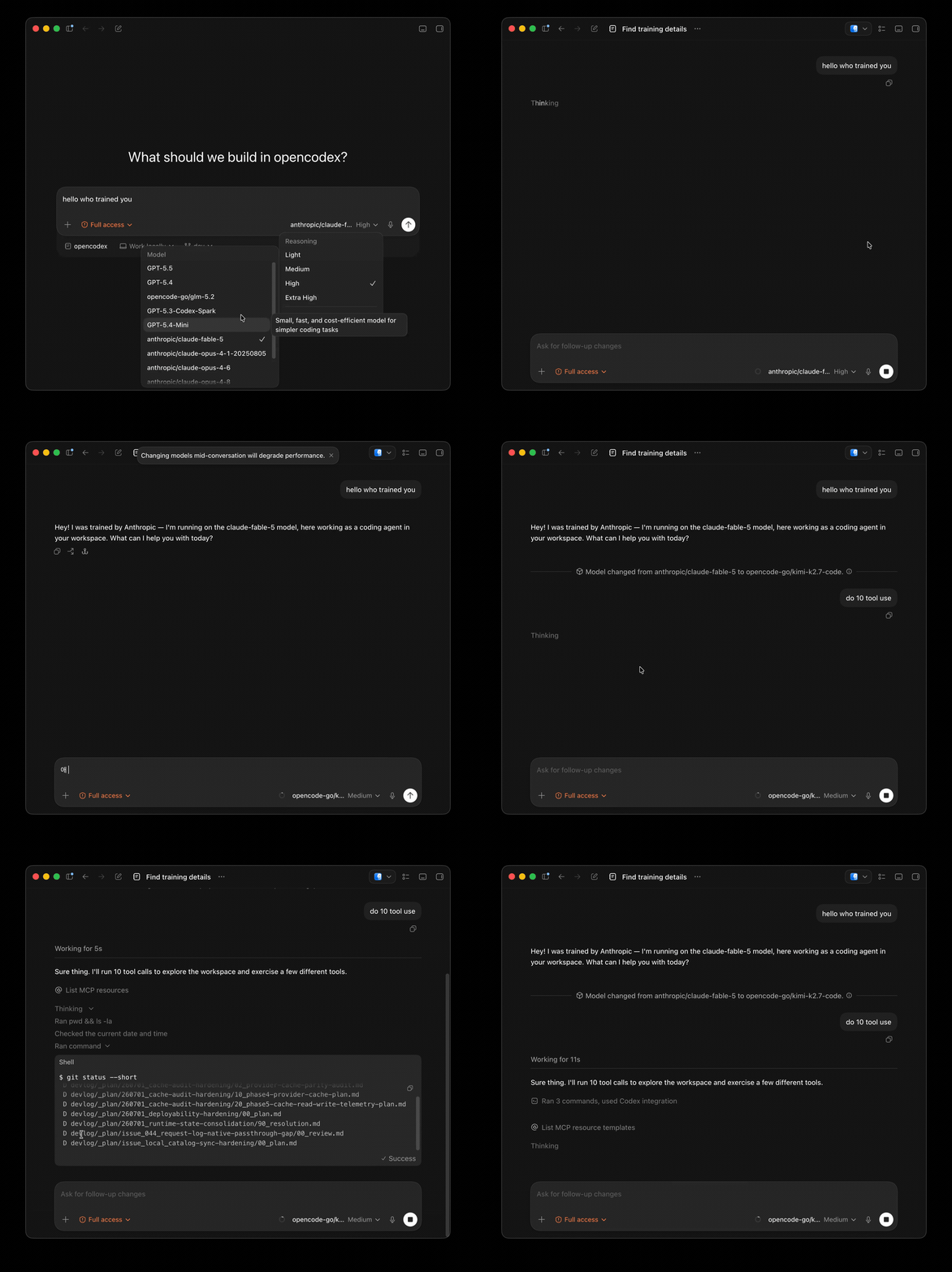
Universal provider proxy for OpenAI Codex & Claude Code — use any LLM (Claude, Gemini, Grok, DeepSeek, Ollama…) with Codex CLI, App, SDK, and Claude Code

Git-native persistent memory for AI coding agents. Implements Google OKF v0.2 with sub-300µs in-memory BM25 search, embedded MCP server, and progressive disclosure. Slashes token bloat by 80% with zero external databases or dependencies. Built in pure Go.

Local-first code intelligence graph for MCP and CLI. Builds a persistent map of your codebase so AI coding tools read only what matters, with benchmarked context reductions on reviews and large-repo workflows.

Stop your AI from making things up — it proposes, deterministic tools decide, every claim checked against ground truth with evidence. Grounded facts and context survive resets. Reverse engineering is the proving ground. MCP server + CLI.