

koala73/worldmonitorConnectors
Real-time global intelligence dashboard. AI-powered news aggregation, geopolitical monitoring, and infrastructure tracking in a unified situational awareness interface
86k
Atom of Thoughts adds three tools to an MCP client: fast reasoning, deeper decomposition, and session and approval management. Each chain is split into atoms with types, dependencies, and confidence scores, then can be viewed in a browser graph or a terminal TUI.
Builders who want their agent's reasoning to be structured, reviewable, and split into tracked steps.
You can inspect and approve an agent's reasoning instead of treating the answer as a black box.
Breaks work into premise, reasoning, hypothesis, verification, and conclusion atoms with dependency links and confidence scores.
Provides `AoT-fast` for shorter decisions and `AoT-full` for deeper decomposition, plus `atomcommands` for session and approval control.
Opens a D3-based graph when `viz: true` is passed, with colored atoms, confidence rings, and approve or reject actions.
Shows atoms streaming in a second terminal pane, with keys for accept, reject, star, pause, and submit.
Keeps reasoning chains in separate sessions so unrelated threads do not bleed into each other.
Lets the user approve or reject atoms, then feeds that verdict back through the server's approval flow.
npm install -g @dioptx/mcp-atom-of-thoughts
npx -y @smithery/cli install @dioptx/mcp-atom-of-thoughts --client claude
docker build -t aot .
Structured reasoning for LLMs. Decompose, track confidence, visualize, approve.




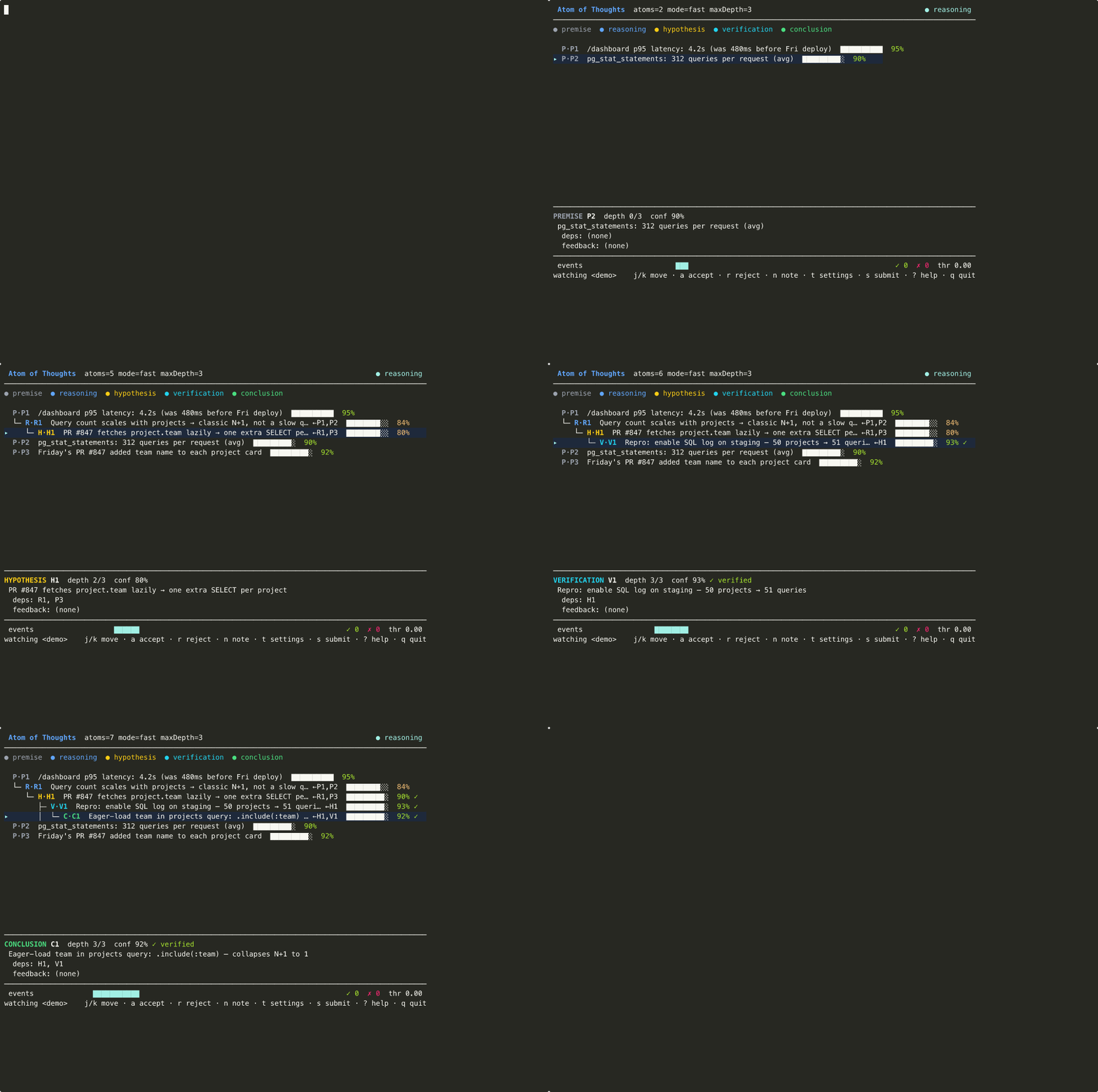
1. Add to your MCP config:
{
  "mcpServers": {
    "atom-of-thoughts": {
      "command": "npx",
      "args": ["-y", "@dioptx/mcp-atom-of-thoughts"]
    }
  }
}
2. Restart your client.
3. Ask the model to reason something through:
"Use AoT-fast to think through whether we should use JWT or session-based auth for the API."
The model breaks the problem into five kinds of atoms (premise, reasoning, hypothesis, verification, conclusion), each tagged with a confidence score. You get a structured chain you can audit, not a black-box answer.
[!TIP] Works with Claude Code, Cursor, Windsurf, or any MCP-aware client.
npx (recommended; zero install, always latest)
{ "command": "npx", "args": ["-y", "@dioptx/mcp-atom-of-thoughts"] }
npm global
npm install -g @dioptx/mcp-atom-of-thoughts
{ "command": "mcp-atom-of-thoughts" }
Smithery
npx -y @smithery/cli install @dioptx/mcp-atom-of-thoughts --client claude
Docker
docker build -t aot .
{ "command": "docker", "args": ["run", "-i", "--rm", "aot"] }
graph LR
    P["P · Premise"]:::premise --> R["R · Reasoning"]:::reasoning
    R --> H["H · Hypothesis"]:::hypothesis
    H --> V["V · Verification"]:::verification
    V --> C["C · Conclusion"]:::conclusion

    classDef premise fill:#6b7280,stroke:#9ca3af,color:#fff,font-weight:bold
    classDef reasoning fill:#3b82f6,stroke:#60a5fa,color:#fff,font-weight:bold
    classDef hypothesis fill:#eab308,stroke:#facc15,color:#000,font-weight:bold
    classDef verification fill:#06b6d4,stroke:#22d3ee,color:#fff,font-weight:bold
    classDef conclusion fill:#22c55e,stroke:#4ade80,color:#fff,font-weight:bold
Atoms chain through dependencies. Each carries a confidence score from 0 to 1. Reasoning terminates when a high-confidence conclusion lands or max depth is hit. Each problem runs in its own session, so two threads of thought never bleed into each other.
Three tools cover the full surface:
| Tool | When to reach for it |
|---|---|
AoT-fast | Default. Tradeoffs, debugging, decisions, option evaluation. Depth 3. |
AoT-full | Plans, architecture, decomposition into sub-problems. Depth 5. |
atomcommands | Sessions, export, approval polling, decomposition lifecycle. |
AoT-fast({atomId:"P1", content:"API returns 500 on POST /users",     atomType:"premise"})
AoT-fast({atomId:"R1", content:"Unhandled exception in route handler", atomType:"reasoning", dependencies:["P1"]})
AoT-fast({atomId:"C1", content:"Add try-catch in POST handler",       atomType:"conclusion", dependencies:["R1"], confidence:0.9})
Only atomId, content, and atomType are required. Everything else has sensible defaults.
Pass viz: true on any call to open an interactive D3 graph in the browser:
AoT-fast({atomId:"C1", ..., viz: true})
Approve and reject decisions POST back to the server over HTTP. No filesystem polling.
Watch the model reason in a second terminal pane while it works, and feed approve/reject decisions back into the next tool call. The event feed is on by default; nothing extra to configure.
In a second pane next to your LLM client:
npx -y @dioptx/mcp-atom-of-thoughts tui
Atoms appear as the model emits them, walking the chain premise → reasoning → hypothesis → verification → conclusion. Confidence bars fill in real time, dependencies show as inline arrows, and a velocity sparkline tracks event rate. Auto-scroll keeps the newest atom selected.
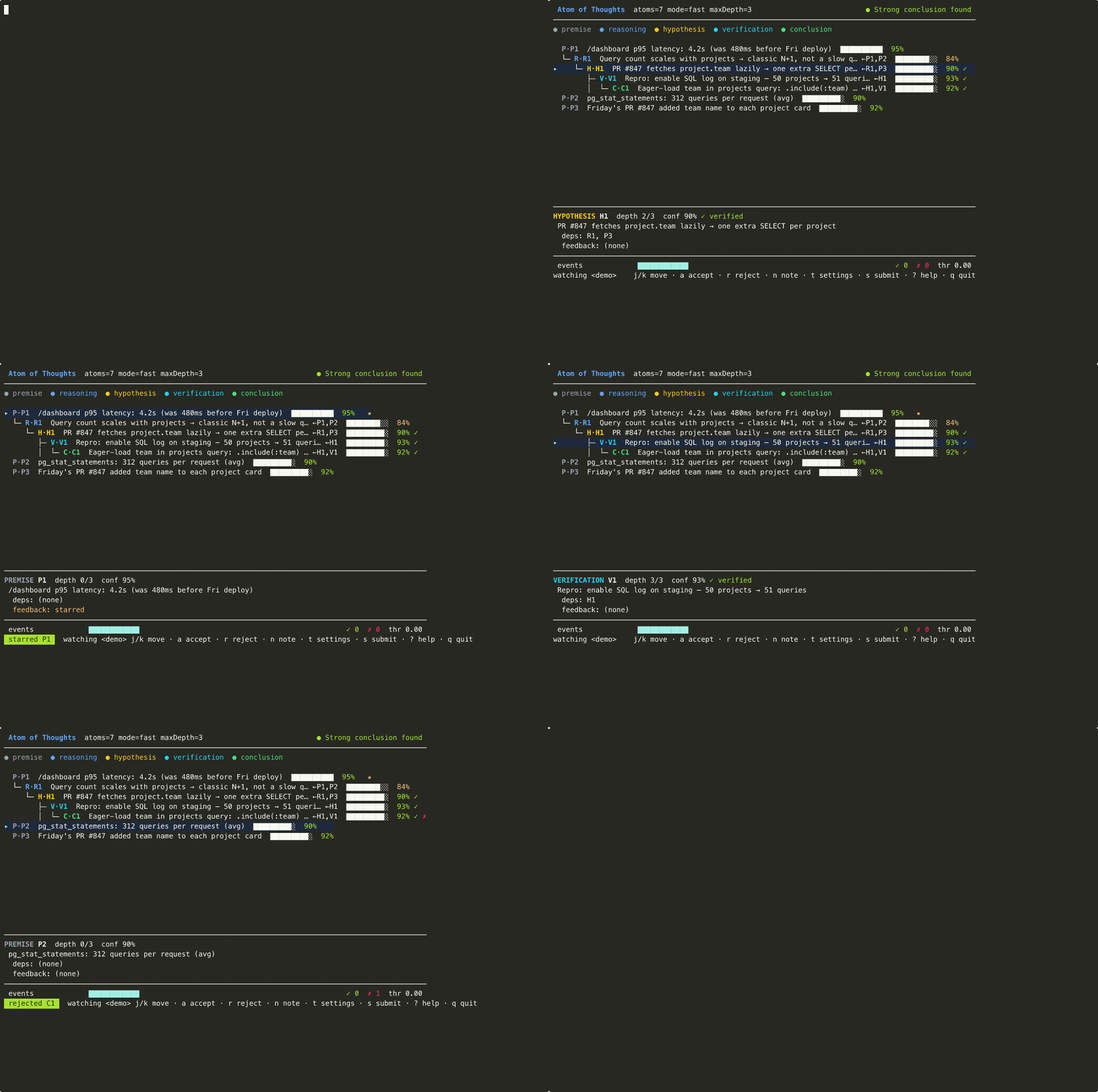
j / k move the selection. a accepts an atom; * stars it as critical context; r rejects it and prompts for a one-line reason. s submits the verdict. The submit flash tells you exactly what to do next: ask the model to call atomcommands check_approval. The verdict is written as the same approval JSON the existing file-fallback path already polls for, so feedback flows back through a contract the server already understands. Zero new wire protocol.
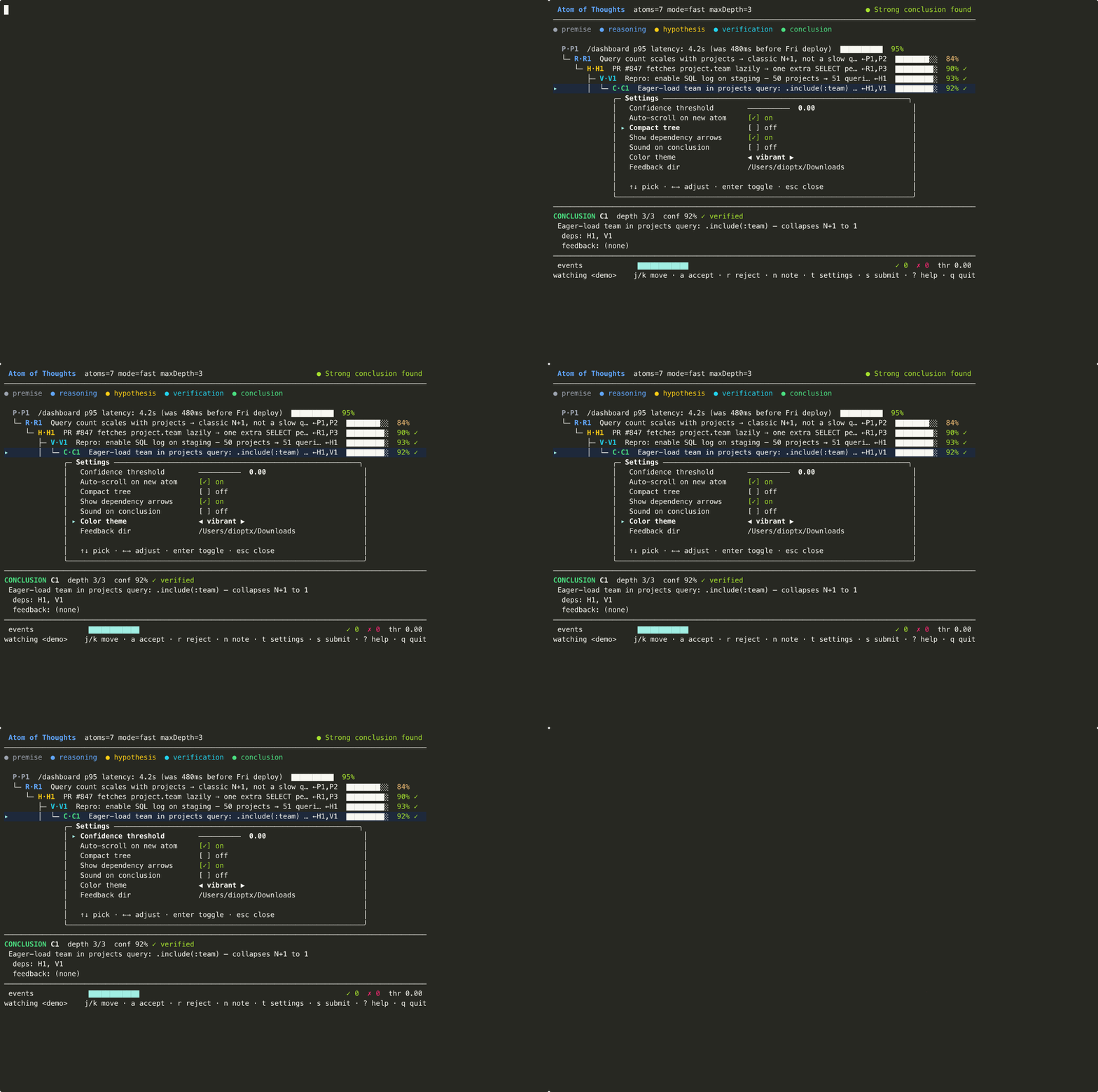
t opens settings: confidence threshold to hide low-confidence atoms, color theme (vibrant, soft, or mono), compact mode, dependency arrows toggle. ? shows the full keymap.
| Key | Action |
|---|---|
j / k | Move selection |
a | Accept the selected atom |
r | Reject (prompts for a one-line reason) |
u | Clear feedback on the selected atom |
* | Star as critical context |
s | Submit verdict (writes aot-approval-*.json) |
t | Settings (threshold, theme, compact mode, deps) |
? | Keys help |
space | Pause / resume event stream |
q | Quit |
[!TIP] Skip setup and see it in action:
npx -y @dioptx/mcp-atom-of-thoughts tui --demo
{
  "args": ["-y", "@dioptx/mcp-atom-of-thoughts", "--mode", "fast", "--viz", "never"]
}
| Flag | Default | Effect |
|---|---|---|
--mode full|fast|both | both | Which tools to register |
--viz auto|always|never | auto | auto: render on viz:true. always: render every call. never: skip (CI) |
--max-depth <n> | 5 / 3 | Override depth limit |
--output-dir <path> | OS temp | Where to write viz HTML |
--downloads-dir <path> | ~/Downloads | Approval JSON fallback |
Each reasoning chain gets its own session. Default ID: "default".
atomcommands new_session creates and activates a new one.atomcommands switch_session / list_sessions / reset_session for management.default-2, default-3, and so on.sessionId on any AoT call to target one explicitly.Two problems in one MCP process stay isolated without manual session management.
Prefer a browser tab to a terminal pane? Pass viz: true on any AoT call. The server writes a self-contained HTML file (D3 inlined, works offline) and opens it:
127.0.0.1 listener on an ephemeral port; falls back to a ~/Downloads file scan if the listener can't bindThe TUI and the browser viz both feed atomcommands check_approval. Pick whichever fits your workflow.
npx (zero install):
{ "command": "npx", "args": ["-y", "@dioptx/mcp-atom-of-thoughts"] }
npm global:
npm install -g @dioptx/mcp-atom-of-thoughts
Smithery:
npx -y @smithery/cli install @dioptx/mcp-atom-of-thoughts --client claude
Docker:
docker build -t aot . && docker run -i --rm aot
git clone https://github.com/dioptx/mcp-atom-of-thoughts.git
cd mcp-atom-of-thoughts
npm install
npm test        # 183 tests (unit + e2e)
npm run build
See MIGRATION_v2_to_v3.md for the full lookup table. The short version:
AoT-light is now AoT-fastAoT is now AoT-fullgenerate_visualization is now viz: true on any AoT callexport_graph and check_approval are now atomcommands subcommands--no-viz and --no-approval are replaced by --viz auto|always|neverMIT. Based on Atom of Thoughts.
Sign in to join the discussion.
No comments yet. Be the first to say what this is good for.
Real-time global intelligence dashboard. AI-powered news aggregation, geopolitical monitoring, and infrastructure tracking in a unified situational awareness interface
High-performance code intelligence MCP server. Indexes codebases into a persistent knowledge graph — average repo in milliseconds. 158 languages, sub-ms queries, 99% fewer tokens. Single static binary, zero dependencies.
Universal provider proxy for OpenAI Codex & Claude Code — use any LLM (Claude, Gemini, Grok, DeepSeek, Ollama…) with Codex CLI, App, SDK, and Claude Code

Git-native persistent memory for AI coding agents. Implements Google OKF v0.2 with sub-300µs in-memory BM25 search, embedded MCP server, and progressive disclosure. Slashes token bloat by 80% with zero external databases or dependencies. Built in pure Go.

Local-first code intelligence graph for MCP and CLI. Builds a persistent map of your codebase so AI coding tools read only what matters, with benchmarked context reductions on reviews and large-repo workflows.

Stop your AI from making things up — it proposes, deterministic tools decide, every claim checked against ground truth with evidence. Grounded facts and context survive resets. Reverse engineering is the proving ground. MCP server + CLI.