


heygen-com/hyperframesFrameworks & SDKs
Write HTML. Render video. Built for agents.
49k
`rss-parser` turns feed XML into typed Pydantic models, so you get autocomplete, validation, and clear errors when parsing RSS, Atom, RDF, and podcast extensions. It provides explicit parsers plus a CLI for validation, item output, and JSON Feed conversion.
Builders who want to parse feeds, inspect items, or validate XML with Python code or the `rss-parser` CLI.
You can work with feed data as typed models instead of nested XML or dict structures.
Parses RSS 2.0, RSS 0.91/0.92, Atom 1.0, RSS 1.0 (RDF), and podcast extensions into Pydantic v2 models.
Provides `rss-parser validate` to check a feed, report errors, and emit JSON status when asked.
Provides `rss-parser items` for NDJSON item output and `rss-parser jsonfeed` for converting supported feeds to JSON Feed.
Supports generic models and subclassing so you can add fields like namespaced tags without rebuilding the whole tree.
Includes `skills/rss-parser/SKILL.md` and `context7.json` so agents can use the parser with repo-specific guidance.
pip install rss-parser
Typed, pydantic-powered RSS/Atom parsing for Python.






rss-parser turns RSS/Atom XML into typed pydantic models —
autocomplete, validation, and clear errors instead of digging through nested dicts.
| Ecosystem | Python 3.10+ — installed with pip install rss-parser, imported as rss_parser. This is not the npm package of the same name; there is no JavaScript/Node.js distribution. |
| Feed formats | RSS 2.0, RSS 0.91/0.92, Atom 1.0, RSS 1.0 (RDF), plus typed Apple Podcasts (itunes:*) extensions |
| Runtime dependencies | pydantic v2 (>=2.7), xmltodict, typing-extensions |
| Repository | github.com/dhvcc/rss-parser |
| Documentation | dhvcc.github.io/rss-parser |
| Package | pypi.org/project/rss-parser |
| License | GPL-3.0 |
| Issues | github.com/dhvcc/rss-parser/issues |
| Security | Report vulnerabilities privately — see SECURITY.md. Do not open a public issue. |
pip install rss-parser
skills/rss-parser/SKILL.md is an
Agent Skill: the API model, recipes and the pitfalls that
trip agents up, in one file. Install it into Claude Code, Cursor, Copilot, Codex and friends with:
npx skills add dhvcc/rss-parser
The library also ships context7.json,
so Context7 serves these docs with Python-specific rules.
Installing the package installs an rss-parser command — handy from a shell or an agent, with
validate as the verb that has no substitute (nothing else knows the three feed schemas):
rss-parser validate feed.xml            # exit 0 ok, 1 rejected; errors on stderr
rss-parser validate --json feed.xml     # {"valid": true, "feed_type": "rss", "items": 36}
rss-parser items feed.xml | jq -r '.content.title.content'   # NDJSON, one item per line
rss-parser jsonfeed feed.xml            # JSON Feed 1.1 document (lossy - see the docs)
curl -sSL "$url" | rss-parser validate -                     # it never fetches for you
Full reference, exit codes and caveats: Command line interface.
rss-parser does not fetch anything — it parses text you already have, so there is no
parseURL/parseString (that is the npm package). Bring your own HTTP client:
import requests
from rss_parser import parse

feed = parse(requests.get(url, timeout=10).text)
parse() accepts str or bytes — pass response.content and the feed's own encoding
declaration is honored, which matters for feeds that are not UTF-8.
Polling, conditional GET, deduplication by guid/id and normalizing across RSS/Atom/RDF are
covered in Fetching feeds from a URL.
from rss_parser import parse
from requests import get  # noqa

rss_url = "https://rss.art19.com/apology-line"
response = get(rss_url)

feed = parse(response.content)  # detects RSS 2.0 / 0.9x, Atom 1.0 or RSS 1.0 (RDF)

print("Language", feed.channel.language)
print("RSS", feed.version)

for item in feed.channel.items:
    print(item.title)
    print(str(item.description)[:50])

# Language en
# RSS 2.0
# Wondery Presents - Flipping The Bird: Elon vs Twitter
# <p>When Elon Musk posted a video of himself arrivi
# Introducing: The Apology Line
# <p>If you could call a number and say you’re sorry
parse() picks the right parser from the XML root element and raises UnknownFeedTypeError
if the document is not a feed. If you already know the feed type, use the explicit parsers:
RSSParser, AtomParser, RDFParser, PodcastParser.
itunes:* tags are supported out of the box, fully typed:
from rss_parser import PodcastParser

podcast = PodcastParser.parse(feed_xml)
channel = podcast.channel.content

channel.itunes_author                    # 'Wondery'
channel.itunes_owner.content.email       # 'iwonder@wondery.com'
channel.itunes_image.attributes["href"]  # artwork url

episode = channel.items[0].content
episode.itunes_duration                  # '00:05:01'
episode.itunes_episode_type              # 'trailer'
The models are generic, so extending the schema doesn't require re-declaring the whole tree:
from typing import Optional
from pydantic import Field

from rss_parser import RSSParser
from rss_parser.models.rss import RSS, Channel, Item
from rss_parser.models.types import Tag


class MyItem(Item):
    dc_creator: Optional[Tag[str]] = Field(alias="dc:creator", default=None)


rss = RSSParser.parse(data, schema=RSS[Channel[MyItem]])

rss.channel.items[0].content.dc_creator
And even without a custom schema, unknown tags are never dropped — they're kept in model_extra:
rss = RSSParser.parse(podcast_xml)
rss.channel.content.model_extra["itunes:author"]  # 'Wondery'
See Customizing the schema for mixins, repeatable tags, and the field types cheat sheet.
4.0 removes the legacy pydantic v1 models, fixes several RSS 2.0 spec violations, and makes the models generic and lossless. See the migration guide for the full list.
Pull requests are welcome. For major changes, please open an issue first to discuss what you would like to change.
Install dependencies with uv sync (install uv).
Using pre-commit is highly recommended. To install hooks, run:
uv run pre-commit install -t=pre-commit -t=pre-push
See Contributing for tests, snapshots, and docs.
Sign in to join the discussion.
No comments yet. Be the first to say what this is good for.
Write HTML. Render video. Built for agents.
Ultra-lightweight, open-source, self-hosted personal AI agent framework in Python with WebUI, tools, memory, MCP, multi-agent workflows, automation, and chat apps

SkillOpt is a text-space optimizer that trains reusable natural-language skills for frozen LLM agents through trajectory-driven edits, validation-gated updates, and deployable best_skill.md artifacts.
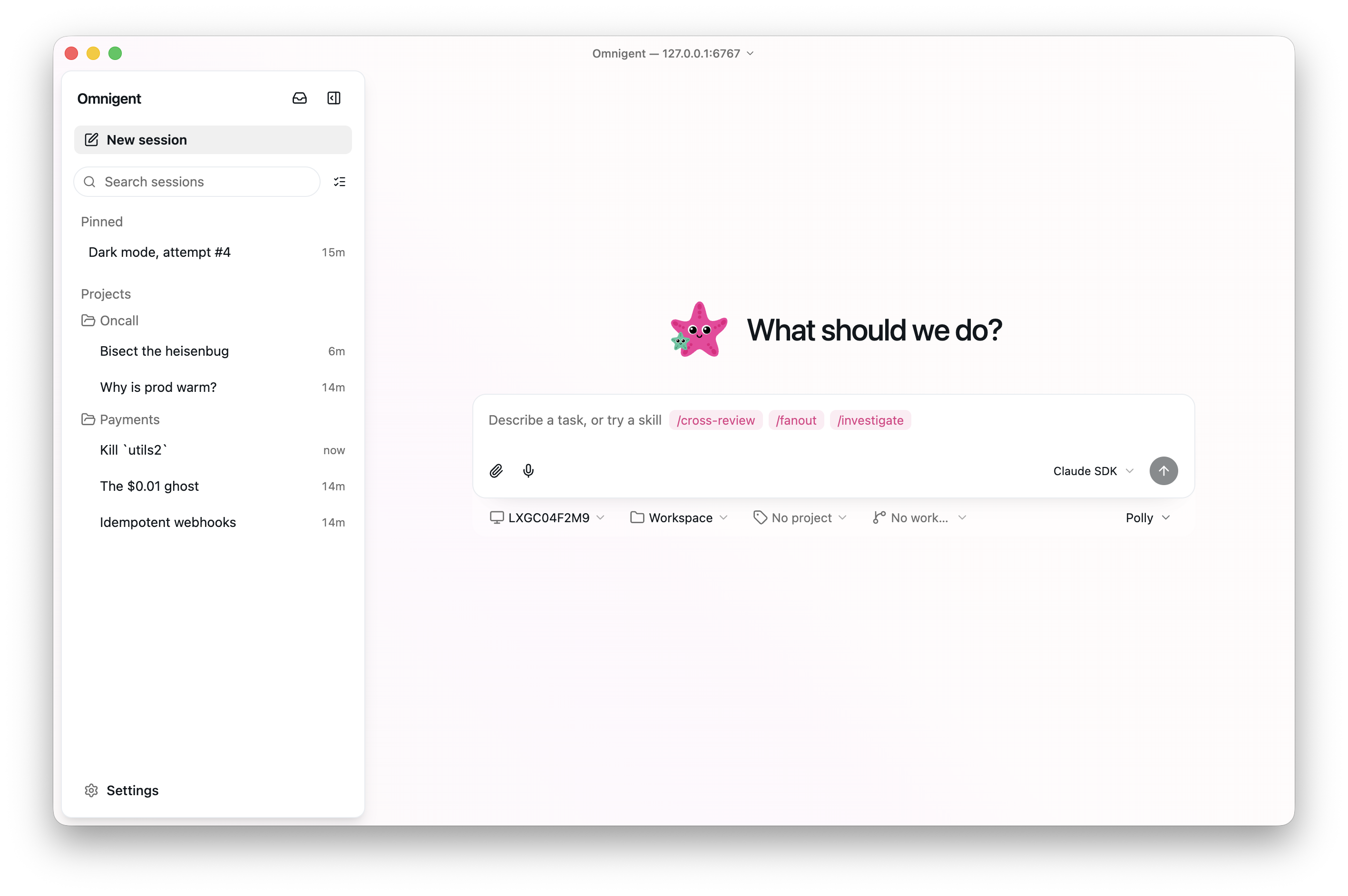
Omnigent is an open-source AI agent framework and meta-harness: orchestrate Claude Code, Codex, Cursor, Pi, and custom agents — swap harnesses without rewriting, enforce policies and sandboxing, and collaborate in real time from any device.

A theoretical reconstruction of the Claude Mythos architecture, built from first principles using the available research literature.
🕷️ An adaptive Web Scraping framework that handles everything from a single request to a full-scale crawl!