







heygen-com/hyperframesFrameworks & SDKs
Write HTML. Render video. Built for agents.
49k
This package provides the core pieces for building an MCP server: definition builders, a runtime entry point, auth, storage, logging, and testing utilities. It also ships agent-facing docs, skills, and project templates so your builder can follow the same patterns while creating and maintaining the server.
Builders who want to connect tools, data, or workflows to an MCP-capable agent.
You can build and ship an MCP server without hand-assembling the runtime, contracts, and test harness.
Defines tools, resources, prompts, and app-level wrappers with TypeScript types and Zod schemas.
Ships `CLAUDE.md`, `AGENTS.md`, skills, and templates so an agent can work inside the project with the right context.
Supports JWT or OAuth access checks and tenant-scoped state with pluggable backends.
Runs as stdio or HTTP on Bun and Node.js, and also supports Cloudflare Workers.
Includes mock contexts, contract tests, fuzz tests, and MCP definition linting.
bunx @cyanheads/mcp-ts-core init my-mcp-server
cd my-mcp-server
bun install
Agent-native TypeScript framework for MCP servers.
Give your agent the infrastructure, patterns, and skills to build and ship your server.
Connect an API, a dataset, or a workflow to an AI agent through the Model Context Protocol (MCP). Your project holds the domain code; @cyanheads/mcp-ts-core provides the auth, storage, logging, and deployment underneath it.
Agent-native means your agent knows what to do. Every scaffold includes framework documentation and Agent Skills: reusable workflows for designing tools, writing tests, reviewing security, and publishing releases. You decide what the server should do; your agent has the patterns and checks to help implement it.
The framework stays a dependency. Infrastructure fixes arrive through package upgrades — run the maintenance skill and your agent updates core, pulls the latest skills, and integrates them into your project.
Servers can run on Bun, Node.js 24 or later, or Cloudflare Workers.
bunx @cyanheads/mcp-ts-core init my-mcp-server
cd my-mcp-server
bun install
Open the project in Claude Code, Codex, or your preferred agent and give it a concrete starting point:
Build an MCP server for my team's inventory API. We need to find products, check stock across warehouses, investigate stock movements, and record adjustments and transfers. Let's get started.
The scaffold includes a source tree, build and test configuration, CLAUDE.md/AGENTS.md, Agent Skills, and plugin metadata for Claude Code and Codex.
Already have a TypeScript project? Install the framework directly with bun add @cyanheads/mcp-ts-core and register your definitions with createApp().
Here's a complete server that searches a small catalog. To try it in the scaffolded project, replace src/index.ts with:
import { createApp, tool, z } from '@cyanheads/mcp-ts-core';

const catalog = ['Notebook', 'Mechanical pencil', 'Desk lamp'];

const search = tool('catalog_search', {
  description: 'Search catalog item names. An empty query lists all items.',
  annotations: { readOnlyHint: true },
  input: z.object({
    query: z.string().describe('Text to find in an item name'),
  }),
  output: z.object({
    items: z.array(z.string()).describe('Matching item names'),
  }),
  async handler({ query }) {
    return {
      items: catalog.filter((name) =>
        name.toLowerCase().includes(query.toLowerCase()),
      ),
    };
  },
});

await createApp({ name: 'catalog-mcp-server', title: 'catalog-mcp-server', tools: [search] });
Build and run it over HTTP:
bun run rebuild
bun run start:http
Connect your MCP client to http://127.0.0.1:3010/mcp (Streamable HTTP), or configure stdio with bun /absolute/path/to/dist/index.js.
| You need to… | The framework provides |
|---|---|
| Give an assistant useful capabilities | Typed builders for tools, resources, prompts, and interactive MCP Apps |
| Help an agent use those capabilities correctly | Server instructions, result enrichment, and declared errors with recovery guidance |
| Control access and keep state | JWT/OAuth, per-definition scopes, and tenant-scoped storage with swappable backends |
| Run locally or host a service | stdio and HTTP on Bun/Node.js; a separate entry point for Cloudflare Workers |
| Understand failures and catch mistakes | Structured logs, optional OpenTelemetry, definition linting, contract tests, and fuzz testing |
Optional integrations such as DuckDB, Supabase, and the OpenTelemetry SDK are peer dependencies, installed when you need them.
Use enrichment and ctx.enrich() for result context such as totals, applied filters, and empty-result notices. Declare failures and recovery guidance in errors, then throw with the typed ctx.fail(). Both contracts are visible to clients before a call.
Here, runSearch(query, limit) returns { items, total, parsed } (matches, total before the limit, and parsed query), or null if the index is unavailable:
import { createApp, tool, z } from '@cyanheads/mcp-ts-core';
import { JsonRpcErrorCode } from '@cyanheads/mcp-ts-core/errors';

const search = tool('search', {
  description: 'Search the catalog and return ranked matches.',
  annotations: { readOnlyHint: true },
  input: z.object({
    query: z.string().describe('Search terms'),
    limit: z.number().int().min(1).default(10).describe('Max results'),
  }),
  output: z.object({
    items: z.array(z.string()).describe('Matching item names, best first'),
  }),
  enrichment: {
    effectiveQuery: z.string().describe('Query as the server parsed it'),
    totalCount: z.number().describe('Total matches before the limit'),
    notice: z.string().optional().describe('Guidance when nothing matched'),
  },
  errors: [
    {
      reason: 'index_unavailable',
      code: JsonRpcErrorCode.ServiceUnavailable,
      when: 'The upstream search index is unreachable.',
      retryable: true,
      recovery: 'Retry in a few seconds — the index may be briefly unavailable.',
    },
  ],
  handler: async (input, ctx) => {
    const res = await runSearch(input.query, input.limit);
    if (!res) {
      throw ctx.fail('index_unavailable', undefined, ctx.recoveryFor('index_unavailable'));
    }
    ctx.enrich({ effectiveQuery: res.parsed, totalCount: res.total });
    if (res.items.length === 0) {
      ctx.enrich({ notice: `No matches for "${input.query}". Try broader terms.` });
    }
    return { items: res.items }; // enrichment never rides in the domain return
  },
});

await createApp({ tools: [search] });
Enrichment and error contracts are advertised through tools/list and checked by the definition linter. ctx.recoveryFor() includes the declared recovery hint in the error response.
MCP hosts differ in what they expose to the agent: some use content[], some use structuredContent, and some use both. The framework keeps tool-result data in sync across both surfaces, so the agent receives the same information whichever one its host exposes. structuredContent carries structured JSON; content[] carries the same data as text.
format() controls the text representation, and the format-parity linter enforces that every output field is represented. Without a custom formatter, the framework uses JSON text. Declared enrichment is mirrored into both surfaces automatically. For example, this formatter presents the item names as a markdown list:
format: (result) => [{
  type: 'text',
  text: result.items.length > 0
    ? result.items.map((name) => `- ${name}`).join('\n')
    : 'No matching items.',
}],
Resources expose data at a URI. This definition delegates the lookup to your own getItem() service:
import { resource, z } from '@cyanheads/mcp-ts-core';

export const itemData = resource('items://{itemId}', {
  description: 'Retrieve item data by ID.',
  params: z.object({
    itemId: z.string().describe('Item ID'),
  }),
  async handler(params) {
    return await getItem(params.itemId);
  },
});
Everything registers through createApp() in your entry point:
await createApp({
  name: 'my-mcp-server',
  version: '0.1.0',
  tools: allToolDefinitions,
  resources: allResourceDefinitions,
  prompts: allPromptDefinitions,
  instructions: 'Brief composition hints for the model.', // optional, sent on every `initialize`
});
It also works on Cloudflare Workers with createWorkerHandler() — same definitions, different entry point.
auth: ['scope'] on a definition to check access before dispatch. Choose JWT or OAuth authentication. Tenant-scoped ctx.state supports in-memory, filesystem, Supabase, and Cloudflare D1/KV/R2 storage; select the backend through configuration.ctx.requestInput(...) to request confirmation, model sampling, or the client's roots. The handler runs again with responses available on ctx.inputs._meta envelope and session-based 2025-era clients. The SDK's compatibility layer handles input requests for older clients.instructions provides guidance during initialization without repeating it in every tool description. Identity fields such as title, websiteUrl, description, and icons populate client server information, the /.well-known/mcp.json server card, and the HTTP landing page.lint:mcp checks names, schemas, scopes, annotations, format parity, and JSON Schema portability at build time. These checks do not run at server startup.CANVAS_PROVIDER_TYPE=duckdb and install @duckdb/node-api; it requires Bun or Node.js. See brapi-mcp-server for a walkthrough of loading API results into a dataframe and querying them with SQL.See the framework reference for configuration and handler patterns, and the observability guide for Pino logging and OpenTelemetry traces and metrics.
my-mcp-server/
  src/
    index.ts                              # createApp() entry point
    worker.ts                             # createWorkerHandler() (optional)
    config/
      server-config.ts                    # Server-specific env vars
    services/
      [domain]/                           # Domain services (init/accessor pattern)
    mcp-server/
      tools/definitions/                  # Tool definitions (.tool.ts)
      resources/definitions/              # Resource definitions (.resource.ts)
      prompts/definitions/                # Prompt definitions (.prompt.ts)
  package.json
  tsconfig.json                           # extends @cyanheads/mcp-ts-core/tsconfig.base.json
  CLAUDE.md / AGENTS.md                   # Point to core's CLAUDE.md / AGENTS.md for framework docs
Framework infrastructure lives in node_modules; your source tree contains the server's definitions, configuration, and domain services.
All core config is Zod-validated from environment variables. Server-specific config uses a separate Zod schema with lazy parsing.
| Variable | Description | Default |
|---|---|---|
MCP_TRANSPORT_TYPE | stdio or http | stdio |
MCP_HTTP_PORT | HTTP server port | 3010 |
MCP_HTTP_HOST | HTTP server hostname | 127.0.0.1 |
MCP_AUTH_MODE | none, jwt, or oauth | none |
MCP_AUTH_SECRET_KEY | JWT signing secret (required for jwt mode) | — |
STORAGE_PROVIDER_TYPE | in-memory, filesystem, supabase, cloudflare-d1/kv/r2 | in-memory |
CANVAS_PROVIDER_TYPE | none or duckdb (optional peer dependency @duckdb/node-api) | none |
OTEL_ENABLED | Enable OpenTelemetry | false |
OPENROUTER_API_KEY | OpenRouter LLM API key | — |
See CLAUDE.md/AGENTS.md for the full configuration reference.
| Function | Purpose |
|---|---|
createApp(options) | Bun or Node.js server — handles full lifecycle |
createWorkerHandler(options) | Cloudflare Workers — returns an ExportedHandler |
| Builder | Usage |
|---|---|
tool(name, options) | Define a tool with handler(input, ctx) |
resource(uriTemplate, options) | Define a resource with handler(params, ctx) |
prompt(name, options) | Define a prompt with generate(args) |
appTool(name, options) | Define an MCP Apps tool with auto-populated _meta.ui |
appResource(uriTemplate, options) | Define an MCP Apps HTML resource with the correct MIME type and _meta.ui mirroring for read content |
Handlers receive a shared Context, with typed helpers for declared enrichment and error contracts:
| Property | Type | Description |
|---|---|---|
ctx.log | ContextLogger | Request-scoped logger (auto-correlates requestId, traceId, tenantId); also mirrored to the client as notifications/message |
ctx.state | ContextState | Tenant-scoped key-value storage |
ctx.requestInput | (spec) => never | Suspend and ask the caller for more input; the handler is re-entered with the answers |
ctx.inputs | ContextInputs | Reader over a retried request's responses — .accepted(), .view(), .state(), .dropped |
ctx.enrich | Enrich / TypedEnrich<E> | Add declared result context to structured output and text content |
ctx.content | ContentCollect | Attach image/audio blocks to content[] — content.image(data, mimeType), content.audio(...), or a raw block |
ctx.fail | (reason, msg?, data?) => McpError | Creates an error for throw ctx.fail(...); available with a declared errors contract |
ctx.recoveryFor | (reason) => object | Resolves a declared recovery hint to { recovery: { hint } } — spread into ctx.fail's data argument |
ctx.signal | AbortSignal | Cancellation signal |
ctx.notifyResourceUpdated | Function? | Notify subscribed clients a resource changed |
ctx.notifyResourceListChanged | Function? | Notify clients the resource list changed |
ctx.notifyPromptListChanged | Function? | Notify clients the prompt list changed |
ctx.notifyToolListChanged | Function? | Notify clients the tool list changed |
ctx.requestId | string | Unique request ID |
ctx.tenantId | string? | Tenant ID (JWT tid claim, or 'default' for stdio and HTTP+MCP_AUTH_MODE=none) |
ctx.auth | AuthContext? | Token claims and scopes when the request is authenticated |
ctx.sessionId | string? | HTTP session ID in stateful/auto session mode — a scoping key, not an authorization principal |
ctx.uri | URL? | The parsed resource URI; set in resource handlers only |
import { createApp, tool, resource, prompt } from '@cyanheads/mcp-ts-core';
import { createWorkerHandler } from '@cyanheads/mcp-ts-core/worker';
import { McpError, JsonRpcErrorCode, notFound, serviceUnavailable } from '@cyanheads/mcp-ts-core/errors';
import { checkScopes } from '@cyanheads/mcp-ts-core/auth';
import { markdown, fetchWithTimeout } from '@cyanheads/mcp-ts-core/utils';
import { OpenRouterProvider, GraphService } from '@cyanheads/mcp-ts-core/services';
import type { DataCanvas, CanvasInstance } from '@cyanheads/mcp-ts-core/canvas';
import { validateDefinitions } from '@cyanheads/mcp-ts-core/linter';
import { createMockContext } from '@cyanheads/mcp-ts-core/testing';
import { mcpTest, toolContractSuite } from '@cyanheads/mcp-ts-core/testing/vitest';
import { fuzzTool, fuzzResource, fuzzPrompt } from '@cyanheads/mcp-ts-core/testing/fuzz';
See CLAUDE.md/AGENTS.md for the complete exports reference.
The examples/ directory contains a reference server consuming core through public exports, demonstrating core patterns:
| Tool | Pattern |
|---|---|
template_echo_message | Basic tool with format, auth |
template_cat_fact | External API call, error factories |
template_madlibs_elicitation | ctx.requestInput / ctx.inputs for multi-round-trip input |
template_image_test | Image content blocks |
template_data_explorer | MCP Apps with a linked HTML UI resource |
import { createMockContext } from '@cyanheads/mcp-ts-core/testing';
import { mcpTest, toolContractSuite } from '@cyanheads/mcp-ts-core/testing/vitest';
import { myTool } from '@/mcp-server/tools/definitions/my-tool.tool.js';

const ctx = createMockContext();
const input = myTool.input.parse({ query: 'test' });
const result = await myTool.handler(input, ctx);
createMockContext() provides a recording log, a working state, and a signal. State runs on a real StorageService over an in-memory provider — the same key validation and TTL expiry a deployed server applies — scoped to tenant 'default' unless { tenantId } says otherwise. Pass { errors: myTool.errors } for a typed ctx.fail matching the definition's contract, and { inputResponses, requestState } to drive a multi-round-trip handler into its second round.
/testing also exports createMockSession() for session-bound contexts, createFetchMock() for upstream HTTP boundaries, and runToolContract() to drive a definition through schema, handler, formatting, and error-envelope checks. /testing/vitest adds the mcpTest fixtures (ctx, session, fetchMock, storage) and toolContractSuite().
For fuzz testing, /testing/fuzz uses fast-check to generate valid inputs from Zod schemas and adversarial payloads that probe for crashes, data leaks, and prototype pollution:
import { fuzzTool } from '@cyanheads/mcp-ts-core/testing/fuzz';

const report = await fuzzTool(myTool, { numRuns: 100 });
expect(report.crashes).toHaveLength(0);
expect(report.leaks).toHaveLength(0);
expect(report.prototypePollution).toBe(false);
Also exports fuzzResource, fuzzPrompt, zodToArbitrary, and ADVERSARIAL_STRINGS for custom property-based tests.
init.bun run rebuild # clean + build (scripts/clean.ts + scripts/build.ts)
bun run devcheck # full gate: lint/format, typecheck, MCP defs, framework antipatterns, docs/skills/changelog sync, audit, outdated, secrets/TODO scan
bun run lint:mcp # validate MCP definitions against spec
bun run test:all # rebuild + coverage + Node.js + Workers + integration
Apache 2.0 — see LICENSE.
Sign in to join the discussion.
No comments yet. Be the first to say what this is good for.
Write HTML. Render video. Built for agents.
Ultra-lightweight, open-source, self-hosted personal AI agent framework in Python with WebUI, tools, memory, MCP, multi-agent workflows, automation, and chat apps

SkillOpt is a text-space optimizer that trains reusable natural-language skills for frozen LLM agents through trajectory-driven edits, validation-gated updates, and deployable best_skill.md artifacts.
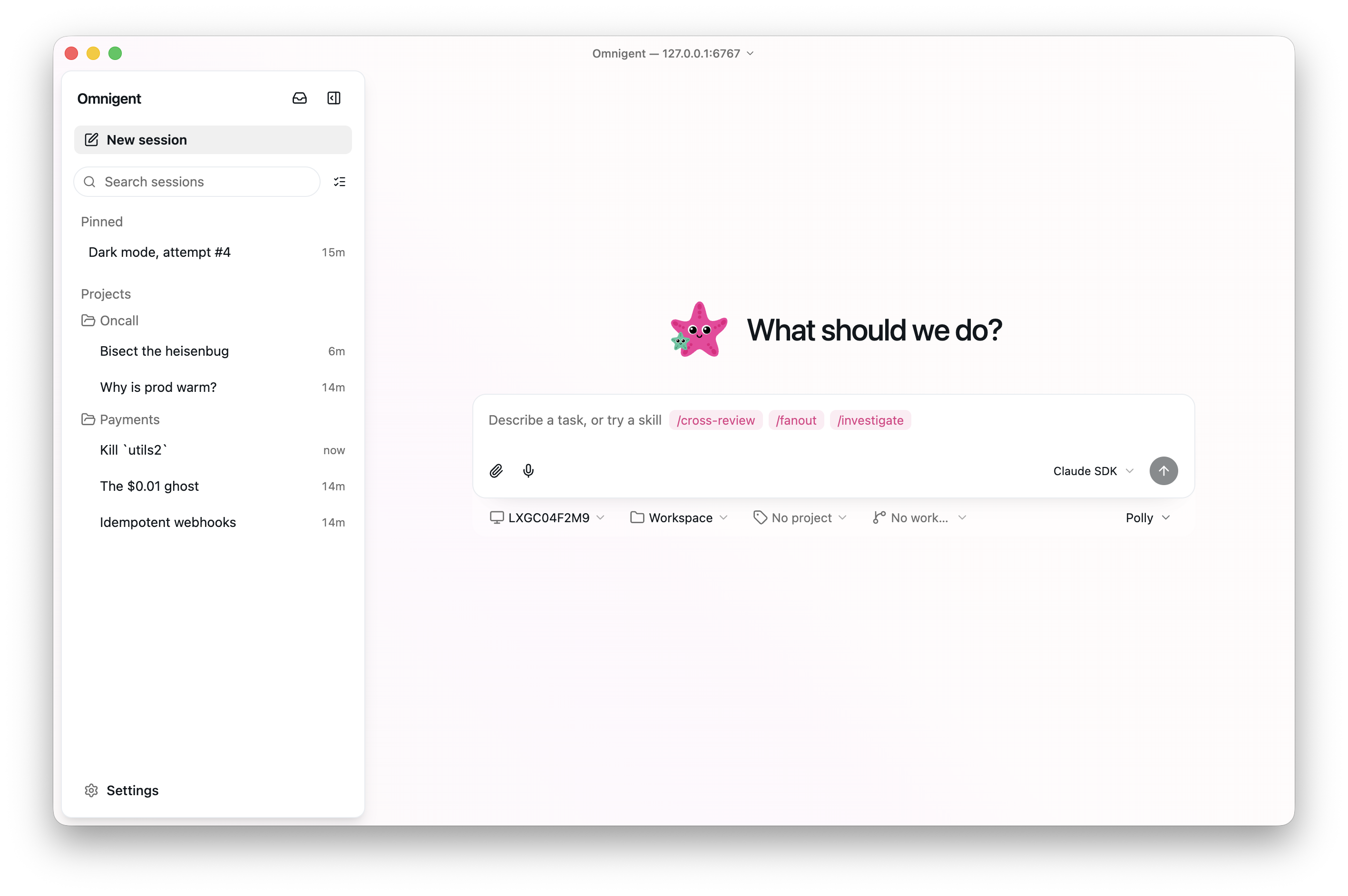
Omnigent is an open-source AI agent framework and meta-harness: orchestrate Claude Code, Codex, Cursor, Pi, and custom agents — swap harnesses without rewriting, enforce policies and sandboxing, and collaborate in real time from any device.

A theoretical reconstruction of the Claude Mythos architecture, built from first principles using the available research literature.
🕷️ An adaptive Web Scraping framework that handles everything from a single request to a full-scale crawl!