lineai-intelligence/
lineai-mcp-server

lineai-intelligence/lineai-mcp-serverConnectors
An MCP Server to utilize Lineai's rich software dependency data in your AI programming assistant.
38
An MCP Server to utilize Lineai's rich software dependency data in your AI programming assistant.
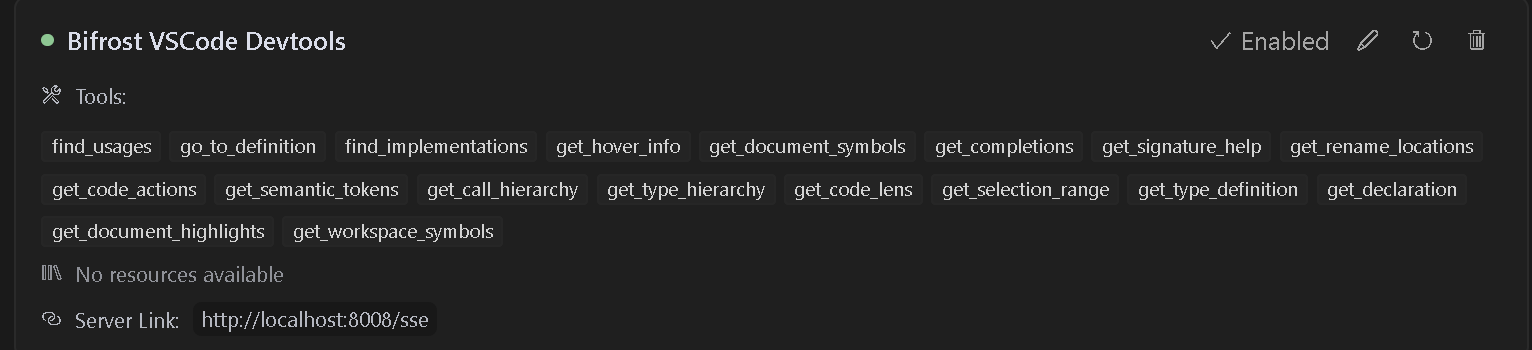
VSCode Extension with an MCP server that exposes semantic tools like Find Usages and Rename to LLMs

Semantic Intelligence for Large-Scale Engineering. Context+ is an MCP server designed for developers who demand 99% accuracy. By combining RAG, Tree-sitter AST, Spectral Clustering, and Obsidian-style linking, Context+ turns a massive codebase into a searchable, hierarchical feature graph.
MCP server that orchestrates language servers into agent-native workflows. 65 tools, 30 CI-verified languages.

🤖 Multi-Agent MCP Server - Let Claude Code / Windsurf / Cursor orchestrate GPT, Claude, Gemini to work as an AI dev team

CI-native security testing for MCP servers. Attack simulation, schema drift detection, and health scoring before agents depend on them.

Framework-aware code intelligence MCP server for Claude Code and Codex — 70.5% fewer input tokens to review a pull request, median over 60 merged PRs in repos we don't own, comprehension at parity. 81 languages, 87 frameworks. Your code and index never leave the machine; an anonymous usage ping is on by default and opt-out.

Security scanner MCP server for AI coding agents. Prompt injection firewall, package hallucination detection (4.3M+ packages), 1000+ vulnerability rules with AST & taint analysis, auto-fix.

Free, MIT alternative to paid Django schema review. Blast radius on every PR, schema drift, N+1 across functions, ER diagrams, MCP server. No DB, no Django boot, no Pro tier.

Repo memory for coding agents. Local-first MCP for Claude Code, Cursor, Windsurf, and Codex CLI: symbol graph, blast radius, diff-aware review, and git-pinned decisions. MIT; no API keys or code upload.
Brutally honest senior-engineer code reviews for Claude Code, Cursor & Windsurf - and your terminal. Scores, evidence-backed issues, usable fixes.

Local-first MCP security scanner for AI-generated apps. Scan → fix → rescan from Claude Code, Cursor, Codex, and other agents.
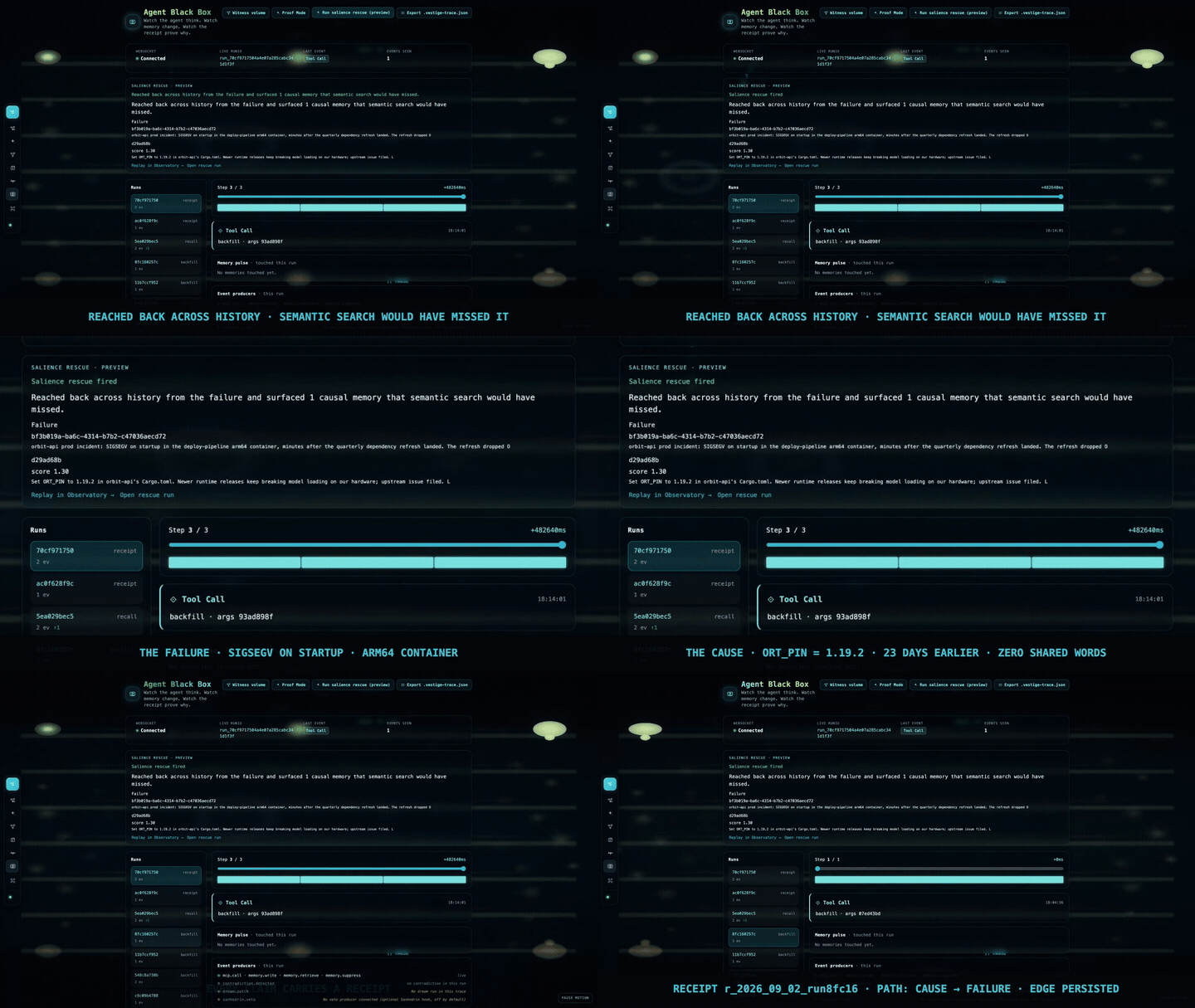
Vestige enhances agents by deterministic root-cause retrieval that reaches backward through time to find the quiet change, decision, or service that caused today’s failure, not the lookalike.