crabbuild/
compass

crabbuild/compassTools
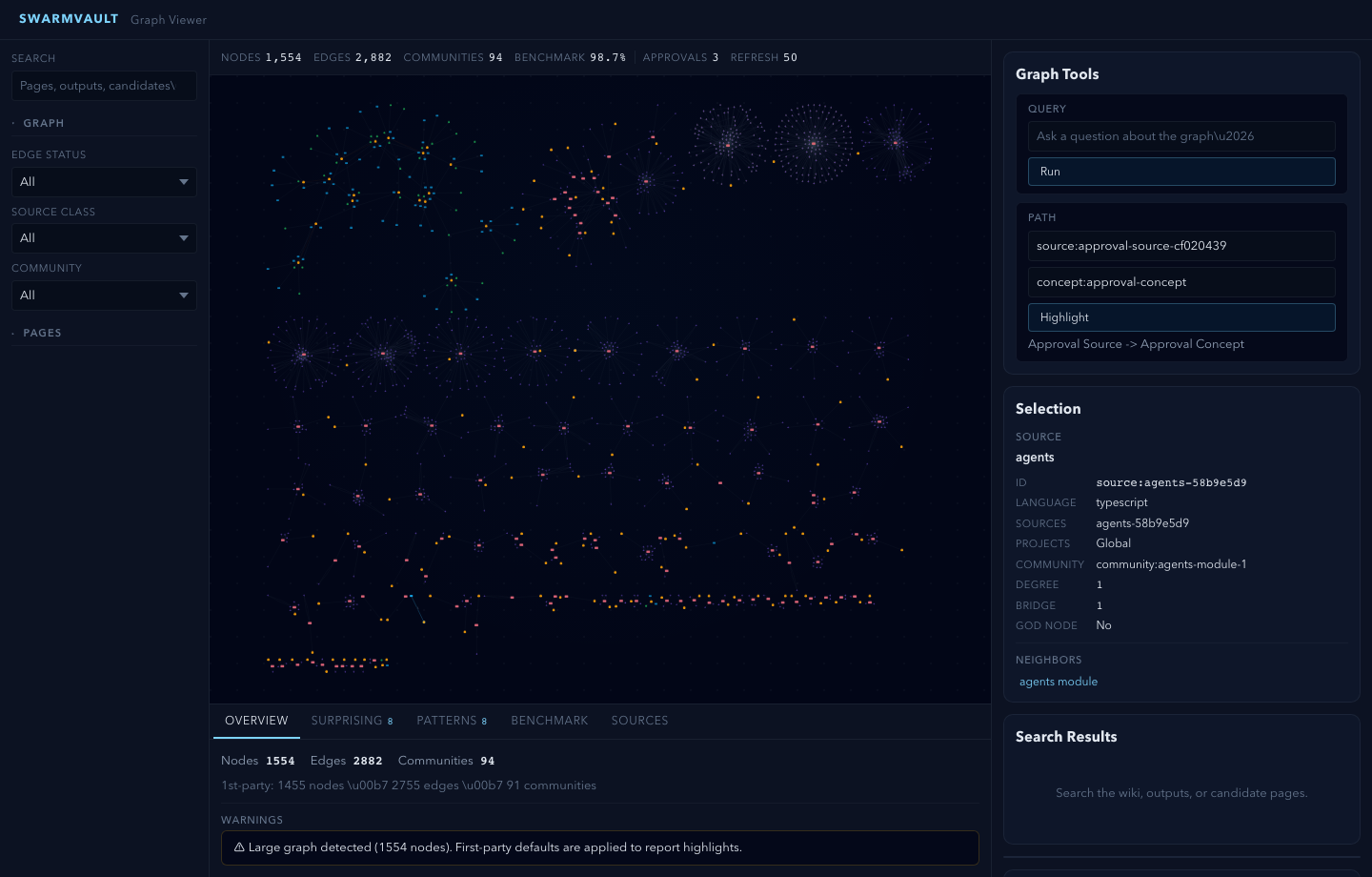
Native, local-first knowledge graph engine for code and project artifacts—inspired by Graphify, built in Rust, and evolving beyond it.
154
Native, local-first knowledge graph engine for code and project artifacts—inspired by Graphify, built in Rust, and evolving beyond it.
The local-first LLM Wiki: open-source knowledge graph builder, RAG knowledge base, and agent memory store. Built on Andrej Karpathy's pattern. An Obsidian alternative for personal knowledge management, AI second brain, and durable Claude Code / Codex / OpenClaw memory.

High-performance code-intelligence engine for AI agents and IDE, supports 257 languages, multi repositories, based on graph, with access via CLI, MCP Server, and API. AI coding agents teammate - expose only needed information, cutting token usage up to 50x. 100% local. Discord: https://discord.gg/39MFHu3J5d

Compounding Context for AI Coding Assistants — MCP graph engine for Claude Code, Cursor, Copilot, Gemini, OpenCode

AI token usage & quota monitor for the macOS menu bar — native Swift, Liquid Glass, 3D contribution graph. Tracks Claude Code, Codex, Cursor, OpenCode & 25+ agents locally.
An open-source code repository and version control system for people and AI agents. Functions, types, recorded relationships and change history are repository data you commit, branch and merge. Look up what a change might affect before you make it. Public alpha.

Stop your coding agent reading the wrong files. Compiler-grade TS/JS repo map — 100% precision on blast radius vs grep's 60%, measured on public repos. CLI + MCP server, fully local, no vector DB.

Tools for AI agents to test, fix and optimise your codebase

Compiles AI agent traces and truns them into reusable context.

Understand any codebase instantly. System intelligence for codebases, built for humans and AI.

Persistent memory for AI coding agents: automatic capture, explainable recall, knowledge consolidation, privacy controls, and portable offline storage. One Python file, zero dependencies.

The ripgrep of AI context: a zero-dependency C++23 CLI + MCP server for coding agents. Find what you want without reading the repo, then check you built what you meant — blast radius, tests-to-run, quality deltas. Signatures at 74.7% fewer bytes than bodies; every guess labelled, every loss published. Paddle out with a map.