lancekrogers/
claude-code-go

lancekrogers/claude-code-goFrameworks & SDKs
Go SDK for Anthropic Claude Code CLI – unofficial Claude Code Go agent SDK
49
Go SDK for Anthropic Claude Code CLI – unofficial Claude Code Go agent SDK

Portable AI agent runtime for the JVM. One @Agent class runs on Spring AI, LangChain4j, Anthropic, or 9 more behind one SPI. Token streaming, tool calls, human approvals, and governance over WebSocket, SSE, gRPC, or WebTransport/HTTP3. Speaks MCP, A2A, and AG-UI.

Building blocks for frontier OpenAI agents in Rust. Nanocodex empowers you with Codex-level performance anywhere.

C# coding-agent harness (.NET 10, Microsoft Agent Framework) — sessions, tools, permissions, providers, MCP, plugins
Universal memory runtime for AI agents

A theoretical reconstruction of the Claude Mythos architecture, built from first principles using the available research literature.
Model Context Protocol management suite/factory. An MCP that can generate and manage other local MCPs in multiple languages. Uses the official SDKs for code gen.

A minimal yet powerful framework for creating AI agents with full control over tools, providers, and execution flow.

Next-gen AI memory layer with importance scoring, temporal decay, hierarchical memory, and YMYL prioritization
Unofficial Go SDK for Claude Code CLI integration. See the Claude Agent SDK documentation for more information. This project has been renamed from claude-code-sdk-go.

Build an agent harness and control it end-to-end. Open-source SDK for production AI agents in Python & TypeScript - any model, any cloud.
Open-source, self-hosted Claude Code - a terminal AI assistant and the Python framework behind it. Tool-calling, sandboxed execution, multi-agent teams, skills, checkpoints, unlimited context - on Pydantic AI, any model.

Deploy production-ready AI services in minutes. One YAML file for agents, RAG pipelines, and MCP servers — run anywhere. Inspired by docker-compose.
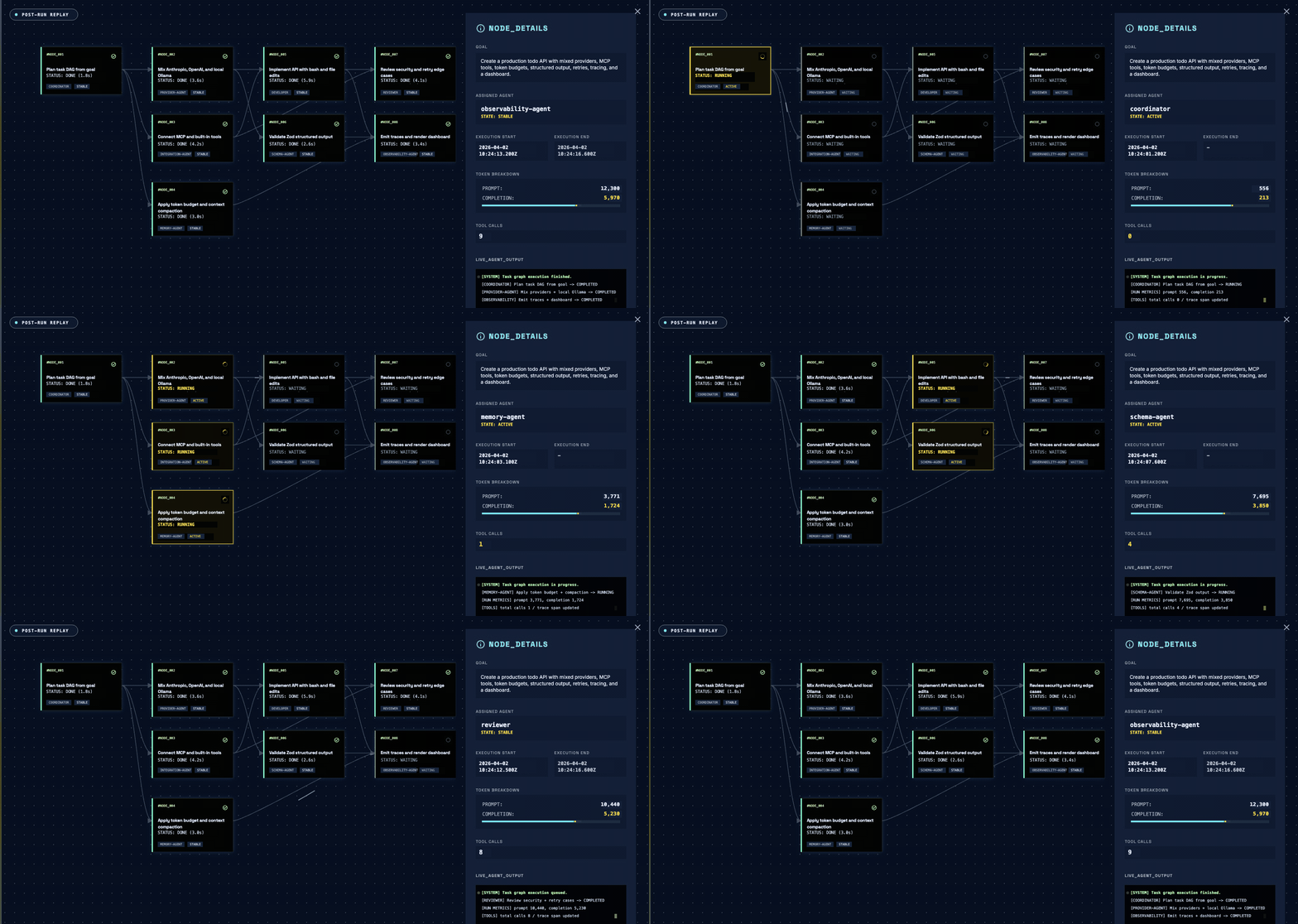
TypeScript multi-agent framework that runs in your own environment: consequential actions wait for approval and every run leaves a verifiable record. Describe the goal, not the graph. 13 built-in providers (Claude, OpenAI, Gemini, DeepSeek and more) plus any OpenAI-compatible endpoint, local models included.

Koog is a JVM (Java and Kotlin) framework for building predictable, fault-tolerant and enterprise-ready AI agents across all platforms – from backend services to Android and iOS, JVM, and even in-browser environments. Koog is based on our AI products expertise and provides proven solutions for complex LLM and AI problems