strausmann/
mcp-dockhand

strausmann/mcp-dockhandConnectors
MCP Server for Dockhand Docker Management - exposes 130+ API endpoints as MCP tools
38
MCP Server for Dockhand Docker Management - exposes 130+ API endpoints as MCP tools

Govern consequential AI agent actions in Docker with deterministic policy, human approval, and signed Decision Dossiers.
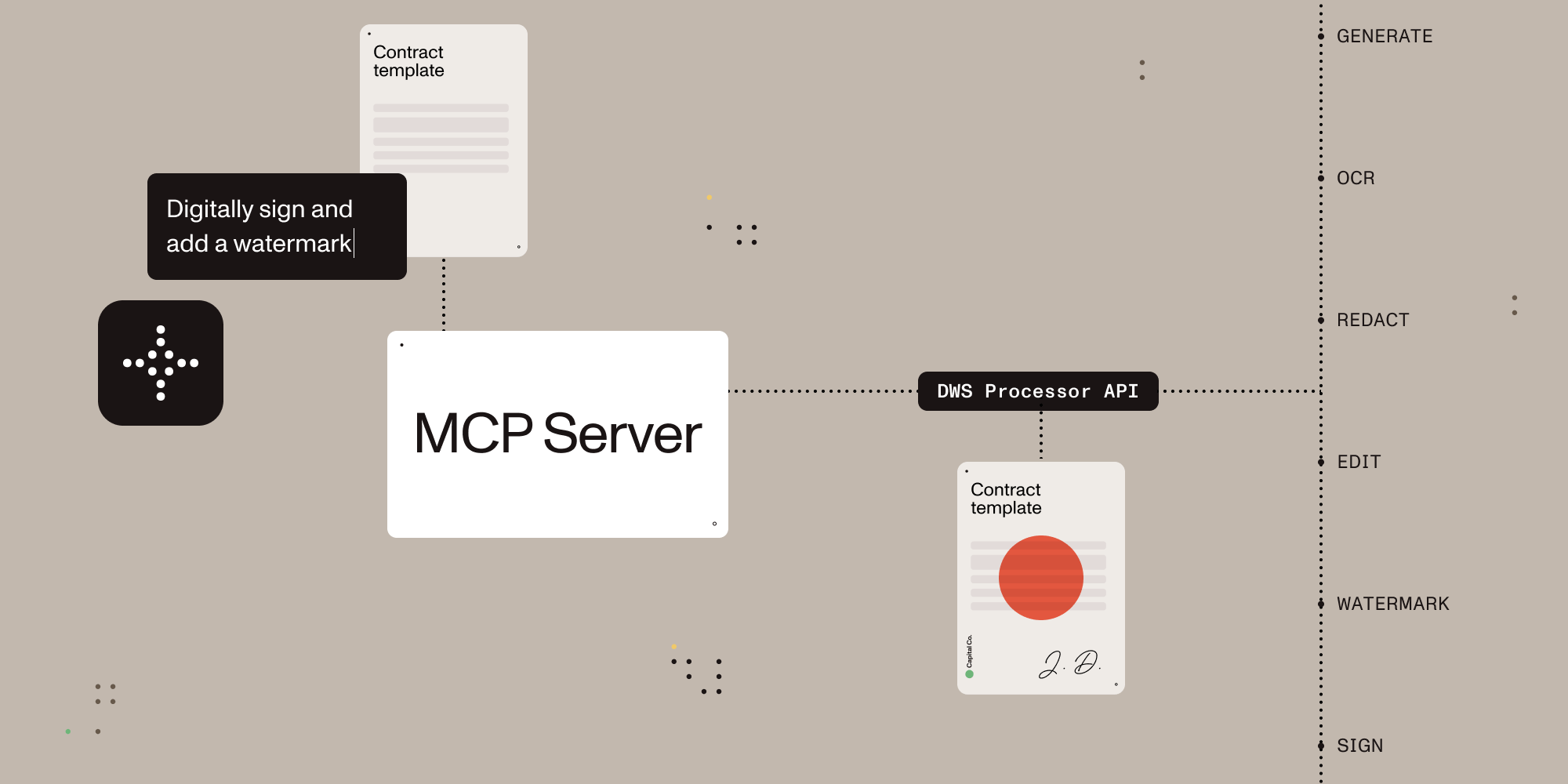
A Model Context Protocol (MCP) server implementation that integrates with the Nutrient Document Web Service (DWS) Processor API, providing powerful PDF processing capabilities for AI assistants.
A Model Context Protocol (MCP) server that enables LLMs to run ANY code safely in isolated Docker containers.

Model Context Protocol (MCP) servers for managing homelab infrastructure through Claude Desktop. Monitor Docker/Podman containers, Ollama AI models, Pi-hole DNS, Unifi networks, and Ansible inventory. Includes security checks, templates, and automated pre-push validation. Production-ready for homelabs.

Ghidra MCP Server — 200+ MCP tools for AI-powered reverse engineering. GUI plugin + headless server, lazy tool loading, convention enforcement, batch operations, Ghidra Server integration, and Docker deployment.
Shared skills, safe for production.
The Privacy Firewall for LLMs

🦞 MCP server for OpenClaw - secure bridge between Claude.ai and your self-hosted OpenClaw assistant with OAuth2 authentication

Connect any AI model to 1200+ integrations (MCP, CLI, API)

AI API identity gateway — reverse proxy that normalizes device fingerprints and telemetry for privacy-preserving API proxying
Supercharge AI Agents, Safely

A growing collection of MCP servers bringing offensive security tools to AI assistants. Nmap, Ghidra, Nuclei, SQLMap, Hashcat and more.
Open-source governed, local-first memory control plane for AI agents and teams. arXiv:2608.08253

Model Context Protocol (MCP) Gateway & Registry - Central hub for managing tools, resources, and prompts for MCP-compatible LLMs. Translates REST APIs into MCP, builds virtual MCP servers with security and observability, and bridges multiple transports (stdio, SSE, streamable HTTP).

K8s-mcp-server is a Model Context Protocol (MCP) server that enables AI assistants like Claude to securely execute Kubernetes commands. It provides a bridge between language models and essential Kubernetes CLI tools including kubectl, helm, istioctl, and argocd, allowing AI systems to assist with cluster management, troubleshooting, and deployments