


heygen-com/hyperframesFrameworks & SDKs
Write HTML. Render video. Built for agents.
49k
Astrid runs WebAssembly capsules in a sandbox and routes them through a daemon that checks capabilities, IPC rules, and audit logging at the boundary. It includes a CLI, MCP gateway, storage system, hooks, and capsule tooling so builders can install, update, and manage agent components while the runtime is live.
Builders who want to compose agent tools and services with explicit permissions, sandboxing, and durable state.
You can build agent-led systems that stay sandboxed, permissioned, and hot-updatable instead of relying on prompts for safety.
Runs WebAssembly capsules with no ambient authority and capability-checked host calls.
Gives each principal isolated access to capsules, storage, secrets, quotas, and audit chains.
Installs, updates, and removes capsules on a running daemon without restarting it.
Uses `astrid` for control and `astrid-daemon` as the kernel process that loads capsules and routes IPC.
Includes an MCP gateway and other uplinks that connect clients to the daemon over IPC.
Provides `astrid capsule new`, build, install, list, and tree commands for packaging WebAssembly capsules.
astrid --version
astrid start
astrid status
astrid capsule list
astrid stop
brew tap astrid-runtime/tap
brew install astrid
cargo install astrid
git clone https://github.com/astrid-runtime/astrid
cd astrid && cargo build --release   # binary at ./target/release/astrid
astrid init --distro @yourorg/your-distro          # repository distro
astrid init --distro ./Distro.toml                  # local manifest
astrid init --distro ./bundle.shuttle --offline     # signed bundle, no network
astrid init --distro @yourorg/your-distro --yes     # non-interactive defaults
astrid doctor    # daemon up? capsules ready? an LLM available?
astrid chat      # interactive session; the daemon auto-starts on first use
astrid models    # list the current provider's models (a registry-capsule verb)
Software should compose without inheriting each other's authority.





Astrid is an operating-system project for software built from WebAssembly capsules. Today it runs as a portable user-space runtime on macOS and Linux; the direction is a standalone operating system. This release is the hosted runtime, not a bootable OS image.
Run components in a sandbox, connect them through typed interfaces, and give each principal its own capabilities and durable state. Install, upgrade, and remove capsules while the runtime is running.
Use it to build agent systems, tools, services, or your own distribution. Astrid does not choose a product, model provider, agent loop, or user interface for you.
Agents make the problem urgent: a model can choose what to do, but that should not make the model the authority that permits it. Astrid separates those jobs. The same foundation serves software without an LLM—components can be replaced and composed without putting application policy into the kernel.
Get started · Write a capsule · Read the Book · Release notes
Install Astrid using one of the options below, then start an uncomposed runtime—no model account or distribution required:
astrid --version
astrid start
astrid status
astrid capsule list
astrid stop
status reports the running daemon; a fresh uncomposed runtime has no product
capsules. stop shuts it down and retires its working state into
astrid.volume. Starting again restores the working projection.
Next, build your first capsule, or choose a distribution you
trust with astrid init --distro <source>. A distribution supplies the capsule
composition and configuration; Astrid does not select one implicitly. See
initial setup for repository, local-manifest, and signed-bundle
inputs.
Start with the Book for the architecture or the Contributor Handbook to contribute.
Agent frameworks put trust in the prompt. Astrid puts it in the runtime. An agent is untrusted code executing on your machine with access to your files, your network, and your credentials. Telling it to behave is not a security boundary. An OS-grade boundary is.
Frontends (the CLI, the HTTP gateway, Discord, and so on) are uplinks: protocol clients that
connect to the daemon over a Unix domain socket and speak in IPC events. There is no Frontend
trait. An uplink publishes events and receives responses like any other bus participant.
flowchart TB
    CLI[CLI] -->|IPC events over Unix socket| Kernel
    HTTP[HTTP gateway] -->|IPC events| Kernel
    Discord[Discord] -->|IPC events| Kernel
    Uplinks[Other uplinks] -->|IPC events| Kernel

    subgraph Runtime[Astrid]
        Kernel[Kernel: astrid-daemon<br/>dumb event router<br/>event bus - capability ACL - audit chain - Wasmtime sandbox]
        Capsules[WASM Component capsules: wasm32-unknown-unknown<br/>providers - orchestrators - tools - fs - http - sessions - registry - identity]
    end

    Kernel -->|capability-checked host calls<br/>astrid:* WIT ABI| Capsules
Capsules communicate exclusively through the bus. Each declares what it needs and what it provides
in a Capsule.toml manifest with typed [imports]/[exports] tables; the kernel resolves the
dependency graph by topological sort and boots capsules in order. Tools are an IPC convention, not a
kernel concept: a tool capsule intercepts tool.v1.execute.<name>, and the kernel never sees a tool
schema.
The host ABI is the WebAssembly component model with versioned astrid:* WIT packages:
fs, io, kv, ipc, net, http, sys, process, approval, identity, elicit, and
uplink. Guests import only what their manifest allows, and every call is capability-gated at the
boundary.
Astrid's security is decomposed. There is no single gate every action funnels through. A capsule has no ambient authority, and authorization is enforced by independent, per-area mechanisms, each fail-closed and each enforced where the effect actually happens.
flowchart TB
    Action[A capsule action] --> Sandbox[WASM sandbox<br/>no syscalls, file descriptors, or host memory<br/>external resources are capability-checked host calls]
    Action --> Manifest[Manifest gate<br/>declared file, network, and process allow-list<br/>empty is deny-all; path traversal and SSRF defenses]
    Action --> IPC[IPC ACL<br/>declared publish and subscribe topics only<br/>per-principal routing]
    Action --> Capability[Capability token<br/>ed25519, principal-bound, scoped, expiring, revocable<br/>per-device tokens can be subset-scoped]
    Action --> Approval[Approval gate<br/>once - session - always - deny<br/>allow always mints a token; local egress elicits consent]
    Action --> OS[OS sandbox<br/>bwrap on Linux - seatbelt on macOS for native subprocesses]
    Action --> Audit[Audit chain<br/>signed, hash-linked JSONL decisions and calls<br/>split per principal and independently verifiable]
These mechanisms are real and independently tested. There is no unified interceptor orchestrating them. The five-layer gate chapter of The Astrid Book walks each layer against the source.
Release archives:
Download the archive for your machine from
GitHub Releases. Keep its
companion binaries and platform files together when extracting it; add the
extracted directory to your PATH.
The 2026.9.0 release targets are:
| Platform | Architectures | Filesystem frontend |
|---|---|---|
| macOS | Apple Silicon, Intel | FSKit on macOS 26+; signed app and extension approval required |
| Linux GNU | x86_64, ARM64 | FUSE |
| Linux MUSL | x86_64, ARM64 | FUSE |
Windows is tested in CI but is not included in this release's archives. For migration and platform limitations, read the 2026.9.0 upgrade notes. Versions now follow year.month.patch.
Homebrew (macOS and Linux):
brew tap astrid-runtime/tap
brew install astrid
From crates.io (requires Rust 1.95+):
cargo install astrid
From source:
git clone https://github.com/astrid-runtime/astrid
cd astrid && cargo build --release   # binary at ./target/release/astrid
The core tools are listed below. Platform release archives additionally include their filesystem provider and, on macOS, the signed AstridFS app and management scripts. A Cargo install is not a substitute for that signed macOS bundle.
| Binary | Role |
|---|---|
astrid | CLI uplink. Connects to the daemon over the Unix socket. TUI, headless mode, capsule and agent management. |
astrid-daemon | The kernel process. Loads capsules, routes IPC, enforces capabilities, runs the sandbox. |
astrid-build | Capsule compiler and packager. Builds to wasm32-unknown-unknown. |
astrid-emit | Stdio-to-bus bridge for external hook producers. |
astrid init --distro <source> fetches a distro (a curated capsule bundle), presents any selection
groups declared by that distro, and prompts for its required configuration. Secrets are stored per
principal in the secret store, never passed on the command line. init writes a Distro.lock
pinning every capsule by BLAKE3 hash, so the same explicit distro input reproduces the same fleet.
astrid init --distro @yourorg/your-distro          # repository distro
astrid init --distro ./Distro.toml                  # local manifest
astrid init --distro ./bundle.shuttle --offline     # signed bundle, no network
astrid init --distro @yourorg/your-distro --yes     # non-interactive defaults
When a distro includes an LLM provider, onboarding can discover that provider's live model list from
its /v1/models endpoint. If the distro also includes an agent loop, confirm that it is ready before
starting a session:
astrid doctor    # daemon up? capsules ready? an LLM available?
astrid chat      # interactive session; the daemon auto-starts on first use
astrid models    # list the current provider's models (a registry-capsule verb)
astrid -p "summarize the git log"                    # single prompt, prints and exits
git diff HEAD~1 | astrid -p "write a commit message" # stdin is appended to the prompt
astrid -p "fix all failing tests" --yes              # auto-approve tool requests
astrid -p "continue" --session "$SID"                # resume by id or name
astrid start     # persistent daemon (survives terminal close)
astrid status    # PID, uptime, connected clients, loaded capsules
astrid ps        # loaded capsules and their lifecycle state
astrid stop      # graceful shutdown
astrid update    # authenticate, verify, and install the latest release
An explicit astrid start is persistent. Automatically started MCP gateways
and ephemeral daemons instead follow client-connection lifetime: quiet connected
clients keep them alive, and they retire after the final client disconnects.
Once the platform filesystem frontend is installed and enabled, a principal can mount its view through the CLI:
astrid start
mkdir -p /tmp/astrid-view
astrid --principal default storage mount --as default /tmp/astrid-view
astrid --principal default storage status /tmp/astrid-view
astrid --principal default storage sync /tmp/astrid-view
astrid --principal default storage unmount /tmp/astrid-view
astrid stop
Use an empty mountpoint. Principal views and the administrative runtime view have different authority; mounting does not grant access to other principals. The files live in Astrid's storage, backed by the host filesystem—not in a new disk partition. Release binaries remain outside the runtime's mutable volume.
macOS archives include macos/manage-macos-fskit.sh for app installation and
enablement; follow its macOS permission guidance. Linux uses its FUSE frontend
and host FUSE setup, without Apple's signing or extension-approval steps.
Each principal (agent identity) is a fully isolated tenant: its own capsule access, KV namespace, secrets, home directory, quotas, and audit chain. New principals inherit nothing by default.
astrid agent create ci-bot                     # clean-slate, least-privilege agent
astrid agent create staging --clone production # full profile + state replica
astrid agent modify ci-bot \
  --add-capsule astrid-capsule-fs              # grant access to a capsule's tools
astrid caps show ci-bot                        # inspect capability grants
astrid quota set -a ci-bot --memory 128MB      # per-principal resource limits
astrid pair-device issue --scope use-only      # scope a device token to a subset
Capsule access is enforced kernel-side at dispatch. A principal can only invoke capsules explicitly granted to it, and two principals installing the same capsule bytes share one content-addressed on-disk artifact while getting separate in-memory runtime instances.
A capsule is a WASM process described by a manifest. The scaffold generates a first-try-compiling
project targeting wasm32-unknown-unknown, plus an AUTHORING.md guide.
astrid capsule new my-capsule    # scaffold Capsule.toml, Cargo.toml, src/lib.rs, .cargo/config.toml
cd my-capsule
astrid capsule build             # compile and package
astrid capsule install .         # hot-loaded into the running daemon, no restart
Capsule authors depend on astrid-sdk, which mirrors
the std module layout (fs, net, process, env, time, log) and adds Astrid modules
(ipc, kv, http, hooks, uplink, identity, approval). The #[capsule] proc macro
generates the WASM ABI boilerplate: exports, serialization, and dispatch for tools, commands, hooks,
and lifecycle entry points.
use astrid_sdk::prelude::*;

#[derive(Default)]
struct Weather;

#[capsule]
impl Weather {
    #[astrid::tool]
    fn forecast(&self, args: ForecastArgs) -> Result<Forecast, SysError> {
        let key = env::var("WEATHER_API_KEY")?;
        let body = http::get(&format!("https://api.example.com/wx?q={}", args.city))?;
        Ok(serde_json::from_slice(&body)?)
    }
}
Building capsules is a first-class workflow in Astrid. The Forge (astrid capsule new plus authoring
tools and runtime-served guidance) is the on-ramp; the direction is an agent that writes, builds, and
installs its own capsules within the capability sandbox.
Reproducible builds and deterministic tests are consumers of Muninn's verified computation memory: complete source and toolchain closures become derivation inputs, so an unchanged fleet build is a verified lookup while install, signing, and publication remain fresh authorized effects.
astrid capsule install @org/capsule-name   # install and hot-load
astrid capsule update my-capsule           # hot-swap the running instance
astrid capsule remove my-capsule           # live-unload, no restart
astrid capsule list --verbose              # installed capsules with capability metadata
astrid capsule tree                        # imports/exports dependency graph
See the full changelog, upgrade notes, and dependency inventory for the release details.
docs/: the unified config schema,
LLM model selection, distro signing, the
gateway deployment runbook, and
generating a gateway client. Architecture programs include
conservation of computation,
Muninn, Huginn, and the
Refinery.cargo build --workspace
cargo test --workspace -- --quiet
cargo clippy --workspace --all-features -- -D warnings
cargo fmt --all -- --check
All crates enforce #![deny(unsafe_code)] except astrid-sys and astrid-sdk, where WASM FFI
requires it. Clippy runs at pedantic level and integer-overflow arithmetic is a lint error. Release
binaries for macOS and GNU/musl Linux (x86_64 and aarch64) are built on tag push and signed with keyless
Sigstore. Self-managed updates authenticate the exact archive and its pinned Astrid release-workflow
identity before independently checking the BLAKE3 manifest and extracting any bytes. Homebrew and
Cargo remain responsible for updates they install; signed SHA-256 manifests remain available for
their compatibility requirements. GitHub build-provenance attestations are published as additional
evidence and are not substituted for the updater's release-archive signature. See the
self-update security model.
Contributions are welcome. Astrid uses a tiered contributor system that protects security-critical code while keeping the door open to new contributors. Every pull request must be linked to a GitHub issue. See CONTRIBUTING.md for the issue-first workflow and tier descriptions.
Changes to any contract surface (the host ABI, the IPC protocol, the capability model, the manifest schema, or the SDK public API) go through the RFC process in the RFCs repository before implementation.
Dual-licensed under MIT and Apache 2.0, at your option.
Copyright (c) 2025-2026 Joshua J. Bouw and Unicity Labs.
Sign in to join the discussion.
No comments yet. Be the first to say what this is good for.
Write HTML. Render video. Built for agents.
Ultra-lightweight, open-source, self-hosted personal AI agent framework in Python with WebUI, tools, memory, MCP, multi-agent workflows, automation, and chat apps

SkillOpt is a text-space optimizer that trains reusable natural-language skills for frozen LLM agents through trajectory-driven edits, validation-gated updates, and deployable best_skill.md artifacts.
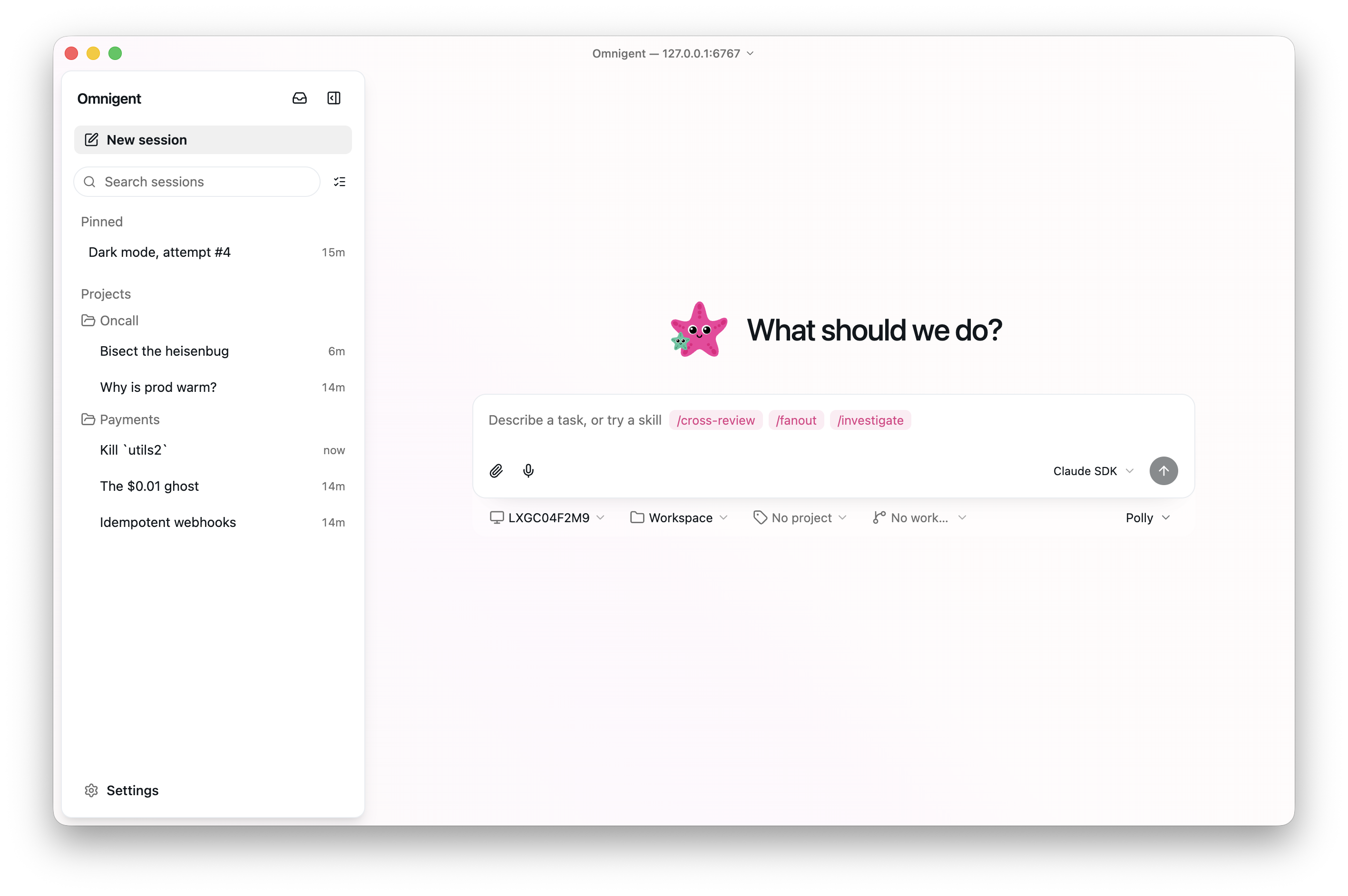
Omnigent is an open-source AI agent framework and meta-harness: orchestrate Claude Code, Codex, Cursor, Pi, and custom agents — swap harnesses without rewriting, enforce policies and sandboxing, and collaborate in real time from any device.

A theoretical reconstruction of the Claude Mythos architecture, built from first principles using the available research literature.
🕷️ An adaptive Web Scraping framework that handles everything from a single request to a full-scale crawl!