

heygen-com/hyperframesFrameworks & SDKs
Write HTML. Render video. Built for agents.
49k
Zvec is a local vector database library that you embed into applications for similarity search, full-text search, and hybrid queries. It uses schemas, collections, and indexes to store data on disk or in memory, and the README shows Python, Node.js, Go, Rust, and Flutter SDKs.

Builders who want vector search and memory inside apps without running a separate database server.
You can add local retrieval, semantic search, and durable storage to your app with minimal setup.
Runs inside your application instead of as a separate database server.
Stores dense and sparse vectors and queries them by nearest neighbors.
Supports keyword search on text fields with natural-language or structured expressions.
Combines vector similarity, text search, and structured filters in one query.
Uses write-ahead logging so data survives crashes and power loss.
Provides bindings for Python, Node.js, Go, Rust, and Dart/Flutter.
English | 中文







🚀 Quickstart | 🏠 Home | 📚 Docs | 📊 Benchmarks | 🔎 DeepWiki | 🎮 Discord | 🐦 X (Twitter)
Zvec is an open-source, in-process vector database — lightweight, lightning-fast, and designed to embed directly into applications. Battle-tested within Alibaba Group, it delivers production-grade, low-latency and scalable similarity search with minimal setup.
[!Important] 🚀 v0.7.0 (August 24, 2026)
- zvec-grep (
zg): Local-first workspace search that unifies ripgrep, BM25, and vector search behind one CLI — built for humans and AI agents.- ReMe integration: zvec is now a file store backend in ReMe, the memory management kit for agents, providing in-process HNSW ANN search.
- DiskANN productionization: Adds Linux ARM64 / macOS ARM64 support and an io_uring async I/O backend, with automatic fallback to the best available I/O option — no user intervention needed.
- Index optimization: New IVF-RaBitQ index and PQ-INT8 quantizer; RaBitQ supports runtime AVX2 / AVX512 dispatch, so the same binary automatically picks the best path on each CPU.
- Deployment experience improved: Prebuilt dynamic libraries slimmed significantly (macOS arm64 C API library 37→22 MB, -40%); new musl libc / Alpine Linux support; prebuilt SDK binaries for Linux (glibc/musl), macOS, Windows, Android, and iOS published with every release.
- DocIterator: New iterator for streaming full-collection document traversal across C++, C, and Python.
- Full-text search: New N-gram tokenizer, better suited for phrase, code, and short-text search.
Zvec offers official SDKs across multiple languages:
pip install zvec (requires 64-bit Python 3.10–3.14)npm install @zvec/zveccargo add zvec-rustflutter pub add zvecSearching code or documents? Try zvec-grep (zg) — a local-first search CLI that unifies ripgrep, BM25, and vector search, built for humans and AI agents.
Prefer a visual tool? Try Zvec Studio to browse data and debug queries — no code required.
If you prefer to build Zvec from source, please check the Building from Source guide.
import zvec

# Define collection schema
schema = zvec.CollectionSchema(
    name="example",
    vectors=zvec.VectorSchema("embedding", zvec.DataType.VECTOR_FP32, 4),
)

# Create collection
collection = zvec.create_and_open(path="./zvec_example", schema=schema)

# Insert documents
collection.insert([
    zvec.Doc(id="doc_1", vectors={"embedding": [0.1, 0.2, 0.3, 0.4]}),
    zvec.Doc(id="doc_2", vectors={"embedding": [0.2, 0.3, 0.4, 0.1]}),
])

# Search by vector similarity
results = collection.query(
    zvec.Query(field_name="embedding", vector=[0.4, 0.3, 0.3, 0.1]),
    topk=10
)

# Results: list of {'id': str, 'score': float, ...}, sorted by relevance
print(results)
Zvec delivers exceptional speed and efficiency, making it ideal for demanding production workloads.
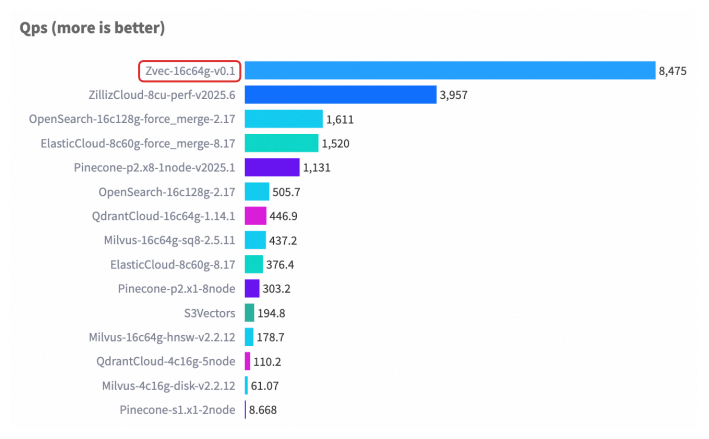
For detailed benchmark methodology, configurations, and complete results, please see our Benchmarks documentation.
| 💬 DingTalk | 🎮 Discord | X (Twitter) | |
|---|---|---|---|
|  |  |  |
| Scan to join | Scan to join | Click to join | Click to follow |
We welcome and appreciate contributions from the community! Whether you're fixing a bug, adding a feature, or improving documentation, your help makes Zvec better for everyone.
Check out our Contributing Guide to get started!
Sign in to join the discussion.
No comments yet. Be the first to say what this is good for.
Write HTML. Render video. Built for agents.
Ultra-lightweight, open-source, self-hosted personal AI agent framework in Python with WebUI, tools, memory, MCP, multi-agent workflows, automation, and chat apps

SkillOpt is a text-space optimizer that trains reusable natural-language skills for frozen LLM agents through trajectory-driven edits, validation-gated updates, and deployable best_skill.md artifacts.
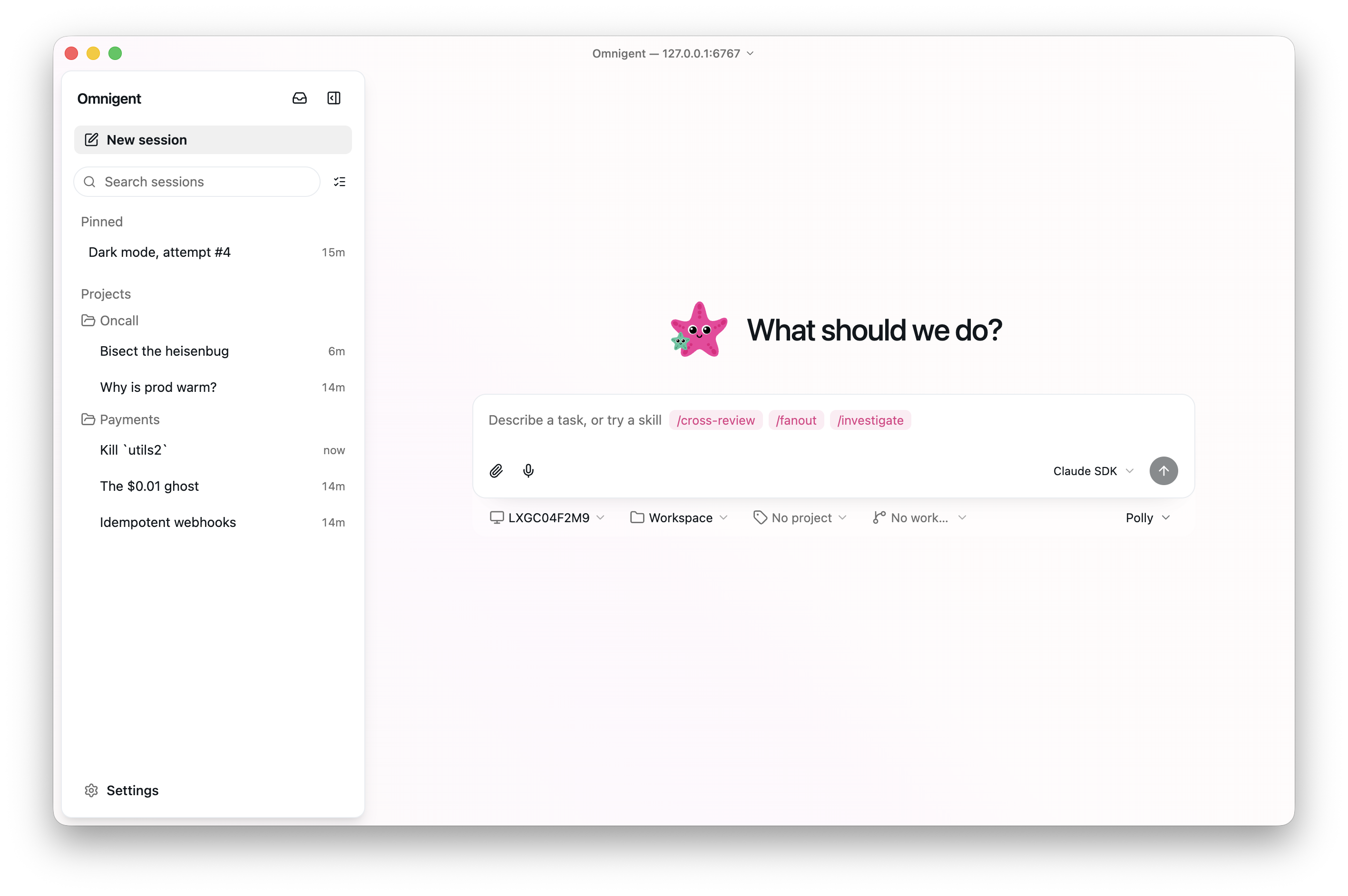
Omnigent is an open-source AI agent framework and meta-harness: orchestrate Claude Code, Codex, Cursor, Pi, and custom agents — swap harnesses without rewriting, enforce policies and sandboxing, and collaborate in real time from any device.

A theoretical reconstruction of the Claude Mythos architecture, built from first principles using the available research literature.
🕷️ An adaptive Web Scraping framework that handles everything from a single request to a full-scale crawl!