

koala73/worldmonitorConnectors
Real-time global intelligence dashboard. AI-powered news aggregation, geopolitical monitoring, and infrastructure tracking in a unified situational awareness interface
86k
Safari MCP connects an MCP client to the real Safari browser on macOS. It uses a Safari bridge extension, AppleScript, and a native helper to let agents navigate pages, fill forms, inspect the DOM, capture screenshots, and read cookies or network activity without launching Chrome or Playwright. It is built for local use and keeps your existing logins and sessions. The server also supports background operation, tab ownership guards, and a shared HTTP daemon mode for multiple agent sessions.

Builders who want their agent to browse, test, and fill forms inside their existing Safari session on macOS.
You can let an agent use your logged-in Safari tabs instead of setting up a separate browser session every time.
Drives the real Safari app on macOS through AppleScript and a bridge extension.
Includes navigation, clicking, forms, screenshots, tabs, waits, JavaScript, storage, network, console, and data extraction tools.
Keeps your existing Safari cookies, logins, and profile state instead of starting fresh in headless Chrome.
Lets Safari stay in the background so the agent can work without taking focus unless you opt in.
Can run one daemon for multiple sessions, with per-session tab ownership and isolation.
Provides CGEvent-based click, hover, typing, and keyboard actions for sites that block normal DOM events.
Adds checks for viewport, safe areas, PWA readiness, and Safari/WebKit compatibility.
npx safari-mcp
npm install -g safari-mcp
claude mcp add safari -- npx safari-mcp
brew install achiya-automation/tap/safari-mcp
git clone https://github.com/achiya-automation/safari-mcp.git
cd safari-mcp && npm install
1. safari_snapshot        → Get page state (accessibility tree)
2. safari_click/fill/...  → Interact with elements by ref
3. safari_snapshot        → Verify the result

The browser for your coding agent.
Your real Safari, logged in — no Chrome, no heat, no headless.



Install in VS Code · VS Code Insiders · Install in Cursor
97 tools · No Chrome/Puppeteer/Playwright needed · ~5ms per command · 60% less CPU than Chrome
Quick Start · All 97 Tools · Examples · Why Safari MCP? · Architecture · Changelog
Your AI agent needs to browse. So it either:
Your AI drives the Safari you're already logged into — Gmail, GitHub, Ahrefs, Slack, banking.
Native WebKit. ~60% less CPU. Background operation. 97 tools. One npx command. macOS only.
📰 Featured on freeCodeCamp: How to Connect Your AI Coding Agent to a Browser on macOS · HackerNoon: Reverse-Engineering React, Shadow DOM, and CSP
🍎 Apple shipped an official Safari MCP (July 2026 — Safari Technology Preview 247+ and the Safari 27 beta). It's built on
safaridriverfor isolated debugging sessions. safari-mcp drives the real Safari you're already logged into — on the stable Safari that ships with macOS today, with 97 tools. See the full comparison below.
Not solicited testimonials — quotes lifted from the public issue tracker, each linked to the thread it came from.
"I run multiple Pi sessions/subagents against my normal Safari profile in parallel. Sharing its cookies and logins is intentional." — @maxim, on running concurrent agents against a real browser
"The server has a deliberate tab-ownership model … the code is careful about this, and for the default case that's the right safety posture." — @turner-moore, on why the guards refuse to touch your tabs
"Direct local validation from the package: Safari MCP doctor 6/6." — @jrepp, who found and fixed a queue-alignment bug in the focus helper
npx safari-mcp
That's it — no global install needed. Or install permanently:
npm install -g safari-mcp
All clients run Safari MCP the same way — npx safari-mcp. Pick your editor:
claude mcp add safari -- npx safari-mcp
Or edit ~/.mcp.json:
{
  "mcpServers": {
    "safari": {
      "command": "npx",
      "args": ["safari-mcp"]
    }
  }
}
Edit ~/Library/Application Support/Claude/claude_desktop_config.json:
{
  "mcpServers": {
    "safari": {
      "command": "npx",
      "args": ["safari-mcp"]
    }
  }
}
Restart Claude Desktop after saving.
One-click: Install in Cursor
Or edit .cursor/mcp.json in your project:
{
  "mcpServers": {
    "safari": {
      "command": "npx",
      "args": ["safari-mcp"]
    }
  }
}
One-click: Install in VS Code
Or edit .vscode/mcp.json:
{
  "servers": {
    "safari": {
      "type": "stdio",
      "command": "npx",
      "args": ["safari-mcp"]
    }
  }
}
Edit .windsurf/mcp.json in your project (or ~/.codeium/windsurf/mcp_config.json globally):
{
  "mcpServers": {
    "safari": {
      "command": "npx",
      "args": ["safari-mcp"]
    }
  }
}
Open Cline in VS Code → click the MCP icon → Edit MCP Settings → add:
{
  "mcpServers": {
    "safari": {
      "command": "npx",
      "args": ["safari-mcp"]
    }
  }
}
Edit ~/.continue/config.yaml (or .continue/config.yaml in workspace):
mcpServers:
  - name: safari
    command: npx
    args:
      - safari-mcp
Edit ~/.config/goose/config.yaml:
extensions:
  safari:
    name: safari
    type: stdio
    cmd: npx
    args:
      - safari-mcp
    enabled: true
Open LM Studio → Settings → MCP Servers → Add Server:
safarinpxsafari-mcpOpen Zed → Settings → search for "Context Servers" and add:
{
  "context_servers": {
    "safari": {
      "command": {
        "path": "npx",
        "args": ["safari-mcp"]
      }
    }
  }
}
brew install achiya-automation/tap/safari-mcp
git clone https://github.com/achiya-automation/safari-mcp.git
cd safari-mcp && npm install
The recommended pattern for AI agents using Safari MCP:
1. safari_snapshot        → Get page state (accessibility tree)
2. safari_click/fill/...  → Interact with elements by ref
3. safari_snapshot        → Verify the result
Element targeting — tools accept multiple targeting strategies:
| Strategy | Example | Best for |
|---|---|---|
| CSS selector | #login-btn, .submit | Unique elements |
| Visible text | "Sign In", "Submit" | Buttons, links |
| Coordinates | x: 100, y: 200 | Canvas, custom widgets |
| Ref from snapshot | ref: "e42" | Any element from accessibility tree |
Tip: Start with
safari_snapshotto get element refs, then use refs for precise targeting. This is faster and more reliable than CSS selectors.
Multiple agents or subagents driving one Safari at the same time will fight over the active tab — unless you run them against a shared HTTP daemon instead of one process per client:
SAFARI_MCP_HTTP=1 SAFARI_MCP_HTTP_PORT=9225 npx safari-mcp
Then point every client at it:
{ "mcpServers": { "safari-mcp": { "type": "http", "url": "http://127.0.0.1:9225/mcp" } } }
One daemon, many sessions — and each session gets its own tab state. The server keys activeTabIndex, the ownership flag and a unique tab marker off the MCP session id, so session A physically cannot read or steer session B's tab.
Two properties make this safe rather than merely tidy:
Tab identity is a marker, not an index. Each session stamps a unique id into the page it opens, so ownership survives navigation and survives the user reordering or closing other tabs. An index alone would silently drift onto the wrong tab.
It fails closed. If a session's marked tab can't be re-found, every tool refuses instead of falling back to whatever tab is in front — because that tab is usually yours:
Tab tracking lost — refusing to fall back to "current tab of window"
(would target the user's active tab). Call safari_new_tab to reopen.
This also drops process count sharply: ~17 node processes for 17 concurrent sessions becomes 1.
SAFARI_PROFILE stays optional — leave it unset and sessions bind to your ordinary Safari windows, cookies and logins intact. Details in docs/http-transport-design.md.
Prefer stdio (one process per agent) over a persistent daemon? That works too — isolation then comes from the process boundary itself. One caveat: if your client multiplexes agents through mcporter, mcporter caches a single MCP client for all of them — whichever transport you pick — so the server never sees distinct sessions and per-session isolation can't engage. mcporter-lanes (a pi extension by @maxim, born out of #76) fixes this upstream: each agent session gets its own daemon dir — and therefore its own safari-mcp — with an idle timeout so processes don't pile up.
By default the server touches only tabs it opened itself. Point it at one of yours and it refuses:
Tab safety: refusing "click" — current tab (https://mail.example.com/inbox) was not
opened by this MCP session. Use safari_new_tab or safari_switch_tab to target your own tab.
That default exists because early versions did click into and close people's tabs. But "read the article I'm looking at" and "fill in the form on my screen" are real, and reopening the page loses the session state that made your tab worth using. Set SAFARI_MCP_ALLOW_USER_TABS=1 and an explicit safari_switch_tab adopts the tab instead of refusing it; from then on the session works in it like one of its own, and says so:
{ "tabIndex": 3, "safeUrl": "https://mail.example.com/inbox", "note": "(user tab, opted-in)" }
What the flag deliberately does not do:
safari_switch_tab adopts, and only the tab you named. An ordinary click or navigate still never lands on whatever tab happens to be in front — the server acts on the tab you pointed it at, not the one you wandered to.safari_close_tab still refuses. Closing is the one action whose cost you cannot undo, so an adopted tab is writable, never disposable. Close it yourself.safari_doctor prints the flag's state, and every operation on an adopted tab logs (user tab, opted-in) — so "why did it touch my tab" has an answer instead of being a mystery. Default off; set it only for agents you want working inside your own browsing session. Designed in #92.
| Variable | Default | What it does |
|---|---|---|
SAFARI_MCP_HTTP | off | Run one shared HTTP daemon instead of a process per client (see above). |
SAFARI_MCP_HTTP_PORT | 9225 | Port for that daemon. |
SAFARI_PROFILE | unset | Bind sessions to a named Safari profile. Unset = your ordinary windows. |
SAFARI_MCP_ALLOW_USER_TABS | off | Let safari_switch_tab adopt a tab you already had open, instead of refusing it (see below). |
SAFARI_MCP_RAISE_ON_NAVIGATE | off | Let navigation bring Safari to the front, and stop the focus guard from putting your previous app back. |
SAFARI_MCP_SCREENSHOT_MAX_WIDTH | unset | Downscale every safari_screenshot to this pixel width (Retina captures are 2× the viewport). Per-call maxWidth overrides it. |
SAFARI_MCP_KEEPALIVE_TAB | off | Keep one daemon-served page open in the profile window so Safari never parks the extension worker between commands. |
SAFARI_MCP_OPEN_WINDOW_CMD | unset | Command run with the profile name when the profile window is absent (e.g. after a reboot). Must open the window without focusing Safari. |
SAFARI_MCP_RAISE_ON_NAVIGATE=1 is for agents whose whole point is showing you a page — a voice assistant answering "open YouTube", a demo driver. Everything else should leave it off: by default Safari MCP works in the background and hands focus back to whatever app you were using, so an agent can drive a page while you keep typing somewhere else.
| Tool | Description |
|---|---|
safari_navigate | Navigate to URL (auto HTTPS, wait for load) |
safari_go_back | Go back in history |
safari_go_forward | Go forward in history |
safari_reload | Reload page (optional hard reload) |
| Tool | Description |
|---|---|
safari_read_page | Get title, URL, and text content |
safari_get_source | Get full HTML source |
safari_navigate_and_read | Navigate + read in one call |
| Tool | Description |
|---|---|
safari_click | Click by CSS selector, visible text, or coordinates |
safari_double_click | Double-click (select word, etc.) |
safari_right_click | Right-click (context menu) |
safari_hover | Hover over element |
safari_click_and_wait | Click + wait for navigation |
safari_click_and_read | Click then return the updated page — saves a round-trip (React Router + full loads) |
| Tool | Description |
|---|---|
safari_fill | Fill input (React/Vue/Angular compatible) |
safari_clear_field | Clear input field |
safari_select_option | Select dropdown option |
safari_fill_form | Batch fill multiple fields |
safari_fill_and_submit | Fill form + submit in one call |
safari_type_text | Type real keystrokes (JS-based, no System Events) |
safari_press_key | Press key with modifiers |
safari_react_select_set | Set a react-select v5 value via React fiber — bypasses the menu UI |
safari_react_select_list_options | List a react-select v5 dropdown's options without opening it |
safari_replace_editor | Replace all content in a code editor (Monaco, CodeMirror, Ace, ProseMirror) |
safari_verify_state | Verify an editor's framework-level state matches expected — catch stale DOM before Submit |
| Tool | Description |
|---|---|
safari_screenshot | Screenshot as PNG (viewport or full page) |
safari_screenshot_element | Screenshot a specific element |
safari_save_pdf | Export page as PDF |
| Tool | Description |
|---|---|
safari_scroll | Scroll up/down by pixels |
safari_scroll_to | Scroll to exact position |
safari_scroll_to_element | Smooth scroll to element |
| Tool | Description |
|---|---|
safari_list_tabs | List all tabs (index, title, URL) |
safari_new_tab | Open new tab (background, no focus steal) |
safari_close_tab | Close tab |
safari_switch_tab | Switch to tab by index |
safari_wait_for_new_tab | Wait for a new tab (e.g. OAuth popup) and auto-switch to it |
| Tool | Description |
|---|---|
safari_wait_for | Wait for element, text, or URL change |
safari_wait | Wait for specified milliseconds |
| Tool | Description |
|---|---|
safari_evaluate | Execute arbitrary JavaScript, return result |
safari_eval_file | Execute JavaScript read from a file path (avoids huge inline scripts) |
| Tool | Description |
|---|---|
safari_get_element | Element details (tag, rect, attrs, visibility) |
safari_query_all | Find all matching elements |
safari_get_computed_style | Computed CSS styles |
safari_detect_forms | Auto-detect all forms with field selectors |
| Tool | Description |
|---|---|
safari_accessibility_snapshot | Full a11y tree: roles, ARIA, focusable elements |
safari_snapshot | Accessibility tree with ref IDs for every interactive element — preferred way to see page state |
| Tool | Description |
|---|---|
safari_drag | Drag between elements or coordinates |
| Tool | Description |
|---|---|
safari_upload_file | Upload file via JS DataTransfer (no file dialog!) |
safari_paste_image | Paste image into editor (no clipboard touch!) |
| Tool | Description |
|---|---|
safari_handle_dialog | Handle alert/confirm/prompt |
safari_resize | Resize browser window |
| Tool | Description |
|---|---|
safari_emulate | Emulate device (iPhone, iPad, Pixel, Galaxy) |
safari_reset_emulation | Reset to desktop |
| Tool | Description |
|---|---|
safari_get_cookies | Get all cookies |
safari_set_cookie | Set cookie with all options |
safari_delete_cookies | Delete one or all cookies |
safari_local_storage | Read localStorage |
safari_set_local_storage | Write localStorage |
safari_delete_local_storage | Delete/clear localStorage |
safari_session_storage | Read sessionStorage |
safari_set_session_storage | Write sessionStorage |
safari_delete_session_storage | Delete/clear sessionStorage |
safari_export_storage | Export all storage as JSON (backup/restore sessions) |
safari_import_storage | Import storage state from JSON |
| Tool | Description |
|---|---|
safari_clipboard_read | Read clipboard text |
safari_clipboard_write | Write text to clipboard |
| Tool | Description |
|---|---|
safari_network | Quick network requests via Performance API |
safari_start_network_capture | Start detailed capture (fetch + XHR) |
safari_network_details | Get captured requests with headers/timing |
safari_clear_network | Clear captured requests |
safari_mock_route | Mock network responses (intercept fetch/XHR) |
safari_clear_mocks | Remove all network mocks |
| Tool | Description |
|---|---|
safari_start_console | Start capturing console messages |
safari_get_console | Get all captured messages |
safari_clear_console | Clear captured messages |
safari_console_filter | Filter by level (log/warn/error) |
| Tool | Description |
|---|---|
safari_performance_metrics | Navigation timing, Web Vitals, memory |
safari_throttle_network | Simulate slow-3g/fast-3g/4g/offline |
| Tool | Description |
|---|---|
safari_extract_tables | Tables as structured JSON |
safari_extract_meta | All meta: OG, Twitter, JSON-LD, canonical |
safari_extract_images | Images with dimensions and loading info |
safari_extract_links | Links with rel, external/nofollow detection |
| Tool | Description |
|---|---|
safari_override_geolocation | Override browser geolocation |
safari_list_indexed_dbs | List IndexedDB databases |
safari_get_indexed_db | Read IndexedDB records |
safari_css_coverage | Find unused CSS rules |
safari_analyze_page | Full page analysis in one call |
safari_doctor | Diagnose the macOS permission + daemon chain (Apple Events, Accessibility, Screen Recording, codesign) with per-failure fixes |
safari_reload_extension | Hot-reload the Safari MCP Bridge extension without a manual toggle |
| Tool | Description |
|---|---|
safari_run_script | Run multiple actions in a single call (batch) |
| Tool | Description |
|---|---|
safari_native_click | OS-level mouse click (CGEvent, isTrusted: true) — bypasses WAF/bot detection when safari_click is blocked (405/403) |
safari_native_hover | OS-level cursor hover — triggers real :hover/mouseenter for tooltips and obfuscated UIs |
safari_native_type | Insert text via the real paste pipeline — ProseMirror/Slate/Draft.js process it natively so Submit sends real data |
safari_native_keyboard | OS-level keypress + modifiers to Safari, no focus steal — reaches React trust-gated handlers (Discord/Slack send) |
| Tool | Description |
|---|---|
safari_inspect_viewport | Validate the <meta name=viewport> tag for iOS Safari (device-width, zoom/WCAG, viewport-fit) |
safari_safe_area_insets | Read live safe-area-inset values + viewport-fit / env() usage (notch / Dynamic Island) |
safari_check_pwa | Audit iOS "Add to Home Screen" / PWA readiness (apple-touch-icon, manifest, theme-color, splash) |
safari_webkit_compat | Check page CSS against this Safari via CSS.supports() — unsupported props, missing -webkit- prefixes, known quirks |
Safari MCP runs locally on your Mac with minimal attack surface:
| Aspect | Detail |
|---|---|
| Network | No remote connections — all communication is local (stdio + localhost) |
| Permissions | macOS system permissions required (Screen Recording for screenshots) |
| Data | No telemetry, no analytics, no data sent anywhere |
| Extension | Communicates only with the local profile bridges (localhost:9224/9228/9232/9236), validated by Safari |
| Code | Fully open source (MIT) — audit every line |
| Feature | Safari MCP | Chrome DevTools MCP | Playwright MCP |
|---|---|---|---|
| CPU/Heat | 🟢 Minimal | 🔴 High | 🟡 Medium |
| Your logins | ✅ Yes | ✅ Yes | ❌ No |
| macOS native | ✅ WebKit | ❌ Chromium | ❌ Chromium/WebKit |
| Browser dependencies | None | Chrome + debug port | Playwright r |
Sign in to join the discussion.
No comments yet. Be the first to say what this is good for.
Real-time global intelligence dashboard. AI-powered news aggregation, geopolitical monitoring, and infrastructure tracking in a unified situational awareness interface
High-performance code intelligence MCP server. Indexes codebases into a persistent knowledge graph — average repo in milliseconds. 158 languages, sub-ms queries, 99% fewer tokens. Single static binary, zero dependencies.
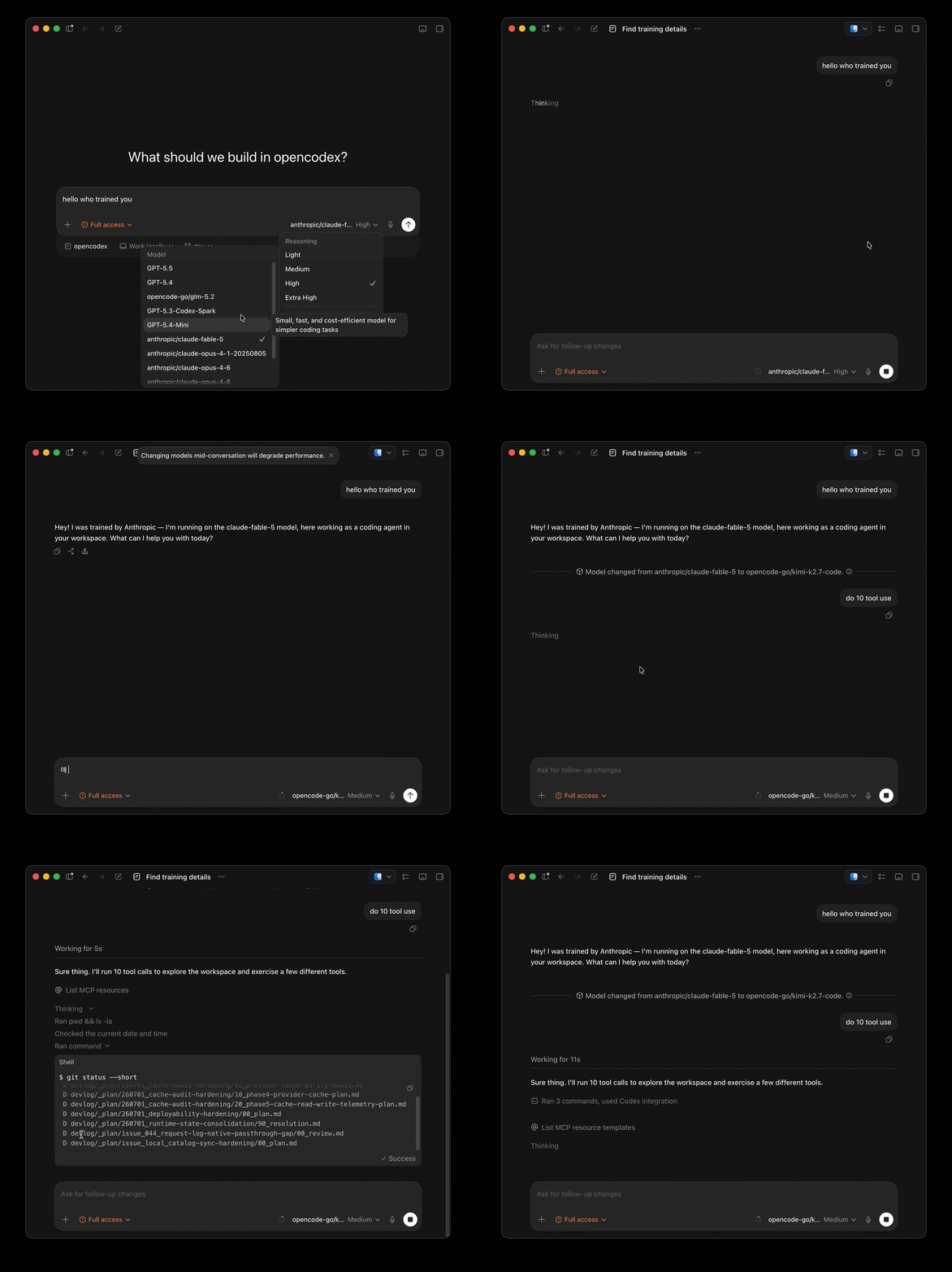
Universal provider proxy for OpenAI Codex & Claude Code — use any LLM (Claude, Gemini, Grok, DeepSeek, Ollama…) with Codex CLI, App, SDK, and Claude Code

Git-native persistent memory for AI coding agents. Implements Google OKF v0.2 with sub-300µs in-memory BM25 search, embedded MCP server, and progressive disclosure. Slashes token bloat by 80% with zero external databases or dependencies. Built in pure Go.

Local-first code intelligence graph for MCP and CLI. Builds a persistent map of your codebase so AI coding tools read only what matters, with benchmarked context reductions on reviews and large-repo workflows.

Stop your AI from making things up — it proposes, deterministic tools decide, every claim checked against ground truth with evidence. Grounded facts and context survive resets. Reverse engineering is the proving ground. MCP server + CLI.