


heygen-com/hyperframesFrameworks & SDKs
Write HTML. Render video. Built for agents.
49k
ScaledMCP is a Go library for embedding an MCP server with support for horizontal scaling. It provides HTTP transport, session storage, tool registries, and an actor-based message flow so you can run the server in one process or behind a load balancer.
Builders who want reusable server code for MCP and A2A instead of wiring the protocol from scratch.
You can embed a scalable MCP server in your app and run it across multiple nodes without reworking your tool and session setup.
Serves the main `/mcp` endpoint and optional SSE transport with capability negotiation.
Supports distributed sessions with Redis or in-memory storage.
Uses an actor system to handle sessions and message routing.
Lets you register tools directly or provide them through a dynamic tool provider.
Supports struct-tag schemas, reflection-based registration, and generics-based typed handlers.
Can plug MCP transport into your own router instead of owning the whole web server.
go get github.com/traego/scaled-mcp@latest


A horizontally scalable MCP (Message Context Protocol) server implementation that supports load-balanced deployments.
The Scaled MCP Server is a Go library that implements the MCP 2025-03 specification with support for horizontal scaling. It's designed to be embedded in your application and provides flexible configuration options.
/mcp endpoint, optional SSE endpoint, and capabilities negotiationgo get github.com/traego/scaled-mcp@latest
Note: This library requires Go 1.24 or higher.
package main

import (
	"context"
	"fmt"
	"log/slog"
	"os"
	"os/signal"
	"syscall"

	"github.com/traego/scaled-mcp/pkg/config"
	"github.com/traego/scaled-mcp/pkg/resources"
	"github.com/traego/scaled-mcp/pkg/server"
)

func main() {
	// Configure logging
	logHandler := slog.NewTextHandler(os.Stdout, &slog.HandlerOptions{Level: slog.LevelDebug})
	slog.SetDefault(slog.New(logHandler))

	// Create a server with default configuration
	cfg := config.DefaultConfig()

	// Use in-memory session store for simplicity
	cfg.Session.UseInMemory = true

	// Create a static tool registry
	registry := resources.NewStaticToolRegistry()

	// Define and register a simple calculator tool
	calculatorTool := resources.NewTool("calculator").
		WithDescription("Performs basic arithmetic operations").
		WithInputs([]resources.ToolInput{
			{
				Name:        "operation",
				Type:        "string",
				Description: "Operation to perform (add, subtract, multiply, divide)",
				Required:    true,
			},
			{
				Name:        "a",
				Type:        "number",
				Description: "First operand",
				Required:    true,
			},
			{
				Name:        "b",
				Type:        "number",
				Description: "Second operand",
				Required:    true,
			},
		}).
		Build()

	// Register the tool with the registry
	registry.RegisterTool(calculatorTool)

	// Define a prompt for the server
	prompt := "You are a helpful AI assistant that can perform calculations using the calculator tool."

	// Create the server with the tool registry and prompt
	srv, err := server.NewMcpServer(cfg,
		server.WithToolRegistry(registry),
		server.WithServerInfo("Example MCP Server", "1.0.0"),
		server.WithPrompt(prompt),
	)
	if err != nil {
		slog.Error("Failed to create server", "error", err)
		os.Exit(1)
	}

	// Set up the tool handler
	registry.SetToolHandler("calculator", func(ctx context.Context, params map[string]interface{}) (interface{}, error) {
		// Extract parameters
		operation, ok := params["operation"].(string)
		if !ok {
			return nil, fmt.Errorf("%w: operation must be a string", resources.ErrInvalidParams)
		}

		a, ok := params["a"].(float64)
		if !ok {
			return nil, fmt.Errorf("%w: a must be a number", resources.ErrInvalidParams)
		}

		b, ok := params["b"].(float64)
		if !ok {
			return nil, fmt.Errorf("%w: b must be a number", resources.ErrInvalidParams)
		}

		// Perform the calculation
		var result float64
		switch operation {
		case "add":
			result = a + b
		case "subtract":
			result = a - b
		case "multiply":
			result = a * b
		case "divide":
			if b == 0 {
				return nil, fmt.Errorf("%w: division by zero", resources.ErrInvalidParams)
			}
			result = a / b
		default:
			return nil, fmt.Errorf("%w: unknown operation %s", resources.ErrInvalidParams, operation)
		}

		return map[string]interface{}{
			"result": result,
		}, nil
	})

	// Start the server in a goroutine
	go func() {
		if err := srv.Start(context.Background()); err != nil {
			slog.Error("Failed to start server", "error", err)
			os.Exit(1)
		}
	}()

	slog.Info("Server started", "host", cfg.HTTP.Host, "port", cfg.HTTP.Port)

	// Wait for termination signal
	sig := make(chan os.Signal, 1)
	signal.Notify(sig, syscall.SIGINT, syscall.SIGTERM)
	<-sig

	// Shutdown the server
	slog.Info("Shutting down server...")
	shutdownCtx, cancel := context.WithTimeout(context.Background(), cfg.HTTP.ShutdownTimeout)
	defer cancel()

	if err := srv.Stop(shutdownCtx); err != nil {
		slog.Error("Failed to stop server", "error", err)
	}

	slog.Info("Server stopped")
}

### Using an External HTTP Server

You can use your own HTTP server with the MCP transport:

```go
package main

import (
	"context"
	"log"
	"net/http"

	"github.com/go-chi/chi/v5"
	"github.com/go-chi/chi/v5/middleware"
	"github.com/go-chi/cors"
	"github.com/traego/scaled-mcp/pkg/config"
	"github.com/traego/scaled-mcp/pkg/server"
	"github.com/traego/scaled-mcp/pkg/transport"
)

func main() {
	// Create a server with default configuration
	cfg := config.DefaultConfig()
	cfg.Session.UseInMemory = true

	// Create the MCP server but don't start the HTTP server
	srv, err := server.NewServer(cfg)
	if err != nil {
		log.Fatalf("Failed to create server: %v", err)
	}

	// Create a custom router
	r := chi.NewRouter()

	// Add middleware
	r.Use(middleware.RequestID)
	r.Use(middleware.RealIP)
	r.Use(middleware.Logger)
	r.Use(middleware.Recoverer)

	// Add CORS middleware - important when using an external server
	r.Use(cors.Handler(cors.Options{
		AllowedOrigins:   []string{"*"},
		AllowedMethods:   []string{"GET", "POST", "PUT", "DELETE", "OPTIONS"},
		AllowedHeaders:   []string{"Accept", "Authorization", "Content-Type", "X-CSRF-Token"},
		ExposedHeaders:   []string{"Link"},
		AllowCredentials: true,
		MaxAge:           300,
	}))

	// Add your custom routes
	r.Get("/", func(w http.ResponseWriter, r *http.Request) {
		w.Write([]byte("Welcome to the MCP server!"))
	})

	// Create the HTTP transport with the custom router
	httpTransport := transport.NewHTTPTransport(
		cfg,
		srv.GetActorSystem(),
		srv.GetSessionManager(),
		transport.WithExternalRouter(r),
	)

	// Start the MCP server without HTTP
	if err := srv.Start(context.Background()); err != nil {
		log.Fatalf("Failed to start server: %v", err)
	}

	// Start the HTTP transport
	if err := httpTransport.Start(); err != nil {
		log.Fatalf("Failed to start HTTP transport: %v", err)
	}

	// Start your HTTP server
	log.Printf("Starting HTTP server on %s:%d", cfg.HTTP.Host, cfg.HTTP.Port)
	if err := http.ListenAndServe(":8080", r); err != nil {
		log.Fatalf("HTTP server error: %v", err)
	}
}

## Dynamic Tool Registry Example

This library supports both static and dynamic tool registries. Here's an client_example of using a dynamic tool registry:

```go
// Create a custom tool provider
toolProvider := NewExampleToolProvider()

// Create a dynamic tool registry with the provider
registry := resources.NewDynamicToolRegistry(toolProvider)

// Create server with the dynamic tool registry
cfg := config.DefaultConfig()
mcpServer, err := server.NewMcpServer(cfg,
    server.WithToolRegistry(registry),
)
The library provides three ways to define tool inputs:
// Define input struct with mcp tags
type CalculatorInput struct {
    Operation string  `mcp:"operation,The operation to perform (add subtract multiply divide),required"`
    A         float64 `mcp:"a,First operand,required"`
    B         float64 `mcp:"b,Second operand,required"`
}

// Type-safe handler function
func calculatorHandler(ctx context.Context, input *CalculatorInput) (interface{}, error) {
    // Direct access to typed fields: input.Operation, input.A, input.B
    switch input.Operation {
    case "add":
        return map[string]interface{}{"result": input.A + input.B}, nil
    // ...
    }
}

// Register with automatic schema generation (method 1)
calculatorType := reflect.TypeOf(CalculatorInput{})
registry.RegisterStructToolWithHandler("calculator", "Performs arithmetic operations", calculatorType, calculatorHandler)

// Or use the convenience function (method 2)
resources.RegisterStructTool(registry, "calculator", "Performs arithmetic operations", calculatorHandler)

### Generics-Based Tool Registration (New in June 2025)

For even better type safety, you can use the new generics-based approach with two type parameters for input and output:

```go
type CalculatorInput struct {
    Operation string  `mcp:"operation,The operation to perform,required"`
    A         float64 `mcp:"a,First operand,required"`
    B         float64 `mcp:"b,Second operand,required"`
}

type CalculatorOutput struct {
    Result    float64 `mcp:"result,The calculation result,required"`
    Operation string  `mcp:"operation,The operation performed,required"`
}

func calculatorHandler(ctx context.Context, input *CalculatorInput) (*CalculatorOutput, error) {
    result := input.A + input.B
    return &CalculatorOutput{
        Result:    result,
        Operation: input.Operation,
    }, nil
}

// Register with compile-time type safety for both input and output
err := resources.RegisterStructToolWithTypes(registry, "calculator", "Performs arithmetic", calculatorHandler)
This approach provides:
#### 2. Using WithInputs

```go
weatherTool := resources.NewTool("weather").
    WithDescription("Get weather information for a location").
    WithInputs([]resources.ToolInput{
        {
            Name:        "location",
            Type:        "string",
            Description: "The location to get weather for",
            Required:    true,
        },
        {
            Name:        "units",
            Type:        "string",
            Description: "Temperature units (celsius or fahrenheit)",
            Default:     "celsius",
        },
    }).
    Build()
calculatorTool := resources.NewTool("calculator").
    WithDescription("Performs basic arithmetic operations").
    WithString("operation").
    Required().
    Description("Operation to perform (add, subtract, multiply, divide)").
    Add().
    WithNumber("a").
    Required().
    Description("First operand").
    Add().
    WithNumber("b").
    Required().
    Description("Second operand").
    Add().
    Build()
The mcp struct tag follows the format: mcp:"name,description,required,default=value"
Supported Go Types:
string → "string"int, int64, etc. → "integer"float64, float32 → "number"bool → "boolean"[]T, [N]T → "array"struct, map → "object"*T → Same as T (pointer types)When using an external HTTP server with the MCP transport, you need to configure CORS settings on your router. The MCP transport will not apply CORS settings when using an external router, as shown in the example above.
For production deployments, it's recommended to use Redis for session management to support horizontal scaling. The in-memory session store should only be used for development or testing.
Contributions are welcome! Please feel free to submit a Pull Request.
git checkout -b feature/amazing-feature)git commit -m 'Add some amazing feature')git push origin feature/amazing-feature)Run tests:
go test ./...
Run tests with coverage:
go test -race -coverprofile=coverage.txt -covermode=atomic ./...
View coverage report in browser:
go tool cover -html=coverage.txt
This project uses Codecov for code coverage reporting. Coverage reports are automatically generated and uploaded during CI runs.
To view the coverage dashboard, visit codecov.io/gh/traego/scaled-mcp.
This project is licensed under the MIT License.
See the GoDoc for detailed API documentation.
Sign in to join the discussion.
No comments yet. Be the first to say what this is good for.
Write HTML. Render video. Built for agents.
Ultra-lightweight, open-source, self-hosted personal AI agent framework in Python with WebUI, tools, memory, MCP, multi-agent workflows, automation, and chat apps

SkillOpt is a text-space optimizer that trains reusable natural-language skills for frozen LLM agents through trajectory-driven edits, validation-gated updates, and deployable best_skill.md artifacts.
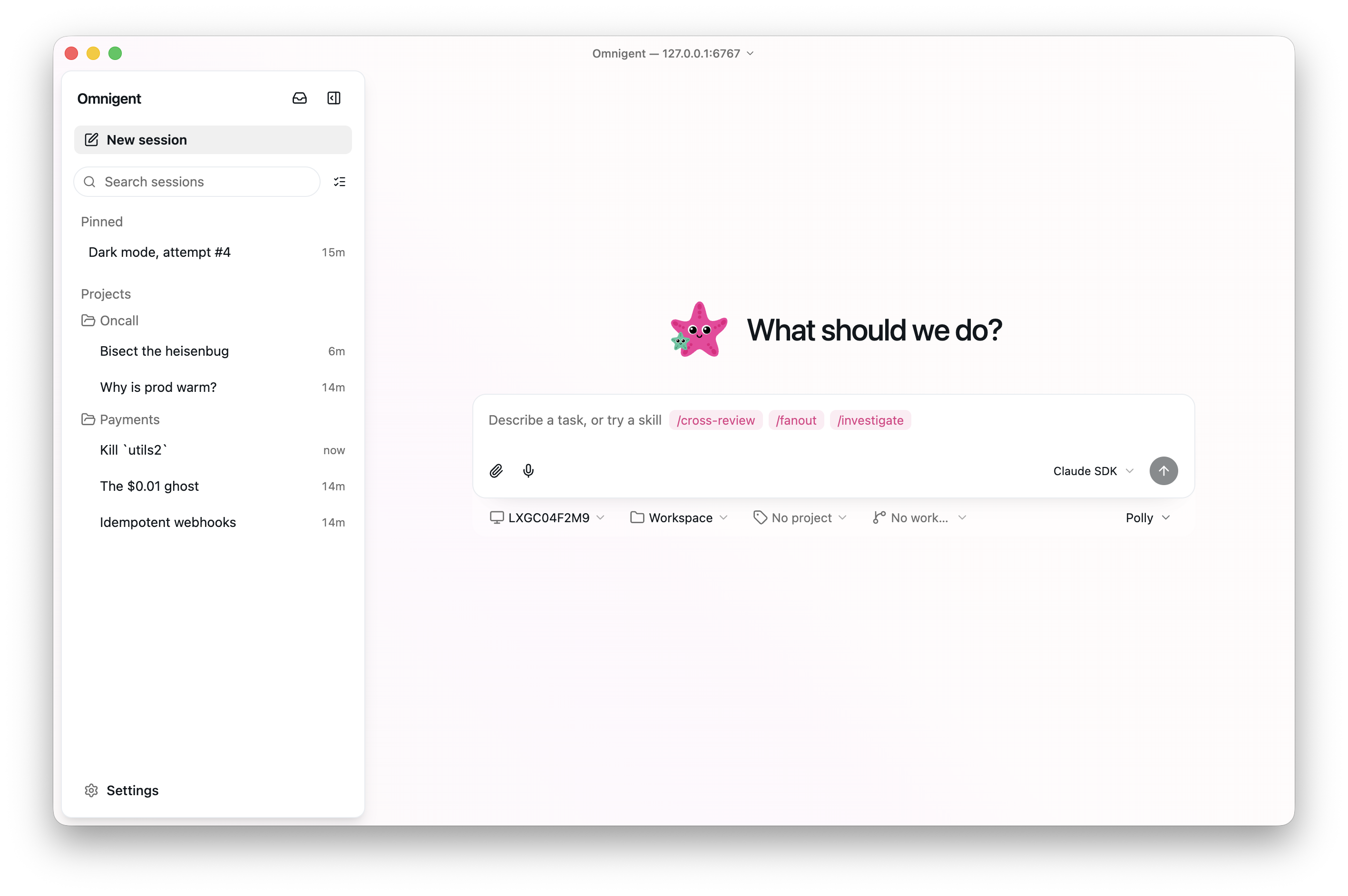
Omnigent is an open-source AI agent framework and meta-harness: orchestrate Claude Code, Codex, Cursor, Pi, and custom agents — swap harnesses without rewriting, enforce policies and sandboxing, and collaborate in real time from any device.

A theoretical reconstruction of the Claude Mythos architecture, built from first principles using the available research literature.
🕷️ An adaptive Web Scraping framework that handles everything from a single request to a full-scale crawl!